What Every Business Owner Should Know About the Real Risks of Entrepreneurship

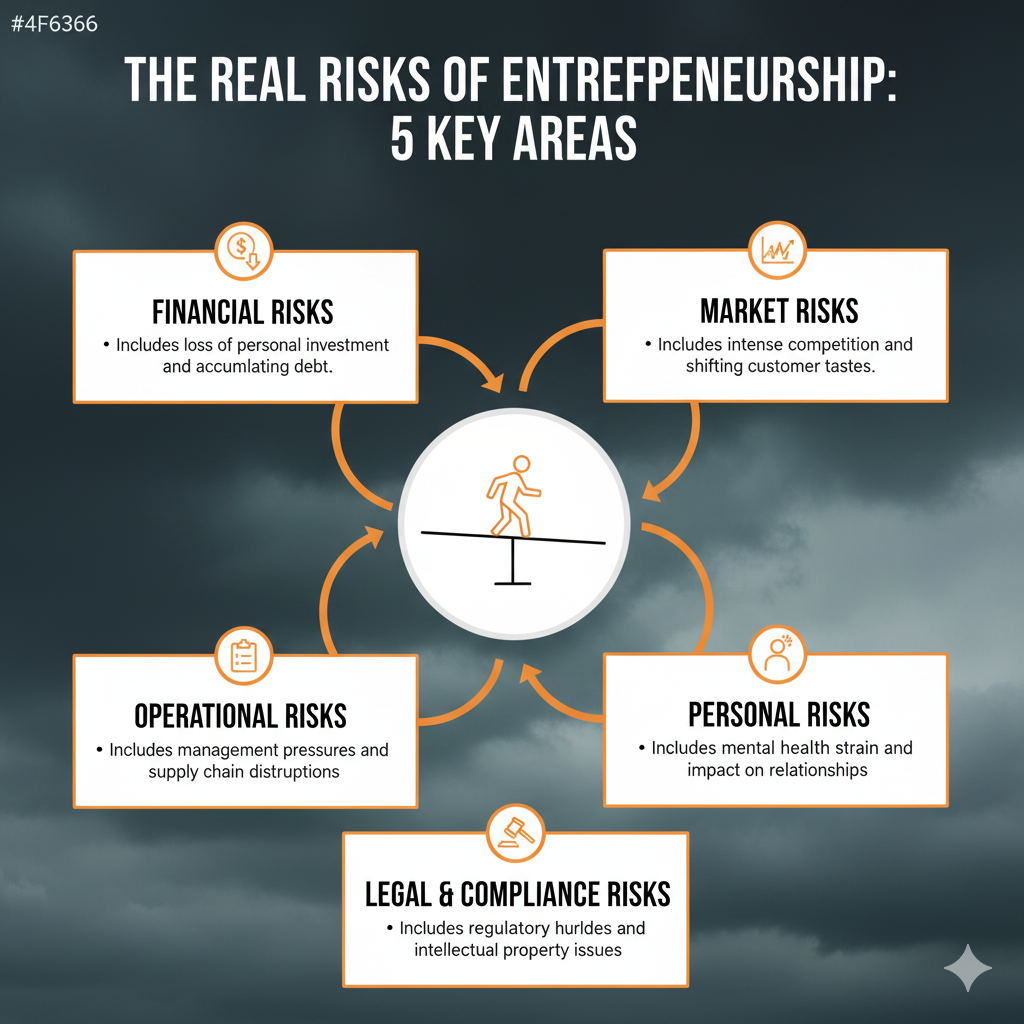
One of the most important choices a person can make is to start a business. Every year, millions of people become entrepreneurs because they want to be their own boss, make something important, and maybe even become financially free. But behind the success stories and motivational quotes is a complicated world of risks that can make or break even the best business ideas.
It’s not meant to scare off people who want to start their own businesses; it’s about making smart choices. You can make plans to deal with problems when you know what they are. This in-depth guide looks at the different kinds of risks that entrepreneurs face and gives useful tips on how to deal with them successfully.
Taking risks is part of being an entrepreneur, but the important word here is “calculated.” Let’s take a look at what those risks really are and how you can set yourself up for success even with them.
Financial Risks: The Foundation of Entrepreneurial Challenges
Loss of Personal Investment
One of the biggest risks for entrepreneurs right away is losing the money they put into their business. Most new businesses need money up front for things like equipment, inventory, marketing, and running costs. Statistics show that personal savings often pay for these early stages, which puts the financial security of entrepreneurs directly at risk.
When cash flow problems happen, reality hits hard. Many businesses that look good on paper have trouble with timing because their expenses come before their income. This gap between spending and earning creates a challenging period where even successful companies can fail due to insufficient working capital.
Funding Challenges and Debt Accumulation
Getting money from outside sources comes with its own risks. Bank loans require personal guarantees, making entrepreneurs personally liable for business debts. When you get money from investors, you usually have to give up some of your ownership and control, which could make it harder to make decisions in the future.
Credit card debt is a common problem for business owners who have trouble getting traditional loans. High interest rates can quickly spiral, creating a debt burden that outlasts the business itself.
Risks in the market: How to deal with an unpredictable landscape
Very tough competition
There are already established players in every market who have resources, customers, and brand recognition that new players don’t have. To compete with well-funded companies, you need to come up with new ideas and carry them out perfectly. Even one-of-a-kind products are at risk of being copied by bigger companies that have more money to spend than smaller ones.
Changing Tastes of Customers
Consumer behavior shifts constantly, sometimes dramatically and without warning. Things that seem like they are necessary today might not be useful tomorrow. The COVID-19 pandemic showed how quickly whole industries could change. Some businesses did well, while others went out of business overnight.
Economic Uncertainty
Businesses are affected by economic downturns in different ways, but few come out of them completely unscathed. When the economy is in a recession, people usually spend less money, which makes it harder to keep up revenue levels. Business performance is affected by things like interest rates, inflation, and unemployment rates that business owners can’t control.
Risks in Operations: The Day-to-Day Challenges
Management and Leadership Pressures
People who are starting their first business often don’t realize how hard it is to run one. Few people have the skills needed to handle finances, operations, marketing, and personnel all at once. It’s harder to learn these skills while running a business, which makes it more likely that you’ll make expensive mistakes.
Problems with staffing and human resources
It is always hard to find, hire, and keep good employees. When a lot of people leave their jobs, it costs more to train new ones and makes things run less smoothly. Managing payroll, following employment laws, and building a good workplace culture all take time and attention away from the main business tasks.
Problems with the supply chain
Relying on suppliers makes a business more vulnerable to things that are out of the owner’s control. Material shortages, shipping delays, and supplier bankruptcies can halt production and disappoint customers. It takes time to build strong relationships with suppliers, and even then, you can’t be sure they won’t cause problems.
Personal Risks: The Unseen Costs of Starting a Business
Effects on Stress and Mental Health
Being an entrepreneur means working long hours, making decisions all the time, and never knowing what’s going to happen next. The pressure to succeed while managing limited resources takes a significant toll on mental health. Many entrepreneurs suffer from sleep deprivation, anxiety, and depression, especially when things are tough.
Stress in a relationship
Building a business takes a lot of time and energy, which can hurt personal relationships. When entrepreneurs put business needs first, their spouses, kids, and friends may feel left out. When a business does well, it affects the family’s financial stability, which puts more stress on all of their relationships.
Costs of Career Opportunities
If you want to be an entrepreneur, you have to give up the chance to move up in your career. While employees gain experience and build professional networks in established companies, entrepreneurs must create these advantages independently. Businesses that fail leave holes in your work history that can make it harder to find a new job.
Risks of Legal and Compliance: Getting through complicated requirements
Problems with following the rules
There are rules that businesses must follow in every industry. There are strict rules that must be followed in healthcare, finance, food service, and other fields, and breaking them can have serious consequences. Keeping up with changing laws takes time and money, and you may need to hire a lawyer to do so.
Insurance and Liability Worries
When a business runs, it can be held responsible for product defects, employee injuries, customer accidents, and mistakes made by professionals. Insurance costs cut into profits, and not having enough coverage puts you at risk of losing money. Many new business owners don’t know how to figure out what level of coverage they need.
Risks to Intellectual Property
You need to know the law and spend money to protect your trademarks, copyrights, and patents. At the same time, business owners need to make sure they don’t violate other people’s intellectual property rights. No matter what the outcome, legal fights over IP rights can be expensive and take a long time.
Strategies for Reducing Risk: Strengthening the Base
Comprehensive Business Planning
Before starting a business, successful entrepreneurs do a lot of research on the market. Knowing who your target customers are, what your competitors are doing, and what trends are happening in your industry can help you spot problems before they happen. Financial projections should include a number of different scenarios, including ones that show the worst possible outcomes to see if the business model can work.
Diversifying and making plans for the unexpected
Wise business owners don’t put all their resources into one strategy. Multiple revenue streams reduce dependence on any single customer or product line. Emergency funds give you some breathing room when things go wrong, and backup suppliers make sure that you don’t have a single point of failure.
Professional Support Networks
Getting to know experienced mentors, accountants, lawyers, and industry experts can help you when you run into problems. Professional advice costs money up front, but it can save you a lot of money in the long run. A lot of successful business owners say that having a mentor helped them make tough choices.
Learning and changing all the time
Markets change quickly, so business owners have to change all the time. Staying informed about industry trends, new technologies, and changing regulations helps identify opportunities and threats early. When original plans don’t work out, having flexible business models lets you change them.
The Rewards That Balance the Risks
Financial Independence Potential
Even though starting a business can be risky financially, it can also pay off big time. Creating valuable businesses makes money that jobs usually don’t. Entrepreneurs can directly benefit from the growth and success of their businesses by owning equity.
Freedom and creative control
Entrepreneurs are in charge of their daily tasks, big decisions, and long-term plans. This freedom lets people follow their own values and interests that might not be possible in a corporate job. Many creative people like the idea of being able to put their ideas into action without having to deal with corporate red tape.
Making a difference and leaving a legacy
Entrepreneurs can help their communities, solve problems, and create jobs by starting businesses. Many business owners are very happy when they can help others in ways that go beyond making money. Making something that will last gives you a sense of satisfaction that goes beyond money.
Making Smart Choices About Business Risk
Knowing the risks of starting a business helps people make better choices, not stop them from starting a business. Preparation, persistence, and strategic thinking have helped every successful businessperson get through these problems. The key is to be honest about the risks and make specific plans to deal with them.
People have different levels of risk tolerance, so what seems too much for one person might be fine for another. The right level of risk depends on your own finances, family obligations, and job stage. There is no one-size-fits-all answer to the question of whether starting a business makes sense; each person’s situation is different.
Successful entrepreneurs don’t avoid risks; instead, they know how to deal with them and plan for them. This method changes entrepreneurship from a game of chance to a series of well-thought-out choices that have a much higher chance of success.