
What are the principles of entrepreneurship
You need more than just a good idea to start a business. Successful business owners follow basic rules that help them make decisions and keep their businesses growing. These entrepreneurial principles are the building blocks of successful businesses that can change and grow in competitive markets.
Entrepreneurship is the act of starting, running, and growing a business in order to make money while taking on financial risks. But what makes some entrepreneurs successful while others fail? The answer is to learn and use the basic business principles that have guided business leaders for decades.
If you want to start a new business or grow an existing one, learning these rules will greatly improve your chances of success. Let’s look at the seven key ideas that every business owner needs to know.
Principle 1: Recognizing Opportunities and Having a Vision
Finding Gaps in the Market
The best entrepreneurs are very good at seeing opportunities where other people see problems. This principle is all about getting good at spotting gaps in the market and coming up with business solutions that fill them.
To find a gap in the market, you need to carefully watch how customers act, what trends are happening in the industry, and where your competitors are weak. Entrepreneurs who are good at this principle talk to their target market often, do a lot of research, and keep up with new technologies and changes in society.
Making a Clear Vision
A strong vision is like a North Star for your business. It helps people make tough choices and keeps teams going when things get tough. Your vision should articulate not just what your business does, but why it exists and what impact it aims to create.
Visions that work are clear, measurable, and have a deadline. They motivate people to act while still being possible to do. A food delivery startup might say, for instance, that by 2027 they want to “connect every neighborhood restaurant with customers within 30 minutes, making local dining available to everyone.”
How to Use It
Spend time each week analyzing your industry and collecting feedback from customers to improve your ability to spot opportunities. Use market size, level of competition, and resource needs as criteria to make a systematic way to look at possible opportunities.
Principle 2: Taking Risks and Being Strong
Managing Risk with Care
Taking risks is a part of being an entrepreneur, but successful business owners do it in a smart way instead of just taking chances. This principle stresses how important it is to do a thorough analysis, come up with ways to reduce risk, and make plans for what to do if things go wrong.
Smart risk-taking involves evaluating potential outcomes, preparing for various scenarios, and making informed decisions based on available data. When entrepreneurs think about their risk tolerance and available resources, they should look at both the likelihood and possible effects of different risks.
Making yourself stronger
Entrepreneurs who are resilient can bounce back from setbacks, learn from their mistakes, and keep going even when things get tough. This trait sets apart people who keep going through hard times from those who give up on their projects as soon as they get hard.
To become more resilient, you need to have a growth mindset, build strong support networks, and see failures as chances to learn. Resilient business owners know that problems are only temporary and can often teach them important lessons that will help them succeed in the future.
Getting better by failing
Every business journey has its ups and downs. The key is to learn from these experiences and use what you learn to make better choices in the future. Successful business owners keep detailed records of what works and what doesn’t. This helps them keep getting better.
Principle 3: Being open to new ideas and changing with the times
Always coming up with new ideas
Innovation helps entrepreneurs succeed by giving them a competitive edge and meeting the changing needs of customers. This principle applies not only to making better products, but also to making better processes, services, and business models.
Entrepreneurs who are successful encourage innovation by encouraging creativity, putting money into research and development, and keeping up with industry trends. They understand that innovation must be systematic and purposeful rather than random or sporadic.
Adaptability to the Market
Business environments change quickly, so entrepreneurs need to change their plans, products, and ways of doing business to keep up. This principle says that you should be flexible while still sticking to your business’s main values and goals.
Entrepreneurs who are flexible keep a close eye on market conditions, get feedback from customers on a regular basis, and change their plans based on new information. They see change as a chance instead of a threat and set up their businesses to take advantage of changing market conditions.
Using Technology
To be a successful entrepreneur today, you need to know how to use technology and be open to trying new tools and platforms. When used correctly, technology can make operations more efficient, improve customer experiences, and open up new ways to make money.
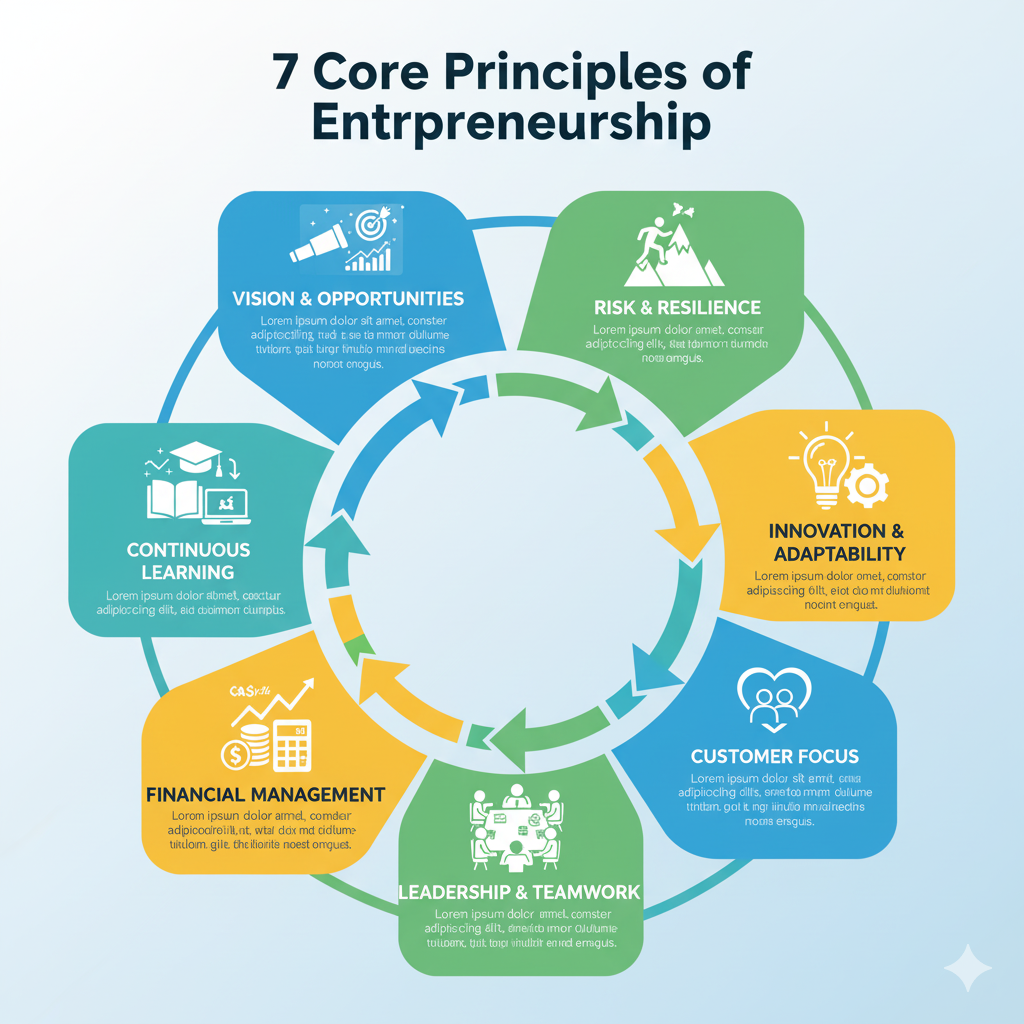
Principle 4: Focus on the customer
Getting to Know What Customers Want
Entrepreneurs who put customers first make it a point to learn about their target market’s needs, wants, and problems. To keep a deep understanding of customers, this principle calls for regular contact with them, collecting feedback, and doing market research.
To truly understand your customers, you need to go beyond basic demographics and get to know their motivations, behaviors, and how they make decisions. Entrepreneurs can make products and services that really connect with their target audience because they know this.
Giving Value
Value delivery forms the foundation of sustainable businesses. Entrepreneurs need to be able to clearly explain and consistently deliver value that makes customers want to buy their goods or services.
Value can be many things, such as saving money, saving time, getting better results, or having better experiences. The most important thing is to know what your customers value most and make sure your products and services match that.
Making Connections
Building strong relationships with customers that go beyond individual transactions is important for long-term business success. This involves providing excellent customer service, maintaining open communication channels, and consistently exceeding expectations.
Principle 5: Building a team and being a leader
Learning how to be a good leader
Entrepreneurial leadership means getting people to work together toward common goals while dealing with change and uncertainty. Good leaders are able to make tough choices, keep the team’s spirits up during tough times, and communicate clearly.
Self-reflection, skill building, and learning from more experienced mentors are all parts of the ongoing process of developing leadership skills. Entrepreneurs should invest time in developing their emotional intelligence, communication abilities, and decision-making capabilities.
Making Teams Strong
No one entrepreneur can do it all by themselves. Building a strong team requires identifying complementary skills, creating a positive culture, and aligning individual goals with business objectives.
Hiring the right people, giving them a thorough onboarding, and giving them chances to grow are all important parts of building a strong team. Successful business owners know that helping their team grow is a direct way to help their business succeed.
How to Delegate Well
As companies grow, business owners need to learn how to delegate tasks and trust their employees to do them well. This principle involves identifying each team member’s strengths and providing appropriate levels of autonomy and support.
Principle 6: Managing Money and Allocating Resources
Good money management means putting your limited resources into activities that will give you the best returns. To follow this rule, you need to know how cash flow works, how to make a budget, and how to choose the best investments.
Entrepreneurs should develop financial literacy to make informed decisions about pricing, expenses, and growth investments. Keeping an eye on your finances on a regular basis can help you spot patterns and areas where you can improve.
Sustainable Growth
Growth is important, but long-term viability depends on sustainable growth. This means finding a balance between wanting to grow and being financially stable and able to handle the work.
When setting growth goals and deadlines, sustainable growth strategies take into account the state of the market, the level of competition, and the company’s own strengths.
Principle 7: Always Learning
Keeping up with things
To stay up to date on industry changes, best practices, and new opportunities, successful business owners make a commitment to lifelong learning. This means going to conferences, reading trade magazines, and meeting other professionals.
As part of continuous learning, you should also ask customers, team members, and mentors for feedback to find areas where you can improve and grow.
Improving Skills
Entrepreneurship necessitates a variety of skills that develop alongside business growth. Successful business owners find skill gaps and work to fill them by getting formal education, finding a mentor, or gaining experience in the field.
Using These Ideas to Help You Start Your Own Business
It’s not enough to just know these rules. To be successful, you need to use these ideas in a consistent way and change them to fit your own situation and industry. First, look at what you’re good at right now and what you need to work on.
Make plans of action to improve your weaknesses while making the most of your strengths. Keep in mind that being an entrepreneur is a long-term goal that requires patience, hard work, and constant improvement.
These rules for entrepreneurs show how to build successful businesses, but every entrepreneur’s path is different. Focus on getting to know your market, taking care of your customers, and building a strong base for long-term growth.

![How to Start an Ecommerce Business in NZ [2025 Guide]](https://businesskiwi.com/wp-content/uploads/2025/11/How-to-Start-an-Ecommerce-Business-in-NZ-644-300x200.png)