
Behind the business of gift giving
Giving gifts is a personal thing. A present wrapped with care, a handwritten card, and the excitement of seeing someone’s face light up—these things seem very different from spreadsheets and market research. But behind these heartfelt messages is a thriving business that makes hundreds of billions of dollars every year.
To understand the business of giving gifts, you need to look at both the emotional and commercial sides of it. This practice is a fascinating mix of human nature and economic activity, from the psychology that makes us want to give to the ways that stores get our attention.
If you’re a business owner who wants to get into this market or just want to know more about one of our most common social customs, looking into how gift-giving works can teach you a lot about how people act, how cultures change over time, and how business works today.
The History of Giving Gifts
It’s not new to give gifts. Archaeological evidence shows that people have been giving each other gifts for thousands of years, often as part of religious ceremonies, political alliances, or social bonding rituals.
During Saturnalia, their winter festival, the Romans gave each other gifts. Medieval European nobles gave each other fancy gifts to show off their wealth and get people to stay loyal. Indigenous communities around the world created complex gift economies in which exchanges strengthened social structures and relationships.
These historical practices set the stage for things we still do today, like giving gifts to show off, build relationships, or show thanks or duty. The reasons haven’t changed much; only the size and the fact that it’s now a business have changed.
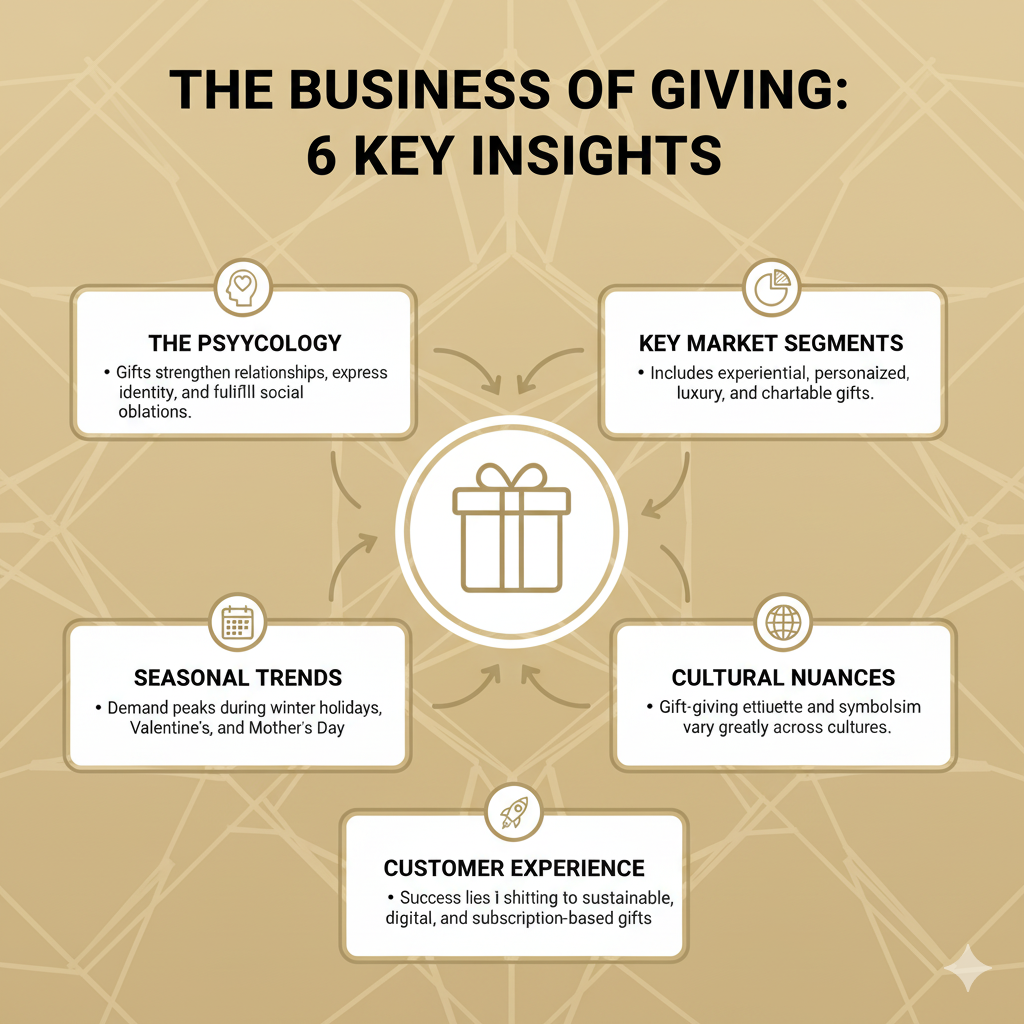
Why We Give: The Psychology Behind the Act
Strengthening Relationships
When we give gifts, it activates the reward centers in our brains, which makes both the giver and the receiver feel good. This neurological response helped our ancestors work together, which was necessary for survival.
Studies show that giving gifts can make relationships stronger because they show that you care about someone else’s happiness and are willing to put in the effort to make them happy. Words alone can’t say “I was thinking about you” in a way that this action does.
Showing Who You Are and What You Believe
The gifts we give say something about who we are. Choosing a product that is good for the environment shows what we believe in. Choosing something made by hand instead of mass-produced shows what we like.
This need to express oneself is why giving gifts can be stressful. We’re not just finding something the person might like; we’re also saying something about who we are and how we feel about our relationship with them.
Meeting Social Obligations
Not every gift-giving is done out of pure kindness. People have certain expectations about birthdays, weddings, holidays, and other special events because of social norms. Not meeting these expectations can hurt relationships or break unwritten social rules.
This part of the obligation explains why the gift industry has predictable seasonal spikes. Retailers can be sure that demand will go up around Mother’s Day, Valentine’s Day, and the winter holidays because social pressure makes sure that people will participate.
The Effect of Giving Back
We feel like we have to give back when someone gives us a gift. This psychological principle is deeply ingrained in how people act. It leads to a cycle of giving gifts that keeps people spending and helps the market grow.
Companies use this idea a lot. Free samples, free consultations, and “gifts with purchase” all make people want to buy more by making them feel like they have to give something back.
The Gift Economy
Size and Growth of the Market
The gift market around the world makes a lot of money. In the US, holiday shopping always brings in hundreds of billions of dollars, and gifts make up a big part of that spending.
E-commerce has greatly increased the gift industry’s reach. Online marketplaces connect buyers with artisans from all over the world. Subscription box services have also made new types of gifts that didn’t exist ten years ago.
Important Parts of the Industry
There are many different parts of the gift industry, each with its own traits:
Experiential Gifts: Concert tickets, spa days, and travel experiences are becoming more popular, especially with younger people who value experiences more than things.
Customized Items: Items that can be personalized, like engraved jewelry or monogrammed accessories, cost more because they are one-of-a-kind and can’t be made in bulk.
Luxury Goods: Expensive gifts serve two purposes: they show love and show that the giver is wealthy or that the recipient is important.
Practical Gifts: Even though people often think of gifts as silly, many people like gifts that help them solve problems or make their lives easier.
Charitable Gifts: Giving money or goods in someone’s name shows that people are becoming more aware of their social responsibility and gives them meaningful alternatives to material goods.
Patterns by season
Gift spending goes through cycles that are easy to predict. The winter holiday season is by far the most important time of year for gift sales. There are also smaller peaks around Valentine’s Day, Mother’s Day, Father’s Day, and graduation season.
Smart businesses get ready for these cycles months in advance by making seasonal products, building up their stock, and running targeted marketing campaigns at times when people are most likely to buy.
Different cultures have different rules about giving gifts.
Different cultures have very different rules about giving gifts. What is acceptable in one nation may be deemed offensive in another.
In Japan, the way you give a gift is just as important as the gift itself. Gifts are usually given with both hands, and wrapping them up well shows respect.The recipient may initially refuse a gift out of politeness before accepting it.
In Chinese culture, some gifts are linked to superstitions. Because clocks stand for death, they aren’t good gifts. The number of things given is also important; even numbers (except four) are usually better.
People from the Middle East are very generous, and they often give gifts that are worth more than what people in the West expect. Refusing a gift can be seen as insulting.
Western cultures tend toward more casual gift-giving, though etiquette still governs situations like weddings (give within your means but respect registry preferences) and professional settings (avoid overly personal items).
Businesses that work internationally or serve communities with people from many different cultures need to know these small differences. A gift that makes one group happy might make another group angry.
Gift Industry Business Plans
Getting to Know Your Customer
Gift businesses that do well know their target market very well. Are you helping people who need to shop quickly and easily? Planners who are looking for one-of-a-kind items? People who want to save money or people who want to live in luxury?
You need to use different strategies for different types of customers. People who care about convenience like fast shipping and gift wrapping. People who want quality want to know a lot about the product and be sure of its quality.
Making Product Experiences That Last
Differentiation is important in a market that is full of competition. Successful gift businesses are often good at telling stories about their products, not just what they are but also why they are important.
Artisanal producers share their creative processes. Brands that are good for the environment are called “sustainable.” Luxury retailers emphasize heritage and exclusivity.
This story-based approach turns transactions into experiences, which makes customers feel good about their purchase beyond just the product itself.
Making the Buying Process Easier
Buying gifts can be stressful. Companies that make this less of a problem have an edge over their competitors.
Some good strategies are:
- Curated collections: Putting things together by who they are for (“gifts for dad,” “presents for coworkers”) makes it easier to choose.
- Gift guides are articles that suggest good gifts for different events.
- Flexible return policies lower the risk of buying something, which is especially important when buying for someone else.
- Gift messaging options: letting people add personal notes to their purchases
- Multiple shipping addresses: This lets items go straight to the people who need them.
Using Technology
Gift shops today use technology to make shopping better for their customers. Virtual try-on features help customers see how things will look. AI-powered recommendation engines suggest gifts based on how you browse the web.
Subscription models have led to ongoing relationships instead of just one-time purchases. Monthly deliveries of curated items, like beauty products, snacks, or books, turn gift-giving into a steady stream of income.
Making friends and getting involved
Smart businesses don’t just sell things; they build communities around shared interests or values. Social media showcases how customers use products, creating authentic testimonials more persuasive than traditional advertising.
User-generated content campaigns encouraging customers to share their gift stories build engagement while providing free marketing material. Loyalty programs reward customers who come back, which is important because it usually costs more to get new customers than to keep old ones.
New trends are changing how people give gifts.
Ethical and Sustainable Consumption
More and more, conscious shoppers think about how their purchases will affect the environment and society. They want things made from recycled materials, support goods that are fair trade certified, and prefer brands with clear supply chains.
This trend opens up new possibilities for companies that really care about being environmentally friendly. But it also needs to be real; people can quickly spot and reject fake “greenwashing.”
Experience Over Things
Millennials and Gen Z consumers strongly prefer experiences to things they own. This shift has fueled growth in gift certificates for activities, classes, and adventures.
These gifts don’t just add to someone’s collection; they also help them remember things and learn new skills. They also look good in photos, which makes them more likely to be shared on social media, which adds to the gift’s psychological value.
Personalization on a Large Scale
Technology now makes it possible to do mass customization that wasn’t possible before. Customers can add names, photos, or personal messages to products on online platforms. This makes each item unique without having to make each one by hand.
This level of personalization comes with a high price. Customers are willing to pay more for things that seem like they were made just for them.
Gifts that are virtual or digital
Digital gift cards are now very common, especially for last-minute gifts. But new things keep happening. Some platforms now let you give digital experiences as gifts, like virtual cooking classes or access to online concerts.
The pandemic made people more open to digital gifts, making non-physical gifts more common in ways that could change how people give gifts for good.
Services by Subscription
The subscription model has changed the way people give gifts by making it possible to give them more than once. Givers can provide ongoing delight through monthly deliveries tailored to recipients’ interests.
This method helps businesses by giving them steady, predictable income, and it helps recipients by giving them long-lasting enjoyment instead of just a one-time thrill.
How to Deal with Problems in the Gift Business
Setting Realistic Expectations
Gift-giving raises stakes for product quality and presentation. Things must meet or exceed expectations because they say something about the person who gave them, not just the store.
Because of this pressure, businesses have to keep strict quality control, provide great customer service, and deal with problems quickly. A broken or bad product doesn’t just lose one customer; it could also hurt the relationship between the giver and the receiver.
Going up against big stores
Big marketplaces have a lot of choices, low prices, and quick shipping. To stand out, smaller businesses need to offer specialized curation, better service, or products that can’t be found anywhere else.
Owning a niche is often more important than competing with a lot of other people. If you become known as the place to get a certain type of gift, people will look for you even if there are easier options.
Keeping inventory in check
Demand that changes with the seasons makes it hard to keep track of inventory. Overstocking can tie up money and require discounts, while understocking can mean lost sales during busy times.
Data analysis helps predict demand more accurately, but some uncertainty always remains. When forecasts turn out to be wrong, flexible supply chains and strategic relationships with manufacturers can give you other options.
Making a plan for your gift business
If you want to be successful in the gift business, you need to think strategically beyond just selling things that people might want to buy. This is true whether you’re starting a new business or growing an existing one.
The first step is to figure out what makes you special. What makes your products or services stand out? Who gets the most out of what you offer? How do you fix problems or get what you want when other options don’t work as well?
Develop a deep understanding of your customers’ motivations. Are they buying to celebrate, show gratitude, or impress? Different reasons for buying call for different messages and product placements.
Put money into your presentation. Gift items need to look good in photos, packaging, and when they’re opened. These things have a direct effect on how much customers think something is worth and how happy they are with it.
Make content that teaches and motivates people instead of just selling things. How-to articles, gift guides, and stories about your products or makers help people trust you and see you more easily in search results.
We help both new and established businesses come up with complete plans for doing well in competitive markets like the gift industry at Business Kiwi. We can help you grow your business in a way that will last by using our knowledge of market analysis, customer psychology, and business development.
The Future of the Gift Business
As technology and culture change, the way we give gifts will also change. Augmented reality might soon let people “try on” gifts before they open them. Blockchain technology could check to see if luxury goods are real and come from a good source.
But even with these new ideas, the basic human need to show connection through physical actions will always be there. The companies that do well will be the ones that respect this emotional core while using modern tools to make things easier, more personal, and more meaningful.
The best gift shops don’t just sell things; they also help people connect with each other. They know that every time someone buys something, they want to make someone else feel loved, valued, or appreciated.