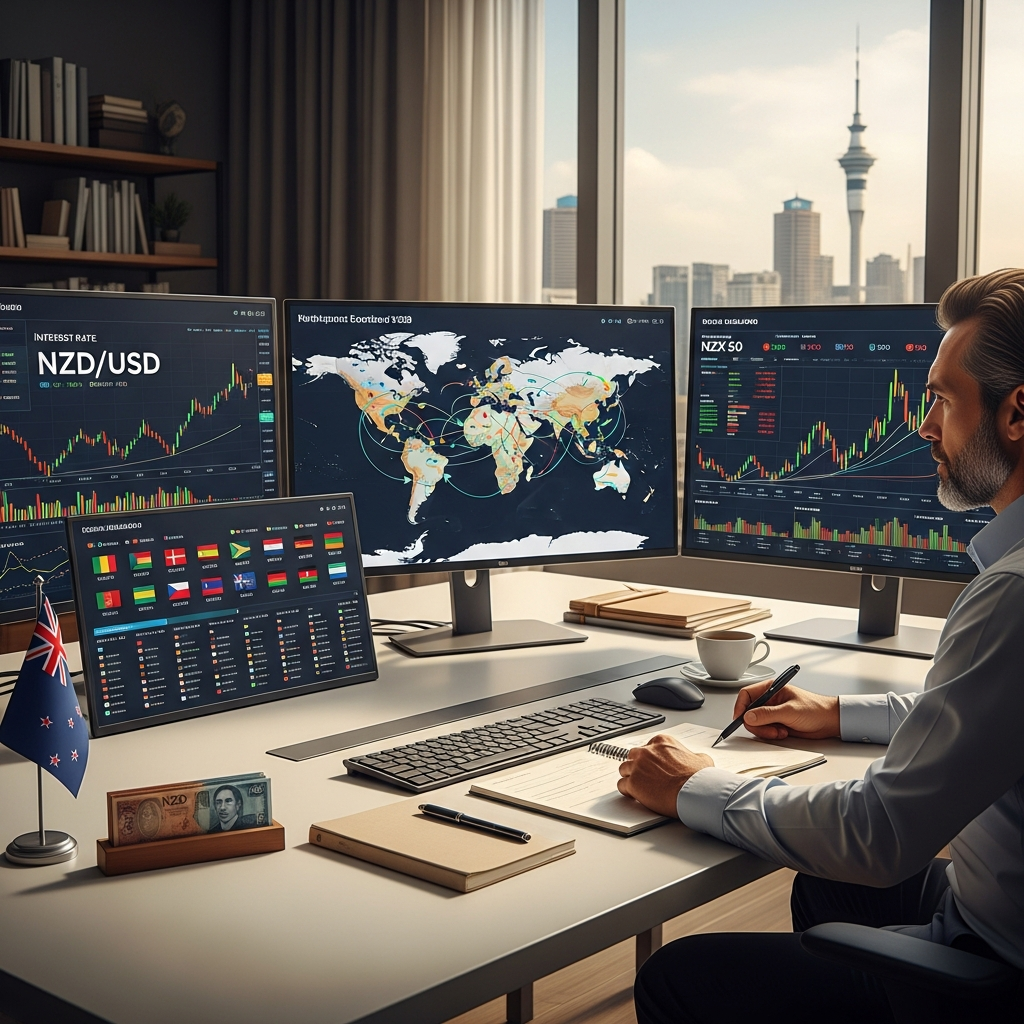
How global economic trends affect NZ investors.
New Zealand’s economy may seem isolated because of where it is, but it is a big part of the global financial system. For Kiwi investors, this means that changes in the economy that are happening thousands of miles away can have effects that are felt right here at home. It’s not just for professional analysts anymore to understand these global trends. Anyone who wants to build and protect their wealth in a world that is connected needs to know how to do this.
International events have a direct and often immediate effect on New Zealand’s investment landscape. For example, inflation rates that go up and down in the US and political tensions in Europe. These things can affect the value of the New Zealand dollar, the performance of the NZX 50, and the stability of the real estate market.
This guide will explain the most important global economic trends that are affecting the financial world right now. We’ll look at how these trends affect specific investment areas in New Zealand and give you useful tips on how to deal with the challenges of the modern market. By staying informed, you can make more strategic decisions, manage risk, and position your portfolio for long-term success.
Important Global Economic Trends to Keep an Eye On
The world economy is constantly in motion, but a few major trends are currently exerting the most pressure on markets globally, including New Zealand’s.
High interest rates and inflation that won’t go away
The rise in global inflation has been one of the most important stories since the pandemic. The US and Europe, two of the world’s biggest economies, have been dealing with rising prices, which has forced their central banks to raise interest rates quickly. Interest rates are still higher than they have been in more than ten years, even though inflation has begun to slow down in some areas.
This environment with high interest rates makes the world economy less active. It costs more for both businesses and consumers to borrow money, which can slow down spending and investment. This could mean that our trading partners in New Zealand have less demand for our exports. It also puts pressure on our own Reserve Bank to align its monetary policy, affecting mortgage rates and business loans domestically.
Geopolitical Instability
Geopolitical events make things very uncertain, like the ongoing war in Ukraine and trade tensions between major world powers. These things can mess up supply chains around the world, make prices for things like oil and grain go up, and make the market more volatile than usual.
For instance, if a major shipping lane is blocked, it can make imported goods more expensive for New Zealand, which can lead to inflation at home. Trade disputes can also hurt our main industries, since New Zealand’s economy depends a lot on exports like wine, meat, and dairy. Investors need to keep an eye on these situations because they can quickly change the risk level of some assets and sectors.
The Move Toward Sustainable Investing
There is a growing global movement towards Environmental, Social, and Governance (ESG) investing. More and more investors around the world want businesses to act in an ethical and sustainable way. This trend is changing the flow of capital, with a lot of money going to businesses that have strong ESG credentials.
This change brings both chances and risks for investors in New Zealand. A lot of money is going into companies in fields like clean technology and renewable energy. On the other hand, companies that don’t quickly adapt to the demands of sustainability may have a harder time getting funding and could hurt their reputation.
How global trends affect your investments in New Zealand
So, what do these big-picture trends mean for your investment portfolio in New Zealand?
The NZX Stock Market
The New Zealand stock market is very affected by how investors around the world feel. When big foreign markets like the S&P 500 go down because people are worried about a global recession, the NZX often does the same. Higher international interest rates can also make New Zealand stocks less attractive to foreign investors, who might find better returns in lower-risk assets like government bonds elsewhere. On the other hand, a positive global outlook can help the NZX by encouraging foreign investment and showing that there is strong demand for NZ exports.
The Real Estate Market
Interest rates in New Zealand have a big effect on the country’s real estate market. Global monetary policy also has an effect on these rates. When the US Federal Reserve raises rates, it makes borrowing more expensive around the world. For Kiwis, this could mean higher mortgage rates, which makes people less likely to buy homes and could cause property prices to drop or slow down. Trends in immigration, which are also linked to the global economy, are very important. For example, the value of New Zealand’s immigration business investment programs can change based on how wealth moves around the world.
Bonds and Fixed Interest
Changes in interest rates have a direct effect on bonds. When central banks around the world raise rates, newly issued bonds pay more interest, which makes existing bonds with lower yields less appealing. The price of older bonds on the market goes down because of this. For investors in New Zealand, this means that a global trend of rising rates can cause them to lose money on their existing bonds, even though the income they get from them stays the same.
The NZD, or New Zealand Dollar
The value of the Kiwi dollar is a good way to tell how the world sees the New Zealand economy. The value of the NZD, which is based on commodities, is often linked to the prices of our main exports around the world. When the world economy is growing quickly, these goods are in higher demand, and the NZD rises. The NZD usually goes down when people are worried about a global slowdown. This affects investors because it changes the value of their foreign investments when they are converted back to NZD and the price of goods that are brought into the country.
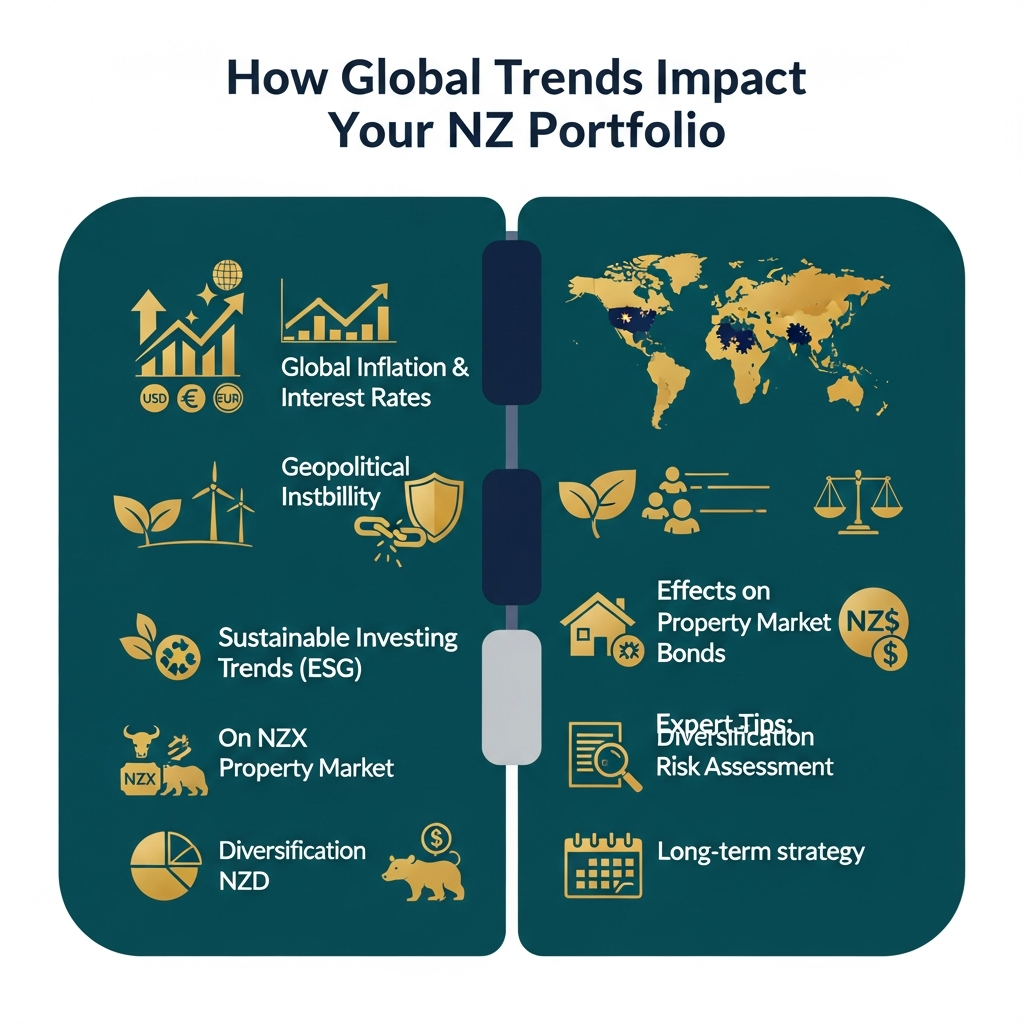
Expert Advice: How to Deal with the Current Climate
Financial experts in New Zealand stress the importance of being proactive and having a variety of options. “Kiwi investors can’t afford to have a ‘set and forget’ mindset anymore,” said one local strategist. Because the world is changing so quickly, you need to look over your portfolio often and be ready to make changes.
Another piece of advice that people often give is to not make decisions in a hurry based on dramatic headlines. A Wellington-based advisor says, “Volatility is the new normal.” “The most important thing is to have a strong, long-term plan that fits with your financial goals and how much risk you’re willing to take. A portfolio that is well-diversified is the best way to protect yourself from short-term market shocks. This feeling shows that even though New Zealand is very connected to the world’s economy and financial markets, good investment principles never change.
Tips for New Zealand Investors
Here are some useful strategies to think about, given the current situation:
- Spread your investments around the world: Don’t only invest in New Zealand. A portfolio that is spread out across many countries can help lower the risks that come with the economy of any one country. When one market isn’t doing well, investing in different regions and asset classes can help.
- Pay attention to quality: When things are uncertain, it’s smart to put your money into high-quality companies that have strong balance sheets, steady cash flow, and an edge over their competitors. These companies are better able to handle bad times in the economy.
- Stay up to date, but don’t get too much information: Stay on top of big economic trends, but don’t let the daily noise of the market get to you. Pick a few trustworthy places to get financial news and analysis, and then think about how your investments will affect you in the long run.
- Check Your Willingness to Take Risks: You might not always be okay with taking risks. Check your portfolio from time to time to make sure it still fits with your financial goals and how much risk you can handle.
- Think about getting professional help: It can be hard to get around in complicated global markets. A qualified financial advisor can help you create a strong investment plan and give you personalized advice.
Finding Your Way in a Global Market
Every investor in New Zealand is affected directly and clearly by the economic trends that are shaping our world today, such as inflation, interest rates, and changes in the geopolitical landscape. The first step to building a strong portfolio that can handle global market swings and take advantage of new opportunities is to understand this link.
You can deal with these problems well by staying informed, spreading out your investments, and focusing on quality over the long term. The most important thing is to stay flexible and take action, making sure your investment strategy keeps up with the changing world.