
How nimble small and medium-sized businesses turn problems into plans
For small and medium-sized businesses (SMEs), disruption isn’t just a storm that comes and goes; it’s the new normal. Changes in the economy, technology, and how people shop make the world a place where things are always changing. Larger companies may have a hard time changing direction, but small and medium-sized businesses (SMEs) have a unique advantage. Because they are so big, they can change quickly and turn possible threats into big strategic chances.
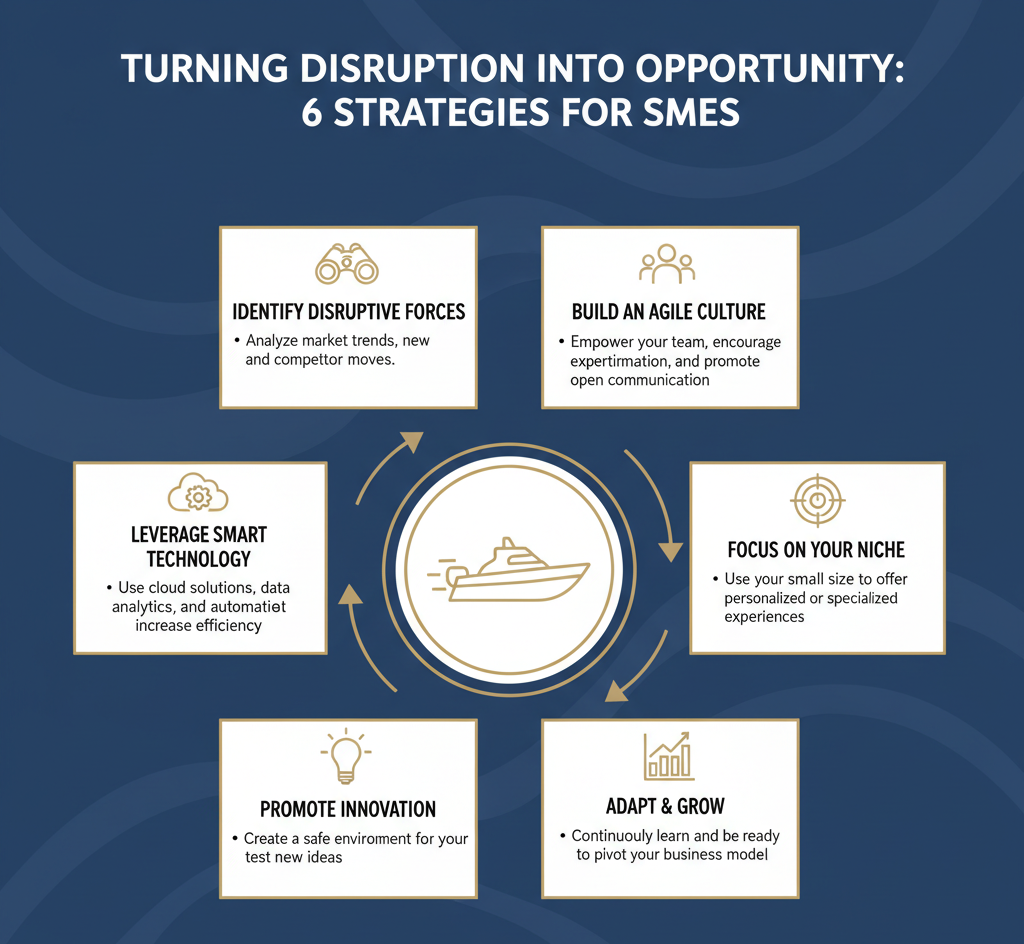
This article talks about how your business can take advantage of this flexibility. We will explain how to find disruptive forces, create a strong company culture, and use technology to your advantage. You can learn to not only survive but also thrive in uncertain times by using these key strategies. This will set your business up for long-term growth and success.
Finding Disruptive Forces
The first step in transforming disruption into a strategy is knowing what to look for. Competitors, technology, rules, or even changes in what customers want can all be disruptive. The challenge for many SMEs is spotting these changes early enough to react effectively.
Study of the Market and Competitors
Pay close attention to your market. What are your competitors doing, both directly and indirectly? Are new companies coming into the market with new ways of doing business? For instance, direct-to-consumer (DTC) brands changed the way people shop by offering personalized experiences and cutting out the middleman. Small and medium-sized businesses (SMEs) that paid attention to this change were able to change their own sales channels, possibly by making their online stores stronger or adding subscription services.
Regularly analyze your competitors’ strategies, pricing, and customer feedback. Listening to social media and reading market research reports are two tools that can give you useful information. The most important thing is to look beyond your direct competitors and think about threats from related fields.
Improvements in technology
One of the most powerful things that can change things is technology. The fast growth of AI, automation, and data analytics is changing whole industries. This can be both a threat and an opportunity for a small business. A small manufacturing business might be worried about big automated factories taking over. But it can also use cheap automation tools to make itself more efficient and compete on quality and customization.
Keep up with new technologies that are important to your field. Go to industry webinars, read tech magazines, and try out new tools. The size of a SME is assessed not just by its revenue or employee count but by its ability to adopt new technologies that punch above its weight.
Changing Customer Behavior
Your customers are always changing. Their needs, wants, and shopping habits change over time. For example, the pandemic sped up the move to online shopping and remote services by a huge amount. SMEs that quickly changed their business models to include contactless delivery, virtual consultations, or strong online stores had a big advantage.
Gather customer feedback through surveys, reviews, and direct conversations. Use this data to understand what your audience truly values. Are they looking for more ease of use? More long-lasting? A more tailored experience? By answering these questions, you can better understand what they need and change what you offer to meet those needs.
Creating a Culture of Flexibility
Your team has a big impact on how well you can handle problems. A culture of agility gives employees the power to be proactive, creative, and strong. It’s about making a place where people don’t fear change but see it as a chance to come up with new ideas.
Give your team power
In an agile company, decisions don’t always come from the top down. Give your workers the power to take charge and make choices in their areas of expertise. Team members are more likely to find problems and suggest solutions quickly when they feel trusted. This decentralized method speeds up responses and encourages people to take ownership.
Promote Trying New Things
Innovation requires a willingness to experiment and, sometimes, to fail. Make it safe for workers to try out new ideas without worrying about getting in trouble. Learn from your mistakes as much as you celebrate your successes. One way to put this into action is to use “pilot projects” or small tests to try out new ideas. This lowers the risk while still letting you collect data and learn quickly.
Encourage Open Communication
An agile culture is built on open and honest communication.Make sure that information flows freely throughout the organization at all levels. Regular team meetings, open forums, and collaborative tools can help keep everyone aligned and informed. Your team is more likely to support a change if they know why it is happening.
Using technology to be more flexible
Technology is the great equalizer for small and medium-sized businesses. The right tools can automate processes, provide crucial data, and enhance collaboration, allowing you to operate with the efficiency of a much larger company.
Solutions in the Cloud
Cloud computing lets small and medium-sized businesses use powerful software and infrastructure without having to spend a lot of money up front. You can access tools for accounting (like Xero), project management (like Asana), and customer relationship management (CRM, like HubSpot) from anywhere. These tools can help you run your business more smoothly. This kind of flexibility is important for working from home and growing or shrinking your business as needed.
Tools for Analyzing Data
You don’t need a group of data scientists to make choices based on data. Google Analytics and Microsoft Power BI are two examples of analytics tools that are easy to use. They can help you keep track of key performance indicators (KPIs), learn about your customers’ behavior, and spot trends. You can make smart decisions about everything from marketing campaigns to product development by looking at this data on a regular basis.
Automation
Doing the same thing over and over by hand can take a lot of time and energy from your team. Automation tools can do everything from sending out email marketing sequences to posting on social media and keeping track of your inventory. You can give your employees more time to work on strategic, high-value tasks that need human creativity and problem-solving by automating these tasks.
Case Studies: How Small and Medium-Sized Businesses Turn Problems into Opportunities
These principles work in real life, as shown by real-life examples.
Consider a local bookstore competing with Amazon. A quick-thinking bookstore might try to give customers a one-of-a-kind experience instead of trying to beat the e-commerce giant on price. It could hold author events, offer curated book subscription boxes, and build a strong social media community. It uses its local presence and personal touch to turn the threat of online shopping into an opportunity to become a beloved community center.
Another example is a small marketing agency that had to deal with problems caused by AI tools that make content. Instead of seeing AI as a threat to its services, the agency used these tools in its work. It used AI to do the first drafts and research, so its human writers could focus on strategy, creativity, and editing. As a result, it produced more, spent less, and provided clients with a faster service, which made it more competitive.
Use Disruption as a Way to Grow
Small and medium-sized businesses (SMEs) face a lot of problems these days, but they also have a lot of chances. By staying alert to disruptive forces, fostering a culture of agility, and leveraging the right technology, your business can transform threats into a powerful strategy for growth. When things go wrong, you have to come up with new ideas, change your mind about what you think is true, and find new ways to give your customers value.
Use this changing environment as a spark. Your ability to move quickly is your best quality. Use it to get ahead of bigger competitors and build a business that will last.