
How to Work as an Immigration Adviser in New Zealand
People from all over the world love to visit New Zealand because of its beautiful scenery and diverse culture. If you’re trying to move here, a licensed immigration adviser is a must-have guide. These experts do more than just fill out forms; they give people and families who want to move to New Zealand expert advice, support, and a clear path.
If you like helping people and are interested in immigration law, working as an immigration adviser in New Zealand could be a good choice. This guide goes into great detail about the steps you need to take, such as getting the right qualifications and learning about the profession’s ethical standards. We’ll talk about everything you need to do to become a licensed immigration adviser in New Zealand so you can decide if this is the right job for you.
The First Step: Meeting Educational Requirements
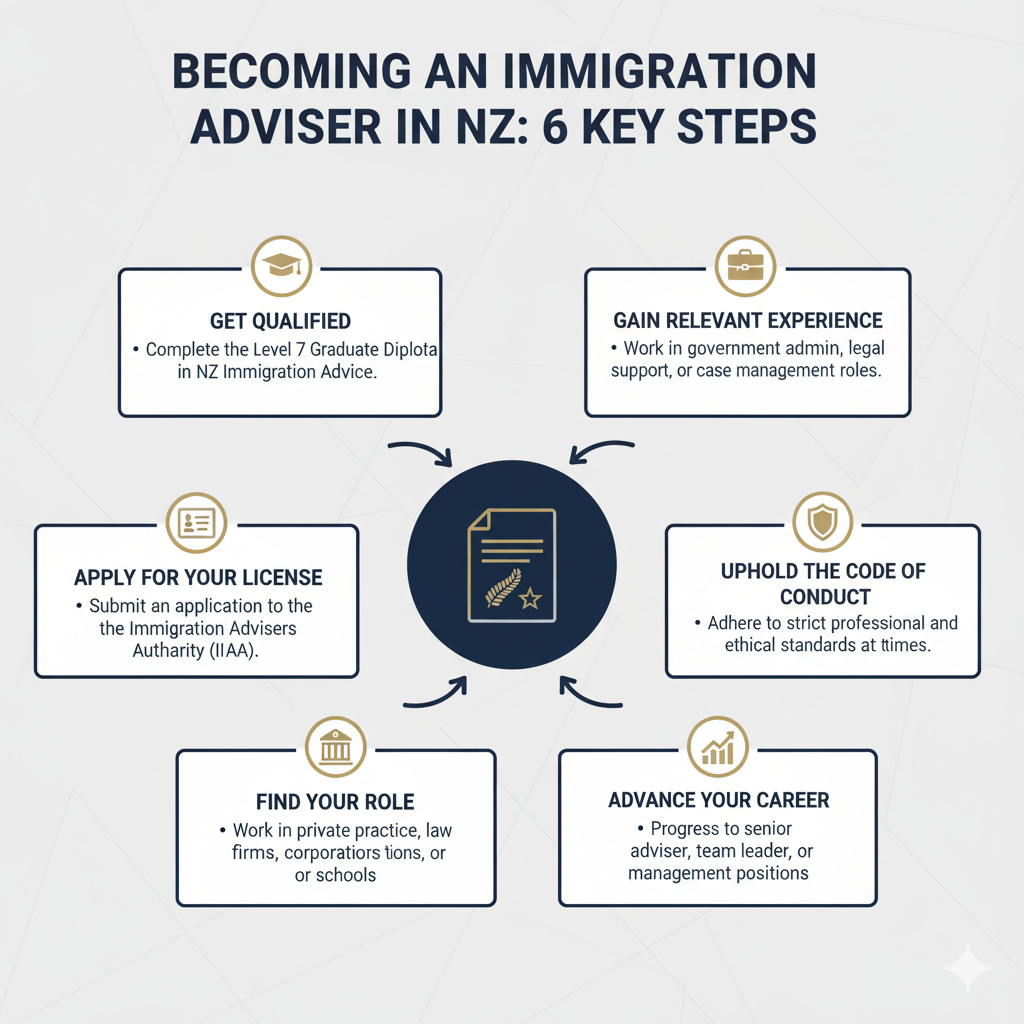
You need a licence from the Immigration Advisers Authority (IAA) to give immigration advice for New Zealand, unless you are exempt. The mandatory first step on this path is completing a specific qualification.
Level 7 Graduate Diploma in New Zealand Immigration Advice
The Graduate Diploma in New Zealand Immigration Advice (Level 7) is the most important educational requirement. The IAA only accepts this qualification for licensing purposes right now.
This one-year program will teach you everything you need to know and be able to do to be successful. The IAA and the Toi Ohomai Institute of Technology work together to offer it. Students from all over New Zealand and even other countries can take the course online.
The curriculum includes important topics, such as the laws that govern immigration to New Zealand.
- How to run a business and how to apply for a visa.
- Professional responsibilities and ethical conduct.
- How to handle client relationships in a good way.
Anyone who wants to work in immigration advice NZ and is not exempt must complete this graduate diploma.
The Licensing Process: How to Get Your IAA License
After you get your qualification, the next step is to ask the Immigration Advisers Authority (IAA) for a license. The IAA is in charge of making sure that advisers are qualified and act in a moral way.
Finish the Graduate Diploma: As mentioned, this is the foundational
- requirement. Before you can apply, you need to have finished the Level 7 diploma.
- Fill out an application: You will need to fill out an online application form on the IAA’s official website. This means giving your personal information, proof of your qualification, and proof that you are fit to practice.
- Pass a Competency Assessment: The IAA may ask you to take a competency test or have an interview to make sure you meet the standards. This helps prove that you have the real-world skills to give good advice.
- Get a Background Check: The IAA does background checks to make sure you are a good person and a “fit and proper” person to give immigration advice. This could include checks by the police.
- Pay the fee for the license: You have to pay a fee to apply for and renew your license every year.
- Get Your License: You will get a license if your application is accepted. Initially, you may be granted a provisional license, which requires you to work under the supervision of an experienced adviser for a period. You can get a full license after you finish your supervision period.
Following the Code of Conduct
All immigration advisers who are licensed must follow a strict Code of Conduct. This code sets the professional and moral standards for the field, making sure that customers get good advice and are treated fairly.
Some important rules in the Code of Conduct are:
- Being Honest and Trustworthy: Advisors must always tell the truth to clients and the IAA.
- Being professional means being clear in your communication, getting back to clients quickly, and keeping their information private.
- Giving Good Advice: Advisers need to know a lot about immigration law and policy and be able to apply it correctly to each client’s case.
- Managing Client Funds: There are strict rules about how to handle client money to keep their financial interests safe.
- Avoiding Conflicts of Interest: Advisers must act in the best interests of their clients at all times.
If an adviser doesn’t follow the Code of Conduct, they may face disciplinary action, such as having their license suspended or revoked.
Job Opportunities and Salary Expectations
In New Zealand, there is still a high demand for skilled immigration advisers. As people move around the world more, they still need expert help with visas and residency paths. This leads to a wide range of careers as immigration advisers in New Zealand.
Job Opportunities
Immigration advisers with a license can work in a number of places:
- Private Practice: A lot of advisers start their own businesses and work directly with clients. This gives you freedom, but you also need to be good at running a business.
- Immigration Law Firms: Many big law firms have special immigration teams where lawyers and advisers work together.
- Companies: Large businesses that hire a lot of migrant workers may have their own immigration advisers to help them with their visa applications.
- Schools: Universities and polytechnics often hire advisers to help students from other countries.
How Much Money Do Immigration Advisors Make?
The salary of an immigration adviser in New Zealand can change depending on where they work, how much experience they have, and what kind of job they have.
- Entry-Level/Provisional Advisers: People who are just starting out may make between $55,000 and $70,000 a year while they are being supervised.
- Advisers with experience: Advisers with a few years of experience and a full license can expect to make between $70,000 and $95,000.
- Senior Advisers/Business Owners: Advisers with a lot of experience or those who run their own successful practice can make more than $100,000 a year.
These numbers are just estimates and can change based on how much work there is to do and how hard it is.