
What NZ’s equity market is signalling right now: key trends for local investors.
The New Zealand stock market is a one-of-a-kind place for local investors. It may not be as big as global giants, but it gives you direct access to the businesses that are the backbone of the country’s economy. It’s important to know what the signals from our own backyard mean in order to make smart investment choices. What does the New Zealand stock exchange say, and what does the economic forecast for 2025 mean for investors?
To understand how the local market works, you need to do more than just keep an eye on the NZ Top 50 share prices. You also need to be able to read the small signs and bigger trends that affect performance. From sector-specific movements to the ripple effects of global events, these signals can help you position your portfolio for what lies ahead. This guide will explain the most recent trends, point out possible chances, and talk about the risks you should think about.
The NZ Equity Market is Changing Right Now
There are a few important things that are affecting the New Zealand stock market right now. The first step in making a good investment plan is to understand these trends.
Performance of the sector: a mixed bag
There is no single direction in which all sectors are moving. The energy and utilities sectors have been able to stay strong, often because they offer important services that are always needed. During times of uncertainty, companies in these fields can be appealing because they are defensive.
On the other hand, sectors that deal with consumer goods, like retail and hospitality, have had a hard time. High interest rates and rising living costs are making families cut back, which hurts company sales and, in turn, their stock prices. Technology stocks have a lot of room to grow, but they have also been very volatile, often because of changes in international markets, especially the US.
Factors that affect the economy
The Reserve Bank of New Zealand (RBNZ) and its decisions about monetary policy are a big part of what moves the market. The official cash rate (OCR) has a direct effect on the cost of borrowing for businesses and the interest rates on mortgages for consumers. A high-OCR environment, designed to curb inflation, can slow down economic growth and put pressure on company profits. Investors are closely watching for any signals from the RBNZ that might indicate a change in direction.
Inflation is still a big worry. It has shown signs of getting better, but it still has an impact on both business costs and consumer spending power. The forecast for the New Zealand economy in 2025 says that it will take a long time to recover, with growth expected to stay low before picking up.
Effects from around the world
New Zealand is a small, open economy that is greatly affected by events around the world. Geopolitical tensions, international trade relationships, and the economic health of major trading partners like China, Australia, and the US all have a direct impact. For instance, if China’s economy slows down, it could lower demand for New Zealand’s exports, which would hurt businesses in the primary industries sector. Changes in how investors around the world feel can also cause money to flow in or out of the New Zealand stock exchange, which can change prices and liquidity.
What the Experts Are Saying: What the Analysts Are Saying
“Market signaling” is a term that financial experts use to explain what companies and markets do. This is based on signaling theory finance, which says that a company’s choices, such as raising dividends or buying back shares, send a strong message to investors about what will happen in the future.
For example, if a company keeps raising its dividend, it shows that it is sure of its future profits. Conversely, a cut in dividends might suggest trouble ahead. Analysts say that right now, people are feeling cautious but things are slowly getting better. The NZ share market graph has gone up and down, but the main message is that it is strong.
Experts suggest that while the overall New Zealand stock exchange index might appear flat, there are pockets of strength. Companies with strong balance sheets, steady cash flow, and a clear edge over their competitors are becoming more important. These are the businesses that are most likely to survive tough times and do well in the long run.
Possible places to invest in 2025
Based on what is happening right now, where do you think the best chances are? It takes a lot of thought to figure out which NZ shares to buy in 2025, but some patterns are starting to show up.
The Change to Green
New Zealand’s dedication to sustainability and renewable energy is a big chance for the long term. Businesses that make renewable energy, use green technology, or grow crops in a way that doesn’t hurt the environment are likely to grow. As government policies and consumer preferences move toward sustainability, these businesses are likely to get more investment.
Care for the Elderly and Healthcare
With an aging population, the demand for healthcare services and retirement living is set to increase. Companies in the healthcare field, such as retirement village operators and makers of medical devices, have the potential for defensive growth. Their services are not optional, so demand stays steady even when the economy is bad.
Stocks with High-Quality Dividends
In a world where things are uncertain, companies that pay reliable dividends can help keep a portfolio stable and provide a steady stream of income. Look for businesses with a long history of dividend payments and a strong financial position that can sustain those payments. Utilities, infrastructure, and established industrial sectors are where you can usually find these. More experienced investors might also think about an equity market neutral strategy, which aims to make money from both rising and falling prices while avoiding risk in the broader market.
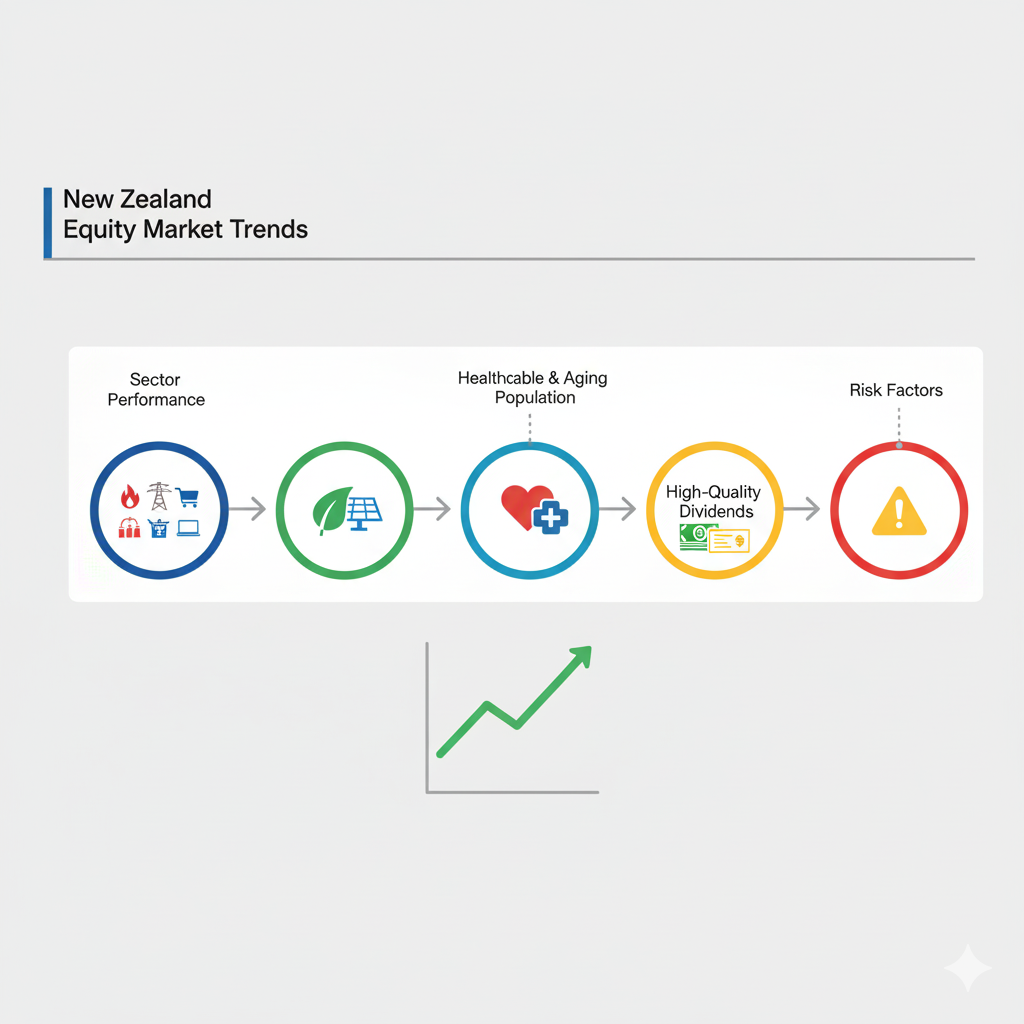
Key Risk Factors to Consider
Every investment has risks, and it’s important to know what problems the NZ equity market is facing.
- High interest rates and inflation that won’t go away: The RBNZ may keep interest rates higher for longer if inflation stays high. This would continue to dampen economic activity and could lead to further downward pressure on share prices.
- Slowdown in the world economy: A recession in important overseas markets that lasts longer than expected would have an effect on New Zealand’s export-driven economy, which would hurt many of the biggest companies on the NZX.
- Changes in rules: Changes in government policy, particularly around environmental regulations or taxation, can have a significant impact on specific sectors. It’s important to stay up to date on possible changes to regulations.
Investors choose capital and equity markets for a number of reasons, such as the chance to make money and grow over time. But knowing these risks is the most important thing you can do to protect your money.
Charting Your Course in the NZ Market
The New Zealand stock market is sending out a mix of signals right now. There are clear chances for smart investors, even though the economy is facing some problems and the world is uncertain. The key is to ignore the short-term noise and focus on companies with strong fundamentals and a clear path to growth in the future.
Building a resilient portfolio involves diversification, a long-term perspective, and a deep understanding of the forces at play. You can feel more sure about how to deal with the current situation if you pay attention to sector performance, economic indicators, and expert opinions.