Sustainable Marketing Practices: How New Zealand Brands are Leading the Way
For a long time, New Zealand has worked hard to look clean, green, and forward-thinking. This reputation for being environmentally friendly isn’t just a tourism slogan; it’s becoming more and more important to how Kiwi businesses do business and talk to their customers. At the heart of sustainable marketing is the move toward purpose-driven business.
This guide talks about the ideas behind sustainable marketing, shows how New Zealand brands are successfully putting them into practice, and gives you ideas for how to do the same with your own business. You can build a stronger brand, connect with environmentally conscious consumers, and help make the world a healthier place by making sure your marketing is in line with real sustainability.
What does “sustainable marketing” mean?
Sustainable marketing is a way of doing business that puts social and environmental responsibility first at every stage of the marketing process. It goes beyond just marketing “green” products. Instead, it means creating, communicating, and delivering value to customers in a way that protects and grows both human and natural capital.
Sustainable marketing, on the other hand, looks at the long term instead of the short term, like traditional marketing does. It looks at the whole lifecycle of a good or service, from getting it and making it to throwing it away and recycling it.
Some of the main ideas are:
- Transparency: Being open about your products, processes, and effects is what transparency means.
- Consumer Value: Selling goods that are good for the environment, high-quality, and good for the customer.
- Social Responsibility: making sure that workers are treated fairly and helping the community in a good way.
- Taking care of the environment means using less carbon and encouraging conservation.
Businesses can earn trust and loyalty from a growing group of people who care a lot about sustainability by following these rules.
Why New Zealand is a Leader in Eco-Friendly Ideas
New Zealand’s one-of-a-kind culture and politics make it a great place for sustainable business practices to grow. The country’s identity is based on its commitment to environmentalism, which is backed by government policy. This makes it a good place for green marketing to grow.
The Māori idea of kaitiakitanga, which means “guardianship and protection of the environment,” is one of the most important parts. This way of looking at the world makes people feel a strong duty to protect the land, water, and other natural resources for future generations. This cultural value shapes public attitudes and business ethics, encouraging a holistic approach to commerce.
Also, New Zealand is known for having strong environmental policies and a strong focus on conservation. This national commitment makes people more aware of how important sustainability is. People in New Zealand care more about environmental issues, so they are more likely to buy from brands that show they care about the environment. Studies show over and over again that a lot of people care about sustainability and are willing to change the way they buy things to support brands that share their values.
Kiwi Brands Making the Way
A number of New Zealand businesses have become global models for how to make sustainability a key part of their marketing strategy.
Allbirds: The Strength of Natural Materials
Allbirds, the footwear company famous for its wool runners, built its entire brand around sustainability. Their marketing has always been based on the creative use of natural, renewable materials like merino wool and eucalyptus tree fibers.
Their marketing messages focus on comfort, ease of use, and a small impact on the environment. They don’t use flashy ads; instead, they tell stories about how their materials are good for the environment and how they want to be a B Corp.
Impact: This method has really struck a chord with people who are sick of fake materials and fast fashion. Allbirds has built a loyal community that cares about both style and the environment by being open about their supply chain and carbon footprint.
Ecostore: Making everyday things clear
Ecostore was one of the first companies to make household and personal care products that are better for people and the environment. Education and openness are at the heart of their marketing plan.
Strategy: Ecostore tells you everything about their ingredients, including what each one does and why it’s a safer choice. They use sugarcane plastic for their packaging, which can be used again and again, and they encourage people to refill to cut down on waste.
Impact: Ecostore has earned a lot of trust by making product labels easier to understand and giving customers the power to make healthier choices. Their success shows that people care about sustainability, even when they buy things like soap and laundry detergent.
Challenges and Opportunities for NZ Brands
While New Zealand provides fertile ground for sustainable marketing, businesses still face challenges. Greenwashing, which is when companies make false claims about how environmentally friendly they are, is one of the biggest problems. This erodes consumer trust and makes it harder for genuinely sustainable brands to stand out.
The cost is another problem. It can be more expensive for small businesses to find sustainable materials and use ethical production methods. To justify a higher price, it’s important to effectively communicate this added value.
But there are a lot of chances. There is still a lot of demand around the world for eco-friendly goods. New Zealand brands can easily meet this demand by using their country’s reputation for being environmentally friendly. There is a lot of room for new ideas in areas like carbon-neutral products, regenerative agriculture, and circular economy models. Brands that can honestly tell their story about being environmentally friendly have a big edge over their competitors.
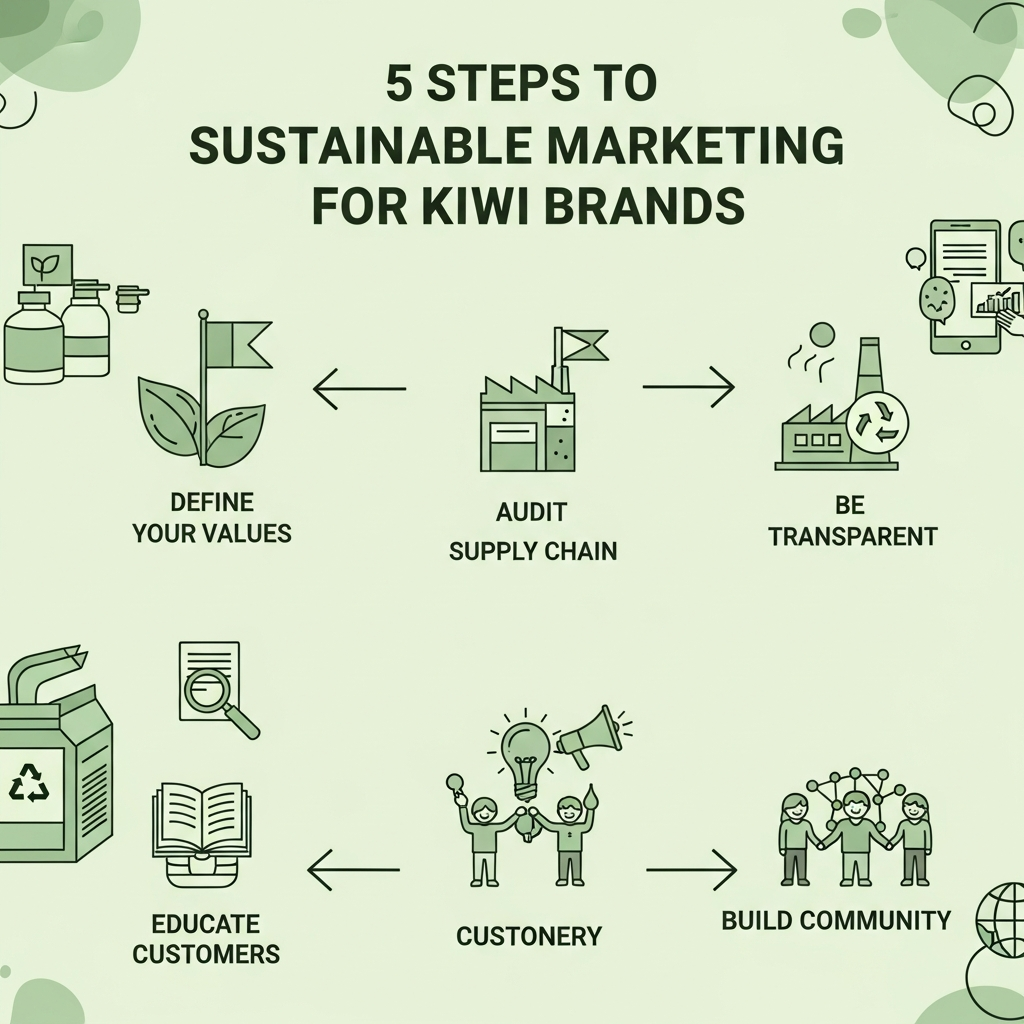
Five Steps to Start Using Sustainable Marketing
Do you want to make your marketing more eco-friendly? Here are five things you can do to help your business:
- Say What You Want to Do: Begin by figuring out what your most important values are. What good things do you want your business to do besides make money? Your goals for sustainability should be real and part of your overall business plan.
- Check Your Supply Chain: Check out everything about your business, from the raw materials to the packaging. Are there ways to switch to suppliers that are better for the environment, make less waste, or lower your carbon footprint?
- Be completely open: The most important part of long-term marketing is being honest. Be honest about how you do things, even the parts that still need work. Tell your story through your website, social media, and packaging.
- Don’t just sell; teach. Make content that helps your customers see why being green is important. Tell people what your products can do for them, give them tips on how to live a more eco-friendly life, and talk about how their purchase can help the environment.
- Make a Community: Get to know your customers and build a community around the things you all believe in. Encourage people to make their own content, hold events, and work with other eco-friendly groups to get your message out there.