

The Bottom of the Cycle? What the OCR Cut Means for 2026
The Reserve Bank of New Zealand (RBNZ) recently cut the Official Cash Rate (OCR), which is a big change in the country’s monetary policy. This action has caused a lot of concern in the business and investment communities, leaving many people wondering what it means for the future. Is this the bottom of the interest rate cycle, and how will it shape New Zealand’s economic landscape leading into 2026?
This post will talk about what the recent OCR cut means. We will explain what the OCR is, look at what experts think about the RBNZ’s decision, and talk about how different sectors might be affected. By the end, you’ll have a better idea of what this change means for your business and some useful tips for dealing with the changing financial world.
What does the Official Cash Rate (OCR) mean?
The Reserve Bank of New Zealand uses the Official Cash Rate as its main tool to control inflation and affect economic activity. The OCR is the interest rate at which commercial banks can borrow from and lend to the RBNZ. It is set eight times a year. This rate has a direct effect on the wholesale interest rates that banks charge each other. This, in turn, affects the interest rates that banks offer to people and businesses for mortgages, loans, and savings accounts.
In March 1999, New Zealand switched to the OCR from a more complicated system for controlling money. The goal of its introduction was to make the process of carrying out monetary policy clearer and more open. The RBNZ raises the OCR when it wants to slow down the economy and keep prices from rising. This makes it more expensive to borrow money, which encourages people to save and spend less. On the other hand, when the economy needs a boost, the RBNZ lowers the OCR to make borrowing cheaper. This encourages people to spend and invest.
What Happens When the OCR Goes Down?
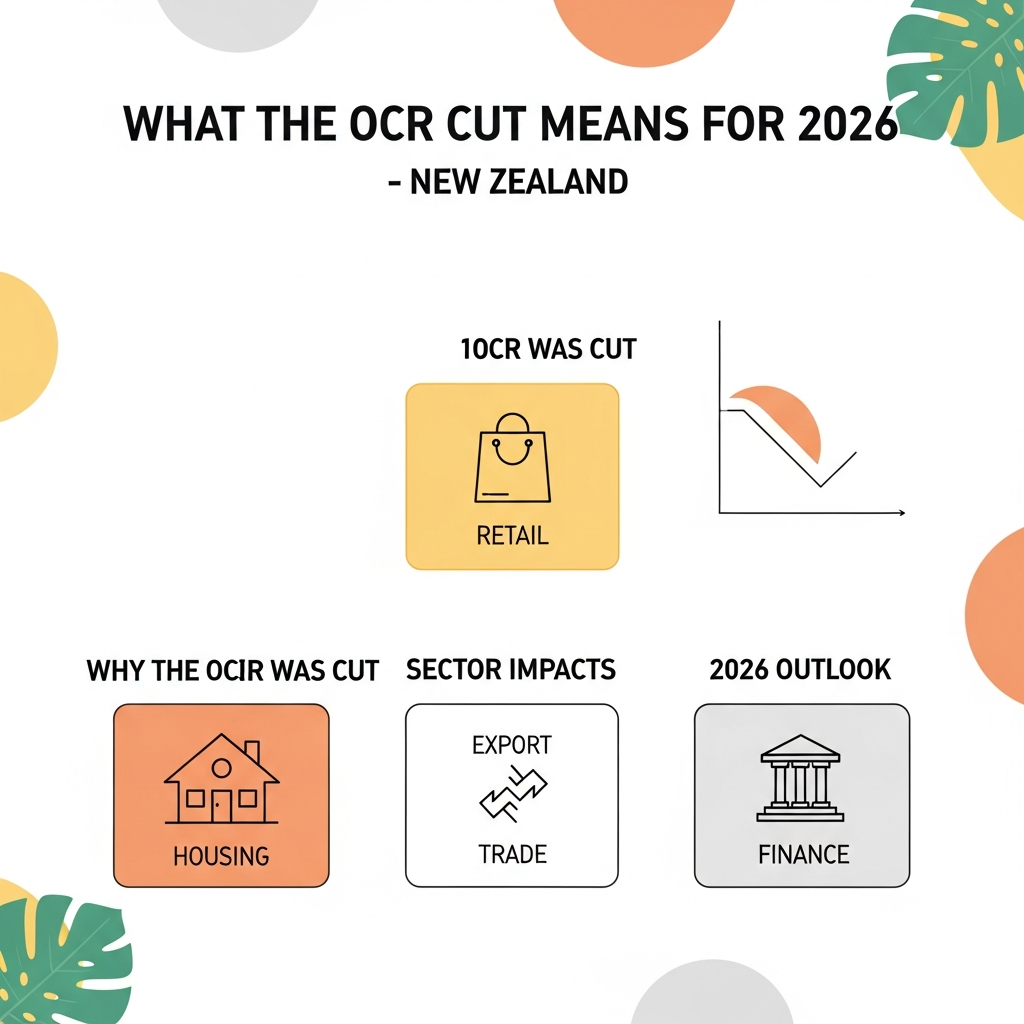
An OCR cut is a way to “loosen” monetary policy. The first thing that happens is that it costs commercial banks less to borrow money. Most of the time, these savings are passed on to customers as lower interest rates on business loans and variable-rate mortgages. This can lead to increased consumer spending, as households have more disposable income, and greater business investment, as the cost of financing projects decreases. But for people who save money, an OCR cut usually means lower interest rates on savings accounts and term deposits.
The Recent OCR Cut and What It Means for 2026
The RBNZ’s decision to lower the OCR shows how they feel about the current state of the economy. The central bank is now more focused on encouraging activity because inflation is starting to ease and economic growth is slowing down. There has been a lot of talk about the New Zealand interest rate forecast for the next few years since this happened.
A lot of economists think that this cut means the end of the cycle of raising interest rates that started because of inflation after the pandemic. The RBNZ wants to “soft land” the economy by acting now. This means slowing it down just enough to keep inflation in check without causing a deep recession. The most important question now is whether this is just a one-time change or the start of a series of cuts that will last until 2026.
What Experts Think About the Financial Future
There is a lot of disagreement among financial experts and analysts about what will happen in the future.
Some people think that this OCR cut is a way to get ahead of a possible global economic slowdown. Supporters of this view think that more cuts will happen in 2025, which will bring interest rates down to a new low by 2026. They say that this will be necessary to keep people working and boost business confidence.
A different group of experts is more careful. They warn that cutting the OCR too quickly could reignite inflationary pressures, forcing the RBNZ to reverse course and raise rates again. These analysts say that even with the recent cut, we should expect interest rates to stay “higher for longer” because of ongoing inflation at home and a tight job market. They think that the OCR might stay the same for a while before any other big changes happen.
But most people agree that the next two years will be marked by a lot of uncertainty. Instead of betting on one outcome, businesses should get ready for a range of possible interest rate scenarios.

What will happen to different sectors?
The change in the OCR will have different effects on different parts of the New Zealand economy.
Building and Real Estate
Lower interest rates are usually good for the real estate market. Lower mortgage rates can make people want to buy houses more, which could cause prices to go back up. This could, in turn, boost the construction industry as builders feel more confident about starting new projects. But the recovery may not be as strong as it could be because of high prices and tight credit.
Retail and Hospitality
More money spent by customers will help the retail and hospitality industries. People will have more money to spend on things they want and need because their mortgage payments will be lower. This increase in demand could help businesses that have been having a hard time with rising costs and low consumer confidence.
Farming and Exports
For exporters, a lower OCR can be a double-edged sword. Lower interest rates in New Zealand can encourage people to invest there, but they can also make the New Zealand dollar weaker. The agricultural sector benefits greatly from a lower dollar because it makes our exports cheaper and more competitive on the global market. But it also makes imported goods and machines more expensive.
Money Services
Banks and other financial institutions will have to change how they lend and take deposits. Lower rates may make people want to borrow money, but they also cut into banks’ net interest margins, which is the difference between what they make on loans and what they pay on deposits.
How to Plan for Your Business in the New Financial World
Adapting to the new interest rate environment requires careful planning. Here are some strategies for your business to consider:
Review Your Debt Structure
If you have business loans with variable interest rates, now is a good time to review them. You might be able to get a lower fixed rate to protect your business from rate hikes in the future. On the other hand, if you think rates will go down even more, keeping a variable rate could save you money in the short term.
Manage Your Cash Flow
It’s very important to keep a healthy cash flow because the economy is uncertain. Make sure you’re making the most of your working capital, keeping track of your inventory well, and making your credit control processes stricter. Having a lot of cash on hand will give you the freedom to deal with problems and take advantage of opportunities as they come up.
Look into ways to invest
If borrowing costs are lower, it might be a good time to invest in growth. This could mean buying new tools, growing your business, or spending money on technology to make things run more smoothly. Do a full cost-benefit analysis to make sure that any new investment will pay off.
Pay attention to value
No matter what the economy is like, customers will always look for value. Focus on quality, great customer service, and new ideas to set your business apart from the rest. A loyal customer base is your best defense against economic volatility.
What to Do Next in a Changing Economy
The recent OCR cut is a turning point for the economy of New Zealand. It could help borrowers and encourage spending, but the road to 2026 is still unclear. Your business can not only survive the uncertainty, but also set itself up for long-term success by understanding what this change means and taking proactive steps.
It can be hard to deal with these changes in finances. The Business Kiwi team is here to help if you need expert advice that is specific to your business’s needs. Set up a meeting with us to make a strong financial plan that fits with your goals.





![How to Start an Ecommerce Business in NZ [2025 Guide]](https://businesskiwi.com/wp-content/uploads/2025/11/How-to-Start-an-Ecommerce-Business-in-NZ-644-300x200.png)