How do i report someone to immigration NZ
The government agency in charge of New Zealand’s immigration system is called Immigration New Zealand (INZ). This includes everything from checking visa applications to making sure that everyone who lives and works in New Zealand is doing so legally. Public vigilance is an important part of keeping this system honest. When individuals or businesses fail to comply with immigration laws, it can undermine the fairness of the system and potentially exploit vulnerable people.
It’s a big deal to report people who you think are breaking immigration laws, but it’s necessary to make sure the system works for everyone. This guide will show you how to report someone to Immigration NZ, including when, why, and how to do it. We will cover the types of violations you can report, the information you need to provide, and what happens after a report is filed. If you ever find yourself in a situation that needs to be reported, knowing this process can help you act with confidence and responsibility.
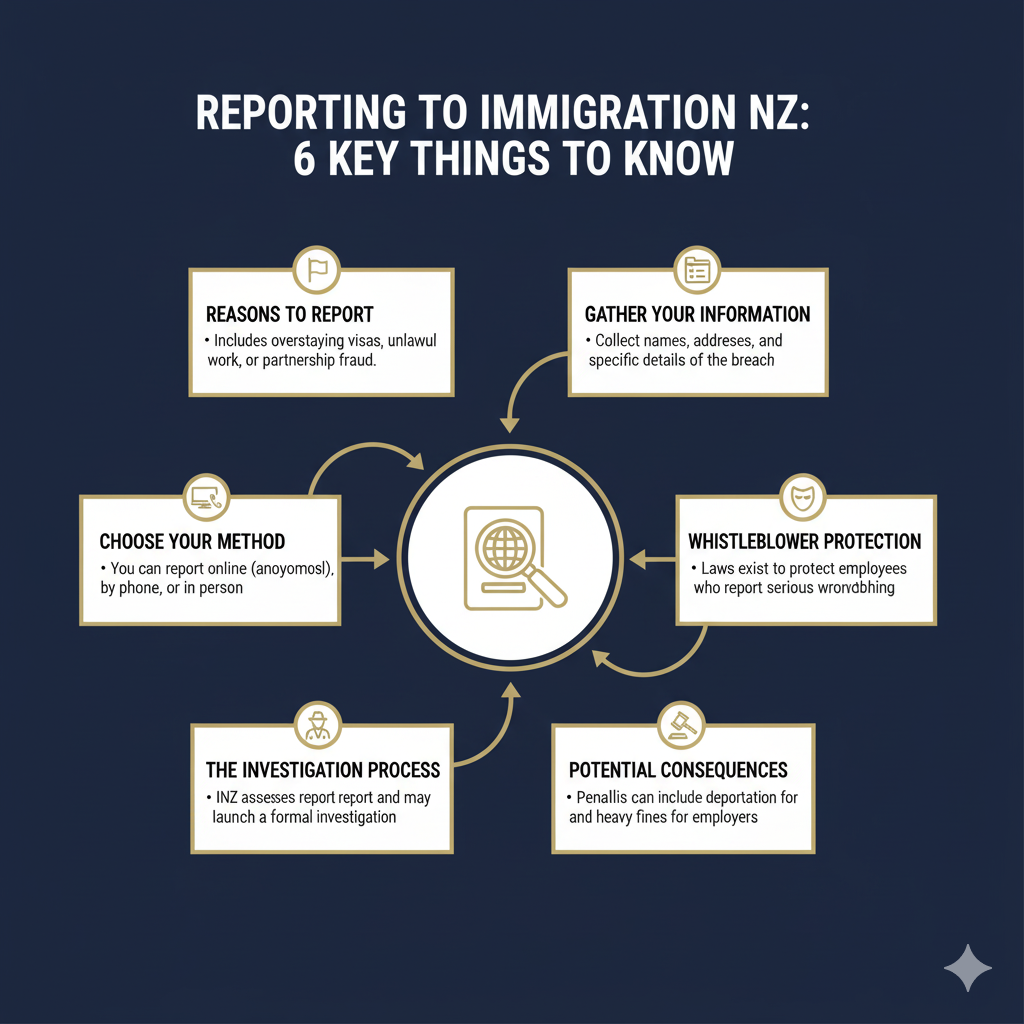
Reasons to Tell Immigration NZ
It’s important to know what breaks immigration law. Reporting should be based on credible information, not personal disputes or suspicions without basis. Here are the most common reasons people report others to Immigration New Zealand.
Breaking the rules of your visa
There are many ways that someone could be breaking the rules of their visa. This is one of the most common reasons for a report.
- Staying too long on a visa: A person stays in New Zealand even though their visa has run out. Every visa has a strict end date, and it is against the law to stay longer than that without a valid new visa.
- Breaching Visa Conditions: There are certain rules that come with every visa. For instance, a student visa holder might be working more hours than they are allowed to, or a visitor visa holder might be working, which is usually not allowed. Other conditions could say where a person can live or what kind of work they can do.
Unlawful Work
Both employers and employees can be in breach of immigration law regarding employment. INZ is very interested in this because of the risk of exploitation.
- Hiring Someone Who Doesn’t Have the Right to Work: A person who is not a New Zealand citizen or resident or does not have a valid work visa is hired by an employer. This is a big deal for the employer.
- Taking advantage of migrant workers: This could mean paying workers less than the minimum wage, making them work too many hours, taking their passports, or making the workplace unsafe. This is a very important area if you need to report an employer in New Zealand.
Immigration fraud is suspected
Giving INZ false or misleading information to get an immigration advantage is called immigration fraud. This can happen in a lot of different ways, and it is taken very seriously.
- Fraudulent Documents: Submitting fake passports, qualifications, bank statements, or other documents as part of a visa application.
- Partnership Fraud: A person enters into a fake relationship with a New Zealand citizen or resident just to get a visa. This undermines the integrity of partnership-based visa categories.
- Incorrect information on applications: On a visa application, lying about your criminal record, qualifications, work history, or other personal information.
A Step-by-Step Guide to the Reporting Process
If you know about a possible immigration violation, it’s important to know how to report it correctly. There are clear ways for the public to give information to INZ.
Step 1: Get the information you need
Gather as much specific and factual information as you can before writing a report. Vague reports are difficult for an immigration officer in NZ to investigate. The more information you can give, the better chance the investigation will be successful. In the next section, we will go over the details that need to be included.
Step 2: Pick how you want to report
You have a few options for submitting your report to Immigration New Zealand.
- Form on the Internet: The best way to do this is to fill out the official online reporting form on the INZ website. This form helps you fill out the required information and lets you report someone to immigration online without giving your name.
- You can call the immigration helpline. A staff member will take down the details of your report over the phone.
- In Person: You can visit an INZ office to make a report, but the online form is generally preferred as it ensures all necessary information is captured systematically.
Step 3: Choose whether or not you want to be anonymous
“How do I report someone to immigration without them knowing?” is a common question. You can report things to INZ without giving them your personal information. You don’t have to fill out your name or contact information when you use the online form. An anonymous report is still useful, but giving your contact information can help INZ if they need to ask more questions to make sure they understand the information.
Step 4: Submit Your Report
Fill out the form or communicate the details as clearly and accurately as possible. Stay with what you know. Don’t use emotional language or guesswork. Your report will be put into the INZ system for review once it has been sent in.
What Should Your Report Have in It?
Include as much of the following information as you can to give INZ the best chance of acting on your report.
Details of the Person Being Reported
- Full Name: This includes any nicknames or names you have used in the past.
- Date of Birth or Approximate Age: This helps INZ find the right person.
- Nationality: The country where the person was born.
- Physical Address: Where the person is currently living.
- Workplace Address: The name and address of the business where they work.
- Contact Information: Any phone numbers or email addresses you may know.
- Details about the vehicle: A description of their car, such as the license plate number, can help find them.
Details of the Alleged Breach
- What kind of violation? Clearly say what you think the breach is, like overstaying, working illegally, or fraud in a partnership.
- Dates and times: When did the crime happen? Is it still going on?
- Location: Where is the crime happening?
- Do you have any documents, pictures, screenshots of conversations, or the names of other people who saw what happened? In your report, talk about this proof. You usually can’t upload evidence directly to the online form, but it’s still important to say that it exists.
Giving these details helps INZ put together a case and do a focused investigation.
Whistleblowers are protected.
It can be scary to report something, especially if it has to do with your boss or someone you know. New Zealand law offers protections for “whistleblowers”—individuals who report serious wrongdoing in their workplace.
The Protected Disclosures (Protection of Whistleblowers) Act 2022 provides a framework to protect employees who report serious misconduct. This could mean protection from retaliation, like being fired or punished for reporting something. These protections may apply to you if you are telling on your boss for taking advantage of migrant workers or doing other illegal things. To fully understand your rights in this situation, it is best to get legal advice from someone who is not connected to the case.
The INZ Investigation Process: What Happens Next?
After you file a report, it goes through a formal process within Immigration New Zealand.
- An immigration officer will first look over your report to see if it is credible and if there is enough information to move forward. Reports that are unclear, don’t have enough details, or seem to be meant to hurt someone may not be looked into any further.
- Collecting Information: INZ may start gathering more information if the report is believed to be true. This could mean looking through their own databases, watching them, or asking questions in a quiet way.
- Investigation: A formal investigation might start. This might mean going to the work site and talking to the person who was reported, their boss, and other people who are important.
- Action: If the investigation confirms a breach of immigration law, INZ will take appropriate action.
Please keep in mind that INZ won’t be able to give you updates or the results of the investigation, even if you gave them your contact information. This is because of privacy laws. This is to keep everyone’s privacy safe. You have to believe that the information has been received and will be used correctly.
What happens if you break immigration laws?
If you break New Zealand’s immigration laws, you could face serious penalties that depend on the type of crime you commit.
- For Individuals: If someone is found to be in New Zealand without permission, they may get a notice to leave the country and be forced to do so. They might also not be allowed to come back to New Zealand for a set amount of time. If someone commits serious fraud, they can be charged with a crime.
- For Employers: If an employer hires a migrant worker illegally or takes advantage of them, they could face big fines and even jail time. They might not be able to hire migrant workers again in the future. The government has recently increased penalties for employer-related offenses to deter exploitation.
Examples of Immigration Violations in Real Life
Anonymized case studies help show how reporting affects people in the real world.
- Case Study 1: Fraud in a Partnership
- Someone in the public told the police about a strange relationship in which a New Zealander paid a foreign national to sponsor them for a partnership visa. The reporter saw that the couple didn’t live together and didn’t seem to be in a real relationship. An INZ investigation, which included interviews and surveillance, showed that the partnership was not real. The foreign national’s visa was revoked, and they were sent back to their home country.
- Case Study 2: Taking Advantage of Employees
- An employee told the police that their boss was making migrant workers work 70 hours a week for less than minimum wage and threatening to deport them if they complained. INZ and the Labour Inspectorate conducted a joint investigation. The employer was prosecuted, fined heavily, and banned from hiring migrant workers. Those employees who were affected were helped to find new, legal jobs.
These cases show how important public reports are for finding immigration frauds in New Zealand and keeping weak people safe.
Help and Resources
There are a lot of places where you can get help or make a report if you need it.
- Immigration New Zealand Website: The official immigration. government.new zealand site has the online reporting form and lots of information about how to follow the rules.
- Community Law Centre: Give free legal advice to people who can’t pay for a lawyer.
- Citizens Advice Bureau: Provides free, confidential information and support on a wide range of issues, including immigration.
- New Zealand Employment: If you are worried about workers being taken advantage of, you should also get in touch with them.