How to become an immigration officer in NZ
Being an immigration officer in New Zealand is a great way to help keep the country safe and make it more prosperous. You need to be honest, have good analytical skills, and know a lot about the law to do this job. This path might be right for you if you want a job that is both hard and rewarding, where you can make a real difference in people’s lives and the future of the country.
This guide will show you step by step how to become an immigration officer in New Zealand. We will talk about everything from the basic duties of the job to the specific skills and education needed. You’ll learn how to get relevant experience, how to fill out an application, and what career advancement opportunities are available to you. By the end of this post, you’ll know exactly what steps to take to get a job with Immigration New Zealand.
Knowing the Role and Duties
An immigration officer is a public servant who makes sure that New Zealand’s immigration laws are followed and enforced. Their main job is to look over applications from people who want to come to or stay in the country. This involves making crucial decisions on visas, residency permits, and citizenship applications.
A New Zealand immigration officer has a lot of different tasks to do every day, such as:
- Looking at Applications: Carefully checking visa applications to make sure they follow all the rules and laws. This means checking the documents, looking for false information, and making sure the applicant is qualified.
- Interviews: Talking to applicants to get more information, clear up any confusion, and check their credibility and intentions.
- Making Decisions: Approving or denying applications after carefully looking at all the evidence and following immigration law.
- Enforcing Compliance: Looking into possible violations of visa conditions, like staying too long or working without permission. This could mean going to the site and working with other agencies.
- Giving Information: Answering questions from the public, employers, and immigration advisors about rules and policies.
- Keeping Up: Keeping current with frequent changes in immigration legislation, policies, and procedures.
This role requires a high level of responsibility, as decisions can have life-changing consequences for individuals and families.
Requirements and qualifications for education
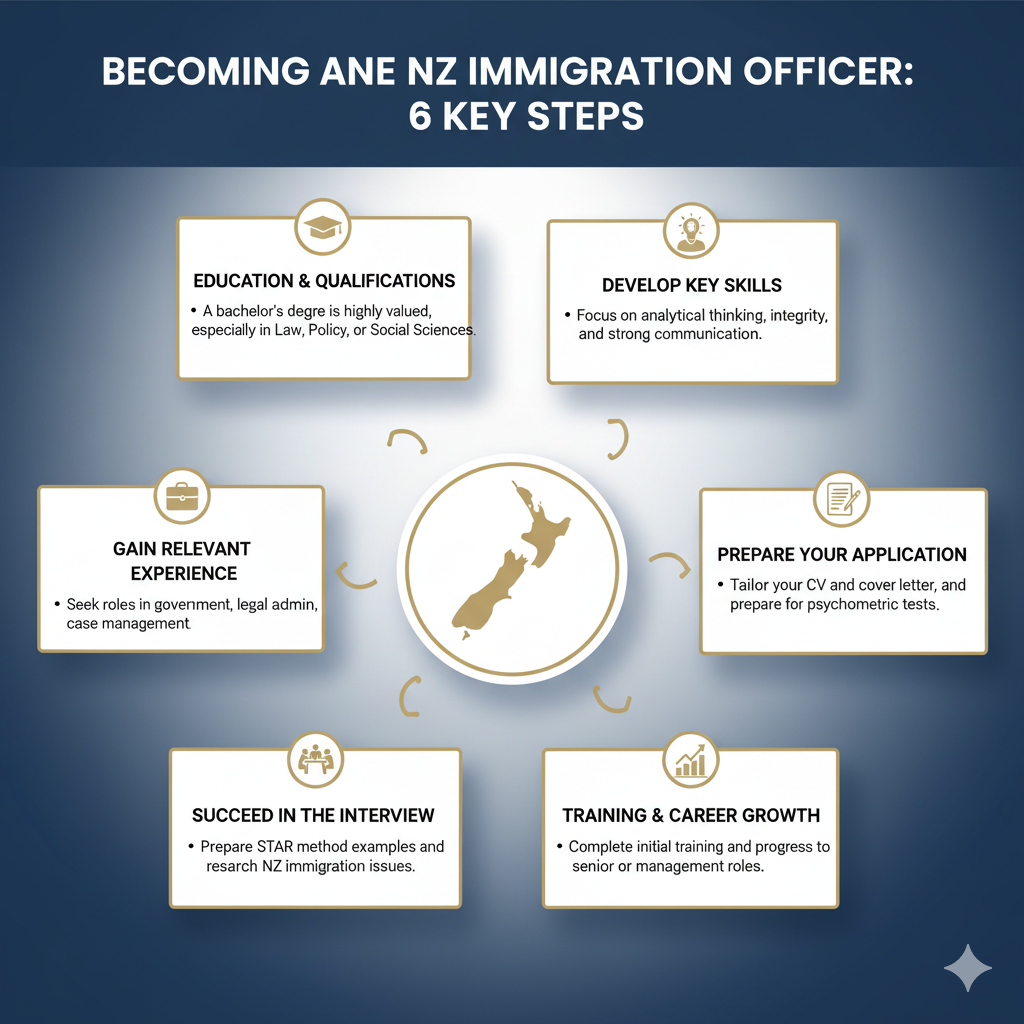
There is no one degree that you need to become an immigration officer in New Zealand, but having a degree from a university or college is very helpful. A bachelor’s degree is often the minimum educational standard expected by Immigration New Zealand. A strong academic background shows that you can think critically, analyze complicated information, and communicate well, which are all important skills for the job.
Fields of Study That Are Important
Some areas of study can really help you get ready for a job as an immigration officer. If you’re thinking about going to college, concentrating on one of the following subjects could give you an edge over other students:
- Law: A law degree gives you a great understanding of legal principles, how to interpret laws, and how to make administrative justice work, all of which are important for the job.
- Policy or Public Policy: This field teaches you how government policies are made, put into action, and judged. It gives you a direct look into the life of an immigration officer.
- Criminology or Social Sciences: These subjects help you learn about how society works, how people act, and what causes people to move, which is useful information for assessment work.
- International Relations or Political Science: These degrees give you a wide view of world events, how cultures interact, and the political reasons why people move to other countries.
- Business or Human Resources: Knowing a lot about these fields can be very helpful when looking at applications for business or skilled migrant visas.
These fields are important, but the subject of your degree is not as important as the analytical and research skills you gain while you are studying.
Important Skills and Abilities
Immigration New Zealand looks for people with a certain set of soft skills and personal traits in addition to formal qualifications. These are very important for dealing with the job’s stress and difficulties.
- Analytical and Critical Thinking: You need to be able to break down complicated cases, find inconsistencies, and logically evaluate evidence in order to make good, defensible choices.
- Integrity and Ethics: The job requires you to be completely honest and fair at all times. People will trust you to make fair choices without bias, and your personal integrity must be above reproach.
- Communication Skills: You need to be able to talk and write clearly and professionally. This includes writing thorough case notes and explaining difficult choices to applicants.
- Paying attention to details: A small mistake can lead to a bad choice. When looking over a lot of paperwork, you have to pay close attention to every little thing.
- Being able to bounce back and change: You will face challenging situations and emotionally charged cases. It’s very important to be able to stay calm under stress and adjust to policies that are always changing.
- Cultural Competence: New Zealand is a multicultural nation. You must be able to interact respectfully and effectively with people from diverse cultural backgrounds.
- Focus on Customer Service: It’s important to follow the rules, but it’s also important to give applicants a professional and helpful service as they work their way through a complicated system.
Getting Useful Experience
Having real-world experience can make your application for immigration officer jobs much stronger. Experience that demonstrates your skills in analysis, customer service, and administration is highly valued.
Look for jobs in places like:
- Government Departments: Working in any capacity within a government agency, like the Ministry of Social Development or Inland Revenue, provides exposure to public sector processes and administration.
- Legal or Corporate Administration: Roles like a legal assistant or an administrative officer in a large company can develop your attention to detail and ability to work with complex rules.
- Banking and Insurance: These industries often involve assessing applications against set criteria, which is directly transferable to the work of an immigration officer.
- Case Management: Any job where you have to manage a caseload like social work or recruitment, shows that you have good organizational and decision-making skills.
Even if the job isn’t directly related to immigration, you should focus on developing and showing off the skills that are useful for an immigration officer.
Internships and chances to help out
Internships with government agencies or NGOs that help migrants and refugees can be very helpful. These chances give you firsthand experience in the field and show that you are dedicated to it. Working with community groups that help new immigrants can also help you learn more about other cultures and improve your communication skills.
How to Apply for Immigration Officer Jobs
Immigration officer jobs are advertised on the official Immigration NZ careers website and other major job boards. To stay up to date on new job openings, it’s a good idea to set up alerts for terms like “immigration officer,” “visa officer,” or “warranted officer.”
The Process of Applying
The process for applying for and hiring an immigration officer is strict and meant to find the best candidates. It usually has a few steps:
- Online Application: You will send in your CV and a cover letter, and you may also have to answer a series of questions about the main skills needed for the job.
- Testing of Skills and Psychometric: Most of the time, candidates have to take tests online. These could be tests of your verbal and numerical reasoning, situational judgment, or writing skills to see how well you can think and communicate.
- Interview on Video: A one-way video interview where you record your answers to questions that have already been set is common.
- Panel Interview or Assessment Centre: Candidates who have made the cut are invited to an interview in person or online. This is a full assessment of your skills, experience, and fit for the job. It could involve group activities, role-playing scenarios, and a formal panel interview.
- Checks on References and Background: The final stage involves thorough reference checks with previous employers. You also need to pass a security and police background check because of the nature of the job. A full, clean driver’s license is also typically required.
How long does it take to get a job as an immigration officer? It can take a few months from applying to getting a job offer, so be patient.
How to Make Your Application Successful
- Make your CV and cover letter fit the job: Don’t use a generic application. For each role, highlight the specific skills and experiences that match the job description. Use the STAR method (Situation, Task, Action, Result) to give specific examples of what you’ve done well.
- Test Preparation: Get to know how psychometric tests are set up. There are many free resources online that can help you practice and improve your performance.
- Get ready for the interview: Expect questions based on the main skills listed in the job description. Get examples ready that show how smart, honest, and tough you are. To show that you care about and are aware of New Zealand immigration issues, do some research on them.
Programs for training and development
All new immigration officers go through a full training program after they are hired. This first training period, which can last for a few weeks, teaches the basic skills and knowledge needed to do the job well. Training includes: Immigration Law and Policy: Detailed lessons on the Immigration Act of 2009 and the specific rules you will be following.
- Operational Systems: Training on the IT systems and software that are used to handle and process visa applications.
- Decision-Making Frameworks: Learning how to use legal and policy frameworks in real-life situations.
- How to Talk to and Interview People: Developing the skills to conduct effective interviews and communicate decisions professionally.
After your first training, a senior immigration officer or team leader will supervise you as you start to manage your own cases. They will also give you ongoing coaching and support.
Opportunities and career growth
Working as an immigration officer in New Zealand gives you a lot of chances to grow and specialize. As you gain experience, you can move up to higher-level jobs that are more difficult and require more responsibility.
This is what a typical career path might look like:
- Immigration Officer: The first step, where you learn the basics and deal with different types of visas.
- Senior Immigration Officer NZ: With a few years of experience, you can progress to a senior officer role. This often means taking on more difficult and dangerous cases and teaching and mentoring new employees.
- Technical Advisor or Team Leader: These jobs involve giving expert advice on complicated technical or policy issues or leading a group of immigration officers.
- Management Roles: If you keep going, you could become an operations manager, which means you would be in charge of whole parts of the visa processing system.
There are also opportunities to specialize in areas like compliance and investigations, refugee and protection services, or policy development. Some roles may also offer the chance to work overseas in one of New Zealand’s international branches.
Graph Your Course with Help from Experts
Becoming an immigration officer in New Zealand is a challenging yet deeply fulfilling career path. It requires a combination of education, specific skills, relevant experience, and a strong sense of personal integrity. You can build a strong foundation and make yourself a strong candidate for Immigration NZ jobs by following the steps in this guide.
It can be hard to figure out how to get a job in public service or how the immigration system works in general. Professional advice can make all the difference if you need help with your career plan or have questions about New Zealand’s immigration system.