
How to encourage entrepreneurship in students
Today’s students hold the key to the future of innovation. As traditional career paths change and new industries grow, teaching young people how to be entrepreneurs has become important for getting them ready for a job market that is always changing.
Teaching students about business is only part of encouraging them to be entrepreneurs. It’s also about helping them be creative, solve problems, and believe that they can make their ideas come true. When students learn to think like entrepreneurs early on, they gain useful skills that will help them no matter what career they choose.
This comprehensive guide explores practical strategies educators, parents, and institutions can use to cultivate entrepreneurial thinking and provide students with the tools they need to succeed as future business leaders.
What Does Being an Entrepreneur Mean for Students?
What does it mean for students to be entrepreneurs? At its core, student entrepreneurship is about learning how to spot chances, be creative, take smart risks, and make things better with new ideas. It’s not just about starting a business; it’s also about changing your mind to accept change, look for answers, and make new opportunities.
There are a few important parts of student entrepreneurship:
- Thinking about new ideas: Learning to look at problems from different points of view
- Risk assessment: Knowing how to deal with and evaluate uncertainty
- Managing resources means getting the most out of your time, money, and connections.
- Leadership development: Gaining the confidence to lead teams and projects
Students learn transferable skills that help them do better in school and get ready for success in their future careers when they learn about entrepreneurship.
Building an Entrepreneurial Mindset
Accepting Failure as a Lesson
Instead of seeing failures as roadblocks, the most successful entrepreneurs see them as steps along the way. Students need to know that problems are a normal part of starting a business. Building resilience and encouraging more innovation are two things that happen when students can try new things, fail, and learn in safe spaces.
Some practical ways to do this are:
- Learning through projects: Giving people problems to solve that don’t have clear answers in the real world
- Exercises for reflection: Getting students to think about what worked and what didn’t in their projects
- Celebrating efforts: Recognizing effort and learning, not just good results
Increasing Confidence in Problem-Solving
Entrepreneurial students excel at identifying problems and developing creative solutions. You can improve this skill by practicing it regularly and facing a variety of problems.
Recognizing problems in everyday life is the first step for students who want to start their own businesses. Students can start by looking around their school, community, or their own lives to find things that could be better.
Effective methods include:
- Workshops on design thinking: Teaching people how to solve problems in a systematic way
- Analysis of case studies: Looking at how successful business owners dealt with problems
- Projects that cross subjects: Bringing together different subjects to solve real-world problems
Practical Ways to Get People to Start Their Own Businesses
Making Schoolwork More Friendly to Entrepreneurs
Schools and teachers are very important for encouraging entrepreneurial thinking. Students can see how what they learn in school can be used in the real world by using entrepreneurship ideas in all of their classes.
You can use entrepreneurship ideas in many different subjects for students:
- Science classes: Students can come up with ways to solve problems that affect the environment.
- Technology courses: Creating apps or digital tools to solve everyday problems
- Social studies: Analyzing market trends and consumer behavior
- Art programs: looking into creative fields and new ways of thinking about design
Setting up student business incubators
School-based incubators give students a structured space to work on their business ideas with help and resources. These programs give:
- Mentorship opportunities: linking students with successful businesspeople and entrepreneurs
- Funding for seeds: Small grants or contests to help students try out their ideas
- Access to workspaces: separate areas for working together and developing projects
- Networking events are chances to meet other people in your field, mentors, and possible customers.
Putting Experiential Learning Programs into Action
Learning by doing is much more effective than just learning from books. Some examples of experiential programs are:
- Businesses run by students: Running cafes, stores, or service businesses in schools
- Market simulations: Making fake economies where students buy and sell things and services
- Community partnerships: Working with businesses in the area on real projects
- Innovation challenges: Taking part in contests that come up with real solutions to business problems
Helping student business owners Through Resources
Tools and platforms for digital use
Students today have access to more resources than ever before to learn about and practice entrepreneurship. Some of the most important digital tools are:
- Software for planning a business: Platforms that help students write full business plans
- Tools for market research: Tools for figuring out who your target audience is and who your competitors are
- Templates for financial modeling: Easy-to-use tools for figuring out costs, income, and profits
- Online learning platforms: Courses made just for student entrepreneurs
Making connections in the business world
To help young entrepreneurs, you should connect them with experienced professionals who can give them advice, feedback, and chances. Some ways to network are:
- Guest speakers from the industry: Bringing successful business owners into schools
- Professional mentoring programs: Putting students in touch with business leaders
- Networks of former students: Connecting current students with entrepreneurial graduates
- Community business groups: Helping people meet local business leaders
Access to Funding and Resources
Students may not need a lot of money, but having access to small amounts of money can help them try out new ideas and learn how to manage their money. There are options such as:
- Micro-grants from schools: Small amounts for starting to work on a project
- Student business competitions are contests that give both money and recognition.
- Community foundation grants: Groups in the area that help young people start their own businesses
- Crowdfunding sites: Teaching students how to pitch their ideas and get money from people who like them
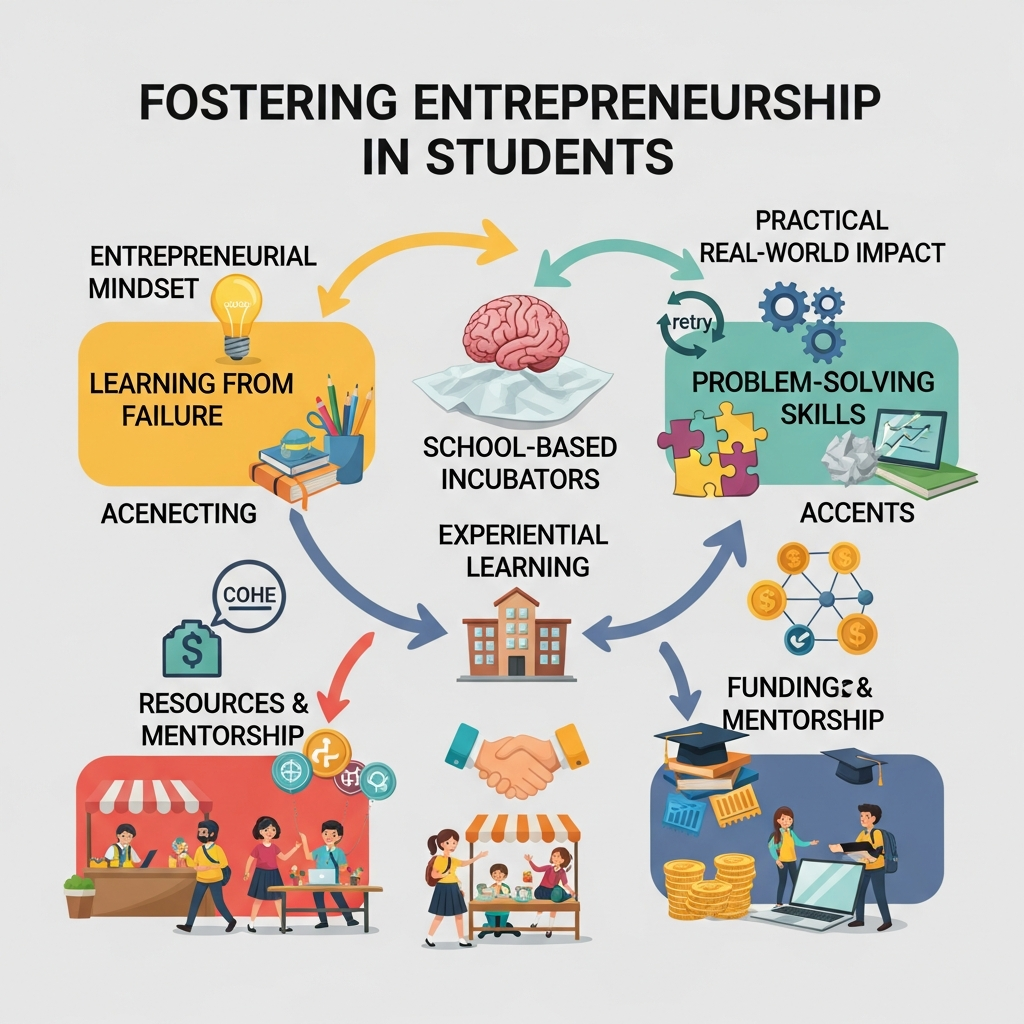
Effects in the Real World: How promoting entrepreneurship can help the economy grow
When students start businesses that create jobs, make money, and compete globally, it becomes clear how encouraging entrepreneurship can boost exports and overall economic growth. Countries that put money into teaching young people how to start their own businesses often see:
- Increased innovation: More students coming up with new ways to meet market needs
- Creating jobs: Young business owners making jobs for other people
- Growth in exports: companies started by students that go on to compete in international markets
- Economic diversification: new industries and sectors that come from student ideas
Making Success Last
Making programs that last
To encourage successful entrepreneurship, you need to be committed for the long term and always be improving. Key elements include:
- Regular program evaluation: Assessing what works and what needs adjustment
- Getting stakeholders involved: getting parents, community members, and business leaders involved
- Resource allocation means making sure that programs have enough money and help.
- Measuring success: keeping an eye on how well students do and how well the program works
Making ecosystems for entrepreneurs
Building broad support systems that go beyond individual programs is the best way to go about it. These ecosystems have:
- Several points of contact: Different ways for students to learn about entrepreneurship while they are in school
- Increasingly complicated: Programs that help you learn new skills over time, from simple ideas to more complex uses
- Community integration means that schools and businesses in the area have strong ties to each other.
- Support from alumni: Relationships with successful graduates who can help current students learn.