How to Start a Skincare Business in NZ: Rules, Compliance and Setup
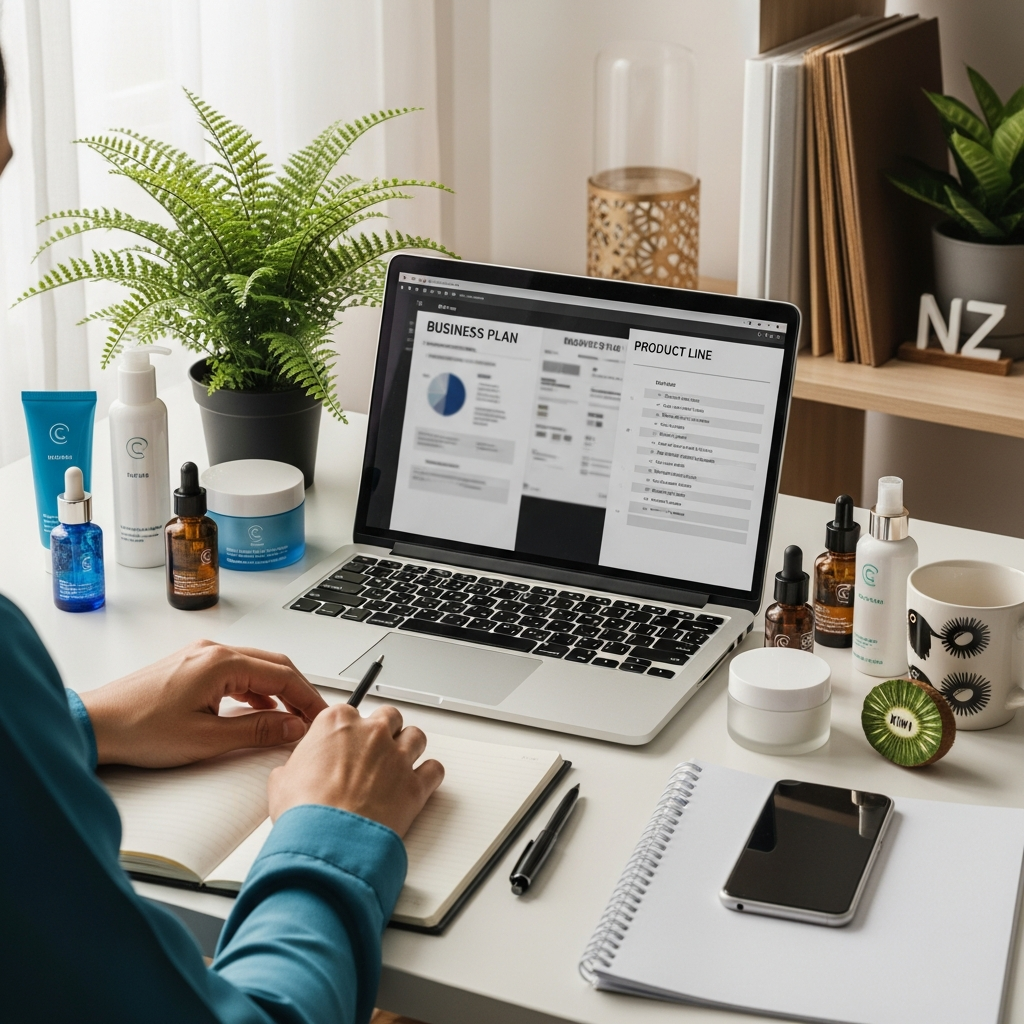
Starting a skincare brand in New Zealand is attractive: low barriers to making product, a local market that loves natural ingredients, and export potential. But skincare is a regulated product category here, and the regulation is the step home-made-brand guides from overseas never mention. In New Zealand, every cosmetic product you sell must comply with the Environmental Protection Authority’s Cosmetic Products Group Standard, your label has rules to follow, and the claims on your packaging are policed under the Fair Trading Act. This guide walks through the whole setup in NZ terms: the legal compliance core, then the business steps around it.
Step 1: Understand the Cosmetic Products Group Standard
Cosmetics in New Zealand are regulated under the Hazardous Substances and New Organisms (HSNO) Act, through the Cosmetic Products Group Standard administered by the EPA. It is not an optional code and it is not an approval you apply for product by product. It works like this:
- A cosmetic product can be sold in New Zealand only if it complies with the Group Standard
- Every ingredient must be a substance covered by the Standard, and ingredients include restrictions and prohibitions in its schedules (the Standard tracks the same ingredient safety approach as the European Union’s cosmetics regime, including its lists of banned and restricted substances)
- You, as the manufacturer or importer, are responsible for compliance. Importing a product that is legal in its home country does not make it legal here if an ingredient falls foul of the NZ Standard
- Products with hazardous properties outside the Standard’s scope, and some categories such as certain nail products and aerosols, can fall outside the Group Standard entirely and need individual EPA assessment before they can be sold
Start product development inside the Standard, not outside it: check every ingredient, including fragrance components and preservatives, against the schedules before you fall in love with a formula.
Step 2: Get labelling and claims right
- Labelling: labels must identify the product, list ingredients using INCI names in descending order of concentration (with specific rules for ingredients under 1 percent and for colour additives), show the name and address of the New Zealand or Australian supplier responsible for the product, and carry any warnings the Standard requires for particular ingredients. If you import, you are the responsible supplier
- Sunscreen is a special case: primary sunscreens sold in NZ must comply with the joint Australian/New Zealand standard for sunscreen products (AS/NZS 2604). Do not treat SPF as a marketing line
- Claims: the Fair Trading Act 1986 prohibits misleading claims, and cosmetic claims are a classic trap. “Reduces the appearance of wrinkles” is a cosmetic claim. “Removes wrinkles”, “repairs skin damage” or “treats eczema” edges toward therapeutic claims, which can pull your product into medicines law and Medsafe territory. Unsubstantiated representations are unlawful even if they are only on your Instagram
- Animal testing: testing cosmetics on animals is prohibited in New Zealand, which local brands can state honestly, while imported brands must ensure their products were not tested on animals to be sold here under the Standard’s conditions
Step 3: Set up the business properly
The standard NZ foundations apply, and our general guides cover the mechanics: choose your structure and start your business properly (many founders begin as a sole trader and incorporate as sales grow), get your NZBN, register for GST once you pass or expect to pass $60,000 in 12 months, and open clean business banking from day one so your personal and product finances never mix. Add two skincare specific items to that list:
- Product liability insurance: you are putting a chemical product on people’s skin. Product liability cover is not legally compulsory, but a single allergic reaction claim without it can end a young brand. Our business insurance guide covers the cover types to discuss with a broker
- Batch records and traceability: record what went into every batch, where ingredients came from, and who received the batch. If a complaint or a recall comes, this file is your defence, and the Group Standard expects you to be able to demonstrate compliance
Step 4: Making the product: three routes
- Make it yourself: lowest start-up cost, full control, and the hardest compliance burden: your premises, hygiene, water quality, preservation and contamination control are all on you. Home kitchens raise council food-premises-style issues in some districts and alarm retailers; a dedicated, clean production space matters sooner than founders expect
- Contract manufacturer: NZ has cosmetic contract manufacturers who formulate and produce to the Group Standard for a fee, with minimum order quantities. You keep the brand and the compliance responsibility, but their process discipline becomes your quality system. Get the ingredient documentation for every formula they supply
- Private label: buy a base product and brand it. Fastest to market, least differentiation, and the same legal responsibility: if the base formula breaches the Group Standard, it is your product when it is sold under your name
Step 5: Sell it, within the rules
Selling direct online, through markets, or wholesale to retailers all work in NZ. Two practical points: retailers with any scale will ask for your ingredient and compliance documentation, so prepare a product information file for each SKU; and if you export, the importing country’s rules apply in that market (Australia’s AICIS regime is separate from NZ’s, despite the similarities). Market stall and online sellers are covered by the same Group Standard and Fair Trading Act as anyone else: the rules follow the product, not the size of the brand.
Frequently asked questions
Do I need a licence or approval to sell skincare in NZ?
There is no licence and no product-by-product approval for standard cosmetics. Instead, your products must comply with the Cosmetic Products Group Standard at all times, and the legal responsibility sits with you as manufacturer or importer. Products falling outside the Standard need EPA assessment before sale.
Can I make products at home and sell them?
Plenty of brands started that way, but the obligations do not shrink with the premises: ingredient compliance, labelling, batch records and hygiene standards all apply, and your council may have rules about commercial activity at home. Plan the move to a dedicated space as volumes grow.
My supplier overseas says the product is EU compliant. Is that enough?
It is a good start, because the NZ Group Standard draws heavily on the EU approach, but it is not a guarantee: the NZ schedules and labelling duties are what count, and you remain responsible for checking them as the importer.
Can I say my product is “natural” or “organic”?
Only if it is true and substantiated. The Fair Trading Act catches vague green claims as much as specific ones, and “organic” claims should be backed by recognised certification if you use certification language or logos. Ingredient lists are public on your label, so sophisticated customers check.
What insurance do I actually need?
At minimum, talk to a broker about product liability and public liability. If you manufacture, add cover for your equipment and stock; if you employ staff, statutory obligations like ACC are automatic, but key person and income cover are your choice. More business topics are in the business category.
Sources
- Environmental Protection Authority, Cosmetic Products Group Standard: https://www.epa.govt.nz
- Consumer Protection (MBIE), Fair Trading Act guidance: https://www.consumerprotection.govt.nz
Disclaimer
This article is general information about starting a cosmetics business in New Zealand. Regulations for specific ingredients and product types are detailed and change as the Group Standard is amended, so confirm your product’s position with the EPA or a regulatory consultant before launching, and take legal and insurance advice for your circumstances.