Hessian Sacks NZ: What They Cost, What Fits in Them and Who Sells Them
The short answer
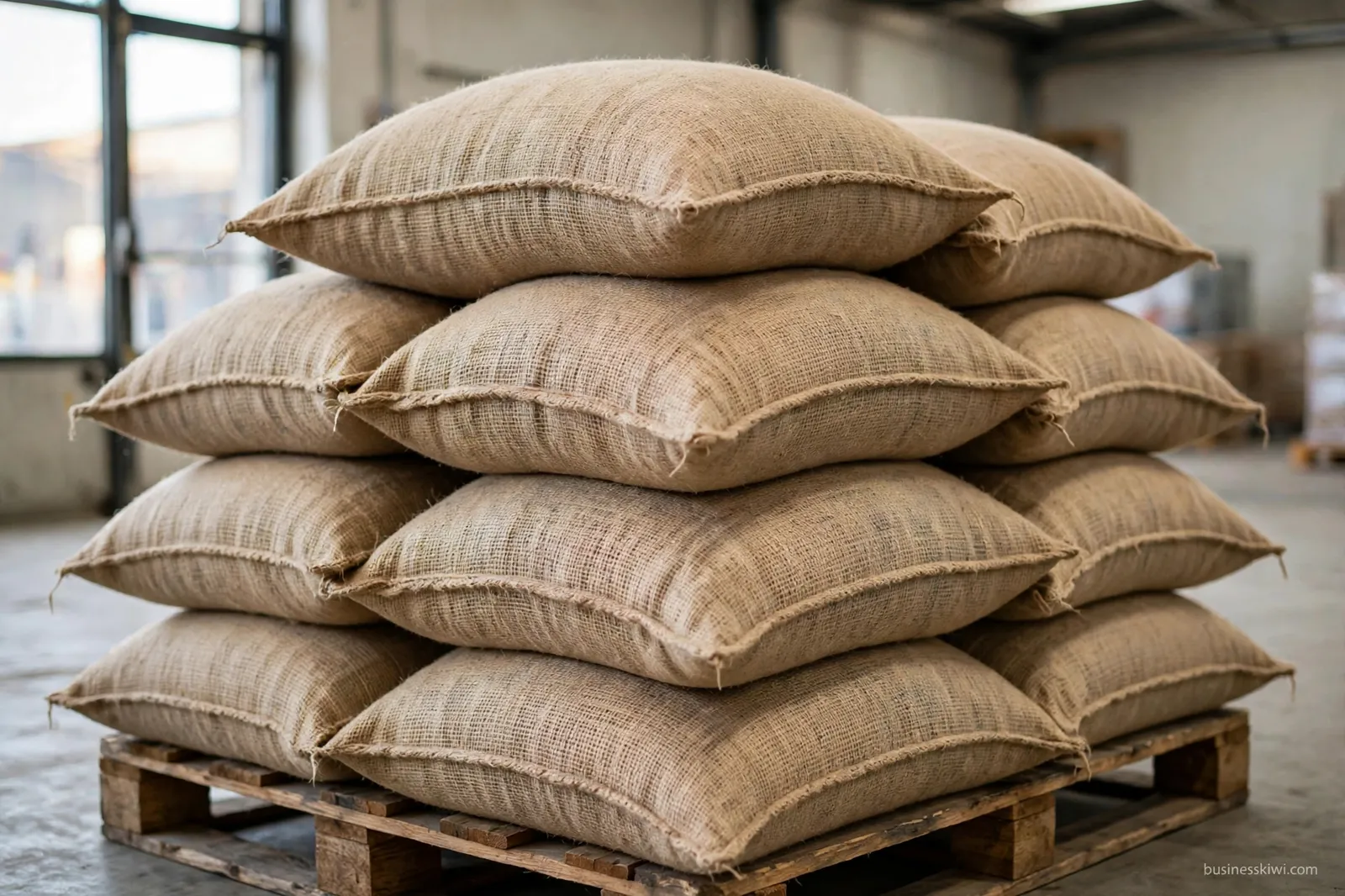
Hessian sacks are bags woven from jute, a natural plant fibre. In New Zealand they show up in a small set of practical jobs: filled with sand for flood protection, carrying firewood, bringing coffee into the country for roasters, and supplying beekeepers with smoker material. Bag Boys, a sandbag supplier with locations in Auckland, Hamilton and Wellington, puts the naming question to rest on its own site: hessian, jute and burlap are the same material under different names.
The awkward part for buyers is price. Almost no NZ supplier publishes a price for new hessian sacks, so most buying starts with a phone call or an email enquiry. The one open ticket price we found is for used coffee sacks, at $5 each from Excelso Coffee. This guide works through the types, sizes and uses that NZ suppliers actually publish, and explains how the pricing works in practice.
What hessian sacks are made of
Hessian is a woven cloth made from jute fibre. Jute is a natural fibre, and products made from it break down in the ground rather than sitting in a landfill. Geofabrics NZ, which sells jute erosion matting, rates its 100 percent natural jute mat as biodegradable within approximately 18 months. A sack is a different product from a mat, but the fibre behaves the same way: leave hessian wet or in contact with soil and it will rot through in time.
The weave matters as much as the fibre. Hessian comes in different weights and tightness of weave, and Geofabrics gives a useful reference point: its erosion mat is built around a central hessian scrim, an open woven mesh of jute, with layers of jute fibre needlepunched onto it. Sack cloth is woven tighter than a scrim, because it has to hold sand, grain or firewood without leaking the load through the gaps.
One gap in the NZ market is worth knowing about before you shop. None of the NZ sack listings we read publish a fabric weight or grade for the sacks themselves. The only jute fabric weight an NZ supplier publishes is for erosion matting, at 620 to 680 grams per square metre. If fabric weight matters for your job, you will need to ask the supplier directly, because it is not on the product pages.
Types of hessian sacks sold in NZ
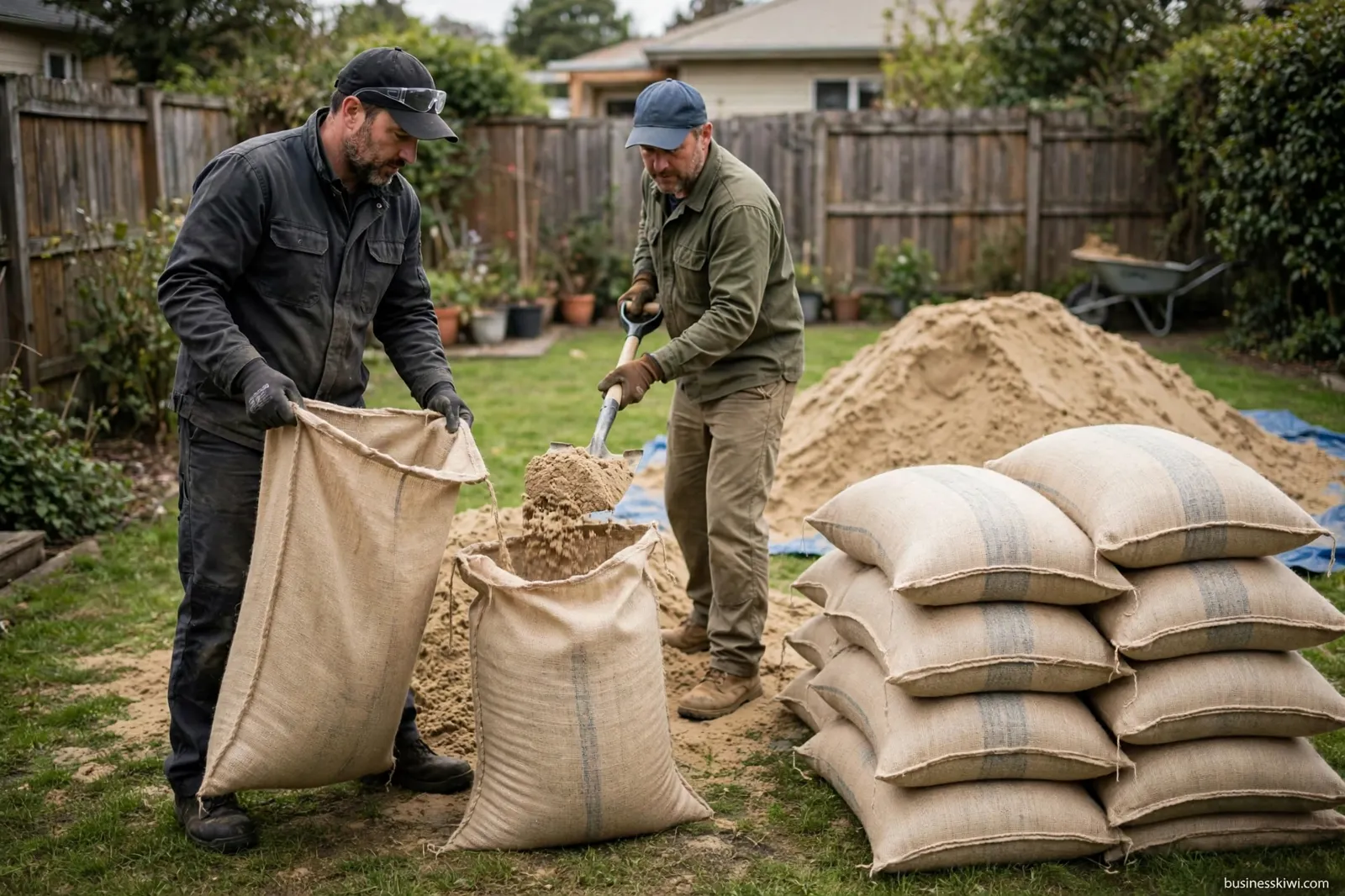
Filled flood and retaining bags. This is the biggest NZ market for hessian sacks. Bag Boys says its flood control sandbags are typically bagged into hessian sacks, which it describes as being like the old potato sack. The same bags, filled with sand or soil, get used for retaining jobs and for shoring up loose earth and embankments.
Produce and commodity sacks. The potato sack comparison is a clue to the sack’s farming history. Hessian was the standard sack for produce and bulk commodities, and it still arrives in NZ holding green coffee. Excelso Coffee sells the used hessian sacks its coffee comes in, over the counter at its shop.
Firewood sacks. Urban Lumberjack, an Auckland firewood business, packs its BBQ wood splits in hessian sacks and its wood chunks in smaller jute drawstring bags. The sack is part of the product rather than something sold on its own, and the business runs a return scheme for the packaging.
Beekeepers’ sacking. Hive World, a beekeeping supplier, lists hessian sacks on its smokers and smoke substitutes page. It sells them washed and weathered, ready for the buyer to cut to their own requirements, which is how beekeepers prepare smoker fuel.
Small jute drawstring bags. Not every jute bag is a sack. Urban Lumberjack’s 7 litre drawstring bags for wood chunks show the same fibre sold in a small retail format, closer to a pouch than a cargo sack.
A related product: jute erosion matting. Buyers shopping for erosion control will meet jute as matting rather than sacks. Geofabrics NZ sells jute mat by the roll for slopes, roadsides and revegetation work. It is the same fibre family, built on that hessian scrim, but it is a ground cover, not a bag.
Sizes and capacities
Published sizes are scarce, so the table below sticks to what each NZ supplier states on its own pages. Where a supplier does not publish a size, the table says so, because that silence is itself useful buying information.
| Sack or product | Supplier | Published size | Published capacity or format |
|---|---|---|---|
| Hessian firewood sack | Urban Lumberjack | 79cm x 48cm | Holds 15 to 20kg of wood splits |
| Filled hessian flood bags | Bag Boys | Sold by fill weight | From carriable 20kg bags; about 40 bags per pallet |
| Used hessian coffee sacks | Excelso Coffee | Not published | Sold individually in store |
| Hessian sacks for beekeepers | Hive World | Not published | Sold washed and weathered, to cut to size |
| Jute erosion mat (related product) | Geofabrics NZ | 2m x 25m roll, 50 square metres | Fabric weight 620 to 680 grams per square metre |
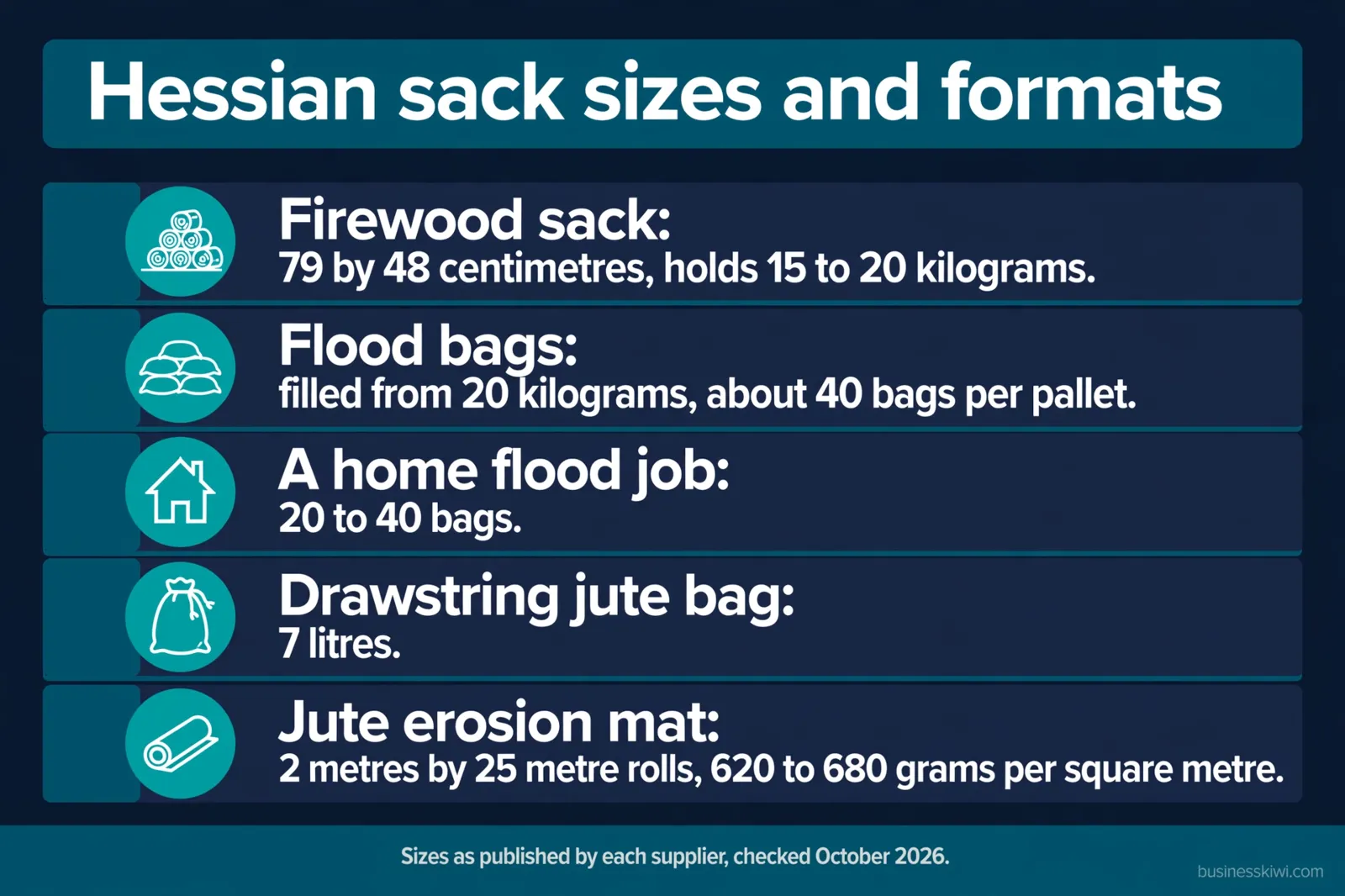
Two patterns stand out. First, filled sandbags are sized by weight, not dimensions. Bag Boys offers sizes from carriable 20kg options through to large one tonne bulk bags, and the size a homeowner handles is the 20kg bag. Second, the one true sack dimension published by an NZ seller is Urban Lumberjack’s 79cm x 48cm firewood sack, which gives a fair sense of a standard large sack: roughly 80cm long and 50cm wide, holding 15 to 20kg of awkward, bulky contents.
For flood work, quantities matter more than dimensions. Bag Boys says a residential job usually takes 20 to 40 bags to divert water or flash flooding, a typical trailer load holds about 30 to 40 bags, and bags are usually delivered on pallets of typically 40.
What hessian sacks get used for in NZ
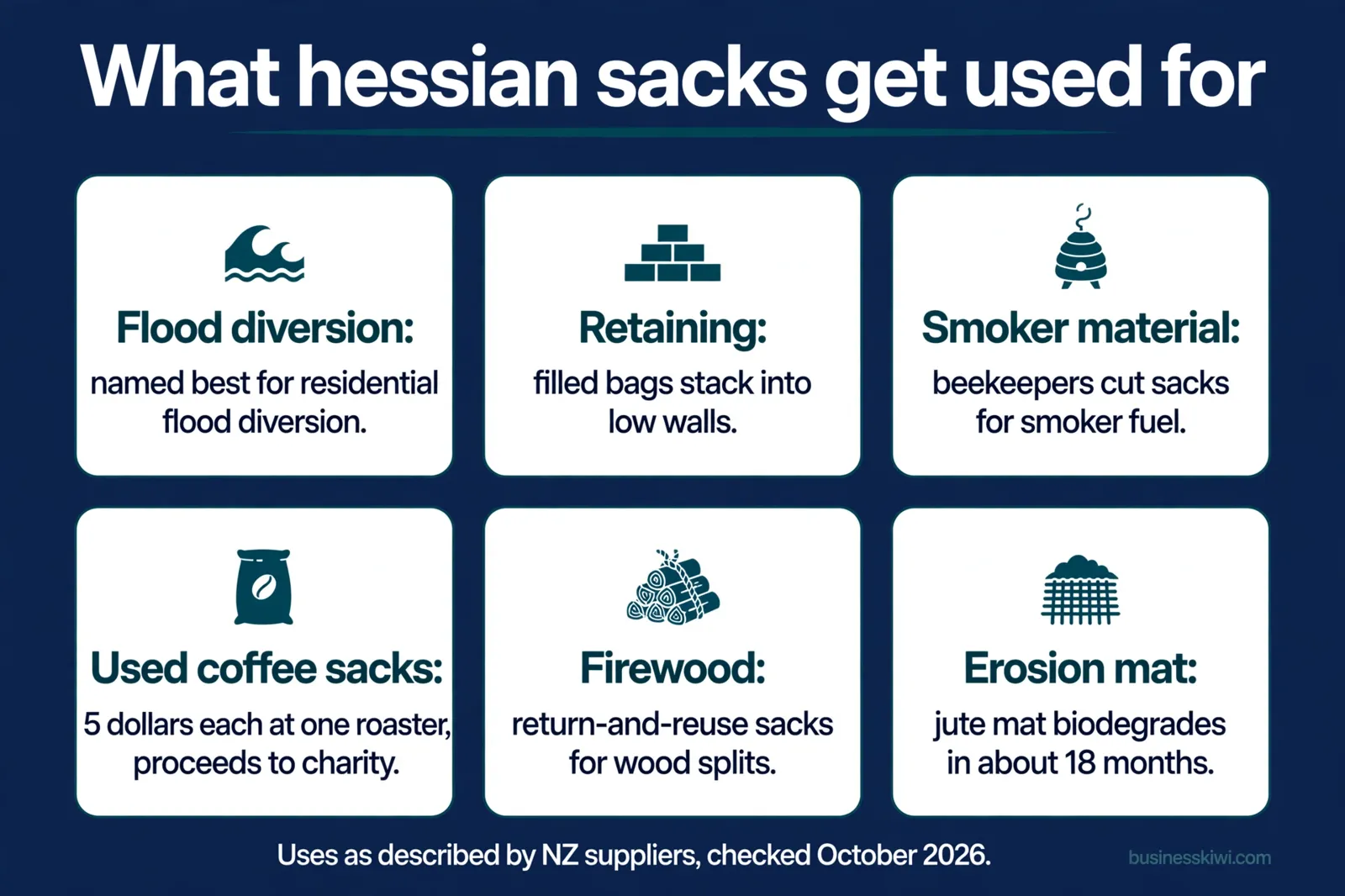
Flood protection at home. This is the use Bag Boys rates hessian for most highly. For diverting water around a house, it says hessian, jute or burlap is the best bag type for the purpose, and that 20 to 40 filled bags is often enough for a residential property.
Retaining walls and embankments. Filled hessian bags stack into low retaining walls and get used to shore up embankments at risk of slipping in wet weather. Because the fibre breaks down, a hessian retaining bag is a temporary or plant-in structure rather than a permanent wall.
Weights and anchoring. Sandbags in general get used to hold down gazebos, signs and temporary shelters, and Bag Boys is honest that woven polypropylene, not hessian, is its most requested bag for that job, because the plastic bag is robust and withstands New Zealand’s harsh UV. Hessian is the pick where the bag needs to disappear into the landscape afterwards, not where it needs to last for years in the sun.
Film props and soundproofing. Bag Boys lists these among the requests it gets for sandbags: military style bunkers for movie and TV productions, and soundproofing, where it says two to three bags thick is ample.
Beekeeping. Beekeepers cut hessian into pieces for smoker fuel, which is why Hive World sells the sacks washed, weathered and ready to cut.
Firewood and BBQ wood. Urban Lumberjack’s whole retail range of splits ships in hessian sacks, and the sacks go back for reuse.
Coffee and crafts. Excelso turns its used coffee sacks into reusable carry bags and plant pot covers, and sells the plain used sacks for $5 to anyone who wants the fabric for their own projects.
Erosion control and revegetation. On slopes and stream banks the jute product is matting, not sacks. Geofabrics rates its jute mat for slopes up to 1:1 grades, water velocities up to 1.8 metres per second, and sites from roadsides to wetlands and riparian batters. The mat acts as a roll-on mulch, protects seed from wind, water and birds, then adds organic matter to the soil as it breaks down.

New vs used sacks
New hessian sacks in NZ are mostly sold filled or as part of another product. Bag Boys supplies new hessian sacks already filled with sand, and Urban Lumberjack’s new sacks leave the yard full of firewood. None of the suppliers we read lists new empty hessian sacks with a public price, so if you want empty new sacks in quantity, expect an enquiry and a quote rather than a checkout button.
Used sacks are easier to buy one at a time. The main source is the coffee trade: roasters empty hessian sacks every week, and Excelso sells theirs for $5 each in store, with the money going to its Coffee for Water programme, which provides clean drinking water in rural Cambodia. Hive World’s washed and weathered sacks are another used option, sold for cutting up rather than for carrying loads.
If you are buying used, check three things. Ask what the sacks carried, because the previous contents decide whether the fabric suits food, garden or workshop use. Check for cuts and heavy fraying, since a sack sold for cutting up may not hold a load. And accept that used sacks are graded loosely: weathered means the fabric has already lived outdoors, which is fine for smoker fuel or garden jobs and less fine for anything that needs full strength.
How pricing works
The honest summary is that new hessian sacks in NZ are priced on enquiry, and only used sacks carry a public price. Bag Boys publishes no prices at all. It sells filled sandbags by the pallet load, will deliver less than a pallet on request, and asks buyers to make contact for their requirements. Hive World likewise says to contact it for availability and pricing on its hessian sacks.
That means a flood bag quote bundles several things together: the bag itself, the sand or soil fill, the bagging, and the delivery. Delivery is part of the price conversation, because pallets of filled bags are heavy. Bag Boys delivers NZ wide from Auckland, Hamilton and Wellington, with kerbside delivery standard and hiab or crane truck placement available for awkward sites, such as over a fence or up a sloping section. A quote for bags placed where you need them will differ from a kerbside quote, so say which you want when you ask.
The exceptions prove the rule. Excelso’s used coffee sacks are $5 each, cash over the counter, no quote involved. Urban Lumberjack does not sell its sacks at all: they are returnable packaging, dropped off when you collect your next order or picked up when the next delivery arrives, except on couriered orders where returns do not apply. If a supplier does quote you per sack for new empty bags, ask whether the price includes freight, because a light but bulky product can cost more to move than to buy.
Choosing and buying checks
Start with the job’s lifespan. Hessian is a natural fibre that biodegrades, so it suits temporary flood work, plant-in retaining walls and any job where the bag should melt into the site. For long term outdoor anchoring in full sun, Bag Boys steers buyers to woven polypropylene for its UV resistance, and that steer is worth taking seriously.
Confirm the size in the terms the supplier uses. For filled bags that means the fill weight, with 20kg the carriable standard, and the number of bags per pallet, typically 40 at Bag Boys. For loose sacks it means flat dimensions, and the Urban Lumberjack sack at 79cm x 48cm is a useful benchmark for a large sack.
Ask about the closure. Bag Boys closes its filled bags with a wire tie or stitching, and either is fine for stacking, but stitched bags are tidier to handle and less likely to snag. Ask about fabric weight too, since NZ listings rarely publish it: a heavier weave costs more and holds up longer, and the only published NZ benchmark is Geofabrics’ erosion matting at 620 to 680 grams per square metre.
Finally, plan the delivery before you order. Filled hessian bags are dense and heavy, a pallet runs to about 40 bags, and unloading options range from kerbside drop to hiab, forklift or crane placement. Getting that detail into the quote avoids a pallet stranded at the gate.
Care, reuse and disposal
Hessian rewards reuse. Urban Lumberjack’s return scheme exists because a sound hessian sack can do many trips, and Excelso’s carry bags and plant pot covers show what a retired sack becomes with a sewing machine. If you are keeping sacks for your own reuse, store them dry, off the ground and out of direct sun, and shake out sand and soil before stacking them. Damp jute stored in a heap will rot, which is the fibre doing what it naturally does.
At the end of a sack’s life, the disposal story is simple compared with plastic. Jute is a natural fibre and breaks down in soil; Geofabrics rates its jute matting at about 18 months to biodegrade, which gives a fair sense of how long hessian lasts in ground contact. A worn out sack can go in the compost or garden as a weed mat style layer rather than lasting for decades as plastic would, but if the fill inside a used flood bag may be contaminated, follow your council’s guidance on where that fill should go.
If flood planning is on your list, our guide to business continuity plans covers keeping a business running in a civil defence emergency. For the insurance side of flood risk, see our house insurance NZ guide. If you are bringing goods into New Zealand rather than bagging them, our import and export business guide is the starting point. More practical guides like this one sit in our Business and Industry section.
Frequently asked questions
Are hessian, jute and burlap the same thing?
Yes. They are three names for the same natural jute fibre and the cloth woven from it. Bag Boys uses all three names for the same bag on its site, and NZ suppliers mix the terms freely, so a search under any one name should find the same products.
How much do hessian sacks cost in NZ?
New sacks are priced on enquiry by the suppliers we read, and filled flood bags are quoted per job or per pallet. The one published price we found is for used sacks: Excelso Coffee sells its used hessian coffee sacks for $5 each in store. If you need new empty sacks, ask the supplier for a per sack price including freight.
How many hessian sandbags do I need to protect a house from flooding?
Bag Boys says 20 to 40 filled bags is often sufficient for a residential property to divert water or flash flooding. A trailer load holds about 30 to 40 bags, and suppliers usually deliver on pallets of about 40 bags, so one pallet is a sensible starting point for a house.
What size is a standard hessian sack?
NZ suppliers rarely publish sack dimensions. The clearest published example is Urban Lumberjack’s firewood sack at 79cm x 48cm, holding 15 to 20kg of wood splits. Filled sandbags are sold by weight instead, with a carriable 20kg bag the standard size for flood work.
Are hessian sandbags better than polypropylene ones?
It depends on the job. Bag Boys calls hessian the best bag type for diverting floodwater around a home, and hessian biodegrades, so it suits temporary works and planted retaining walls. For holding down signs, gazebos and shelters over a long period, it says woven polypropylene is the most requested, because it is robust and withstands harsh UV.
Where can I buy used coffee sacks in NZ?
Coffee roasters are the source, because green coffee arrives in hessian sacks. Excelso Coffee sells its used sacks in store for $5 each, with proceeds going to its Coffee for Water programme, and also turns sacks into carry bags and plant pot covers. Other roasters are worth asking, but Excelso is the seller we verified.
Do hessian sacks rot, and how should I store them?
Yes, hessian rots eventually, because jute is a natural fibre that biodegrades. Geofabrics rates its jute matting at about 18 months to break down in use outdoors. Store sacks dry, off the ground and out of the sun, and empty and dry any bag that has been filled, so the fibre is not sitting damp between jobs.
The bottom line
Hessian sacks are a small, practical corner of the NZ packaging market. The suppliers who publish real detail are a filled sandbag specialist, a beekeeping supplier, a coffee roaster and a firewood business, and between them they cover the jobs hessian actually does here: flood protection, retaining work, smoker fuel, coffee and firewood. Go in expecting to ask for a quote on new bags, expect to pay per pallet for filled flood bags delivered where you need them, and know that the cheapest way into hessian is a $5 used coffee sack.
Sources
- Bag Boys, Flood Control Sandbags: https://bagboys.co.nz/pages/flood-control-sandbags/
- Bag Boys, Sandbags For Gazebo Weights & Flooding: https://bagboys.co.nz/blogs/news/sandbags-for-gazebo-weights-flooding
- Hive World, Smokers and Smoke Substitutes: https://www.hiveworld.co.nz/product-category/hive-management/tools-consumables/smokers-and-smoke-substitutes/?product_orderby=popularity
- Excelso Coffee, Doing Good: https://excelso.co.nz/pages/doing-good
- Geofabrics NZ, Jute Mat Thick Technical Data Sheet: http://geofabrics.co.nz/sites/default/files/2026-04/jutemat-thick-technical-data-sheet-apr26.pdf
- Urban Lumberjack: https://www.ulj.co.nz/
This article is general information about hessian sacks and the New Zealand suppliers who publish details about them. Prices, sizes and availability change, and most suppliers quote per job, so confirm the current price, size and delivery terms with the supplier before you order.