
How to Make a Great Elevator Pitch
Imagine this: you get into a lift and find yourself next to the one person who could change the course of your startup a dream investor, a key partner, or a big client. The doors close, and you have until they open again to make a lasting impression. What do you think? The “elevator pitch” comes from this situation, which is very important for entrepreneurs.
An elevator pitch is a short, convincing speech that you can use to get people interested in your business idea It’s not enough to just do something; you need to know why it matters. Every business owner needs to know how to give an elevator pitch. It’s the thing you use most often at networking events, meetings with investors, and even random meetings. This guide will tell you what an elevator pitch is, why it’s important, and how to make one that will help your business.
What does a lift pitch mean?
An elevator pitch is a short, interesting summary of your business, project or idea that you can give in the time it takes for an elevator ride, which is about 30 to 60 seconds. The point isn’t to make a deal right away; it’s to get your listener’s attention and make them want to know more. It’s like a business card that tells people about your business in a way that’s easy to understand and remember.
This tool is very useful for entrepreneurs. It makes you break down your complicated business plan into its most important parts, so you can always clearly and confidently share your vision.
The Key Parts of an Elevator Pitch
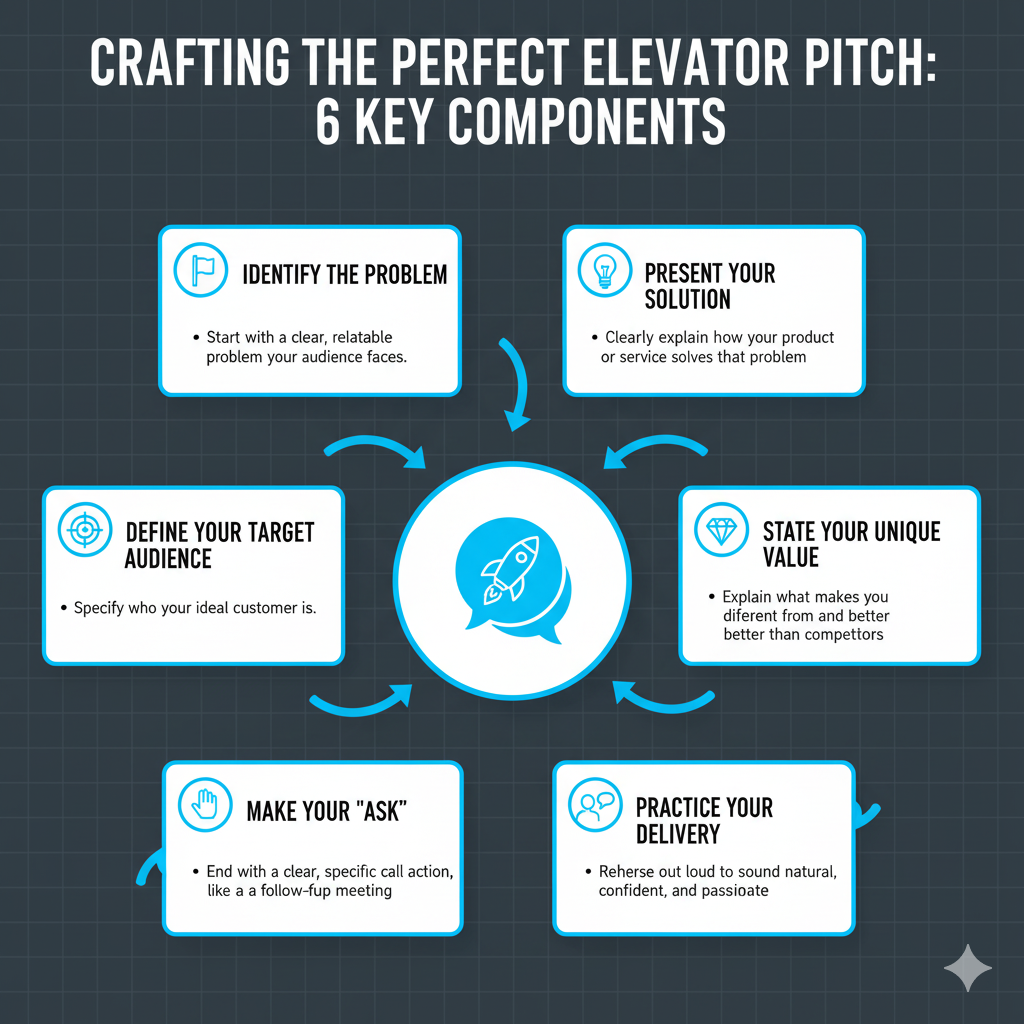
A strong elevator pitch isn’t just a bunch of facts thrown together. It’s a carefully planned story that takes the listener from a problem to your unique solution. Here are the most important parts that every pitch should have.
The Issue
Find a problem that your target audience can relate to and that is clear. A compelling problem makes your listener feel like they are part of the story right away. It shows that you know about a real problem and have thought about how to fix it. Make it tangible and, if possible, quantify its impact.
Your Answer
After outlining the problem, introduce your solution. This is where you talk about your company, service, or product. Tell us how your answer directly solves the problem you just brought up. Don’t use industry jargon and be clear. The person listening should immediately understand what you do and how it helps.
Target Audience
Who would be the best customer for you? Defining your target market shows that you know who will benefit the most from your solution and that you have a clear business focus. It shows investors and business partners that you’ve done your research and found a good number of customers.
Unique Value Proposition (UVP)
What makes you different from the competition? Your unique value proposition is the heart of your pitch. It’s the secret ingredient that makes you different. This could be your innovative technology, a unique business model, exceptional customer service, or a lower price point. Clearly explain why your solution is better than other options that are already out there.
Your “Ask”
There should always be a clear call to action, or “ask,” at the end of every pitch. What do you want the person you’re pitching to do? This could be a request for a follow-up meeting, an introduction to someone in their network, or just their business card. Make it easy for them to accept your offer by being specific.
How to Make the Perfect Pitch: A Step-by-Step Guide
Now that you know what goes into a pitch, let’s make one.
1. Put it in writing
To begin, write down each of the parts we talked about above. At first, don’t worry about how long it is; just write down all your ideas. This will be your raw material.
2. Make it part of a story
People connect with stories, not just data. Tell a story with your pitch. Start with the problem as the conflict, introduce your solution as the hero, and show the positive outcome it creates for your target market. A story makes your pitch more interesting and easy to remember.
3. Make it short and simple
It’s time to cut out the extra stuff once you have your story. Get rid of any unnecessary words, technical language, or hard-to-understand explanations. Your pitch should be between 75 and 150 words long. Remember that the goal is to be clear and short. Every sentence should have a point.
4. Keep practicing
An elevator pitch should sound natural, not rehearsed. The only way to achieve this is through practice.
- Say it out loud: Practise your pitch in front of a mirror until you feel good about it.
- Time yourself: Use a timer to make sure you can do it in 30 to 60 seconds.
- Get comments: Ask your friends, family, or mentors for their honest opinions on your pitch. Did they get it? Were they interested? Use what they say to make your message better.
Examples of Elevator Pitches in Real Life
Let’s see how companies that are doing well might have pitched their ideas.
For a startup like Airbnb, “Finding affordable, real travel accommodations can be a nightmare.” Hotels cost a lot of money and don’t always have a lot of character. We provide a trusted online platform where people can rent out their spare rooms or homes to travelers. This lets travellers have a unique, local experience for less money, and hosts can make extra money from their empty space. We’re creating a new way for people to travel and connect.”
“Many marketing graduates have trouble finding jobs where they can use real analytics tools.” This is an example for a student or job seeker. In the last year, I’ve not only finished my marketing degree, but I’ve also gotten certifications in HubSpot and Google Analytics. I’m passionate about using data to drive strategy and am looking for an entry-level position where I can apply my skills to deliver measurable results.”
Elevator Pitch Do’s and Don’ts
Making your pitch is just as important as giving it.
Do:
- Be excited: Passion spreads. People are more likely to be excited about your idea if you are.
- Know Who You’re Talking To: Make your pitch fit the person you’re talking to. An investor will care about market size and ROI, while a potential partner might be more interested in synergy.
- Maintain Eye Contact: This builds trust and shows confidence.
- A pitch should start a conversation, not a speech. Be prepared to answer questions.
Not:
- Use Jargon: Don’t use technical terms or acronyms that the person you’re talking to might not understand.
- Don’t Speak Too Quickly: If you rush, you sound nervous and hard to follow. Talk clearly and at a normal speed.
- Overwhelm with Details: Stay on the big ideas. In a follow-up meeting, you can give more details.
- Forget Your “Ask”: Don’t let the conversation die. Make it clear what you want to happen next.