New Zealand Immigration Sponsorship 2025: What You Need to Know
Immigration sponsorship in New Zealand makes it possible for many families, skilled workers, and businesses to bring people with skills into the country. Whether you’re looking to reunite with loved ones or fill critical skill gaps in your business, understanding the sponsorship process can make the difference between success and disappointment.
New Zealand’s immigration system relies heavily on sponsorship to maintain family connections and address labor shortages across various industries. The process involves legal commitments, financial responsibilities, and detailed documentation that requires careful attention to succeed.
This detailed guide covers everything you need to know about sponsoring someone to come to New Zealand, including who can do it, how to apply, common mistakes to avoid, and tips for increasing your chances of getting approved. By the end, you’ll know how to get through this difficult but rewarding trip.
How does sponsoring someone for immigration work?
In New Zealand, immigration sponsorship is a legal and financial agreement in which a citizen or resident of New Zealand agrees to bring someone to the country. This duty goes beyond just filling out forms. Sponsors agree to help the person they are sponsoring while they are in the country.
The sponsorship system has many uses. It helps Immigration New Zealand look at applications more carefully and makes sure that sponsored people have enough help when they get there. Sponsors basically say that the person they’re bringing to New Zealand is who they say they are and that they can make a positive contribution to New Zealand society.
There are different kinds of sponsorship based on the relationship between the sponsor and the applicant, the reason for the visit, and how long the applicant plans to stay. Each category has its own set of rules, responsibilities, and processing steps that must be followed exactly.
Who Can Be a Sponsor?
Requirements for residency
You must be a New Zealand citizen or have a resident visa to be able to sponsor someone to move to New Zealand. Immigration New Zealand says that temporary visa holders, including those with work visas, usually can’t sponsor other people unless they meet certain requirements.
Your residency status must be up to date and valid the whole time you are sponsoring someone. If your own visa runs out or your status changes, this could affect sponsorship applications that are still open and your ability to meet sponsorship obligations that are still in effect.
Financial Stability Criteria
Sponsors must show that they have enough money to help the person they are sponsoring. This includes meeting income thresholds that vary depending on the type of sponsorship and number of people being sponsored.
If you want to sponsor someone for a visitor visa, you need to show that you can pay for their housing, living expenses, and travel back home. Sponsorships in the family category require bigger financial commitments, such as meeting minimum income requirements and promising to support the person.
Bank statements, employment letters, tax returns, and other financial documents serve as evidence of your ability to meet these obligations. Immigration New Zealand carefully checks this information to make sure that sponsors can really help their applications.
Requirements for Character
All sponsors must meet character requirements, which means they can’t have any serious criminal records or immigration violations. If a potential sponsor has recently committed a crime, especially one that involved violence, fraud, or immigration-related offenses, they may not be able to help.
As part of the sponsorship evaluation, Immigration New Zealand may ask for police certificates or do character checks. If you have a history of breaking sponsorship rules or not meeting your sponsorship obligations, that will also affect your eligibility.
Who Can Be Sponsored?
Family Members
The family category has the most sponsored immigrants to New Zealand. Spouses, partners, dependent children, parents, and sometimes adult children or siblings are all family members who can apply.
There are certain rules for each type of family relationship. For example, kids who are dependent on their parents must be under 24 years old and not able to support themselves. To get a parent category sponsorship, you need to meet certain income levels and may have to wait a long time.
To get a partnership-based sponsorship, you have to show that the relationship is real and stable by showing that you live together, share finances, and are both committed. To stop relationship fraud, Immigration New Zealand carefully looks over these applications.
Employees and Workers with Skills
When there aren’t enough qualified candidates in New Zealand, businesses can bring skilled workers to the country through employer sponsorship. This group includes applications for residence and temporary work visas for essential workers.
Before sponsoring workers from other countries, employers must show that they have made real efforts to hire people from the area. Labor market testing, advertising requirements, and skills shortages all factor into these assessments.
The sponsored worker must have the right qualifications, experience, and skills that meet New Zealand’s standards. There are often requirements for professional registration, qualification assessments, and English language skills.
Different kinds of sponsorship
Sponsorship by Family
Family sponsorship forms the cornerstone of New Zealand’s humanitarian immigration policy. The process is very different depending on the type of relationship and the category being applied for.
Types of Partnerships: To get a spouse or partner visa, you need a lot of paperwork to prove that your relationship is real. These applications are backed up by photos, joint bank accounts, shared leases, statutory declarations from friends and family, and proof of ongoing communication.
Parent Category: This path has seen a lot of policy changes, including ballot systems and caps that limit the number of approvals each year. Sponsors must have a higher income and promise to support the person for a longer time.
Dependent Children: Parents can sponsor dependent children, including biological, adopted, and step-children who meet dependency criteria. Age limits, financial dependence, and housing arrangements all need to be carefully documented.
Employer Support
Employer sponsorship helps fill skill gaps in many fields and gives valuable workers a way to stay in the country.
Essential Skills Work Visas: These short-term visas let employers hire workers from other countries for certain jobs. Labor market testing, genuine job offers, and appropriate remuneration are key requirements.
Skilled Migrant Category: If a candidate meets certain points thresholds and has job offers in skilled occupations, they may be able to get a residence through employer sponsorship.
Long-term Skill Shortage List: Workers in jobs on this list have fewer requirements and faster processes because New Zealand really needs these skills.
The Process of Sponsorship
Initial Assessment and Preparation
Before starting any sponsorship application, make sure that both the sponsor and the applicant are eligible. Check out the official Immigration New Zealand website for information on current immigration rules, processing times, and fees.
Get some initial paperwork to prove that you meet the basic requirements. This includes proof of identity, proof of status in New Zealand, financial records, and proof of a relationship, if necessary.
Be careful about when you apply because processing times can be very different for different types of visas and can change based on how many applications there are and policy changes.
Gathering and getting ready the documents
To get a sponsorship, you need to provide a lot of information. Make sure that all of your paperwork meets Immigration New Zealand’s standards by putting it in organized folders for each type of document.
Identity and Status Documents: Every application must have a current passport, birth certificate, marriage certificate, and proof of New Zealand citizenship or residence.
Recent bank statements, employment letters, tax summaries, and proof of assets are all examples of financial evidence that show you have the money to pay. Make sure that all of your financial documents are up to date and clearly show that you can meet your support obligations.
Relationship Evidence: Family sponsorship applications require extensive proof of relationships. Marriage certificates, joint bank accounts, photos from throughout the relationship, and sworn statements from witnesses all make applications stronger.
Medical and Character Certificates: Depending on the type of visa and the applicant’s home country, they may need to get medical exams and police certificates. These documents have limited validity periods, so timing their procurement is crucial.
Submitting and processing applications
Fill out all application forms carefully, making sure that all the information is correct and matches on all of them. Check the versions of the forms again, because Immigration New Zealand changes them and their requirements all the time.
For most categories, you can apply online, but some still need paper applications. Pay the fees you need to and keep the receipts for your records.
Check on the progress of your application using online systems when they are available. During processing, Immigration New Zealand may ask for more information, so make sure to respond quickly to any letters.
Common Reasons for Not Getting Sponsorship
Applications that are missing information or are wrong
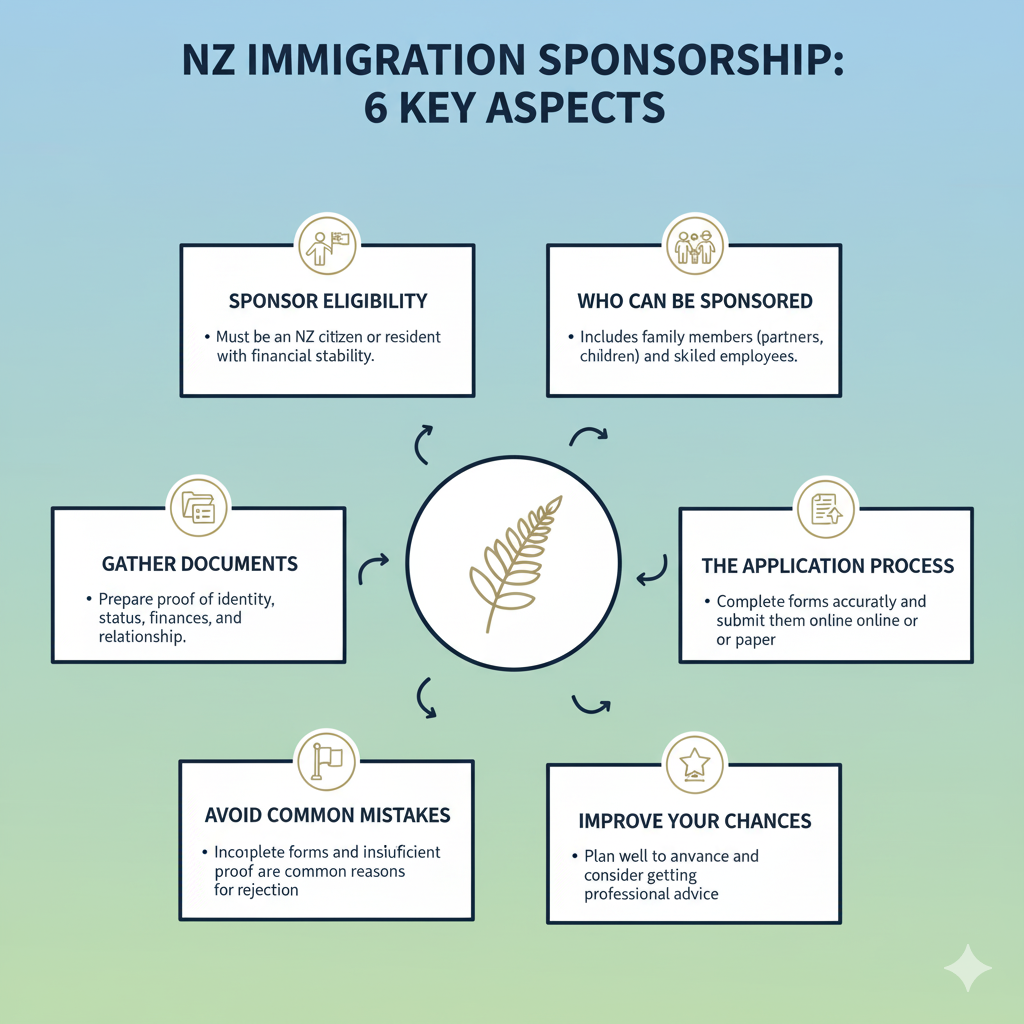
A lot of sponsorship applications don’t go through because they don’t have all the right documents, the forms aren’t filled out completely, or the information isn’t consistent. Immigration officers can’t approve applications that are missing required evidence or have information that doesn’t match up across documents.
Take the time to carefully go over the checklists and make sure that all the necessary papers are there. To avoid delays or rejections, make sure that all of your paperwork has the same names, dates, and other information.
Not enough proof of funds
Failing to meet financial requirements represents another common rejection reason. Sponsors need to not only meet income requirements, but they also need to show that they are financially stable and can support the person they are sponsoring.
As needed, provide full financial records that cover several months or years. Add explanations for any strange transactions or changes in income that might come up during the assessment.
Problems with character or health
If either the sponsor or the applicant has character problems, the application may be turned down. Applications can be turned down if the person has broken immigration laws in the past, been convicted of a crime, or not met health requirements.
Be honest about any possible character issues and give clear explanations with proof when needed. Trying to hide important information usually has worse effects than being honest about problems.
Relationship Authenticity Concerns
To stop fraud, Immigration New Zealand carefully looks at family ties. Applications that don’t have solid proof of real, stable relationships often get turned down.
Offer extensive relationship documentation covering prolonged durations. Include various types of documentation showing ongoing commitment, cohabitation, financial interdependence, and social recognition of the relationship.
How to Make Your Sponsorship Application Stand Out
A Plan for Detailed Documentation
Put documents in order and make sure to explain things clearly when they get complicated. Make cover letters that summarize the main points and point out the relevant evidence that supports them.
Use certified translation services to translate all documents written in a foreign language. Include both the original language versions and the certified English translations when needed.
Keep copies of everything you send in and write down every conversation you have with Immigration New Zealand. This information is useful if you have questions during the process or need to file an appeal.
Things to think about when getting professional help
Professional immigration advice isn’t required, but it can greatly increase the chances of getting your application approved, especially for complicated cases. Licensed immigration advisers understand current policies, processing procedures, and common pitfalls.
Be careful when choosing advisers; check their credentials with the Immigration Advisers Authority. It’s against the law in New Zealand for people who aren’t licensed to offer immigration services. This could hurt your application.
Timing and Planning
Plan your applications well in advance of when you want to travel, taking into account processing times and possible delays. Applications that are rushed often have mistakes or missing paperwork.
Think about how processing times and immigration officer workloads change with the seasons. Some times of the year see more applications, which could make processing take longer.
Keep an eye on policy changes that could have an effect on your application type. Immigration rules can change quickly, so it’s important to stay up to date to avoid surprises when you apply.
Changes and updates to policies that have happened recently
Changes to immigration after COVID
After the COVID-19 pandemic, New Zealand’s immigration system changed a lot. Border closures, health requirements, and delays in processing hurt sponsorship applications in all categories.
Recent policy announcements have shown that the government is moving toward skills-based immigration and changing the ways families can reunite. These changes are in line with New Zealand’s changing economic and demographic goals.
Keep up with the latest entry requirements, such as vaccination requirements and health screening procedures that could affect people you sponsor.
Digital Transformation Projects
Immigration New Zealand is still adding more online application systems and digital processing capabilities. The goal of these changes is to keep security standards high while making things run more smoothly and cutting down on processing times.
New online sponsorship forms and systems for tracking applications make it easier to see how far along an application is. However, technical issues occasionally occur, so maintain backup documentation and contact information.
Skills Shortage List Updates
Regular updates to lists of skills shortages have an effect on employer sponsorship opportunities. Industries that are having a hard time finding workers may get faster processing or fewer requirements for sponsored workers.
If you’re looking for employer sponsorship pathways, check these lists often because changes can have a big effect on how you apply and how long it takes to process your application.
Help and Resources
Official Government Resources
The website for Immigration New Zealand has a lot of information about current policies, forms, and how to process applications. To stay up to date on changes, bookmark important pages and sign up for updates.
If you have specific questions about your situation, get in touch with Immigration New Zealand directly. Even though you might have to wait a long time, following official advice will make sure you get the right and up-to-date information.
Networks of community support
The different immigrant groups in New Zealand can help each other and give each other advice based on their own experiences. Community groups often help new sponsored people with practical things and teach them about the culture.
Professional groups in your field can help you get your credentials recognized, meet new people, and find career development resources that are important for a successful settlement.
Services for the Law and Professionals
Licensed immigration advisers give you expert advice that is specific to your situation. Their knowledge of current rules and policies can greatly increase the chances of getting an application approved.
Immigration law experts can help with hard cases or appeals. Lawyers cost more than immigration advisers, but they offer more protection and knowledge for tough situations.
Going Forward with Confidence
Sponsoring someone to move to New Zealand is both an opportunity and a duty that shouldn’t be taken lightly. To be successful, you need to plan carefully, prepare well, and keep your promise to help the people you sponsor.
At first, the process may seem too much to handle, but if you break it down into smaller steps and get the right help, you can do it. Keep in mind that Immigration New Zealand wants to approve applications that meet their requirements. Your job is to make sure that your application clearly and fully shows that it meets those requirements.
Sponsorship brings people and communities together in ways that last, whether it’s bringing family members back together or bringing valuable skills to New Zealand. Putting in the effort to do it right pays off with good results and good experiences for everyone involved.