
What is the dark side of entrepreneurship
It’s a strong idea to be your own boss. There are a lot of stories on social media about founders who quit their 9-to-5 jobs to follow their passions and build successful businesses from scratch. This well-known story makes starting a business seem like a sure way to get rich and happy. But there is a more complicated and difficult reality behind the highlight reel.
People often call this less-glamorous side of business “the dark side of entrepreneurship.” It means the big costs to your personal and professional life that come with starting a business. These problems, which can range from a lot of mental stress to not knowing how much money you have, are a part of the journey that not everyone talks about.
Knowing about these problems shouldn’t make you feel bad. It’s not about that; it’s about giving a full picture. You can get ready for the road ahead, build resilience, and learn how to deal with the problems that will come up by looking at the dark side of being an entrepreneur. This post will go into detail about these problems and give you useful tips on how to deal with them.
The effect on mental health
There can be a lot of pressure to do well. Entrepreneurs often pour their heart, soul, and savings into their ventures, tying their self-worth directly to the success of their business. This makes it a high-stakes place where the fear of failure is always there.
- Stress and Anxiety: The ups and downs of being an entrepreneur are like a rollercoaster. The constant uncertainty about getting money, getting customers, or changes in the market can make you feel stressed and anxious all the time. It feels like every choice is important, and the pressure to make the right one for employees and investors can be too much.
- Burnout: It is common for the “hustle culture” to glorify long hours of work. Many founders think that working long hours is necessary for success, so they don’t take care of their health, eat well, or get enough sleep. This fast pace is not sustainable and often leads to burnout, which is a state of physical and emotional exhaustion that can make you feel disconnected and useless.
Unstable finances
Financial instability is one of the biggest risks for entrepreneurs. An entrepreneur’s income can be unpredictable, especially at first, unlike a regular job where you get a steady paycheck.
Many founders go months or even years without drawing a salary, reinvesting every dollar back into the business. They often go into debt or put their life savings on the line to get their business off the ground. This financial instability doesn’t just affect the business; it also affects every part of personal life, making things stressful and limiting options. The dream of “getting rich” can quickly fade when you have to deal with the reality of making ends meet.
Stress on Relationships
Starting a business takes up all of your time. The time and energy required can leave little room for family, friends, and partners. People who love entrepreneurs often complain about missed dinners, canceled plans, and being mentally “checked out” even when they are there.
The ups and downs of running a business can also make relationships harder. Your friends and partners may not always understand how much stress you’re under. This can make you feel alone and cut off from your support system, which can make things worse when you need it most.
The Imposter Syndrome
Have you ever felt like a fake, just waiting for someone to find out? That’s what impostor syndrome is. It’s the constant feeling inside that you don’t deserve your success, even though there is evidence to the contrary. Many successful business owners, from the founders of startups to experienced CEOs, deal with these feelings of not being good enough in private.
This doubt about yourself can stop you in your tracks. It can make you doubt your choices, avoid taking risks that are necessary, and not give yourself enough credit for what you do. It’s easy to feel lost when you’re always pushing into new areas and facing problems you’ve never faced before. This is a normal part of the process, but it’s hard to get over in your mind.
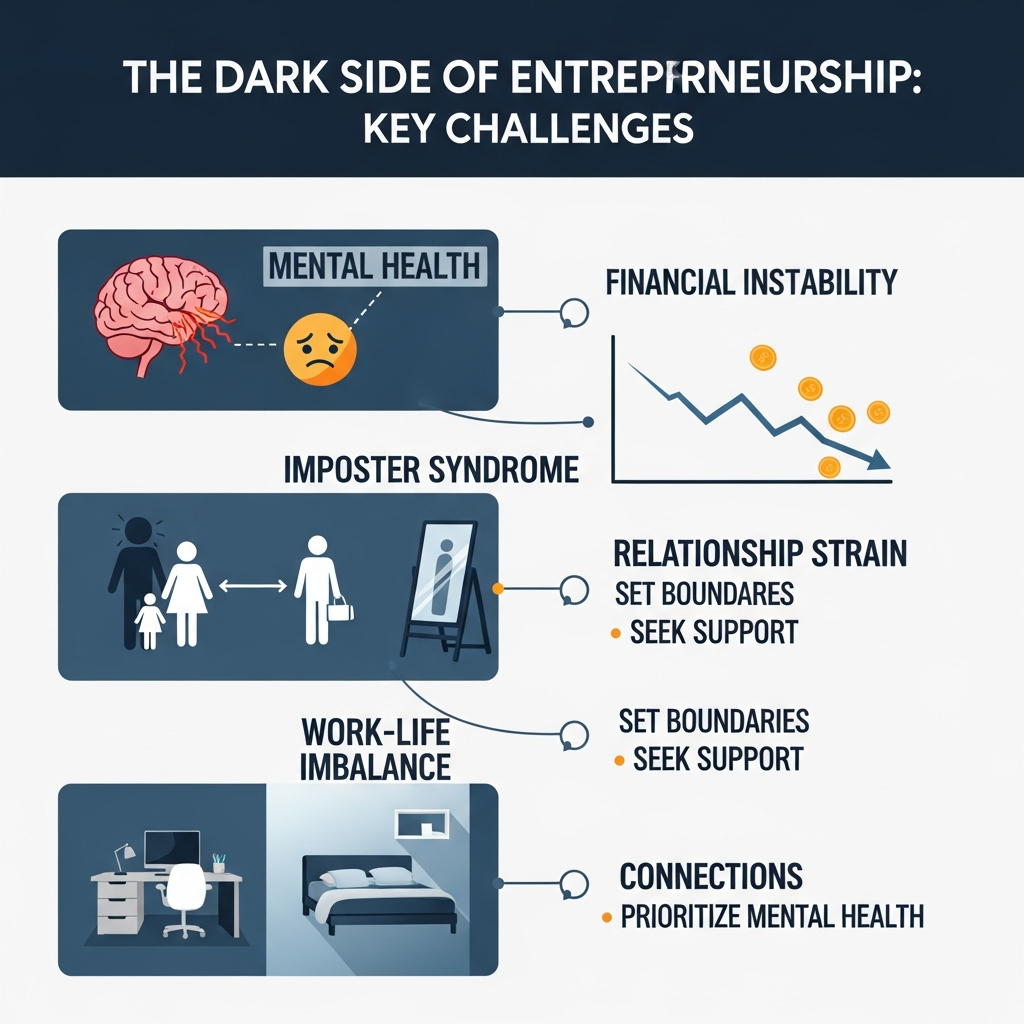
The Unbalance Between Work and Life
For business owners, the line between work and personal life is often unclear, if it even exists. It’s hard to turn off when your business is your passion. Your office could be your home, and you can always reach your work phone. It’s almost impossible to turn off and recharge with this “always-on” mindset.
This lack of separation can lead to more than just tiredness. It can keep you from being present in your personal life and make you forget about the hobbies and interests that used to make you happy. If you don’t set clear boundaries, work can take over your whole life and make you feel like you don’t have a life outside of work.
How to Handle the Bad Side of Being an Entrepreneur
The first step to getting over these problems is to admit that they exist. If you want to start your own business or are already running one, here are some tips to help you get through the tough times:
- Put Mental Health First: Treat your mental well-being as a critical business asset. Plan time for activities you enjoy, exercise, and rest. Think about getting help from a therapist or coach who knows what it’s like to be an entrepreneur and the stress that comes with it.
- Create a Strong Support Network: You don’t have to do this by yourself. Have friends, family, and mentors who will support you. Join entrepreneur groups or mastermind circles where you can talk about your problems with other people who understand.
- Set Clear Boundaries: Make an effort to keep your work and personal life separate. Set aside times and places where you won’t be working. After a certain time, turn off notifications and make an effort to be with the people you care about.
- Accept Flaws: Know that you will make mistakes. Failure isn’t the end; it’s a chance to learn. Be nice to yourself when things don’t go as planned, and celebrate small wins. Keep in mind that the goal is to make progress, not to be perfect.