What is immigration amnesty

Amnesty for immigrants is a complicated and often talked-about issue. It means giving legal status to people who came into or stayed in a country without permission. This one policy choice can change millions of lives, change the economies of whole countries, and change the way people live in communities. Understanding what amnesty truly means, beyond the political headlines, is crucial for anyone interested in immigration law and policy.
This guide goes into great detail about immigration amnesty. We will look at what it means, where it came from in the US, and weigh the pros and cons of using it. This post aims to give a clear, balanced, and complete picture of immigration amnesty and its place in the larger discussion about immigration reform by looking at past programs, busting common myths, and looking to the future.
A Short History of Immigration Amnesty
Knowing about the history of immigration amnesty in the US is important for today’s debates. This idea isn’t new; it has been used before to talk about the status of large groups of undocumented immigrants.
The “Reagan Amnesty” of 1986
The Immigration Reform and Control Act (IRCA) of 1986, which President Ronald Reagan signed into law, is the most important example of immigration amnesty in U.S. history. This important law had two main goals: to stop and control illegal immigration and to give people who were already in the country a way to become legal.
- Who could apply? IRCA gave amnesty to illegal immigrants who had lived in the U.S. without permission since before January 1, 1982. It also had a special program for some farm workers.
- What happened in the end? IRCA gave legal status to about 2.7 million people. The program’s effects have been studied, and the results are mixed. Many people who were recently legalized saw their wages go up and their ability to move around the economy improve. They could put money into their education, start businesses, and pay more taxes. On the other hand, the law’s attempts to stop illegal immigration in the future, like punishing employers, didn’t work as well as they were supposed to, and the number of undocumented immigrants started to rise again in the years that followed..
The last major immigration amnesty under President Reagan is still an important point of reference in all modern talks about immigration policy.
Other Programs Like Amnesty
IRCA was the biggest program, but other smaller ones have also helped in similar ways. Temporary Protected Status (TPS) and Deferred Action for Childhood Arrivals (DACA) are not technically amnesty, but they do give certain groups of immigrants who are in very bad situations, like armed conflict or natural disasters in their home countries, temporary protection from deportation and permission to work. These programs show that we still need rules that deal with the problems of immigration outside of the usual legal ways.
The Benefits of Immigration Amnesty
People who support immigration amnesty say that it is good for both immigrants and the country as a whole. These arguments are often about making money, bringing people together, and doing good things for people.
Benefits for the economy
- More Money for Taxes: When undocumented workers get legal status, they can work “on the books” in higher-paying jobs. This means they pay more in income and payroll taxes. Their legal status lets them make more money, which raises their taxable income.
- Labor Force Growth: Amnesty can help stabilize the workforce, particularly in sectors like agriculture, construction, and hospitality that often rely on immigrant labor. Legalizing workers gives them protections at work, which cuts down on abuse and makes the job market more stable for everyone.
- Economic Stimulation: Immigrants are more likely to spend, invest, and start businesses when they have legal status and higher wages. This increased economic activity stimulates local economies and creates jobs.
Benefits for people and society
- Improved Community Integration: Amnesty can reduce the fear and uncertainty that dominate the lives of undocumented individuals. When people aren’t afraid of being deported, they are more likely to report crimes, get medical care, and take part in community life. This makes social cohesion stronger.
- Family Reunification: Many undocumented immigrants have lived in the U.S. for decades and have strong ties, such as children who are U.S. citizens. Amnesty keeps families together, which is good for their mental and financial health because it keeps them from having to go through the trauma of being apart.
- Protecting Human Rights: From a humanitarian point of view, giving people a way to get legal status is a kind thing to do for people who have built lives and helped society, often while living in the shadows.
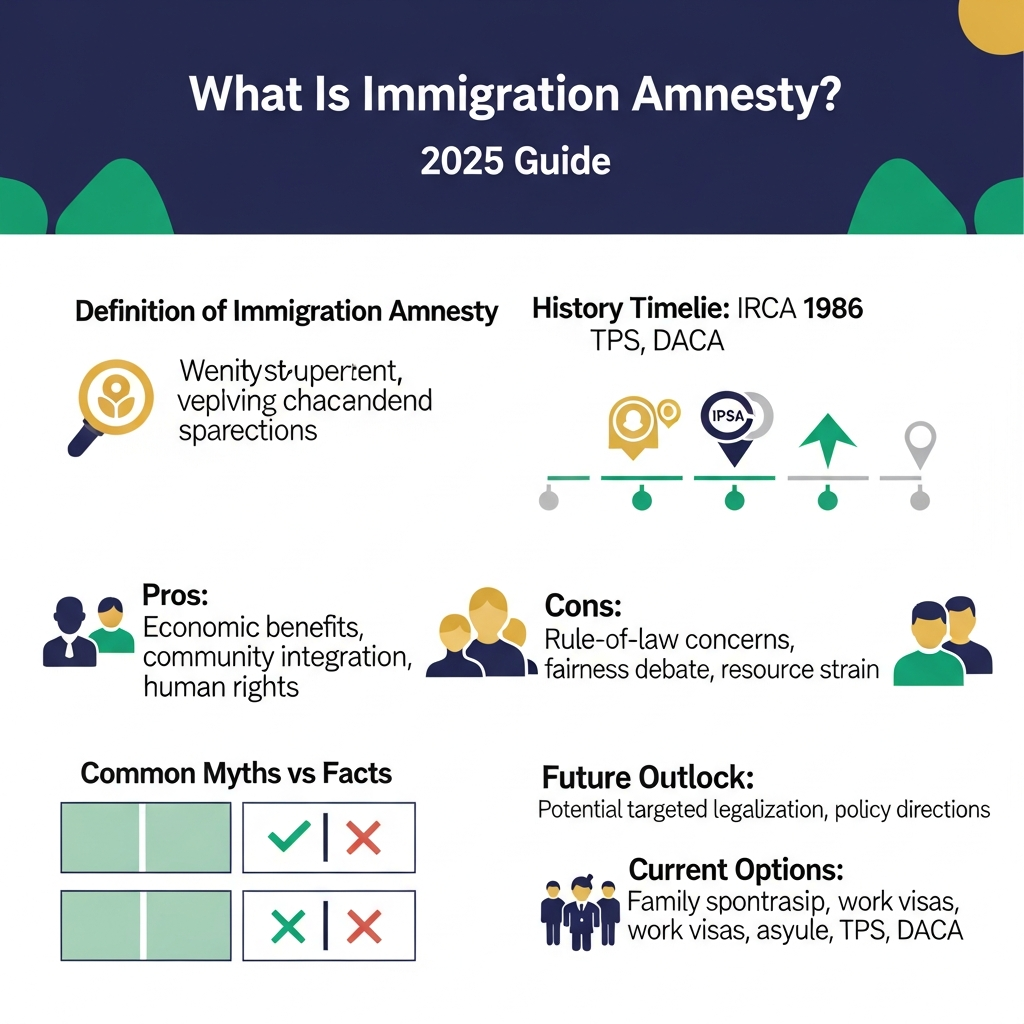
The Drawbacks of Immigration Amnesty
On the other hand, people who are against amnesty are very worried about the bad things that could happen if it is granted. These arguments typically focus on fairness, the rule of law, and the potential strain on public services.
Fairness and the Rule of Law
- Perceived Unfairness: A primary argument against amnesty is that it is unfair to those who have followed the legal immigration process, which can be long, expensive, and complex. Some people might see it as “rewarding” people who broke the law while others waited their turn.
- Encouraging Future Illegal Immigration: Critics are worried that a large-scale amnesty program could make people think that immigration laws aren’t being strictly followed, which could lead to more people entering the country without permission in the hope of getting an amnesty in the future. People often call this a “pull factor.”
Stress on Public Resources
- Increased Demand for Services: Granting legal status to millions of people could place additional strain on public resources like schools, healthcare systems, and social services. Newly legalized immigrants would also have to pay more in taxes, but the sudden rise in demand could be hard for some communities to handle.
- Infrastructure Challenges: If not planned for properly, a sudden rise in the legally recognized population could also put a strain on physical infrastructure, like housing and transportation.
Setting the Record Straight on Amnesty Myths
There are a lot of strong opinions on both sides of the immigration amnesty debate, but it’s important to know what’s true and what’s not. Let’s use facts to clear up some common myths.
Myth 1: Amnesty will cause a lot of native-born workers to lose their jobs..
Truth: Most studies of the economy show that immigrant workers do not replace native-born workers; instead, they work together with them. Immigrants often take jobs that native-born workers don’t want to do or that there aren’t enough native-born workers to do. Immigration can also create new jobs by making the economy more active. The legalization of millions of people could increase consumer demand, further stimulating the economy.
Myth 2: Immigrants don’t have to pay taxes.
Reality:undocumented immigrants already make a big difference in the economy by paying billions of dollars in sales, property, and even payroll taxes (often through Individual Taxpayer Identification Numbers or deducted from paychecks without the ability to claim refunds). Giving them legal status would officially include them in the tax system, which would greatly increase the amount of taxes they pay over their lives.
Myth 3: The only two choices are mass amnesty and mass deportation.
Reality: This is a false choice. The immigration debate involves a spectrum of policy options. In the middle of these two extremes are ideas for better border security, easier ways for people to legally immigrate, bigger guest worker programs, and programs that help certain groups of people (like DACA recipients) become legal. A comprehensive approach frequently entails a blend of these strategies rather than a binary option.
The Future of Immigration Amnesty
There are no broad immigration amnesty programs that people can apply for in the United States as of 2025. Talks about future amnesty proposals are very political. The conversation is still going on, though, and different ideas are being looked at as part of a larger immigration reform effort.
Possible directions for policy
- Legalization with a specific goal: Some proposals don’t call for a broad amnesty. Instead, they want to give legal status to certain groups, like “Dreamers” (people who came to the U.S. as children), farmworkers, or essential workers who have been in the country for a long time.
- Path to Citizenship vs. Legal Status: A major point of contention is whether amnesty should offer a direct route to full citizenship or a more restricted legal status, such as permanent residency without voting rights.
- Full Reform: A lot of people who make laws say that amnesty shouldn’t be the only thing that happens. They think it should be part of a bigger plan that includes better border security, changes to the legal immigration system, and better enforcement of employment laws.
There is no program called “immigration amnesty 2025” right now. If you hear any news that says otherwise, you should check with official government sources like U.S. Citizenship and Immigration Services (USCIS).
How to Get Immigration Amnesty
You can’t apply for a general amnesty program right now because there isn’t one. Individuals seeking to change their immigration status should explore existing legal pathways. This might include:
- Sponsorship by family
- Visas for work
- Asylum or refugee status
- Other humanitarian programs, such as TPS or DACA (if you qualify and the application period is open)
It’s hard to figure out how to use these options because the rules change all the time.
Finding Your Way Forward
One of the most divisive issues in U.S. policy is immigration amnesty. It shows a basic conflict between upholding the law and dealing with the economic and social reality of the millions of undocumented people living in the country. As we’ve seen, it could have positive effects on the economy and on people in need, but there are also good reasons to worry about fairness and the possibility that it could lead to more illegal immigration in the future.
The 1986 IRCA shows that amnesty can help millions of people become part of society, but it is not the only way to fix a broken immigration system. Any future talks about amnesty will need to learn from the past and be part of a bigger plan.