Value My Car NZ: How to Work Out What Your Car Is Worth
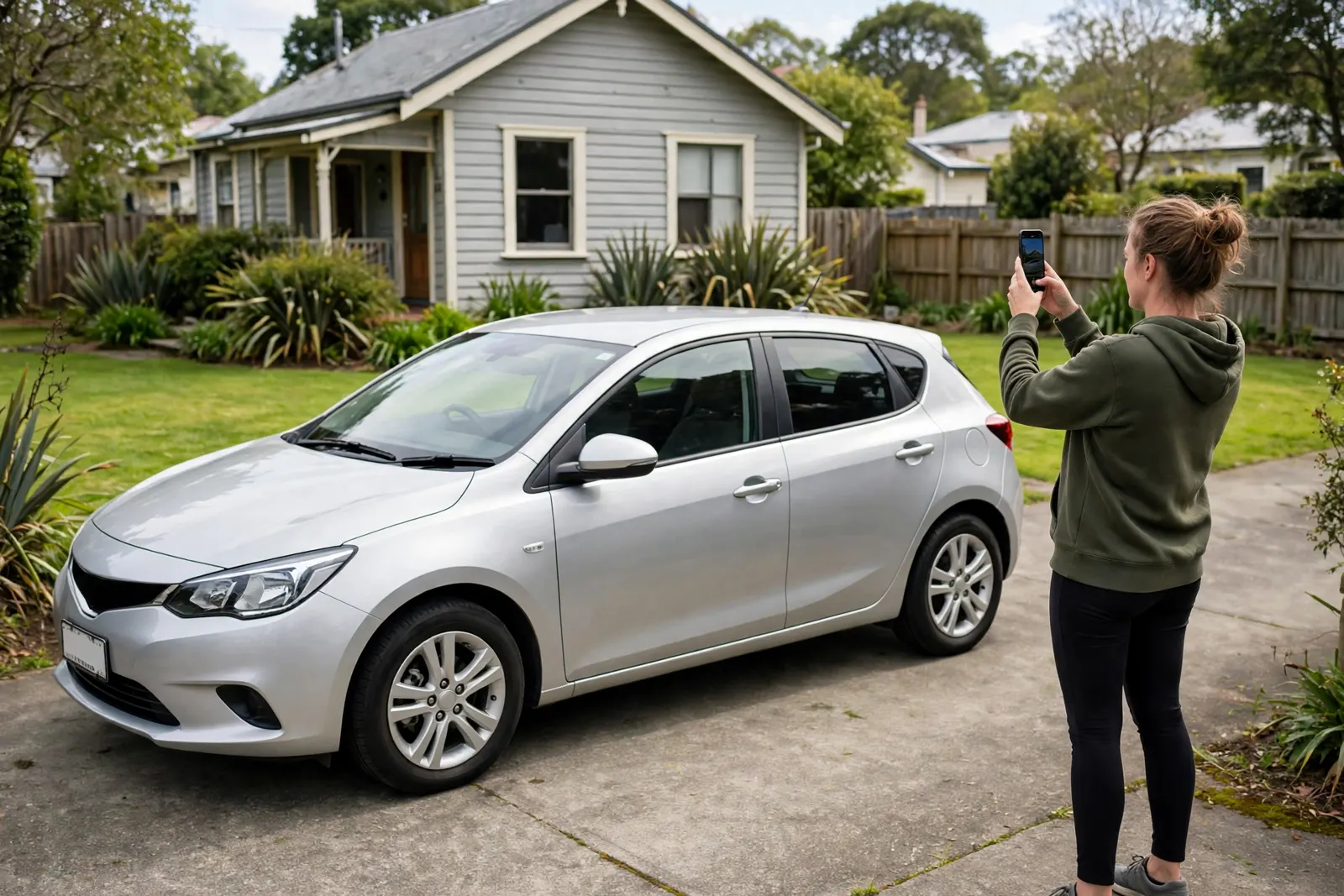
Ask three people what your car is worth and you will likely get three different numbers. A dealer offers one figure as a trade-in. Cars like yours are advertised online for noticeably more. Your insurance paperwork shows another number again. Nobody is necessarily lying. They are answering slightly different questions, and until you know which question you are asking, “value my car” searches will keep giving answers that do not line up. This guide covers the main ways a car’s value is expressed in New Zealand, what moves it up or down, and the checks worth doing before you sell, trade in or renew your insurance.
Quick answer
Your car does not have one value. It has at least three:
- Private sale value: what a buyer will pay you in a private sale, usually the highest of the three, because the buyer pays for the car itself rather than funding a dealer’s margin and resale costs.
- Trade-in value: what a dealer will allow against another car. Almost always lower, because the dealer has to prepare, warrant and resell your car at a profit.
- Insurance value: either an agreed value you set with your insurer, or the market value at the time of a claim. It only matters if the car is written off or stolen, but it can differ from both figures above.
The most reliable way to find your private sale value is to research what similar cars are advertised for, adjust for age, kilometres, condition and history, then sanity check the figure against a dealer valuation or two.
The three ways a car’s value is expressed
Market value
Market value is what your car would sell for in the current market, in its current condition. Consumer Protection describes it, in the insurance context, as what your vehicle is worth just before it is damaged. Insurers settling claims on a market value basis look at what similar cars in similar condition are selling for, which is why two owners with the same model can receive different settlements. A tidy, low kilometre example is simply worth more than a tired one.
Trade-in value
A trade-in is a wholesale transaction dressed up as a discount. The dealer takes your car, spends money getting it ready for resale, holds it until a buyer appears, and needs a margin on top. That margin, plus reconditioning costs and the risk the car sits on the yard, comes out of what they offer you. Expect less than you could get privately. In return you get convenience: no listings, no viewings, no strangers test driving your car, and the changeover done in one transaction. Whether that is worth the gap is a judgement call, but you should know the size of the gap before deciding.
Agreed value (insurance)
If you insure your car, you will usually choose between market value cover and agreed value cover. Consumer Protection puts it plainly: agreed value is a figure you and your insurer settle on when you take out the policy and each time it renews. If the car is written off, that is what you are paid. Market value cover pays what the car was worth immediately before the loss, a number only worked out after something has gone wrong.
Setting an agreed value well above what the car would fetch creates no windfall, and it does raise your premium, because premiums are partly based on the sum insured. Our guide to Car Insurance NZ works through how the two cover types compare. The practical point is that insurance value should track the car’s real market value, so it needs revisiting as the car ages.
What drives your car’s value
Two cars of the same model and year can be worth quite different amounts. These are the factors buyers, dealers and valuers weigh up.
Age and odometer reading. Age sets the broad bracket, but kilometres do much of the fine sorting. A six year old car with 60,000 km and an identical car with 160,000 km are not the same proposition.
Condition inside and out. Dents, paint damage, worn tyres, a smoky interior and warning lights all chip away at value. Mechanical condition matters most, because buyers price in the repairs they can see coming.
Service history. A stamped service book or a file of invoices tells a buyer the car has been looked after. Gaps raise questions, and questions lower offers. Consumer Protection suggests asking sellers about service receipts and big ticket items. If a car has a cambelt, it generally needs changing every 100,000 km, an expensive job, so a car due one is worth less than one that has just had it done.
NZ new or used import. Where the car started life affects its paperwork, specification and history trail. Buyers tend to pay for a full, traceable New Zealand record.
Fuel type and running costs. Petrol, diesel, hybrid and electric versions of similar cars can hold their value quite differently, and demand shifts with fuel prices. For EVs, battery health is a core part of the value. Consumer Protection advises EV buyers to ask about the battery’s state of health and capacity, because those affect how far the car travels on a charge. A tired battery means a lower value, whatever the odometer says.
Warrant of Fitness and registration. A fresh WoF and plenty of registration left make a car easier to buy, so they support the price. A car sold days from its WoF expiry invites a discount for the risk of a fail sheet. Specification matters too: trim level, safety features and whether the model has a following all nudge the price, as does local supply.
Step by step: valuing your car yourself
You do not need a paid valuation to get a solid figure for an ordinary car. You need an hour and a bit of discipline.
- Write down your car’s exact specification. Year, make, model, variant, engine size or motor, transmission, fuel type and odometer reading. Small differences, such as a higher specification variant, can move the price, so compare like with like.
- Search current listings for the same car. Same model and variant, within a year or so of age and a similar odometer range. Note asking prices, and notice how long listings have been sitting. Cars priced at the top of the range that linger for weeks are telling you the market disagrees.
- Build a range, not a single number. Low, middle and high. A car in average condition with average kilometres sits near the middle. Be honest about where yours falls.
- Adjust for your car’s specifics. Add a little for a full service history, recent major maintenance or new tyres. Subtract for damage, a due cambelt, a tired interior or a short WoF. Buyers make these adjustments even if you do not.
- Cross-check against the other two values. A trade-in offer near the bottom of your range is normal. An agreed insurance value well above the top means you may be paying premiums on value you would never recover.
Getting dealer valuations
A dealer appraisal is worth getting even if you plan to sell privately. It gives you a real, money on the table figure to compare your research against, and a floor if private selling becomes a grind. Get more than one, because offers vary with what stock a dealer needs, and ask for the trade-in figure and any outright purchase figure separately. If you are trading in, negotiate the price of the car you are buying and the value of yours as two separate numbers. Blending them into one changeover figure hides where the discount really sits.
Dealers must be registered on the Motor Vehicle Traders Register, and you can check a trader’s registration there before dealing with them. When a dealer sells a used car, they must display a Consumer Information Notice covering details such as the price, the vehicle’s history and any money owing on it, which makes yard stock a useful benchmark for your own car.
Checking history and money owing
A car’s value assumes it is clean: no debt attached, no hidden past. Two official checks help establish that, and buyers increasingly expect sellers to have done them.
The PPSR check. The Personal Property Securities Register (PPSR) is the official register of security interests over personal property, run by the Companies Office. If a previous owner borrowed against the car and a lender registered an interest, that interest can follow the car. Consumer Protection warns that a car can be repossessed by a finance company if money is still owed on it, even after it changes hands privately. A PPSR search costs $2.30 including GST, per the register’s official schedule of fees, and you search using the car’s identifiers such as its VIN. As a seller, being able to show a clean search removes a reason for buyers to haggle or walk away.
NZTA records and the odometer. NZ Transport Agency Waka Kotahi holds the Motor Vehicle Register, which includes details such as odometer readings and inspection history. Readings are recorded when vehicles are inspected, so a car’s recorded history should climb steadily. A reading that drops, stalls oddly or clashes with the service records is a red flag for odometer tampering, and a serious value problem.
Change of registered person. When a vehicle changes hands, both buyer and seller must tell NZTA straight away, so the change of registered person is completed on the Motor Vehicle Register. NZTA records the registered person, not ownership as such, and that person is responsible for licensing and road user charges. Completing your side promptly protects you from tickets and charges that belong to the new keeper.
Trade-in vs private sale vs selling to a dealer
Each route trades money for effort differently.
Private sale usually returns the most. You set the price, you keep the whole amount, and competition between buyers works in your favour. The costs are time and hassle: photographing, listing, answering questions, hosting viewings and handling payment safely. Be aware of the legal flip side when buying privately. Consumer Protection is clear that private sellers do not have to comply with the Consumer Guarantees Act or the Fair Trading Act, and do not have to display a Consumer Information Notice. Buyers know this, and some will only buy privately at a price reflecting the risk.
Trade-in returns the least but asks the least of you. It can also simplify finance and timing, since both cars change hands together. Its real use is as a benchmark and a fallback.
Selling outright to a dealer sits between the two: a fast, clean sale without viewings, at a wholesale price below what a private buyer might pay. For an older or high kilometre car that could take weeks to sell privately, that certainty can be worth the difference.
One legal point matters whichever side of a dealer sale you are on. Dealer sales are covered by the Consumer Guarantees Act: the vehicle must be of acceptable quality, fit for purpose and as described, and the dealer must put things right if it is not. That protection is part of what a dealer’s higher asking price pays for, and part of why equivalent cars cost more on a yard than in a private listing.
Pricing to sell
Price from your research, not from what you paid or what you still owe. Neither figure matters to a buyer. Anchor near the middle of your comparable range if your car is average, a touch higher if the history and condition justify it, and leave a small amount of room to negotiate.
Presentation feeds straight into price. A clean car, good daylight photos, an honest description mentioning the service history and any known faults, and paperwork ready to show will move a car faster and closer to your asking figure than the same car photographed in the dark with a one line description. If enquiries are silent after a week or two, the market is giving you feedback, and a modest early reduction beats a stale listing buyers learn to scroll past.
For more on the money side of car ownership, from insurance to running costs, see our Finance, Tax & Money guides.
Common mistakes
- Valuing from one listing. A single optimistic advert is not the market. Use a spread of comparable cars.
- Confusing the three values. Quoting your agreed insurance value as your asking price, or expecting a trade-in to match private listings, sets you up for a slow sale or a rude shock.
- Ignoring money owing. Selling or buying without a PPSR check risks the car being repossessed for someone else’s debt.
- Pricing from what you owe. Finance owing does not make a car worth more. If the balance is above market value, that gap is a problem to solve, not a price to charge.
- Hiding faults. Buyers find them, and trust collapses. An honest listing with receipts beats a polished one with surprises.
Frequently asked questions
How do I find out what my car is worth in NZ?
Research current asking prices for the same make, model, variant and approximate age and kilometres, then adjust for condition and history. Cross-check with a dealer appraisal or two. The overlap between those sources is a realistic value range.
Why is my trade-in offer so much lower than similar cars advertised online?
Because the dealer has to prepare, hold and resell your car at a profit, and dealer asking prices reflect Consumer Guarantees Act obligations that private sellers do not carry. The gap is normal.
What is the difference between agreed value and market value?
Agreed value is a figure you and your insurer settle on when the policy starts and at each renewal, and it is what you are paid if the car is written off. Market value is what the car was worth immediately before the loss, worked out at claim time from what similar cars sell for.
How much does a PPSR check cost?
A search of the Personal Property Securities Register costs $2.30 including GST, per the register’s official schedule of fees. It shows whether a security interest, such as finance owing, is registered against the car.
Can a car be repossessed after I buy it privately?
Yes, if money is still owing on it and a lender holds a registered security interest. Consumer Protection lists this as a risk of private buying, which is why a PPSR check before you pay is money well spent.
Sources
- Consumer Protection, Car insurance (market value and agreed value definitions): https://www.consumerprotection.govt.nz/help-product-service/cars/paying-registering-insuring-car/car-insurance
- Consumer Protection, Buying a car from a dealer (registration, Consumer Information Notice, Consumer Guarantees Act): https://www.consumerprotection.govt.nz/help-product-service/cars/finding-the-right-car/buying-car-from-dealer
- Consumer Protection, Buying a car privately (legal protections, money owing risk): https://www.consumerprotection.govt.nz/help-product-service/cars/finding-the-right-car/buying-car-privately
- Consumer Protection, Researching cars and sellers (dealer and private sale differences): https://www.consumerprotection.govt.nz/help-product-service/cars/finding-the-right-car/researching-cars-sellers
- Consumer Protection, Pre-purchase inspections and checks (service history, cambelt, EV battery health): https://www.consumerprotection.govt.nz/help-product-service/cars/pre-purchase-inspections-checks
- Personal Property Securities Register, Schedule of fees (PPSR search $2.30 including GST): https://ppsr.companiesoffice.govt.nz/help-centre/paying-ppsr-fees/schedule-of-fees/
- NZ Transport Agency Waka Kotahi, Change of vehicle ownership (registered person requirements): https://nzta.govt.nz/vehicles/buying-and-selling-a-vehicle/vehicle-ownership
- NZ Transport Agency Waka Kotahi, The Motor Vehicle Register (odometer readings and inspection history held): https://www.nzta.govt.nz/vehicles/how-the-motor-vehicle-register-affects-you
This article is general information only, not financial or legal advice. Car values move with the market, and your car’s worth depends on its individual condition and history. For a formal valuation, for example for insurance disputes or legal purposes, use a registered valuer.