David Henry Kindergarten: Enrolment, Hours, Curriculum and Key Information
David Henry Kindergarten: Enrolment, Hours, Curriculum and Key Information
The short answer
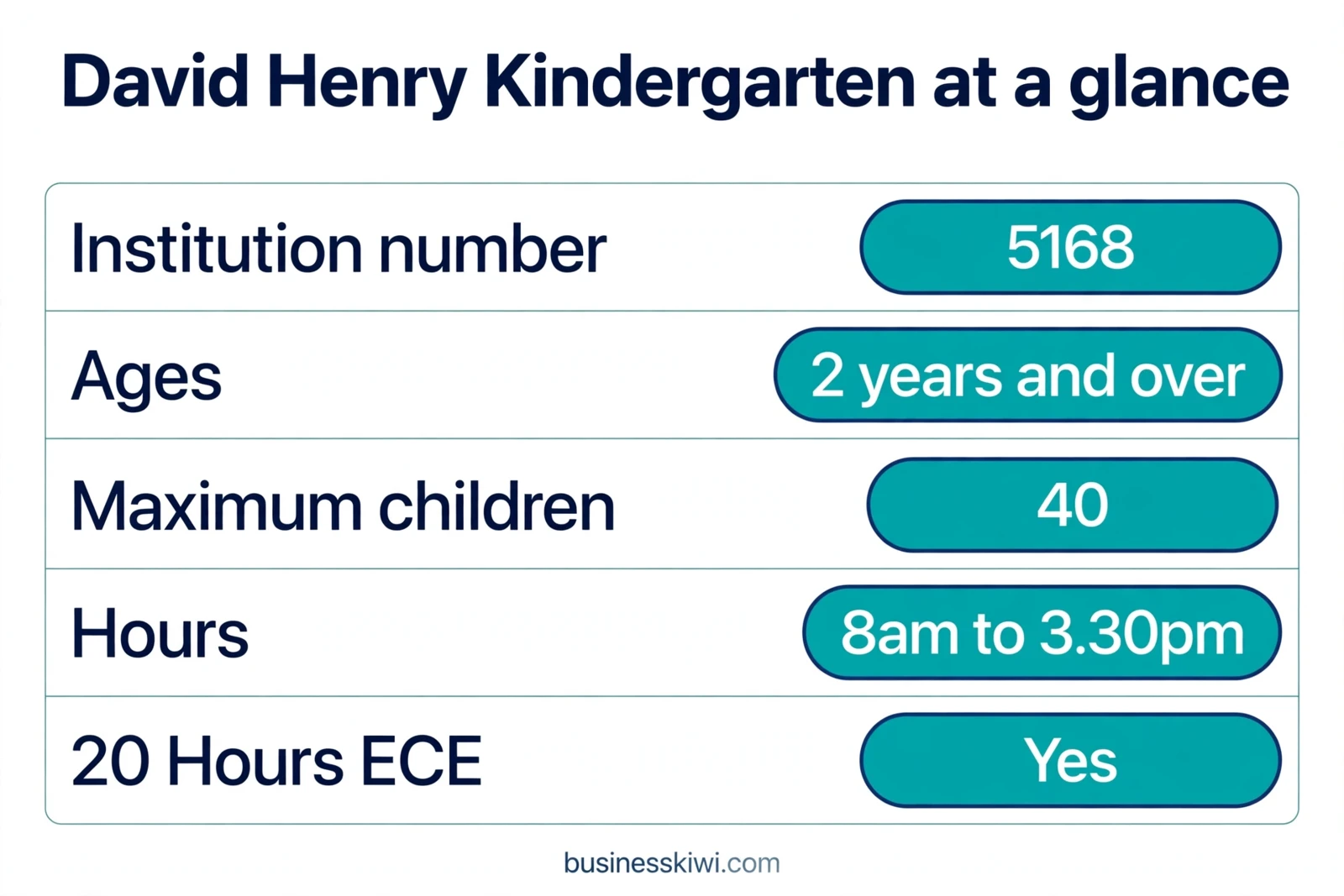
David Henry Kindergarten is a community kindergarten in Tokoroa, in the South Waikato district. It is part of Central Kids Kindergartens, a not for profit network of kindergartens across the central North Island. It takes children from two years of age, is licensed for up to 40 children at a time, and is open Monday to Friday from 8am to 3.30pm, including during term breaks.
This guide sets out the facts parents usually ask about: where the kindergarten is, who runs it, the ages and hours, how enrolment works, what it costs, what children learn there, and what to do if you want to visit or enrol. It is general information, not advice about which early learning service is right for your child. Every figure in this guide comes from an official source, and where a figure could not be verified it is stated plainly rather than guessed.
David Henry Kindergarten at a glance
| Detail | What is known |
|---|---|
| Full name | Central Kids Kindergartens – David Henry |
| Institution number | 5168 |
| Address | 60 Fergusson Street, Tokoroa 3420 |
| Phone | 07 8851016 |
| davidhenry@centralkids.org.nz | |
| Service type | Kindergarten |
| Ages | 2 years and over (no children under 2) |
| Maximum children | 40 |
| Hours | Monday to Friday, 8am to 3.30pm |
| Term breaks | Open |
| 20 Hours ECE | Yes |
| Head teacher | Rie Gathergood |
| Administrator | Courtney Jones |
| Organisation | Central Kids Kindergartens |
The details in this table come from the Ministry of Education Education Counts directory and from the kindergarten’s own page on the Central Kids website. Both were read in November 2026.
Where it is and how to find it
David Henry Kindergarten sits at 60 Fergusson Street in Tokoroa, a town in the South Waikato district of the Waikato region. Fergusson Street is one of the streets in the older part of Tokoroa, close to the town centre. The kindergarten is named after Sir David Henry, the managing director of New Zealand Forest Products who took a close interest in Tokoroa’s development when the town grew around the Kinleith timber mill from the late 1940s. Many of Tokoroa’s streets were named by Henry after places near his home town of Edinburgh in Scotland, and the nearby David Henry School carries the same name.
Tokoroa is the largest town in the South Waikato district. Families visiting the kindergarten for the first time can simply turn up during opening hours. The kindergarten’s own welcome is plain: “Nau mai haere mai, we welcome you to visit our kindergarten any time.” There is no appointment system stated on its page, but phoning ahead on 07 8851016 is the sensible step if you want to be sure a kaiako is free to show you around and talk through enrolment.
Who runs it: Central Kids Kindergartens
David Henry Kindergarten is run by Central Kids Kindergartens, the early childhood arm of the Central North Island Kindergarten Trust, a registered charitable trust. Central Kids describes itself as a not for profit organisation that reinvests its funds to help whanau and to keep early childhood education accessible and affordable. Its head office is in Putaruru, and the network operates 48 kindergartens and 8 full day care centres, running from Whitianga in the north to Taumarunui in the south and Opotiki in the east.
Being part of a larger network matters for parents in practical ways. Enrolment, fees and support policies are set at network level, so the rules at David Henry match those at other Central Kids kindergartens. The kindergarten also draws on shared support, including the Matauranga Ake team, which works with whanau who would benefit from extra assistance towards a resilient, stable and supportive home life.
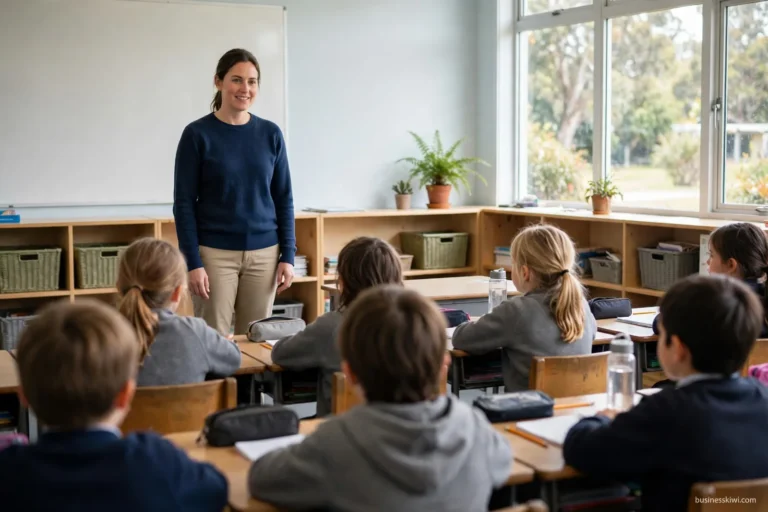
The head teacher at David Henry is Rie Gathergood, and the administrator is Courtney Jones. The kindergarten’s own page describes its kaiako as passionate and enthusiastic teachers who develop close relationships with tamariki and whanau. Its guiding statement is: “Na te atuatanga o te tamaiti hei whakarahi, we let the uniqueness of the child guide our work.”
Ages, places and hours
David Henry Kindergarten takes children from two years of age up to school age. It does not take children under two. The Education Counts directory records the maximum number of children as 40, and the age range as two year olds and over only. That is the licensed maximum, not the current roll. The number of children actually enrolled on any given day is not published, so this guide does not state a roll figure.
The kindergarten is open Monday to Friday, 8am to 3.30pm. That is a seven and a half hour day. Unlike many kindergartens, it stays open during term breaks. Parents who work through school holidays should still confirm the exact arrangements for public holidays, as Central Kids states that no fees are charged for public holidays or closure days, which means the kindergarten does close on public holidays.
Central Kids requires tamariki to enrol for a minimum of six hours a day, three days a week. That is 18 hours a week. Families can enrol for more than the minimum, up to the full five days, subject to places being available. When a child starts, kaiako support the transition from home to kindergarten and take care to be mindful of the child’s needs. Parents are welcome to stay, have a cup of tea and meet the team while their child settles in.
Enrolment: how it works, and the question of a zone
There is one point about this kindergarten that parents should understand clearly. David Henry Kindergarten does not have an enrolment zone. Zones, or enrolment schemes, apply to state schools. Kindergartens do not run them. Any family can apply to enrol their child, regardless of where they live in Tokoroa or beyond. Places are offered subject to availability, not to an address boundary. The sheet title for this guide mentions a zone because it uses a school profile template, but for a kindergarten the honest answer is that there is no zone to describe.
To enrol, contact the kindergarten directly by phone or email, or use the enquiry form on the Central Kids website. The kindergarten encourages whanau involvement before tamariki start, and that involvement often lasts long after tamariki have left. A visit is the best first step. You can see the rooms and the playground, meet the kaiako, and talk about your child’s needs, the days you want, and the funding and subsidies that apply to your family.
If there is a waiting list, the kindergarten will tell you. The guide does not state waiting times, because they change with enrolments and are not published.
What it costs: 20 Hours ECE, fees and help
David Henry Kindergarten offers 20 Hours ECE, the Ministry of Education funding that covers up to 20 hours a week of early childhood education for three, four and five year olds. Under the scheme, a child can attend for up to six hours a day and 20 hours a week without fees being charged for those hours. The funding is paid to the service, not to the family, and the family attests that the funded hours are used at that service.
What a family actually pays depends on the child’s age and how many hours they are enrolled for. Children aged three and over can use their 20 Hours ECE at David Henry. Children aged two are not covered by 20 Hours ECE, so their hours are charged at the kindergarten’s hourly rate. Hours above the funded 20 are also charged at the hourly rate. Central Kids publishes its hourly rates in its kindergarten directory rather than on each kindergarten’s page, and the David Henry hourly rate was not found in a published source, so no dollar figure is stated here. Families should ask the kindergarten directly for the current rate before enrolling.
Three forms of help can reduce what a family pays. The first is 20 Hours ECE itself, for tamariki aged three and over. The second is the WINZ Childcare Subsidy, run by Work and Income, for eligible families. The third is FamilyBoost, the IRD childcare payment for eligible households. Central Kids says it will support families to access these entitlements and subsidies when they enrol. In some circumstances Central Kids may also offer additional financial support to reduce the fees whanau pay after government entitlements and subsidies have been applied. No fees are charged for public holidays or closure days.
Parents should be careful about one detail. If a child splits their 20 Hours ECE between two services, the funded hours are shared, and the family may be charged for hours at one service that are funded at the other. The enrolment form is where this is sorted out, so it is worth raising at the first visit if your child already attends another service.
The curriculum: Te Whariki and how David Henry teaches it
All early childhood education providers in New Zealand follow Te Whariki, the national early childhood curriculum published by the Ministry of Education. Te Whariki, first published in 1996 and refreshed in 2017, is built around four principles and five strands, woven together like a mat, which is what the name means. The five strands are Mana Atua (Wellbeing), Mana Whenua (Belonging), Mana Tangata (Contribution), Mana Reo (Communication) and Mana Aoturoa (Exploration). Every licensed service works from the same curriculum, but each service has freedom in how it supports children’s learning, so the way Te Whariki looks in practice varies from one kindergarten to another.
Central Kids describes its teaching as outcomes focused. Its kaiako intentionally provide a range of learning experiences that let tamariki follow their own interests while learning through play, at their own pace. Learning outcomes are monitored using Te Whatu Pokeka, a kaupapa Maori learning assessment framework that recognises tamariki as products of their whakapapa, bringing with them the talents, understandings and abilities of their tipuna. The framework is used to measure progress over time in a way that is personalised to each child.
The curriculum at David Henry is localised, which means it reflects the characteristics of the community, its people, places and things. The kindergarten’s own page gives concrete examples. Children make regular excursions to the ngahere (bush), the marae, the library and community gardens. They grow sunflowers and gardens, keep worm farms and do regular plantings. Kaitiakitanga, care for the natural world, is encouraged through these projects.
Inside, the kindergarten has different areas for varied learning, with a home like atmosphere. There is a library area with books that reflect Maori, Pasifika and other cultures, so tamariki see themselves in the stories they hear. Puzzles, blocks, costumes and musical instruments are ready to explore, alongside painting, drawing and craft. Family and dramatic play areas give children a chance to role play and build language, emotional, social and problem solving skills.
A day at David Henry Kindergarten
There is no published timetable for a day at David Henry Kindergarten, and this guide does not invent one. What the kindergarten does say about its days is specific enough to give parents a clear picture.
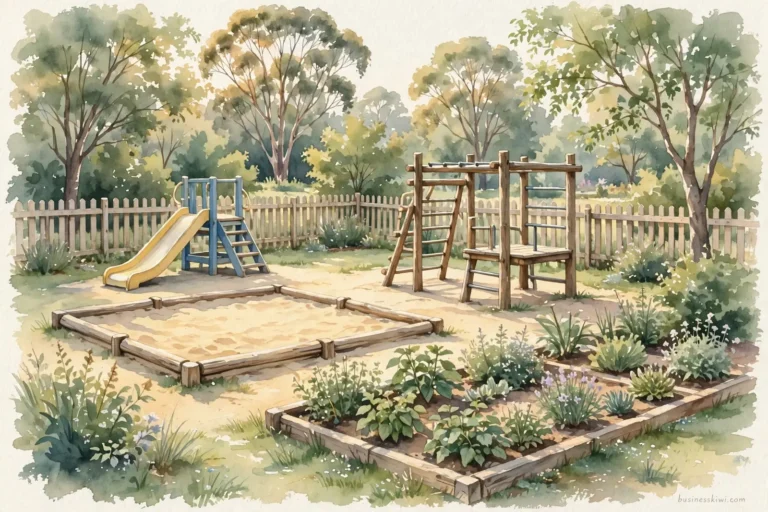
The kindergarten has a large playground area that is available to tamariki at all times. Wet weather gear is provided so children can get outside regardless of the conditions. The outdoor areas include big sandpits, equipment for swinging, climbing and leaping, and plenty of space to run around. Carpentry and loose parts are used to inspire tamariki to design, build and problem solve. Messy play and sensory experiences are part of the programme, and the kindergarten is not afraid of making a mess in its large outdoor areas.
Community connections are a regular part of the week. Groups of tamariki go on excursions to the ngahere, the marae, the library and community gardens. Back at the kindergarten, nature is strongly valued and nurtured. Children help care for gardens, where they can discover insects and investigate natural materials, and they take part in growing projects that include sunflowers, worm farms and regular plantings.
The kindergarten also has a whanau room. It is used for a variety of early childhood services, including speech and language therapy, TCOSS, and hearing and vision testing, or any other need that requires a quiet room and a friendly environment. That room is a practical sign of how the kindergarten connects families with the services their children need, without families having to travel elsewhere.
Food: kai at kindergarten
David Henry Kindergarten provides kai for all tamariki, in partnership with KidsCan, as part of the KidsCan ECE Food for Kids programme. The Ministry of Education’s list of services in the ECE Food Programme, as at 11 February 2026, includes Central Kids David Henry Kindergarten in the Waikato region.
For parents this means they do not need to send lunch. The food is provided at the kindergarten at no cost to whanau, as part of the programme. The kindergarten’s page states this plainly: “David Henry Kindergarten provides kai for all tamariki in partnership with KidsCan.” Families with a child who has allergies or dietary needs should raise this with the kaiako when they enrol, so the kindergarten can plan for it.
Whanau involvement and support
Whanau involvement is central to how David Henry Kindergarten works. The kindergarten encourages whanau to be involved before tamariki start, and that involvement often lasts long after tamariki have left. Kaiako communicate with whanau regularly about the education and care of their tamaiti, share updates about learning, and welcome whanau into decision making about tamariki learning and into activities and excursions.
Central Kids describes a culture of inclusiveness. Collaboration with whanau about their goals and aspirations helps kaiako support the individual needs of every tamaiti. When the kindergarten journey finishes, the goal is for every tamaiti to be ready for the adventure that lies ahead.
Support goes beyond the classroom. Whanau who would benefit from extra assistance are offered support and guidance from the Matauranga Ake team, towards achieving a resilient, stable and supportive home life for tamariki. Central Kids also has a role in identifying tamariki with additional learning support needs, whether physical, behavioural, neurodiverse, developmental delay or child protection related. Early identification and intervention matter, and kaiako have training and support to make sure this happens. The kindergarten engages with whanau to support referral to external agencies when needed.
Transition to school
Starting school is a big step, and David Henry Kindergarten treats the transition as an important part of its work. Its kaiako support this time through firm connections with new entrant teachers at local schools. Central Kids kindergartens also visit local kura as part of their excursions, so tamariki get to know school settings before they start.
The nearest primary school carrying the same name is David Henry School, a contributing state school for Years 1 to 6 on Thompson Street in Tokoroa. Its Education Counts record lists it as institution 1708, co-educational, with cohort entry. Parents should note that attending David Henry Kindergarten does not guarantee a place at any particular school. School enrolment is a separate process, and state schools with enrolment schemes have their own rules. The kindergarten’s role is to prepare the child and to work with the family and the new entrant teacher so the start of school goes well.
New entrant teachers and kindergarten kaiako share information about the child, with the family’s involvement, so the school knows the child’s strengths, interests and needs from the first day. Families can ask the kindergarten which schools its tamariki usually move on to, and what the transition visits involve.
What the Education Review Office says
The Education Review Office, known as ERO, reviews early childhood services in New Zealand and publishes reports on its website. The Education Counts profile for David Henry Kindergarten includes a link to its ERO report. However, no recent ERO report for this kindergarten was found in a public search in November 2026, and this guide does not state a report date, a rating or any findings, because none could be verified.
Parents who want the latest ERO view should check the ERO website directly, or ask the kindergarten for its most recent report. ERO reviews look at the learning and organisational conditions in a service, and at how well it supports equitable and excellent outcomes for children. A missing public report is not a finding about the kindergarten. It means only that no report could be located for this guide.
Other kindergartens in Tokoroa
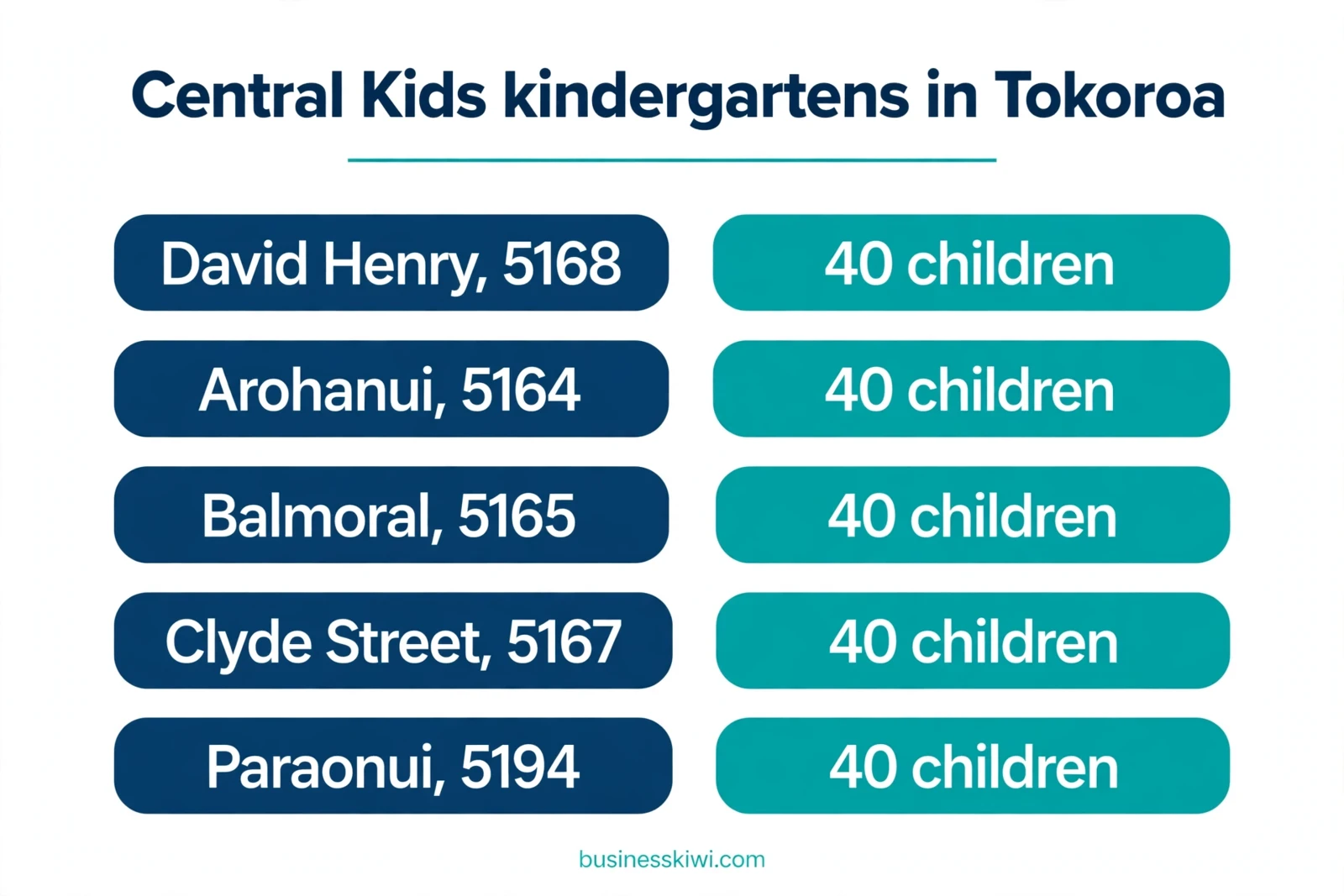
David Henry is one of several Central Kids kindergartens in Tokoroa. Families comparing options may find this summary useful. All figures come from the Education Counts directory.
| Kindergarten | Institution number | Address | Ages | Maximum children | 20 Hours ECE |
|---|---|---|---|---|---|
| David Henry | 5168 | 60 Fergusson Street | 2 years and over | 40 | Yes |
| Arohanui | 5164 | 107 Grampian Street | 2 years and over | 40 | Yes |
| Balmoral | 5165 | Tainui Street | 2 years and over | 40 | Yes |
| Clyde Street | 5167 | 42 Clyde Street | 2 years and over | 40 | Yes |
| Paraonui | 5194 | 13 Totara Street | 2 years and over | 40 | Yes |
All five are Central Kids kindergartens with the same age range, the same licensed maximum of 40 children, and the same 20 Hours ECE offer. The differences between them are in their location, their kaiako, and the feel of each kindergarten, which is why visiting in person matters more than comparing numbers. Tokoroa also has other early learning options, including Playcentre on Balmoral Drive and Te Wananga o Aotearoa’s Te Rau Oriwa early learning centre, for families who want a different style of service.
Visiting and making contact
The best way to judge a kindergarten is to visit it. David Henry Kindergarten welcomes visits at any time during its opening hours, Monday to Friday, 8am to 3.30pm. The address is 60 Fergusson Street, Tokoroa 3420. The phone number is 07 8851016 and the email is davidhenry@centralkids.org.nz. Enquiries can also be made through the Central Kids website.
When you visit, useful questions to ask include: which days and hours are available for your child, what the current hourly rate is for hours not covered by 20 Hours ECE, how the kindergarten handles the transition from home, what the kaiako to child ratio is on a typical day, and how the kindergarten communicates with whanau about their child’s learning. Ask also about the whanau room services, the kai provided through KidsCan, and how the kindergarten supports the move to school. The answers, and the feel of the place, will tell you more than any guide can.
For more on early learning and schooling in New Zealand, browse the Jobs and Education section. Families considering other kindergartens in the region may also find the guides to Bellevue Kindergarten and Fairleigh Kindergarten useful.
Frequently asked questions
Where is David Henry Kindergarten?
It is at 60 Fergusson Street, Tokoroa 3420, in the South Waikato district. The phone number is 07 8851016 and the email is davidhenry@centralkids.org.nz. It is part of Central Kids Kindergartens.
What ages does David Henry Kindergarten take?
It takes children from two years of age up to school age. It does not take children under two. The licensed maximum is 40 children at a time.
Does David Henry Kindergarten have an enrolment zone?
No. Kindergartens do not have enrolment zones. Zones, or enrolment schemes, apply to state schools. Any family can apply to enrol their child at David Henry Kindergarten, subject to places being available.
What does it cost to send a child to David Henry Kindergarten?
It depends on the child’s age and hours. Children aged three and over can use 20 Hours ECE, which covers up to 20 hours a week, or up to six hours a day, without fees for those hours. Hours beyond that, and hours for two year olds, are charged at the kindergarten’s hourly rate, which is published in the Central Kids kindergarten directory. Families should ask the kindergarten for the current rate. The WINZ Childcare Subsidy and FamilyBoost may also help eligible families.
What are the opening hours?
Monday to Friday, 8am to 3.30pm. The kindergarten stays open during term breaks. It closes on public holidays, and no fees are charged for public holidays or closure days. The minimum enrolment is six hours a day, three days a week.
Does the kindergarten provide food?
Yes. David Henry Kindergarten provides kai for all tamariki in partnership with KidsCan, as part of the KidsCan ECE Food for Kids programme. Families with a child who has allergies or dietary needs should discuss this with the kaiako when they enrol.
How do I enrol my child?
Contact the kindergarten by phone on 07 8851016, by email at davidhenry@centralkids.org.nz, or through the enquiry form on the Central Kids website. Visiting in person during opening hours is encouraged, so you can see the kindergarten, meet the kaiako and talk through days, hours and funding before you enrol.
This guide is general information only. It is not legal or financial advice. Details such as hours, fees and staffing can change, so confirm the current position with David Henry Kindergarten or Central Kids Kindergartens before you enrol.