Bellevue Kindergarten, Newlands: Hours, Ages, Programme and How to Enrol
The short answer
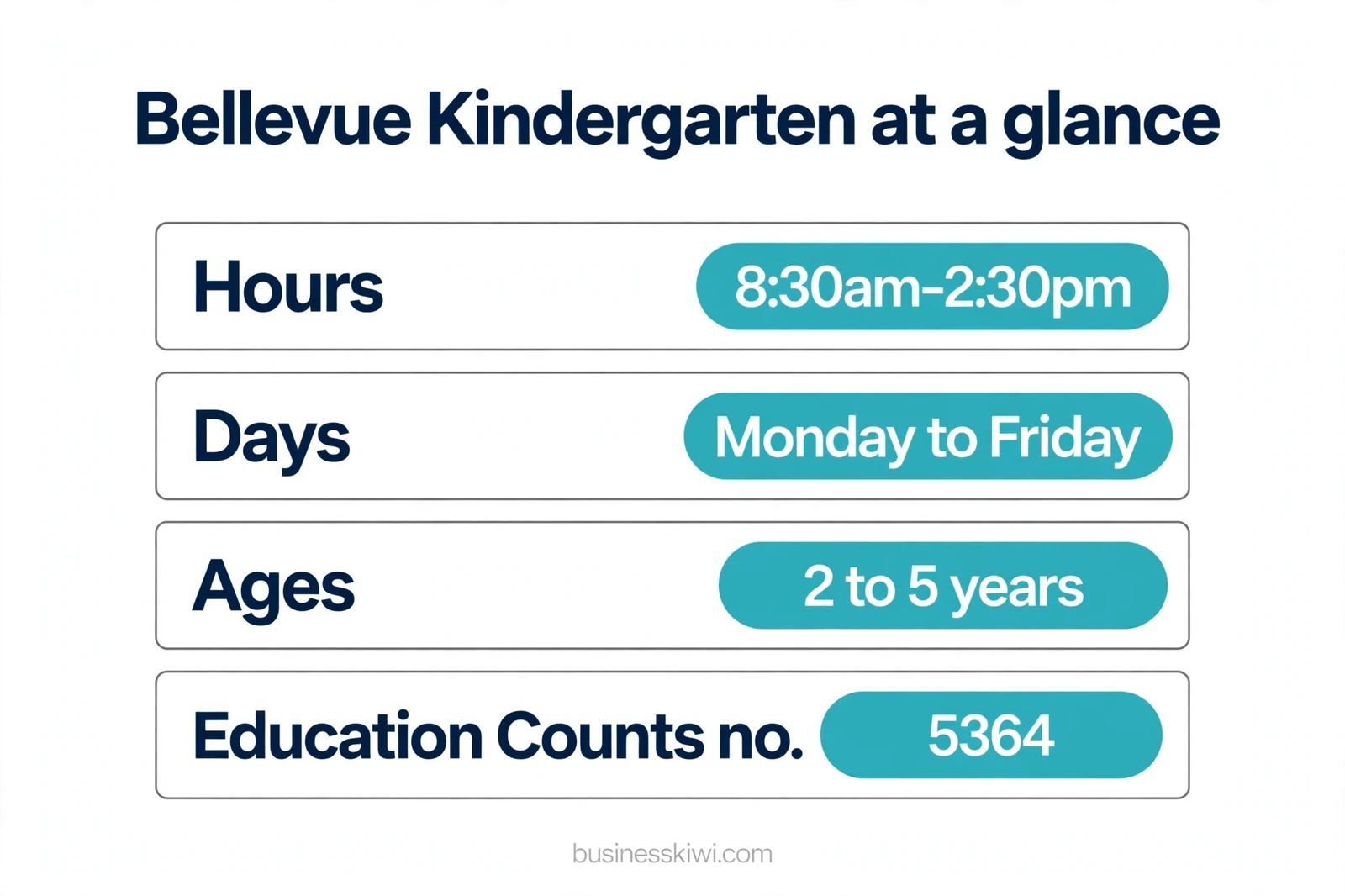
Bellevue Kindergarten is a community kindergarten in Newlands, Wellington, at 50 Link Road, tucked in behind Bellevue School. It takes children aged two to five in mixed-age sessions, runs Monday to Friday from 8:30am to 2:30pm, and belongs to Whānau Manaaki Kindergartens, a not-for-profit association.
This guide sets out where it is, who can attend, what the programme looks like, what it costs, and how to enrol or visit.
Bellevue Kindergarten at a glance
| Detail | What is confirmed |
|---|---|
| Name | Bellevue Kindergarten |
| Address | 50 Link Road, Newlands, Wellington |
| Education Counts number | 5364 |
| Hours | Monday to Friday, 8:30am to 2:30pm |
| Ages | 2 to 5 years, mixed-age sessions |
| Phone | 04 477 6764 |
| bellevue@wmkindergartens.org.nz | |
| Association | Whānau Manaaki Kindergartens |
| Head teacher | Anne |
| Next-door school | Bellevue School, Newlands (Year 1 to 6) |
Where it is and how to find it
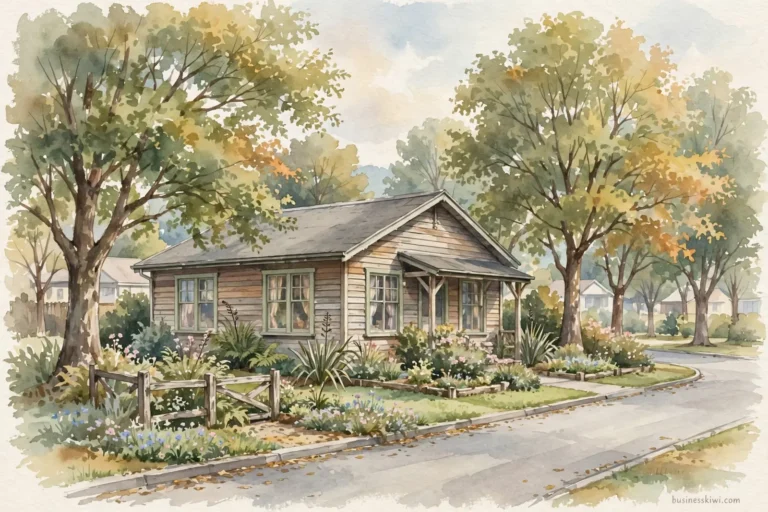
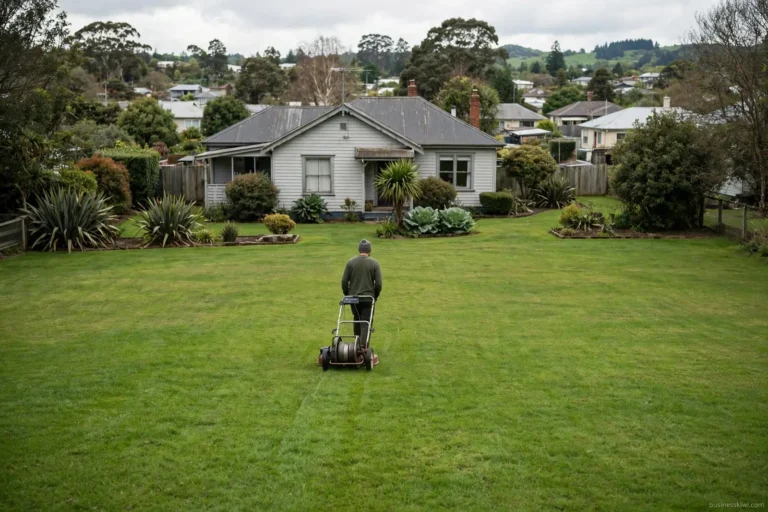
Bellevue Kindergarten sits in the Wellington suburb of Newlands, on Link Road, behind Bellevue School. Newlands is a northern suburb of Wellington, on the road between Johnsonville and the city, and the kindergarten serves families from Newlands and the surrounding suburbs.
The setting matters for families because it shapes the daily routine. Children arrive at a kindergarten that shares its neighbourhood with a primary school, so older siblings may be a short walk away and the move from kindergarten to school is a familiar one rather than a leap into the unknown. The kindergarten describes itself as tucked in behind Bellevue School, which means visitors should look for the school first and then follow the signs to the kindergarten behind it.
Parking and drop-off details are not published on the kindergarten’s page, so families should ask about them when they visit or phone. The same applies to the exact entrance to use. A first visit answers these small practical questions quickly, and the kindergarten invites families to pop in and see the programme in action.
Newlands itself is a family suburb with its own primary school, shops and community facilities. For families moving into the area, the kindergarten is one of the local early learning options alongside other services in Newlands and nearby Johnsonville. The kindergarten’s own page is the best place to confirm current details, because hours and staffing can change.
Who can attend: ages, hours and sessions
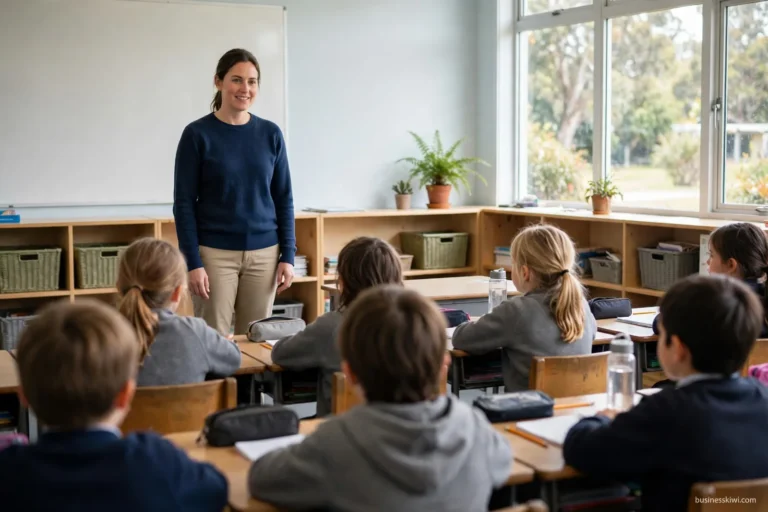
Bellevue Kindergarten offers mixed-age sessions for children from two to five years old. Mixed-age sessions mean that two-year-olds, three-year-olds and four-year-olds learn together in the same group, rather than being split into separate rooms by age. Siblings can attend together, which the kindergarten presents as a deliberate part of its approach.
The kindergarten is open Monday to Friday from 8:30am to 2:30pm. That is a sessional day of six hours, which fits the school-day pattern many families use. It is not a full-day service running into the late afternoon, so families who need care beyond 2:30pm will need to arrange that separately. The kindergarten does not publish term dates or holiday closures on its page, so families should confirm the calendar when they enrol.
Mixed-age groups work differently from age-segregated rooms. Younger children watch and copy older children, and older children practise helping and explaining. The kindergarten uses the framework of tuakana teina for this, where more experienced children provide a role model for less experienced children. For a two-year-old starting out, that means there are older children to follow. For a four-year-old nearing school, it means a chance to lead, which builds confidence before the move to Year 1.
Children can start at two. That matters because some kindergartens take children only from three, and families with a two-year-old often need to know whether a place is available at that age. At Bellevue, the answer is yes, within the mixed-age sessions. The kindergarten does not publish a maximum number of licensed places, so the size of each session is something to ask about on a visit.
The learning programme: Te Whāriki in practice
Bellevue Kindergarten follows Te Whāriki, New Zealand’s early childhood curriculum. Te Whāriki was first published in 1996 and refreshed in 2017 by the Ministry of Education. Its name means a woven mat, and the curriculum is built as a weaving of four principles and five strands, which each kindergarten then shapes into its own local programme.
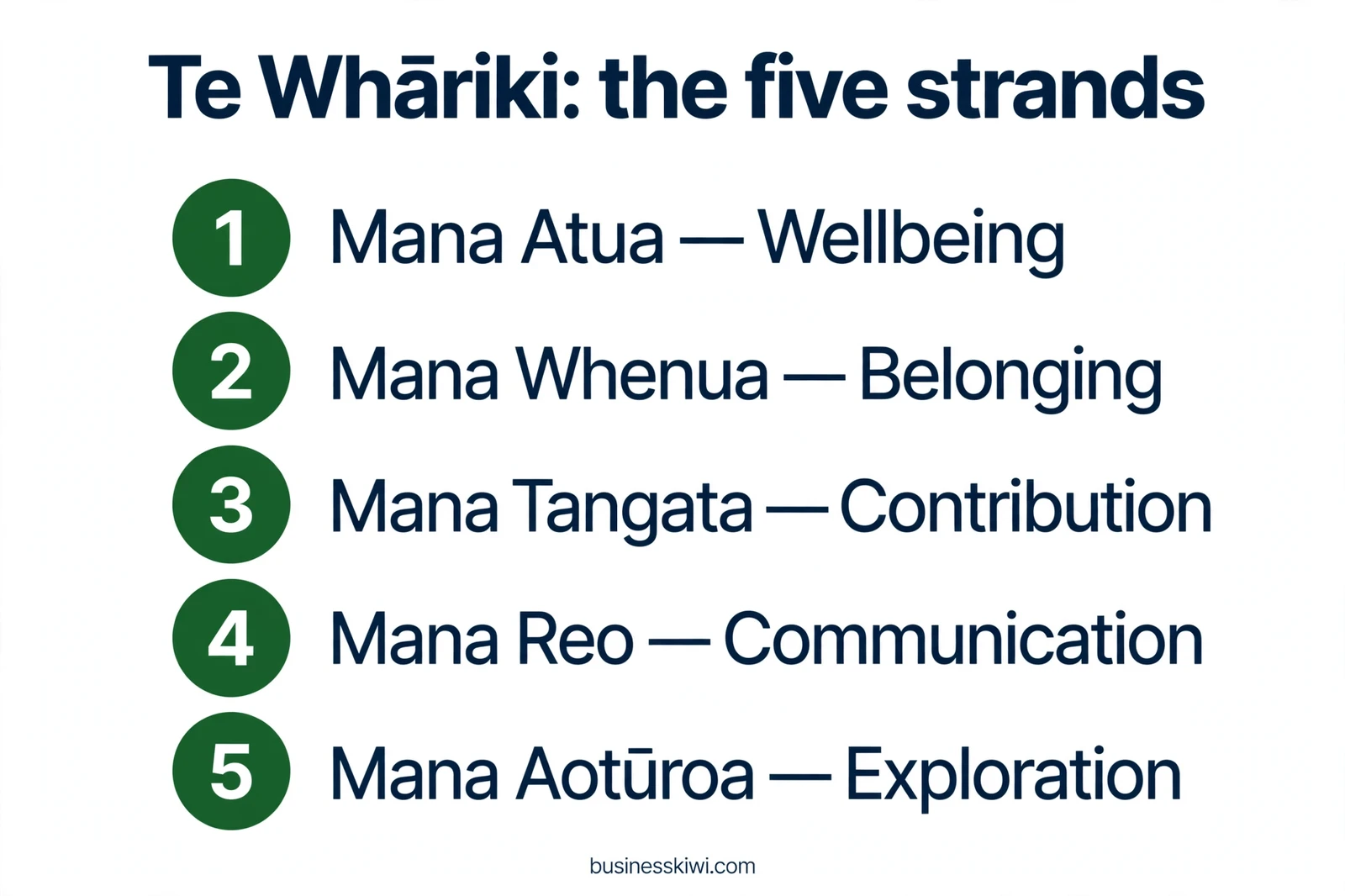
The five strands of Te Whāriki are Mana Atua (Wellbeing), Mana Whenua (Belonging), Mana Tangata (Contribution), Mana Reo (Communication) and Mana Aotūroa (Exploration). The four principles are Empowerment (Whakamana), Holistic Development (Kotahitanga), Family and Community (Whānau Tangata) and Relationships (Ngā Hononga). Together they set out what children should experience, rather than a list of lessons to be taught. Learning happens through play, through relationships and through exploration, and teachers notice children’s interests and build on them.
At Bellevue, the programme is described in the kindergarten’s own words as bicultural, embracing Te Tiriti o Waitangi, and celebrating the cultures of the whānau who attend. That means te reo Māori and tikanga Māori are part of daily life, alongside the languages and cultures that families bring with them. The kindergarten sets up its environment purposefully every day, with the aim of fostering whānaungatanga (relationships and belonging), manaakitanga (care and hospitality) and kaitiakitanga (guardianship and care for the environment).
The kindergarten states its view of children plainly: tamariki are competent, capable learners. Teachers seek to challenge children to take safe learning risks, and to support and extend the skills children already have. That is a play-based approach, not a desk-based one. Children learn by doing, by trying, by making mistakes in a safe setting, and by having adults who notice what they are interested in and offer the next step.
What this looks like on an ordinary day is not spelled out in detail on the kindergarten’s page, and families should not expect a timetable of lessons. Instead, a visit shows the pattern: indoor and outdoor play, shared kai times, group times, and teachers working alongside children rather than in front of them. The kindergarten invites families to pop in and check out the programme in action, which is the most direct way to see whether the approach suits a child.
The aspiration statement that Whānau Manaaki uses for all of its kindergartens comes from Te Whāriki itself: for children “to grow up as competent and confident learners and communicators, healthy in mind, body, and spirit, secure in their sense of belonging and in the knowledge that they make a valued contribution to society”. That is the goal the daily programme is working towards.
The whānau-based approach
The kindergarten describes its approach as whānau based. In practice, that means the family is treated as part of the learning, not as an audience for it. Siblings attend together, parents and whānau are welcome in the kindergarten, and the cultures of the families who attend are celebrated within the programme.
Whānaungatanga, manaakitanga and kaitiakitanga are the three values the kindergarten names for its daily environment. Whānaungatanga is about relationships and a sense of belonging. Manaakitanga is about care, kindness and looking after others. Kaitiakitanga is about caring for the environment and for each other. These are not posters on a wall. They are the way teachers describe how the day is set up, and they shape how children are encouraged to treat each other and their surroundings.
Tuakana teina is the other named framework. It is a Māori concept in which a more experienced person supports a less experienced one. In a mixed-age kindergarten, that happens naturally: a four-year-old shows a two-year-old how to use the climbing frame, or helps a younger child put on their shoes. Teachers support this deliberately, because it builds social competence in both children. The older child practises patience and leadership. The younger child learns from a peer rather than only from adults.
For families, the practical meaning is that the kindergarten expects to know the whānau, not just the child. Enrolment is the start of a relationship, and the kindergarten’s invitation to pop in reflects that. Parents who visit can see how teachers talk with children, how the day is organised, and whether the setting feels right for their family.
The teaching team
The kindergarten’s team is listed on its page as Harriet (Admin), Anne (Head Teacher), Rebecca, Sandra and Trish. Anne leads the teaching team as head teacher, and Harriet handles administration.
Whānau Manaaki states across its association that its teaching teams are 100 percent qualified early childhood teachers. That is an association-wide statement, and it reflects the kindergarten model, in which qualified teachers lead the programme. Teacher registration in New Zealand is handled through the Teaching Council, and our guide to teacher registration in New Zealand explains what registration involves for teachers working in early childhood education.
Families meeting the team for the first time should expect to deal with the head teacher on programme and learning questions, and with the administrator on enrolment, hours and fees. Knowing who does what makes the first contact easier. The kindergarten’s phone number is 04 477 6764, and its email is bellevue@wmkindergartens.org.nz.
Staffing can change, so the names on the page should be checked against the current team when visiting. What matters more than individual names is the ratio of teachers to children and the stability of the team, both of which are fair questions to ask on a visit. A stable team means children see familiar faces every day, which matters for their sense of security.
Fees and 20 Hours ECE
Fees are the question most families ask first, and the honest answer for Bellevue Kindergarten is that the individual fee structure should be confirmed with the kindergarten directly. Whānau Manaaki says this plainly on its parent information page: contact your local kindergarten to confirm their individual fee structure.
What is confirmed at the association level is the framework. The Government provides up to 20 hours of early childhood education per week to all three, four and five year old children, with no compulsory fees for those hours. That is the 20 Hours ECE scheme. Whānau Manaaki extends this at most of its kindergartens by offering 20 hours free ECE to under-threes as well. Its fee policy states that families whose children are not eligible for the free entitlement, because the child is under three, will have their fees subsidised to a nil balance, up to 20 hours.
Whānau Manaaki also says that all of its kindergartens offer fees free for two-year-olds. Taken together, that means a family enrolling a child at Bellevue should expect no compulsory fees for up to 20 hours a week, but should still confirm the details for their child’s age and hours with the kindergarten, because individual fee structures can differ.
Two other costs are worth knowing about. First, whānau contributions are voluntary donations that help pay for kindergarten costs. The suggested amount across the association is 50 cents per hour, up to a maximum of $10.00 per week. These are donations, not fees, and families are not required to pay them. Second, if a child is enrolled for more than 20 hours a week and the parent is studying or working, the family may be eligible for a WINZ subsidy for up to an additional 30 hours per week. That is arranged through Work and Income, not through the kindergarten.
No fee figure specific to Bellevue Kindergarten is published on its page, and none is stated in this guide. That is deliberate. Fee structures change, and the only reliable figure is the one the kindergarten gives when a family enrols. Families should ask for the fees contract, which the association says parents sign on enrolment, and check what is included before signing.
What to know before you visit or enrol
A visit is the best first step. The kindergarten invites families to pop in and see the programme in action, and a visit answers the questions that no web page can: what the rooms feel like, how teachers speak with children, how busy the sessions are, and whether the setting suits a particular child.
Before visiting, it helps to have a short list of questions ready. Useful ones include: what are the current session times and days available; is there a waiting list, and how long is it; what is the maximum number of children in a session; what should a child bring each day; how does the kindergarten handle settling in; and what is the process for moving on to school. The kindergarten’s page does not answer these in detail, so asking them directly is the way to get current answers.
Enrolment with a Whānau Manaaki kindergarten starts with registering interest. The association’s website has a register-your-interest link on each kindergarten’s page, and families can also phone or email the kindergarten directly. On enrolment, parents sign a fees contract, and fees are invoiced and collected through the Whānau Manaaki office. Families receive statements and reminders if fees are unpaid, and the association prefers automatic payments or internet banking.
Settling in is worth discussing at the first visit. Most kindergartens expect a settling-in period in which a parent stays for part of the session while the child gets used to the setting. The length of that period varies by child. Asking how Bellevue handles settling in, and how teachers communicate with parents during the first weeks, gives a clear picture of what to expect.
What a child needs to bring each day is another practical question. The kindergarten’s page does not list it, so ask. Common items at New Zealand kindergartens include a named drink bottle, a change of clothes, sunhat and sunscreen in summer, and a warm layer in winter. Some kindergartens provide food and some ask families to send it. Confirm this before the first day so the child is not caught short.
Moving on to school: Bellevue School next door
Bellevue Kindergarten sits behind Bellevue School, the local primary school in Newlands, and that closeness shapes the move to school. Children who have spent their kindergarten years next door to the school already know the grounds, the sounds and the routines of a school day. That familiarity makes the first day of school less daunting.
Bellevue School is a state contributing school for Year 1 to Year 6, co-educational, at 12 Bancroft Terrace, Newlands, Wellington. Its principal is Rachel Johnston. The school’s roll was 254 children at 1 July 2025, according to Education Counts. Its phone number is 04-4787037 and its email is office@bellevue-newlands.school.nz.
The move from kindergarten to school is one of the biggest transitions in a child’s early life, and kindergartens that sit beside a school can make it smoother. Teachers at the kindergarten know the school, and the school knows the kindergarten. Families should still visit the school separately when the time comes, because enrolment at the kindergarten does not enrol a child at the school. The two are separate, and school enrolment follows its own process. Our guides to other New Zealand primary schools, including Runanga School and Maungaturoto Primary School, follow the same format.
For families choosing a kindergarten with the school years in mind, the location is a genuine advantage. A child who starts at Bellevue Kindergarten at two and moves to Bellevue School at five has spent three years in the same neighbourhood, with the same families around them. That continuity is part of what a community kindergarten offers.
What ERO says
The Education Review Office reviews early childhood services on average once every three years, and more often where a service needs improvement or where there are risks to children’s education and safety. ERO reports are public, and parents can read them on ERO’s website.
No ERO report for Bellevue Kindergarten could be verified at the time this guide was written. That does not mean the kindergarten has no report, and it does not mean anything negative about the service. It means the latest report was not available through the sources checked for this guide, so no date or findings are stated here. Parents who want to read the latest ERO report should search for Bellevue Kindergarten on the Education Review Office website, ero.govt.nz, or ask the kindergarten directly for its most recent report.
ERO reports are worth reading because they describe what reviewers saw on the day, what the service does well, and what it is working to improve. They are written for parents as well as for the service, and they give a fuller picture than any single visit. When reading one, look for the overall findings and for any actions the service was asked to take, and check the date, because a report from several years ago may not reflect the current team.
How to enrol and visit
Enrolling at Bellevue Kindergarten starts with contact. Phone 04 477 6764, email bellevue@wmkindergartens.org.nz, or register interest through the Whānau Manaaki website, where each kindergarten has its own page with a registration link. The kindergarten also welcomes families who pop in during opening hours, Monday to Friday, 8:30am to 2:30pm.
When contacting the kindergarten, have the child’s date of birth and the days wanted ready. Those two details decide whether a place is available and when it could start. If the sessions wanted are full, ask about the waiting list and how it works. Waiting lists are common at community kindergartens, and the wait can vary by age group and by day.
Before the first day, confirm the practical details: session times, what to bring, the settling-in plan, the fees contract, and who to contact if the child is away. The kindergarten’s administrator, Harriet, handles enrolment and fees, while the head teacher, Anne, handles questions about the programme and the child’s learning.
Bellevue Kindergarten is a small community service, and its strength is its setting: a whānau-based kindergarten, behind the local primary school, run by a not-for-profit association, with qualified teachers and a play-based programme built on Te Whāriki. Families in Newlands who want that kind of start for their child should visit and see the programme in action.
For another community kindergarten profile, see our Fairleigh Kindergarten guide, and browse more in the Jobs and Education section.
Frequently asked questions
Where is Bellevue Kindergarten?
Bellevue Kindergarten is at 50 Link Road, Newlands, Wellington, tucked in behind Bellevue School. Its phone number is 04 477 6764 and its email is bellevue@wmkindergartens.org.nz. It is part of Whānau Manaaki Kindergartens.
What ages does Bellevue Kindergarten take?
The kindergarten takes children aged two to five years in mixed-age sessions. Siblings can attend together under its whānau-based approach. Children can start at two, which is younger than some kindergartens accept.
What are the hours at Bellevue Kindergarten?
The kindergarten is open Monday to Friday from 8:30am to 2:30pm. That is a six-hour sessional day. Families who need care after 2:30pm will need to arrange it separately.
Is Bellevue Kindergarten free?
The Government provides up to 20 hours of early childhood education per week for three, four and five year olds, and Whānau Manaaki extends free hours to under-threes at most of its kindergartens, including offering fees free for two-year-olds. Families should confirm the individual fee structure with the kindergarten directly, because it can differ by service. Whānau contributions are voluntary donations, suggested at 50 cents per hour up to $10.00 per week.
What curriculum does Bellevue Kindergarten follow?
The kindergarten follows Te Whāriki, New Zealand’s early childhood curriculum, first published in 1996 and refreshed in 2017. Its programme is bicultural, embraces Te Tiriti o Waitangi, and is built around the values of whānaungatanga, manaakitanga and kaitiakitanga, with tuakana teina guiding how older and younger children learn together.
How do I enrol my child at Bellevue Kindergarten?
Phone 04 477 6764, email bellevue@wmkindergartens.org.nz, or register interest through the Whānau Manaaki website. On enrolment, parents sign a fees contract. Families can also pop in during opening hours to see the programme and meet the team. If sessions are full, ask about the waiting list.
What school will my child go to after Bellevue Kindergarten?
Most children move on to Bellevue School, the state primary school next door at 12 Bancroft Terrace, Newlands, for Year 1 to Year 6. Its roll was 254 children at 1 July 2025. Enrolment at the kindergarten does not enrol a child at the school, so families should contact the school separately when the time comes.
This guide is general information only, based on the kindergarten’s own published pages, Education Counts and the Education Review Office’s published guidance, checked in November 2026. Hours, staffing, fees and session details can change. Confirm current details with Bellevue Kindergarten directly before enrolling.