Radiologist Salary in NZ: Specialist Pay Scales, Training Pay and the Technologist Difference
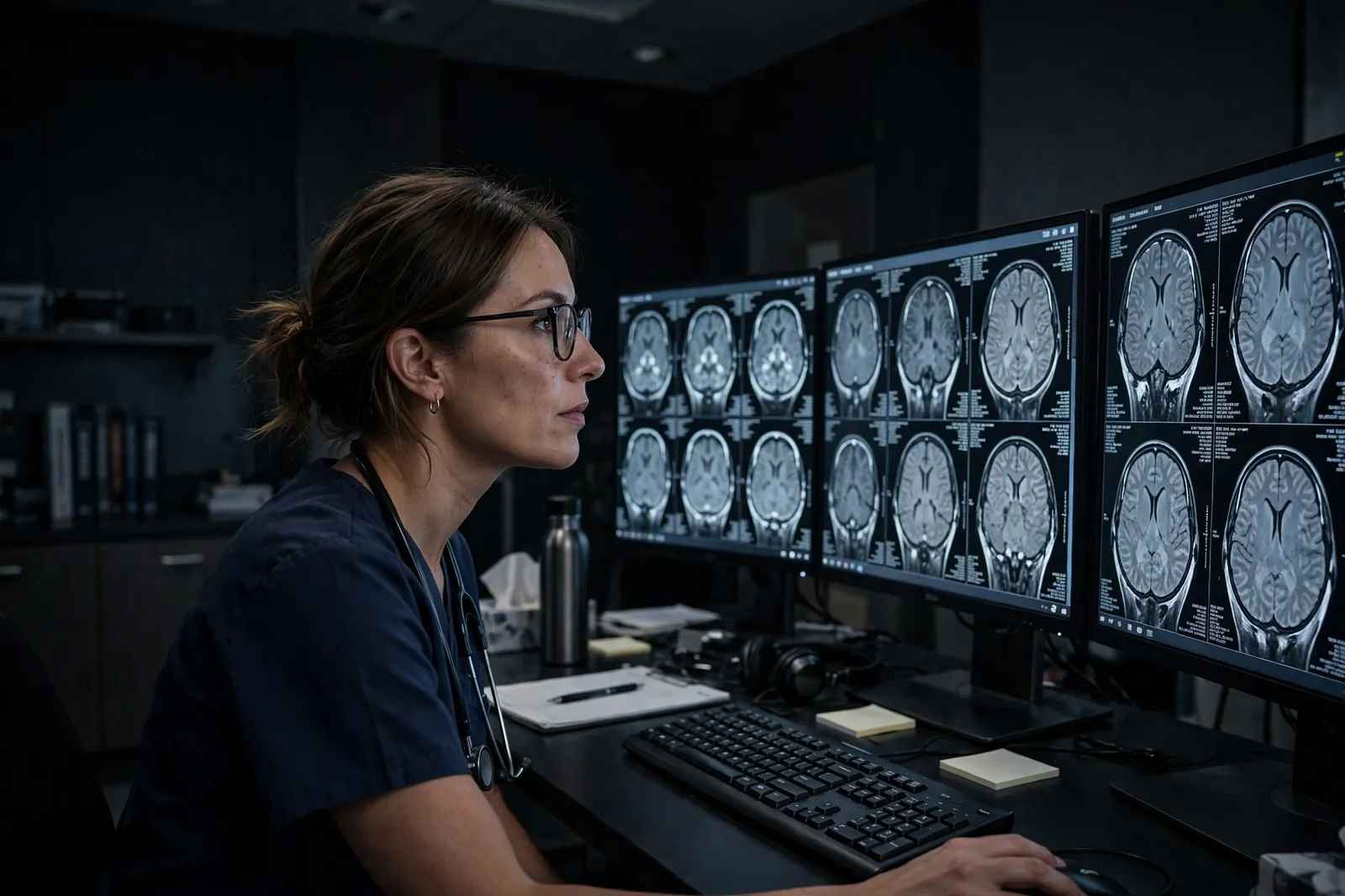
Search for “radiology salary” in New Zealand and you will find two very different jobs blended into one set of numbers. A radiologist is a specialist doctor who interprets scans and performs image-guided procedures. A medical radiation technologist, also called a medical imaging technologist, is the registered health practitioner who operates the imaging equipment and produces the images. Their training differs by roughly a decade, their regulators are different, and their pay scales sit in different collective agreements. This guide keeps the two apart, covering radiologist pay in depth first, then technologist pay in its own section.
Every pay figure below comes from a published collective agreement or an official source named in the Sources section. Where no official figure exists, this article says so.
The short answer
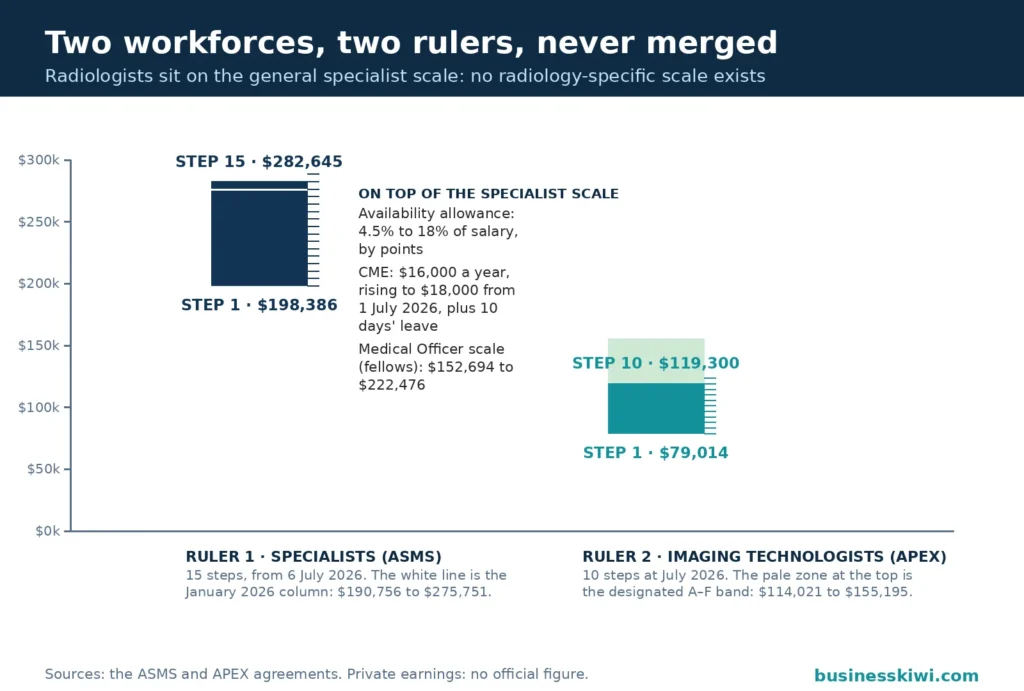
A radiologist employed by Health New Zealand is paid on the senior medical officer specialist scale in the collective agreement between Health New Zealand and the Association of Salaried Medical Specialists (ASMS). From 6 July 2026 the scale runs from $198,386 a year at Step 1 to $282,645 a year at Step 15, for a full-time job size of 40 hours a week. It is the standard specialist scale for all hospital specialists, not a radiology-specific scale, and most radiologists also earn an availability allowance for on-call work on top of base salary.
A medical imaging technologist employed by Health New Zealand is paid under a separate agreement with APEX. From 6 July 2026 the main technologist scale runs from $79,014 a year at Step 1 to $119,300 at the top recognition step, with designated leadership roles paid up to $155,195.
Two jobs sit behind one search term
Radiologists are medical doctors. After medical school and at least two years of general hospital work, they complete the five-year clinical radiology training programme run by the Royal Australian and New Zealand College of Radiologists (RANZCR). A qualified radiologist holds Fellowship of the College (FRANZCR) and is registered with the Medical Council of New Zealand in the vocational scope of diagnostic and interventional radiology. Day to day, the radiologist protocols examinations, interprets and reports images across X-ray, CT, MRI, ultrasound and nuclear medicine, advises other clinicians, and in interventional radiology performs procedures such as biopsies, drainages and vascular treatments under image guidance.
Medical imaging technologists come to the department from the other direction. They complete a degree in medical imaging, register with the Medical Radiation Technologists Board, and hold an Annual Practising Certificate. Their job is the examination itself: positioning the patient, setting the technique, running the scanner or X-ray unit safely, checking image quality and caring for the patient through the procedure. They work closely with radiologists, who rely on the quality of the images produced, but the two roles carry different registration, different accountability and very different pay.
Radiologist pay: the senior medical officer scale
There is no separate pay scale for radiologists in the public system. Radiologists are senior medical officers, and their base pay is set by the specialist scale in clause 12 of the ASMS collective agreement, the same scale that covers surgeons, physicians, psychiatrists and every other hospital specialist. That is worth understanding before comparing figures online, because any “radiologist salary” range that does not match this scale is either describing total earnings including allowances, describing private practice, or describing a different country.
The scale has 15 steps. The rates below are the current ones, effective from 6 July 2026, for a full-time job size of 40 ordinary hours a week. Part-time specialists are paid pro rata to their agreed job size.
Placement on the scale is negotiated at appointment and takes account of years of relevant experience and qualifications, measured from when the specialist met the requirements for vocational registration rather than the date registration was formally granted. Movement up the scale is then annual, subject to satisfactory performance of the agreed duties. A specialist who keeps performing satisfactorily climbs one step a year until they reach Step 15, which is why base pay for experienced radiologists clusters toward the top of the range. The scale itself is also periodically renegotiated: the same steps paid $185,380 to $267,980 from 1 January 2024 and $190,756 to $275,751 from 5 January 2026, before the July 2026 rates above took effect.
A worked example shows how the pieces fit together. Take a radiologist on Step 10, with a base salary of $252,553 from July 2026, on a moderately busy on-call roster scoring in the 200 to 224 point band. The availability allowance for that band is 10.5 percent of salary, worth about $26,500 a year, taking total agreement pay to roughly $279,000 before superannuation and any additional duties. The example is illustrative only, because actual points depend on each department’s roster, but it shows why quoting base salary alone understates what hospital radiologists earn.
Not every doctor doing senior work sits on the specialist scale. The agreement has a second scale for medical and dental officers, doctors who have not yet met the requirements for vocational registration. It matters in radiology departments because it covers fellows doing a year of subspecialty training after FRANZCR. From 6 July 2026 it runs from $152,694 at Step 1 to $222,476 at Step 14, so a fellow is paid noticeably less than a vocationally registered colleague doing similar reporting lists.
Government careers guidance is consistent with this picture: its diagnostic radiologist profile gives a usual earnings band that sits inside the scale, with the full scale range quoted as the possible span, because where a radiologist lands depends mainly on their step.
What sits on top of base salary
Base salary is not the whole package for a hospital radiologist, and for many it is not even the whole story. Three agreement provisions matter most.
Availability allowance. Radiologists on an after-hours on-call roster are paid an availability allowance under clause 14 and Schedule 1 of the agreement. It is calculated on a points system scoring the roster’s frequency (a 1-in-1 roster scores far higher than 1-in-5), how quickly the specialist must respond, how quickly they must be able to attend the hospital, and how much junior medical support is available overnight. Total points convert to a percentage of salary, running from 4.5 percent at the lowest band to 18 percent for scores between 300 and 324 points, with the heaviest rosters, scoring 325 points or more, settled by individual negotiation. On a top-step salary, even a mid-range allowance is worth tens of thousands of dollars a year, which is why total radiologist earnings in the public system are often quoted well above the base scale.
Continuing medical education. Specialists are entitled to 10 working days of continuing education leave each financial year, and to reimbursement of actual and reasonable continuing medical education expenses of up to $16,000 a year (excluding GST). That expense entitlement rose to $18,000 a year from 1 July 2026, with a further $500 for specialists enrolled in two or more maintenance of professional standards programmes. Reimbursement of professional costs such as registration and indemnity arrangements also features in specialist packages, although the detail sits outside the salary clauses.
Job size. Salary is calculated against the agreed job size, which bundles routine clinical duties, non-clinical duties such as teaching and departmental work, and rostered after-hours availability. Two radiologists on the same step can therefore be paid differently if one has a larger agreed job size.

Pay during training: radiology registrar salaries
Radiologists are not paid on the specialist scale until they qualify. During the five years of RANZCR training they work as registrars, who are resident medical officers covered by the collective agreement between Health New Zealand and the New Zealand Resident Doctors’ Association (NZRDA). Registrar pay works differently from almost every other salary scale in the health system: it is set by roster category and years of registrar service, not by specialty.
The category reflects the average weekly hours of the roster, from Category F (40 to 44.9 hours) up to Category A (65 hours or more). The heavier the roster, the higher the salary for the same year of service, because the salary is built to compensate the hours rather than paying overtime separately. From 3 August 2026, a first-year registrar earns between $95,209 on a Category F roster and $170,169 on a Category A roster. By the fifth year of registrar service the range is $113,065 to $202,988, with a mid-hours Category C roster (55 to 59.9 hours) paying $134,830 in Year 1 and $160,749 in Year 5. Rates rise again from 2 August 2027, when the first-year range becomes $98,589 to $175,423.
Two progression rules matter for radiology trainees. First, registrars progress one step a year, but cannot progress beyond Year 5 unless they are in a vocational training programme, which radiology trainees are by definition. Second, a registrar who passes their Part I examinations gains a higher qualification increment, moving to the next step in the scale, provided they are at least in their sixth year of postgraduate medical employment. Employers also match superannuation contributions dollar for dollar up to 6 percent of gross salary under the agreement.
Placement rules also soften the start. A doctor appointed to their first registrar position starts at Year 1 of the registrar scale, but relevant earlier registrar service, including overseas service the employer accepts as directly relevant, is credited when setting the starting step, so a doctor switching into radiology from another specialty does not necessarily start again from the bottom. Registrars are also entitled to reimbursement of training-related costs under the agreement, including their Annual Practising Certificate, and those training in rural hospitals receive a rural hospital allowance of 5 percent of base salary at the hospitals listed in the agreement.
In practical terms, a radiology registrar in a department with a moderately heavy roster will typically earn somewhere in the middle of those bands during training, then step onto the bottom of the specialist scale once Fellowship and vocational registration are in place.
Private practice radiology
A large share of radiology in New Zealand is delivered by private practices, which provide community and hospital-contracted imaging in most main centres. Radiologists in private practice may be salaried employees, contractors, or shareholders in the practice, and many combine a public hospital appointment with private sessions.
There is no published official pay scale for private radiology, and this article will not invent one. What can be said honestly is structural. Private earnings depend on the ownership and contracting model, the mix of reporting and interventional work, and the volume a practice handles, so they vary far more than public salaries do. Claims that private radiologists earn a particular average figure circulate widely online, but they are not sourced from any official publication and should be treated with caution. Anyone comparing a private offer with a public one should weigh the whole arrangement, including leave, on-call expectations and indemnity, rather than a headline number.
Medical radiation technologist pay
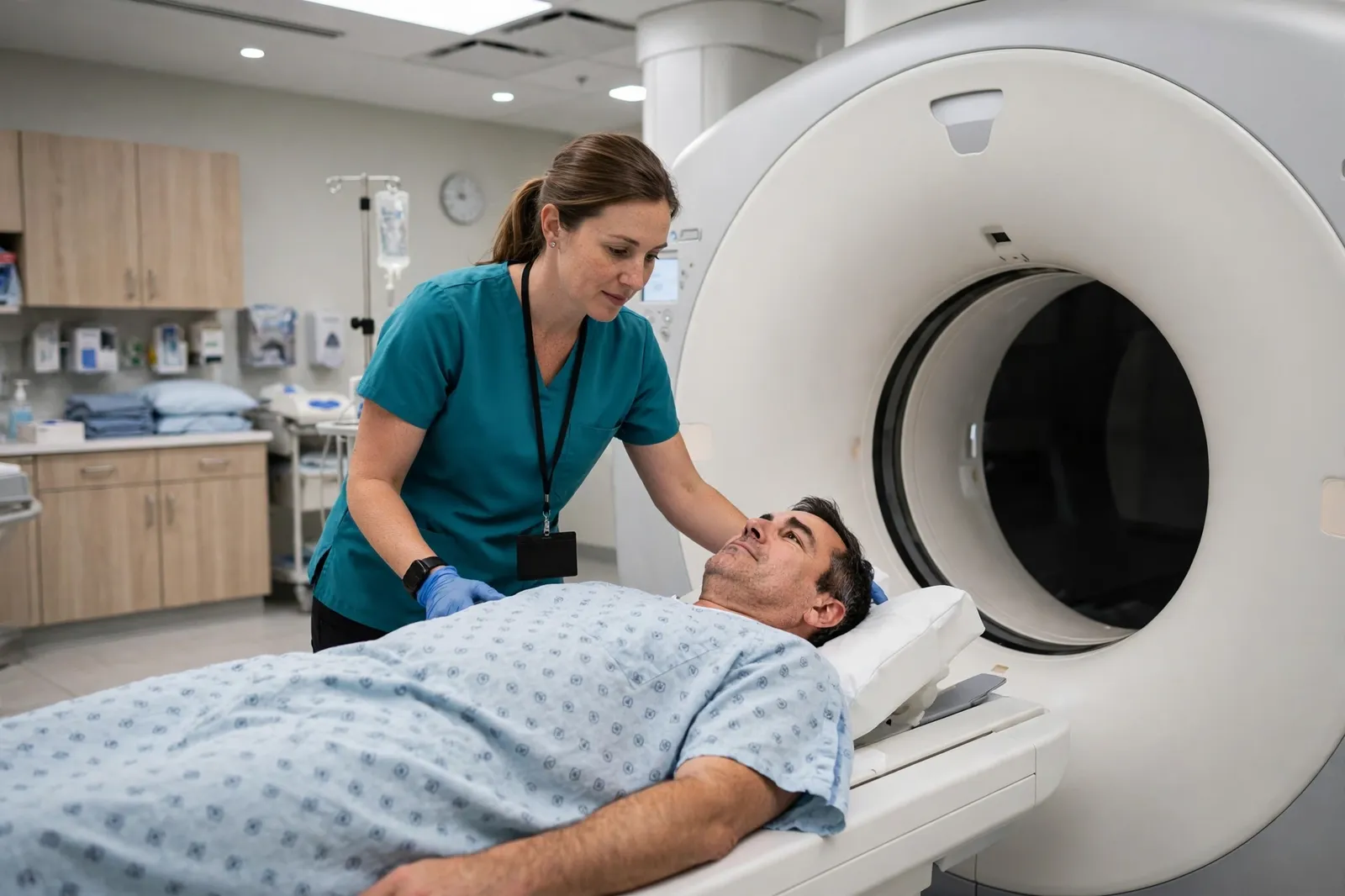
This section covers the other occupation in the search results: the medical imaging technologists who operate the equipment. If you are researching technologist pay, the radiologist figures above do not apply to you.
Technologists employed by Health New Zealand are covered by the APEX Medical Imaging Technologists Collective Agreement, which runs from 1 July 2026 to 30 June 2028. The main scale for a 40-hour week has ten steps. Steps 1 to 7 progress automatically by annual increment. Step 8 is an additional progression step reached by achieving agreed objectives. Steps 9 and 10 are recognition steps, reached through the recognition progression process in the agreement, with faster routes for technologists who work across multiple modalities or hold a relevant postgraduate diploma.
Shift work changes the picture considerably, because imaging departments run around the clock. Under the agreement, overtime is paid at time and a half for the first three hours and double time after that, with double time applying across weekends and public holidays. Rostered weekend work attracts penal rates on the same pattern. Technologists on call are paid an on-call allowance of $8.00 an hour, or $10.00 an hour on public holidays, and a call-back normally pays a minimum of three hours at the applicable rate. A technologist who regularly works nights, weekends and on-call rosters will earn meaningfully more than their step salary suggests, though still on a different scale from medical staff.
Technologists appointed to designated positions, roles with formal advanced clinical, leadership or management responsibility such as Charge, Clinical Educator and Clinical Coordinator positions, move onto a separate designated scale with six bands, A to F. From 6 July 2026 that scale runs from $114,021 at the bottom of Band A to $155,195 at the top step of Band F, and a Charge Medical Imaging Technologist must be paid at a minimum of Band D or E.
Beyond salary, the agreement reimburses the cost of the Annual Practising Certificate and professional association fees, provides three days a year for continuing professional development with some course costs reimbursed, and Health New Zealand covers professional indemnity insurance for its technologists.
MRI and nuclear medicine technologists sit under a separate APEX agreement again, reflecting their postgraduate qualifications. Health New Zealand publishes their band as $110,851 to $141,403 a year on a ten-step scale, with steps 1 to 6 progressing automatically each year and steps 7 to 10 by merit. Sonographers are covered by yet another arrangement and are outside both agreements described here.
Radiologist vs medical imaging technologist
The relationship between the two roles is collaborative in day-to-day practice. Technologists decide how an examination is performed and are responsible for the diagnostic quality of the images. Radiologists decide what the images mean and what should happen next for the patient. Shortages in either group show up quickly as longer waits for scans and reports.
The training pathway to becoming a radiologist
The radiologist pathway is long. It starts with a medical degree, six years at Auckland or Otago for most New Zealand students. The first two postgraduate years are prevocational, spent as a house officer rotating through hospital services while working toward general registration. RANZCR then requires applicants for radiology training to be registered medical practitioners who have completed at least two full years in an approved hospital as an intern or resident, and to have secured an accredited training position, which is competitively allocated.
The College programme itself is designed as five years in three phases. Phase 1 builds foundation knowledge and skills, including the anatomy and applied imaging technology examinations. Phase 2 broadens practice across the subspecialty areas, from neuroradiology and body imaging to breast, paediatric and interventional work, and carries the main written and viva examinations. Phase 3 consolidates skills and lets trainees focus on areas of interest; the College’s interventional radiology training overlaps the final clinical radiology year for those who take it. Trainees progress by competence rather than by the calendar alone, so some take longer than five years.
The technologist pathway is shorter and more direct. A Board-accredited undergraduate degree in medical imaging, typically three years, leads straight to registration with the Medical Radiation Technologists Board and an Annual Practising Certificate. Postgraduate diplomas then open the MRI, nuclear medicine and ultrasound scopes, and with them the higher technologist pay scales described above. Government careers guidance puts total training time for a diagnostic radiologist at about 13 years, against three to five years for a medical imaging technologist, and that difference in training time is the single biggest reason the two salary scales sit so far apart.
Job outlook
Official sources are positive about both occupations, without putting hard numbers on future vacancies. Government careers guidance rates job opportunities for diagnostic radiologists as good, and Health New Zealand describes the career outlook for medical imaging technologists as promising, with job growth and opportunities to specialise or move into supervisory roles. The technologist agreement itself records the parties’ shared focus on meeting growing demand for imaging and reducing patient waiting times, and Health New Zealand runs a centralised graduate recruitment process for technologists with two intakes a year. Medical imaging technologists are also on Tier 1 of New Zealand’s Green List, making them eligible for the Straight to Residence Visa, an official signal that the occupation is in shortage. Demand for imaging keeps rising with population growth, an ageing population and wider use of CT and MRI, so neither occupation shows signs of shrinking.
Frequently asked questions
How much does a radiologist earn in New Zealand?
A radiologist working for Health New Zealand earns a base salary between $198,386 and $282,645 a year from 6 July 2026, depending on their step on the 15-step specialist scale in the ASMS collective agreement. On-call availability allowances, which range from 4.5 percent to 18 percent of salary under the agreement’s points system, take total pay higher.
Is there a specific radiologist salary scale?
No. Radiologists are paid on the general senior medical officer specialist scale that covers all hospital specialists employed by Health New Zealand, so base doctor salary rates are identical across specialties on the same step. Total earnings still differ by specialty, because on-call intensity and private work differ.
How much do radiology registrars earn during training?
Registrars are paid under the NZRDA collective agreement by roster category and years of registrar service. From 3 August 2026, pay ranges from $95,209 for a first-year registrar on the lowest-hours roster category to $202,988 for a fifth-year registrar on the highest-hours category. The roster a registrar works, not the specialty they are training in, drives where they sit in that range.
How much does a medical imaging technologist earn?
From 6 July 2026, a medical imaging technologist employed by Health New Zealand earns between $79,014 at Step 1 and $119,300 at the top recognition step of the APEX agreement scale, before penal rates and on-call payments. Designated leadership roles pay up to $155,195, and MRI and nuclear medicine technologists are on a separate scale published at $110,851 to $141,403.
What is the difference between a radiologist and a radiographer?
Radiographer is the international name for the role New Zealand registers as a medical radiation technologist or medical imaging technologist. Radiographers and technologists operate the imaging equipment and produce the images. A radiologist is a specialist doctor who interprets those images, writes the diagnostic report and, in interventional radiology, performs image-guided procedures. The two roles have different degrees, different regulators and different pay scales.
How long does it take to become a radiologist in NZ?
About 13 years in total: a six-year medical degree, at least two years of prevocational hospital work, and the five-year RANZCR clinical radiology training programme, at the end of which the doctor gains FRANZCR and vocational registration in diagnostic and interventional radiology.
Do radiologists earn more in private practice?
There is no official published data on private radiology earnings in New Zealand, so any specific average should be treated with caution. Private radiologists may be salaried, contracted or shareholders in their practice, and earnings depend on that structure, the work mix and on-call expectations. Public salaries, by contrast, are set out in full in the ASMS collective agreement.
Which agreement covers radiologist pay?
Radiologists employed by Health New Zealand are covered by the collective agreement between Health New Zealand and the Association of Salaried Medical Specialists (ASMS), which sets the specialist salary scale, the availability allowance for on-call work and continuing medical education entitlements. Registrars in training are covered by the NZRDA agreement instead.
This article is general information about published pay scales and training pathways in New Zealand. It is not career, financial or legal advice, and it does not describe any individual’s actual earnings, which depend on their step, job size, roster and employer. Collective agreements are renegotiated over time, so check the current agreement before relying on a figure.
Sources
- Association of Salaried Medical Specialists, Senior Medical and Dental Officers Collective Agreement, clause 12 Salaries, asms.org.nz
- Association of Salaried Medical Specialists, Senior Medical and Dental Officers Collective Agreement, clause 14 Availability Allowance and Schedule 1, asms.org.nz
- Association of Salaried Medical Specialists, Senior Medical and Dental Officers Collective Agreement, clause 36 Professional Development and Education, asms.org.nz
- Health New Zealand | Te Whatu Ora and New Zealand Resident Doctors’ Association, Collective Agreement 2026–2028, clause 8 Salaries and Wages, health.nz
- APEX and Health New Zealand | Te Whatu Ora, Medical Imaging Technologists Collective Agreement 1 July 2026 to 30 June 2028, health.nz
- Health New Zealand | Te Whatu Ora, Medical Imaging Technologists careers page, healthnz.govt.nz
- The Royal Australian and New Zealand College of Radiologists, Clinical Radiology Training Requirements, ranzcr.com
- New Zealand Medical Radiation Technologists Board, Notice of Scope of Practice and Prescribed Qualifications, mrtboard.org.nz
- Careers New Zealand (Tahatū), Diagnostic radiologist occupation profile, careers.govt.nz