Car Registration (Rego) in NZ: Fees, Renewals and Keeping Your Vehicle Legal
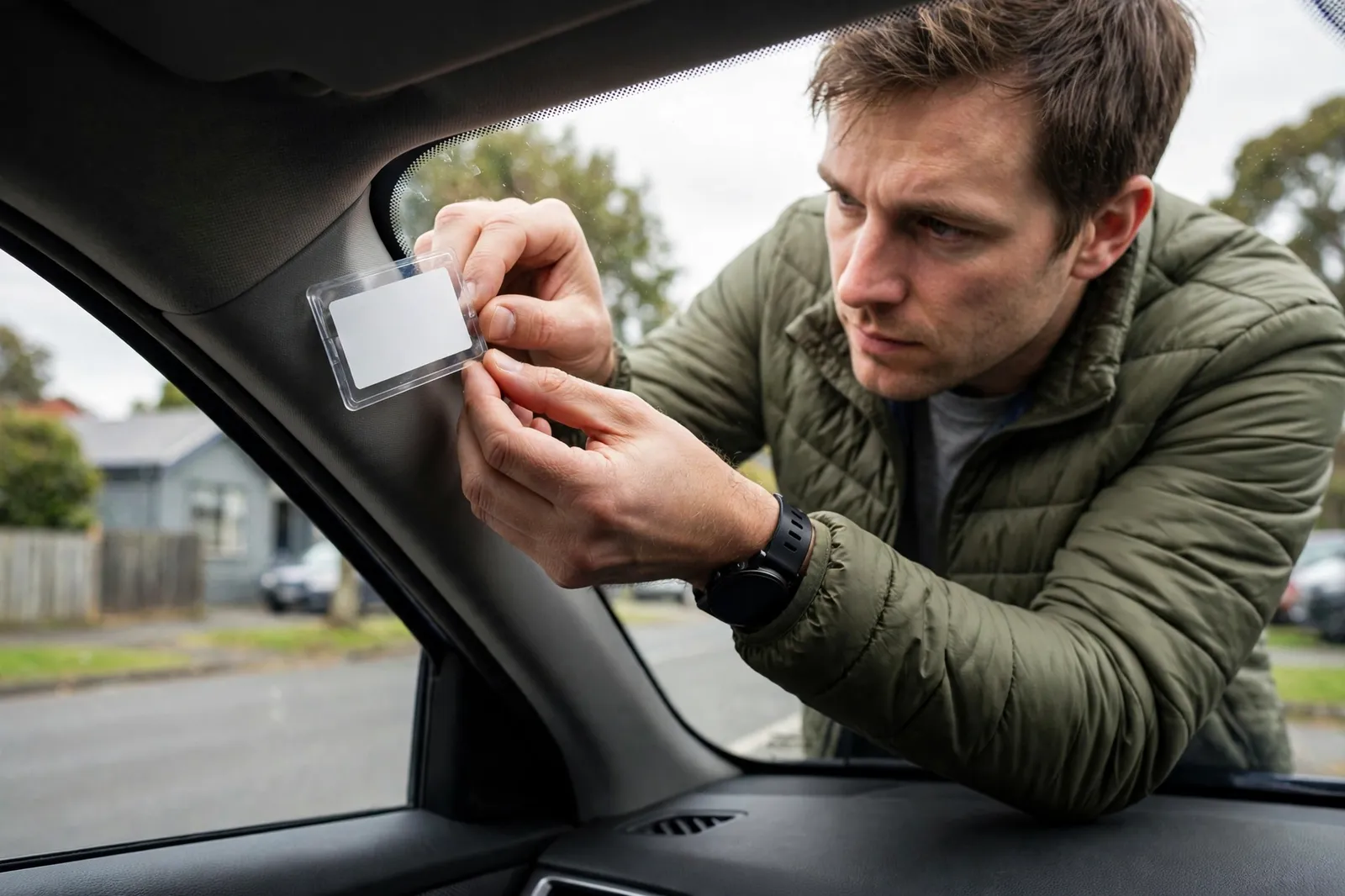
Ask a room of Kiwi drivers what “rego” means and most will point at the label on the windscreen. That label is the visible part of a system that also includes registration, continuous licensing rules and, for businesses running vehicles, a steady stream of renewal dates that cannot be missed without cost. Registration and rego get used interchangeably in everyday conversation, but they are separate transactions with separate fees, and mixing them up is where most confusion starts.
This guide explains how vehicle registration and licensing work in New Zealand, what you pay as at October 2026, how to renew, what happens if you let things lapse, and how the rules play out for private owners and businesses alike.
The short answer
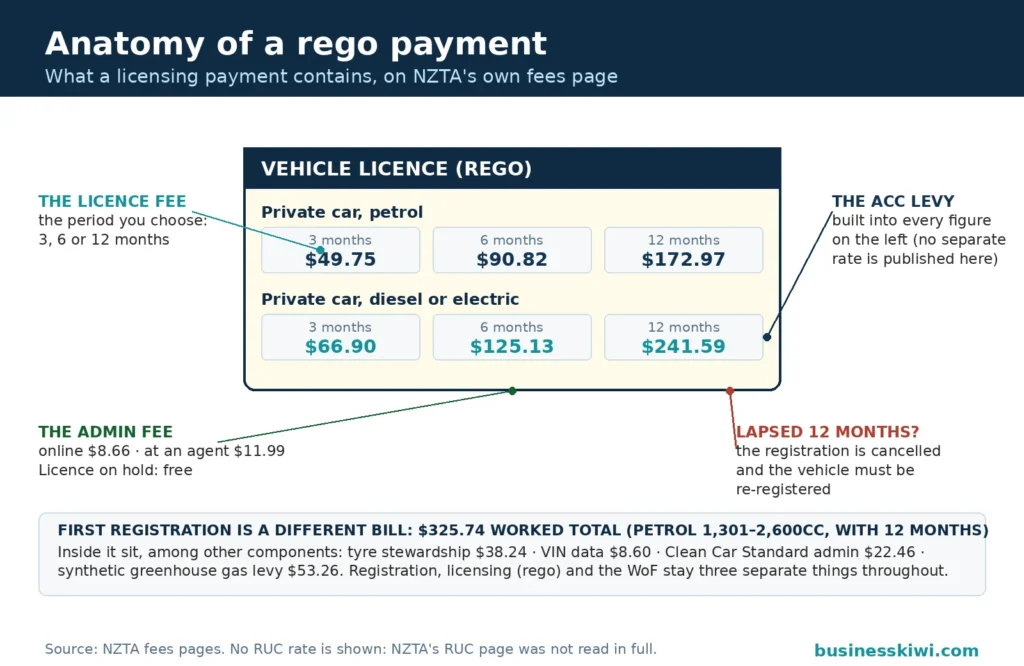
Registration is the one-off process of adding a vehicle to the Motor Vehicle Register and getting number plates for it. Rego, properly called vehicle licensing, is the ongoing fee you pay to use the vehicle on public roads. Most owners deal with rego far more often: a standard petrol car costs $172.97 for 12 months at the October 2026 rates, a diesel or electric car costs $241.59, and renewing online is cheaper than renewing at an agent because the administration fee is lower. Most vehicles must be licensed continuously, with no gaps, but if you will not use a vehicle for at least three months you can put the licence on hold for free instead of paying. Leave a vehicle unlicensed for 12 months and NZTA cancels its registration, and you still owe the unpaid fees.
Three things that are not the same thing
Registration happens once in a vehicle’s life in New Zealand, in most cases. It records the vehicle’s details on the Motor Vehicle Register when it first goes on the road here. The vehicle is inspected and certified, its details are added to the register, number plates are issued, and a registered person is recorded: the individual or organisation responsible for the vehicle. Being the registered person is not the same as legal ownership, and the register does not record who legally owns the vehicle.
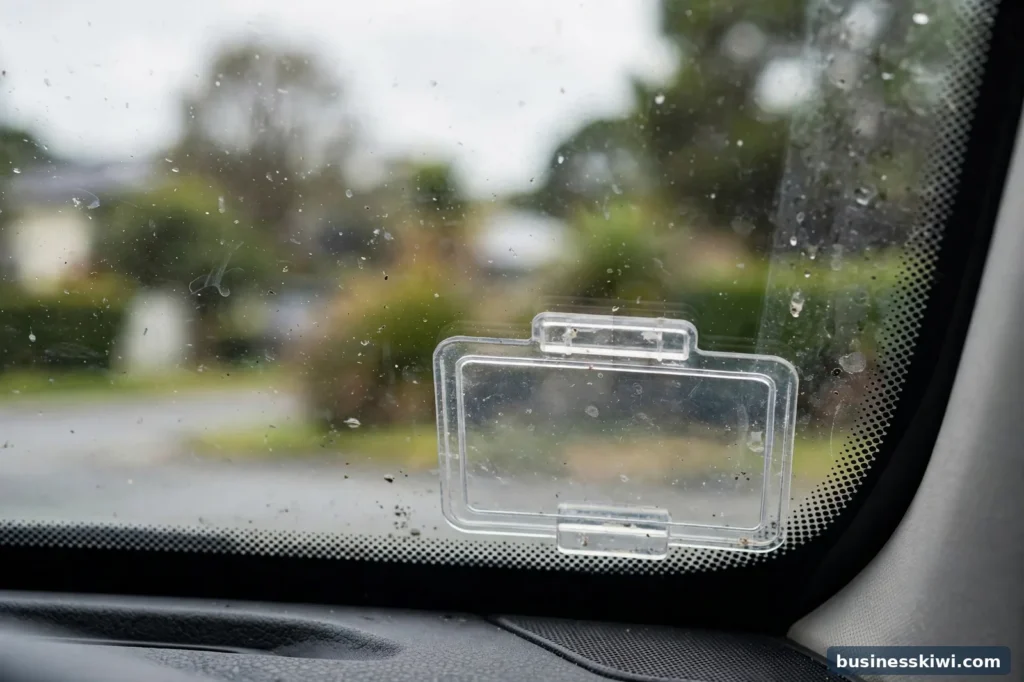
Licensing (rego) is the recurring payment that keeps the vehicle legal to use on the road. When you pay, you receive a licence label showing the expiry date, displayed on the left-hand side of the windscreen, or near the number plate on a trailer or motorcycle. A licence lasts up to 12 months at a time, and you choose the period each time you renew.
A Warrant of Fitness (WoF) is a safety inspection, not a payment to the Crown. Your vehicle generally needs a current WoF (or a Certificate of Fitness, CoF, for commercial vehicles) before you can license it or use it on the road. The two run on different cycles, so this guide only touches on the WoF where it affects licensing.
What your rego payment actually covers
A licence fee is not one charge. According to NZ Transport Agency Waka Kotahi (NZTA), it bundles three parts: a licence fee, an ACC levy and an administration fee. Vehicles operating under a transport service licence, such as taxis and goods services, pay a transport service licence fee on top.
Most of the money collected goes into the National Land Transport Fund, which pays for the road network. The ACC levy helps fund the cost of injuries from crashes on public roads. Petrol vehicles pay part of that levy at the pump, which is one reason a petrol car’s rego is lower than a diesel or electric car’s, where the whole levy is collected through the licence fee. The administration fee depends on how you transact: $8.66 online, $11.99 at an agent, both including GST.
One more thing worth knowing: the annual licence fee portion of rego had not increased since 1994. The Government lifted it from 1 January 2025 to roughly where it would have sat if it had tracked inflation, and it stepped up again from 1 January 2026.
Rego fees as at October 2026
The tables below are NZTA’s common licensing fees. They include the online administration fee and GST. If you renew at an agent instead, add $3.33 per transaction, the difference between the agent and online administration fees.
Cars, trailers and rental vehicles
A note on trailers: light trailers up to 3,500kg are among the few vehicles not required to be licensed continuously, along with tractors and forklifts, so gaps between licences do not create backdated fees for them.
Utes, vans and trucks
Diesel vehicles carry a second, separate cost: road user charges, bought in advance in distance blocks. A diesel ute needs both rego and road user charges current before it goes on the road.
Motorcycles and mopeds
Motorcycle rego surprises people, because the ACC levy reflects injury risk and makes up most of the total.
Hybrids follow their fuel type: a petrol hybrid pays the petrol fees, a diesel hybrid the diesel fees. Electric vehicles used to pay a discounted ACC levy rate as an incentive for low-emission vehicles. That discount ended on 1 July 2025, so EVs now sit in the same band as diesel vehicles.
If your vehicle is not in these tables, NZTA offers a fee checker by plate number through its Rightcar service, and its contact centre can quote less common types.
Worked examples
A trades business with three diesel utes. Each ute (up to 3,500kg GVM) costs $276.46 for 12 months, so the fleet rego bill is $829.38 a year before road user charges. Renewing all three online rather than at an agent saves $9.99 in administration fees. Small money, but staggering the renewals also stops three bills landing in the same week.
A new car bought from a dealer. First registration bundles the registration fee, plates, administration and 6 or 12 months of licensing into one amount. A petrol car with an engine between 1,301cc and 2,600cc registered with 12 months of licensing costs $325.74 in total, against $172.97 for licensing alone, so the one-off registration component is a meaningful part of the driveaway cost.
A motorcycle used only in summer. A 650cc bike costs $590.20 for a full year. A rider who garages the bike over winter can license it for the riding months and put it on hold while it is off the road instead.

How to renew your rego
Step 1: Watch for the reminder. NZTA sends a renewal reminder about six weeks before your licence expires, by post or by email if you have switched to email reminders. The expiry date is also printed on your current label and can be checked online. Not receiving a reminder is not a defence: the registered person is responsible either way.
Step 2: Make sure the WoF or CoF is current. You cannot license a vehicle that needs an inspection unless it holds a current one. If your WoF expires around the same time, get the inspection done first.
Step 3: Renew online. You need your reminder number or your plate number, plus a credit or debit card or internet banking details. Choose your period, confirm the vehicle details, and pay. The online administration fee is $8.66, the cheapest channel.
Step 4: Fit the new label. Your new label arrives by post, usually within 14 days. Display it as soon as it arrives, and order a replacement online if it does not show up. A lost or stolen label can also be replaced: $7.94 online or $14.05 at an agent.
If online does not suit. Any NZTA agent can renew you on the spot, and you walk out with the label in hand, which matters if your licence has already expired. Take the reminder notice, or fill in an Application to license motor vehicle (MR1B) form at the counter.
One caution: rego renewal scams are common, and NZTA’s genuine reminder emails have non-clickable links for that reason. If an email urges you to click through and pay, start from the NZTA website yourself instead.
Licensing periods and expiry dates
You do not have to renew for a full year. The 3 and 6 month options cost more per month than the 12 month option, but they let you spread costs or license a vehicle for a specific season. You can also change your expiry date altogether with an Application to change licence expiry date (MR27) form at an agent, handy if you want every vehicle in a business renewing in the same month.
Continuous licensing: the rule that catches people out
Most vehicles in New Zealand must be licensed continuously. There can be no unlicensed days unless the vehicle has officially been taken off the road. The consequence many owners only discover at the counter: if you renew late, the new licence is backdated to the expiry of the old one, and you pay for the gap. Letting rego slide for two months does not save two months of fees. It just means you pay for those months later, and in the meantime using the vehicle on the road has been unlawful.
The only clean way to pause the clock is an exemption, covered next. Two narrower exceptions exist: a buyer of an unlicensed vehicle only pays from the date they bought it (the seller owes the fees up to the sale date), and a stolen vehicle stops accruing fees from the date it was stolen, provided you report it to the Police and contact NZTA.
Putting your rego on hold
If a vehicle will be off the road for at least three months in a row, apply for an exemption from licensing, better known as putting your rego on hold. It is free, with no administration fee.
- Apply online with your New Zealand driver licence, the plate number and a payment method on hand, or complete a Put your vehicle licence (rego) on hold (MR24) form at an agent. Someone else can apply on your behalf.
- Apply in advance where you can. The exemption starts when your current licence (or existing exemption) expires, or from the application date if the vehicle is already unlicensed.
- An exemption lasts a minimum of three months and a maximum of 12 months, and you can apply for another as the current one nears expiry.
- The vehicle must not be used on the road while on hold. If you need it back early, license it first. License it within the first three months of the exemption and the new licence starts from the previous expiry date, so you do not gain a free quarter.
- If your licence or exemption has been expired for 60 days or more and the vehicle is subject to continuous licensing, outstanding fees must be settled as part of the process.
When the exemption ends: license the vehicle, apply for another exemption, or cancel the registration if it is off the road for good.
If your rego lapses
Driving on an expired licence is an offence under the Land Transport Act 1998. Beyond the legal risk, the meter keeps running: fees accrue from the previous expiry date until the vehicle is licensed, put on hold or cancelled. Sell a vehicle with fees owing and NZTA can pursue you for the amount outstanding up to your sale date, including through a debt collection agency.
The hard deadline is 12 months. If a vehicle subject to continuous licensing stays unlicensed for more than a year, NZTA cancels its registration, after sending a warning notice. Cancellation does not wipe the debt: outstanding fees are still owed. Vehicles not subject to continuous licensing get two years before automatic cancellation.
Bringing a cancelled vehicle back is a much bigger job than renewing on time: inspection, certification, re-registration and licensing, with new plates issued. For an older vehicle of modest value, those costs can be the end of the road.
Registering a vehicle for the first time
Registration is normally handled by dealers and entry certifiers for brand-new and imported vehicles, so most buyers never do it themselves. The shape of it is simple. The vehicle is inspected and certified as meeting New Zealand standards. The certifier prints a registration application form (MR2A), which you take with your identification to a registration agent. The vehicle is added to the Motor Vehicle Register, plates are issued, and you pay the registration amount, which includes your first 6 or 12 months of licensing. A certificate of registration follows by post. If the vehicle has been registered here before, you need proof of that earlier registration instead.
First registration totals for common cars, including the licensing period shown, are:
Inside that total sit several components that can apply on top of the registration and licence fees: an administration fee of $14.38 for a vehicle with a VIN ($14.70 VIN-exempt, $6.33 to re-register a vehicle registered before), a tyre stewardship fee of $38.24 for a car or $76.47 for a light goods vehicle, a VIN data maintenance fee of $8.60, a Clean Car Standard administration fee of $22.46 for most light vehicles first registered from 1 July 2025, and a synthetic greenhouse gas levy of $53.26 for a small passenger vehicle with air conditioning using the older refrigerant gas. Heavy vehicles over 3,500kg also pay a chassis rating fee of $40.97.
Number plates, in brief
Plates are issued when a vehicle is registered and normally stay with it for life, changing only if they are lost, stolen or damaged, or if the owner fits personalised plates. You hand them in when you cancel a registration (personalised plates are shown to the agent and returned to you), and a refund of unused licence fees depends on returning them.
Cancelling a registration, transfers and refunds
Cancelling is the permanent option, for a vehicle that is destroyed, written off, permanently off the road or leaving New Zealand for good. Apply at a registration agent with an Application to cancel registration (MR15) form, your ID and the plates, and pay the $10.02 administration fee. Licence fees owing to the cancellation date can be paid on the spot, or invoiced later, which adds a $14.05 administration fee.
Refunds are limited and specific. NZTA may refund unexpired licence fees when a registration is cancelled, but the licence administration fee is never refundable, refunds are at the Registrar’s discretion, and you must return the plates to get one. There is no refund simply for selling a vehicle or parking it up mid-licence. If you are only pausing use, the exemption is the right tool, not cancellation.
Buying and selling sits between these rules. Telling NZTA you have bought a vehicle (the change of registered person transaction) costs nothing. Do it promptly: until the record changes, the seller remains the registered person for reminders and fees.
Common mistakes
Assuming no reminder means no bill. It does not. Fees keep accruing and are backdated.
Paying a scam renewal site. Renew through NZTA’s own website or an agent, never through a link in an unexpected email.
Letting a project car sit unlicensed. If it will be off the road for three months or more, put it on hold. It takes minutes and costs nothing.
Forgetting the WoF sequencing. An expired WoF blocks licensing. Book the inspection before the rego deadline, not after.
Staggering nothing. Businesses with several vehicles often inherit a cluster of renewals in one month. Use shorter licensing periods or an MR27 expiry date change to spread them across the year.
Budgeting rego on its own. Licence fees sit alongside car insurance, fuel, maintenance and, for diesels, road user charges. Budget for all of them.
Frequently asked questions
How much is rego for a car in NZ?
For a private petrol car, $172.97 for 12 months at the October 2026 rates, including the online administration fee and GST. Diesel and electric cars cost $241.59 for 12 months. Shorter periods cost $49.75 for three months and $90.82 for six months for a petrol car.
Is rego the same as registration?
No. Registration is the one-off process of adding a vehicle to the Motor Vehicle Register and issuing its plates. Rego is vehicle licensing, the recurring fee that allows the vehicle to be used on public roads. You register once; you license continuously.
Can I renew my rego online?
Yes. You need your reminder number or plate number and a card or internet banking details. Online renewal carries the lowest administration fee, $8.66, and your new label arrives by post, usually within 14 days. Agents can renew you on the spot for an $11.99 administration fee.
What happens if my rego expires?
Fees are backdated to the expiry date when you next license the vehicle, so a late renewal costs the same as an on-time one, and using the vehicle while unlicensed is an offence. If it stays unlicensed for more than 12 months, NZTA cancels its registration and you still owe the outstanding fees.
How do I put my rego on hold?
Apply for an exemption from licensing online or with an MR24 form at an agent. It is free, lasts between three and 12 months, and can be renewed. The vehicle must not be used on the road while the exemption runs.
Why does a diesel cost more to register than a petrol car?
Partly because of how the ACC levy is collected. Petrol vehicles pay part of the levy at the pump, while diesel and electric vehicles pay their whole levy through the licence fee. Diesel vehicles also pay road user charges on top, since diesel is not taxed at the pump the way petrol is.
Can I get a refund if I sell my car mid-licence?
Generally no. Licence fees are not refunded when you sell a vehicle. A refund of unexpired licence fees may be available when a registration is cancelled and the plates are handed in, at the Registrar’s discretion, and the administration fee is never refunded.
Why is motorcycle rego so much more than car rego?
The ACC levy makes up most of a motorcycle licence fee, and it is set by injury risk. A bike over 600cc costs $590.20 for 12 months, compared with $172.97 for a petrol car. Riders who park the bike up for a season can use the exemption to avoid paying for months it is off the road.
This guide is general information about how vehicle registration and licensing work in New Zealand, based on NZTA’s published fees and guidance as at October 2026. Fees and rules change from time to time, so check the current amounts for your vehicle on the NZTA website before you pay. Nothing here is legal or tax advice for your specific situation.
Sources
- NZ Transport Agency Waka Kotahi, Vehicle licensing (rego), nzta.govt.nz
- NZ Transport Agency Waka Kotahi, Licensing (rego) fees, nzta.govt.nz
- NZ Transport Agency Waka Kotahi, Administration fees, nzta.govt.nz
- NZ Transport Agency Waka Kotahi, Registration fees, nzta.govt.nz
- NZ Transport Agency Waka Kotahi, Registering your vehicle, nzta.govt.nz
- NZ Transport Agency Waka Kotahi, Put your licence (rego) on hold, nzta.govt.nz
- NZ Transport Agency Waka Kotahi, Cancelling your registration, nzta.govt.nz
- NZ Transport Agency Waka Kotahi, Registered person’s responsibilities, nzta.govt.nz