Gwen Rogers Kindergarten: Sessions, Fees and What Parents Need to Know
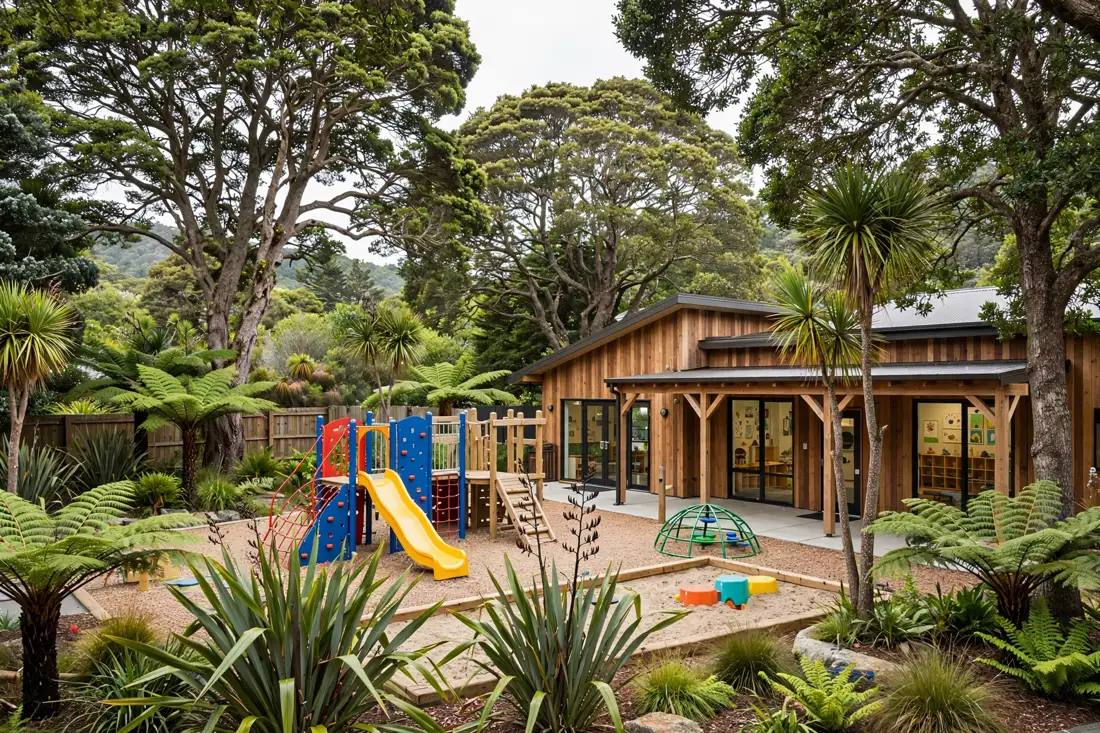
For families in Mount Maunganui, Gwen Rogers Kindergarten is one of the longest established early learning options in the neighbourhood. It sits on a quiet lane beside Omanu Primary School, takes children from the age of two, and runs on the traditional New Zealand kindergarten model: qualified and registered teachers, learning through play, government funded hours, and a request for a modest donation rather than a published fee schedule. This profile brings together what is verified about the service from the Ministry of Education’s official directory and from the kindergarten’s own pages, covering session times, what attendance costs, how enrolment works, and where families can find independent quality reports before they commit.
The kindergarten at a glance
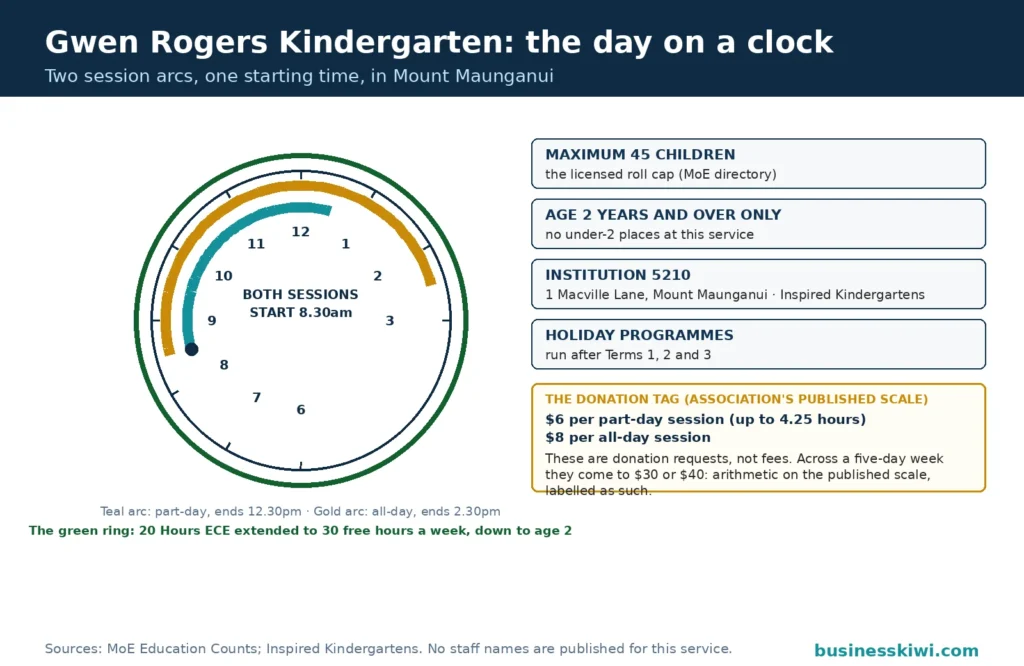
The service’s full name in the Ministry of Education’s Education Counts directory is Gwen Rogers Free Kindergarten, and it is a licensed kindergarten service in Mount Maunganui, Tauranga. Its Education Counts institution number is 5210, the number that identifies it across official records, funding documents and Education Review Office reporting. The directory records the address as 1 Macville Lane, Mount Maunganui, while the kindergarten’s own page gives the address as 1 Macville Park Lane, Mount Maunganui 3116. Families can contact the kindergarten directly on 07 575 4915 or by email at gwenrogers@ikindergartens.nz.
The directory shows the service provides for children aged two years and over only, with no places for children under two. Its licensed maximum is 45 children at any one time, which keeps it at the smaller, community scale typical of association kindergartens rather than the larger rolls of some education and care centres. It is recorded as offering 20 Hours ECE, the government funding scheme explained further below. The kindergarten does not run its own standalone website. Its official online presence is its page on the Inspired Kindergartens website, alongside its Education Counts directory profile, and those are the places families should check for current information rather than third-party listing sites, which frequently carry out of date session times and contact details for this service.
Part of Inspired Kindergartens
Gwen Rogers Kindergarten belongs to Inspired Kindergartens, the trading name of the Tauranga Regional Free Kindergarten Association Incorporated. The association has provided kindergarten services across the greater Bay of Plenty and the Coromandel since 1960, and its website describes a network of 26 kindergartens enrolling more than 1,300 children. That association structure matters for parents because it shapes how the kindergarten is run. Policy, staffing support and funding administration sit with the association, while each kindergarten keeps its own local character, its own teaching team and its own relationship with its neighbourhood.
Kindergartens in this model are community based and not run for profit. The association states that all of its teachers are fully trained, qualified and registered teachers, supported by senior teachers across the network. Registered teacher status is a meaningful distinction in early childhood education. It means the people leading your child’s learning hold a recognised teaching qualification and are registered with the Teaching Council, the same professional registration held by primary school teachers. The association also commits to children receiving at least 20 hours of early learning free each week across its kindergartens, and at Gwen Rogers that commitment is extended further, as the costs section below explains. Families who want to talk to the association itself, rather than the kindergarten, can call its office on 0800 250 052.
Sessions and hours
Gwen Rogers Kindergarten offers two session choices, Monday to Friday. Children can attend a shorter session from 8.30am to 12.30pm, or a longer day from 8.30am to 2.30pm. The choice lets families match kindergarten around work, other children and their child’s stamina. A two or three year old might start with the four hour morning session, while an older child approaching school age often benefits from the six hour day, which is closer to the length of a primary school day and helps build that routine before the transition.
The kindergarten also runs holiday programmes following Terms 1, 2 and 3. That is a practical point worth noting, because many sessional kindergartens simply close for the full school holidays. A holiday programme after three of the four terms gives families some continuity of care and gives children the chance to keep seeing their friends and teachers across most of the year. It is still wise to plan ahead for the long summer break and for the Term 4 holiday period, and to confirm programme dates and any separate charges with the kindergarten each year, because holiday programme arrangements can change.
Because the licence caps attendance at 45 children, sessions cannot simply expand when demand rises. If a session is full, the kindergarten team will talk through when a place is likely to become available, which is one reason the enrolment process below encourages families to make contact early rather than waiting until the term they want their child to start.
The session pattern also fits neatly with the funded hours described in the next section. A child who attends the longer day, five days a week, is at kindergarten for exactly 30 hours a week, which matches the association’s free hours offer in full. A child on morning sessions uses 20 hours a week. Families can therefore choose the pattern that suits their child without having to calculate a separate fee for the balance, as long as they assign their 20 Hours ECE entitlement to the kindergarten.
What it costs: free hours and donations
Cost is where Gwen Rogers differs most clearly from a privately run centre. The kindergarten is donation based. It offers up to 30 free hours per week, and instead of charging fees for those hours it asks families for a voluntary donation. The association’s published donation scale is $6 per child for a part day session, meaning a session of up to 4.25 hours, and $8 per child for an all day session of more than 4.25 hours. On that scale, the 8.30am to 12.30pm session at Gwen Rogers falls into the part day band, and the 8.30am to 2.30pm day falls into the all day band. The donations are kept by the kindergarten itself and go towards the things government funding does not fully cover, such as maintaining the buildings, buying resources and equipment, and meeting ongoing expenses.
To put that in a weekly frame, a child attending the longer day five days a week would attract a requested donation of $40 a week, and a child attending five morning sessions would attract $30 a week. Those figures are requests, not invoices. Under Ministry of Education rules, donations are voluntary, a service cannot require you to pay one, and it cannot describe a donation as a fee. If you do donate, keep the receipt, because donations to this type of service may be eligible for a donation tax credit through Inland Revenue, currently a third of the amount donated, claimed through your IRD return.
The free hours sit on top of the government’s 20 Hours ECE scheme. Under that scheme, children aged three, four and five are funded for up to 20 hours of early childhood education a week, for no more than six hours in any one day, and a service cannot charge fees for the hours a child has signed up to receive under the scheme. Parents confirm which hours are covered when they complete the enrolment agreement, and the hours can be split between two services as long as the daily and weekly limits are not exceeded. Inspired Kindergartens goes beyond the government baseline in two ways. It extends the free entitlement from 20 hours to 30 hours a week, and it makes free hours available from the age of two, a year earlier than the government scheme, which begins at age three.
Two qualifications are worth understanding. First, sessions or services beyond the funded package are charged separately, so if you arrange extended attendance outside the standard offer, expect a charge and ask what it is before you agree. Second, the association’s cost information states that families who do not assign their full 20 Hours ECE entitlement to the kindergarten are charged a proportionate fee, because the kindergarten then misses out on funding it has budgeted around. Separate optional charges, for things such as sunscreen, food or special resources, can also apply across early learning services generally, but only where a parent has agreed to them at enrolment. The practical advice is simple: the everyday cost of Gwen Rogers is the donation scale above, and anything beyond that should be confirmed in writing at enrolment so there are no surprises later.
Families on lower incomes may also be able to get help from Work and Income. The Ministry of Education notes that its childcare subsidy can be used instead of 20 Hours ECE, or combined with it where a family’s subsidy entitlement covers more than 20 hours a week. That is most relevant where a family is paying for hours outside the kindergarten’s funded offer, and it is worth checking eligibility before assuming the full cost falls on you.
How children learn at Gwen Rogers
The kindergarten’s own philosophy statement puts relationships first. It describes strong, collaborative relationships with children and their whānau, summed up in the concept of whanaungatanga, as fundamental to learning, and it aims for an atmosphere that is welcoming, respectful, inclusive and fun. Learning is play based. The kindergarten states that children learn best through experiences they initiate themselves within their play, including challenges and cooperative projects, and that children learn at their own pace in a holistic way. In practice that means teachers set up a rich, stimulating environment with plenty of open-ended material, then observe, join in and extend what children are already curious about, rather than running the day as a sequence of teacher directed lessons.
That approach is the hallmark of the kindergarten tradition in New Zealand, and it suits the two to five age group, where social confidence, language, independence and a love of learning are the foundations everything else is built on when children reach school. Parents visiting should expect to see children spread across indoor and outdoor play, working on their own projects at their own speed, with teachers in among them rather than standing apart.
The kindergarten also has a particular strength in environmental education. It teaches children about the environment and aims to foster a generation who think and act sustainably as a matter of habit. In 2014 it received an Enviro Schools Green-Gold award, the highest level in that programme, in collaboration with neighbouring Omanu School. For families who care about outdoor learning and care for the local environment, that is a genuinely distinctive feature, and it reflects the kindergarten’s position in the central Mount, where the beach, the maunga and the local parks shape daily life.
A long-standing part of the Mount
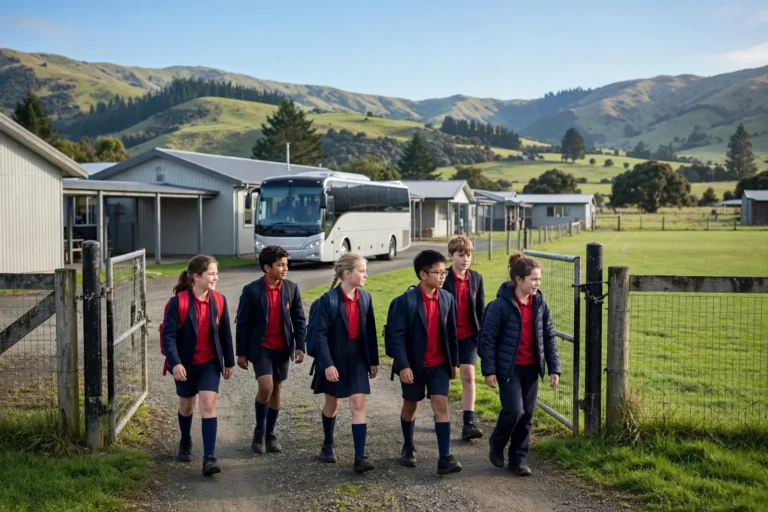
Gwen Rogers Kindergarten has been part of the Mount Maunganui education community for more than 45 years. That kind of longevity means many current parents were once kindergarten children there themselves, and it gives the service a settled place in the neighbourhood. Its position directly beside Omanu Primary School is also significant. Young children become familiar with the school grounds and the sight of school life long before they start, and the move from kindergarten to school at age five feels less like a leap into the unknown. Families thinking ahead to that transition will find it helps to look at the wider picture at the same time, including what the first year of school involves and the everyday costs that come with it, such as school stationery and uniforms once your child starts.
Quality and oversight: ERO reports
Like every licensed early learning service in New Zealand, Gwen Rogers Kindergarten is reviewed by the Education Review Office, the government agency responsible for independently evaluating education and care in early learning services and schools. ERO publishes its reports for parents and whānau, and both the kindergarten’s Education Counts profile and its own page on the Inspired Kindergartens website link through to its ERO report, so families can read the most recent review before enrolling.
A note on what this profile does not do: it does not summarise the findings or repeat any rating from the kindergarten’s ERO report. Review reports are detailed documents, they are updated as new reviews are completed, and a summary in a profile like this one can quickly become misleading. The right approach is to read the current report yourself, note the date of the review, and look at how the reviewers describe children’s learning, the teaching team, and the service’s own plans for improvement. If anything in the report raises a question, raise it with the kindergarten when you visit. A good service will expect those questions and answer them openly. ERO’s own website also explains how its reports can be useful to parents and suggests questions families can ask any service they are considering, which is a helpful companion read before a visit.
How to enrol
Inspired Kindergartens sets out a five step enrolment process, and it encourages families to visit before deciding. The first step is choosing which kindergarten you prefer. The second is to call and arrange a visit, or simply call in during the day, meet the teachers and get a feel for the place with your child. The third step is confirming your choice and enrolling. The fourth is completing the enrolment form, which records the essential information about your child. You can fill it in at the kindergarten or take it home, and a teacher will talk through your needs, discuss when a place is available and answer your questions. The fifth step is that a coordinator stays in touch and arranges a suitable start date with you.
Children can be enrolled from the age of two, matching the directory record for this service. When you complete the enrolment agreement you will also confirm which hours are covered by 20 Hours ECE funding, so it helps to have thought through which sessions you want before you sign. If your preferred session is full, the conversation at step four is when you will learn how long the wait is likely to be, so enquire early, particularly for the popular longer day. Bring your questions about donations, holiday programmes and any optional charges to the visit as well, and ask for anything you agree to be recorded on the enrolment agreement. Contact the kindergarten on 07 575 4915 or at gwenrogers@ikindergartens.nz to arrange a visit, or use the enrolment enquiry option on its page on the Inspired Kindergartens website.
Frequently asked questions
What ages does Gwen Rogers Kindergarten take?
The service takes children from the age of two until they start school. The Education Counts directory records that it provides for two year olds and over only, and it has no places for children under two.
What are the session times at Gwen Rogers Kindergarten?
Families choose between an 8.30am to 12.30pm session and an 8.30am to 2.30pm day, Monday to Friday, as published on the kindergarten’s own page. Holiday programmes are also offered following Terms 1, 2 and 3.
How much does Gwen Rogers Kindergarten cost?
The kindergarten offers up to 30 free hours a week and is donation based. The association’s published scale asks for a voluntary donation of $6 per child for a part day session and $8 per child for an all day session. Donations are voluntary by law, and extended sessions outside the standard offer are charged separately.
Are the teachers at Gwen Rogers Kindergarten qualified?
Yes. Inspired Kindergartens states that all of its teachers are fully trained, qualified and registered, and that they are supported by senior teachers across the association’s network of kindergartens.
Does Gwen Rogers Kindergarten have an ERO report?
Yes. The Education Review Office reviews the service, and its Education Counts profile and its own kindergarten page both link to its ERO report. Read the current report directly before enrolling, as reports are updated with each new review.
How do I enrol my child at Gwen Rogers Kindergarten?
Call the kindergarten on 07 575 4915 to arrange a visit, confirm you want a place, complete the enrolment form, and a coordinator will arrange a start date with you. Children can be enrolled from age two.
This profile is general information about Gwen Rogers Kindergarten based on official records and the kindergarten association’s published information at the time of writing. Session times, donation requests and programme arrangements can change, so confirm current details with the kindergarten before enrolling. Nothing here is financial or educational advice for your family’s circumstances.
Sources
- Gwen Rogers Free Kindergarten, profile and contact details, Education Counts, Ministry of Education
- Gwen Rogers Mount Maunganui Kindergarten, Inspired Kindergartens
- How much will it cost?, Inspired Kindergartens
- Enrolment Process, Inspired Kindergartens
- Inspired Kindergartens homepage, Inspired Kindergartens
- Greerton Kindergarten Becomes Maarawaewae Kindergarten, media release, 1 September 2025, Inspired Kindergartens
- 20 hours funding for early childhood education, Ministry of Education
- Education Review Office homepage, Education Review Office