Cheap 4×4 Utes for Sale NZ: How It Works, Costs & Key Considerations
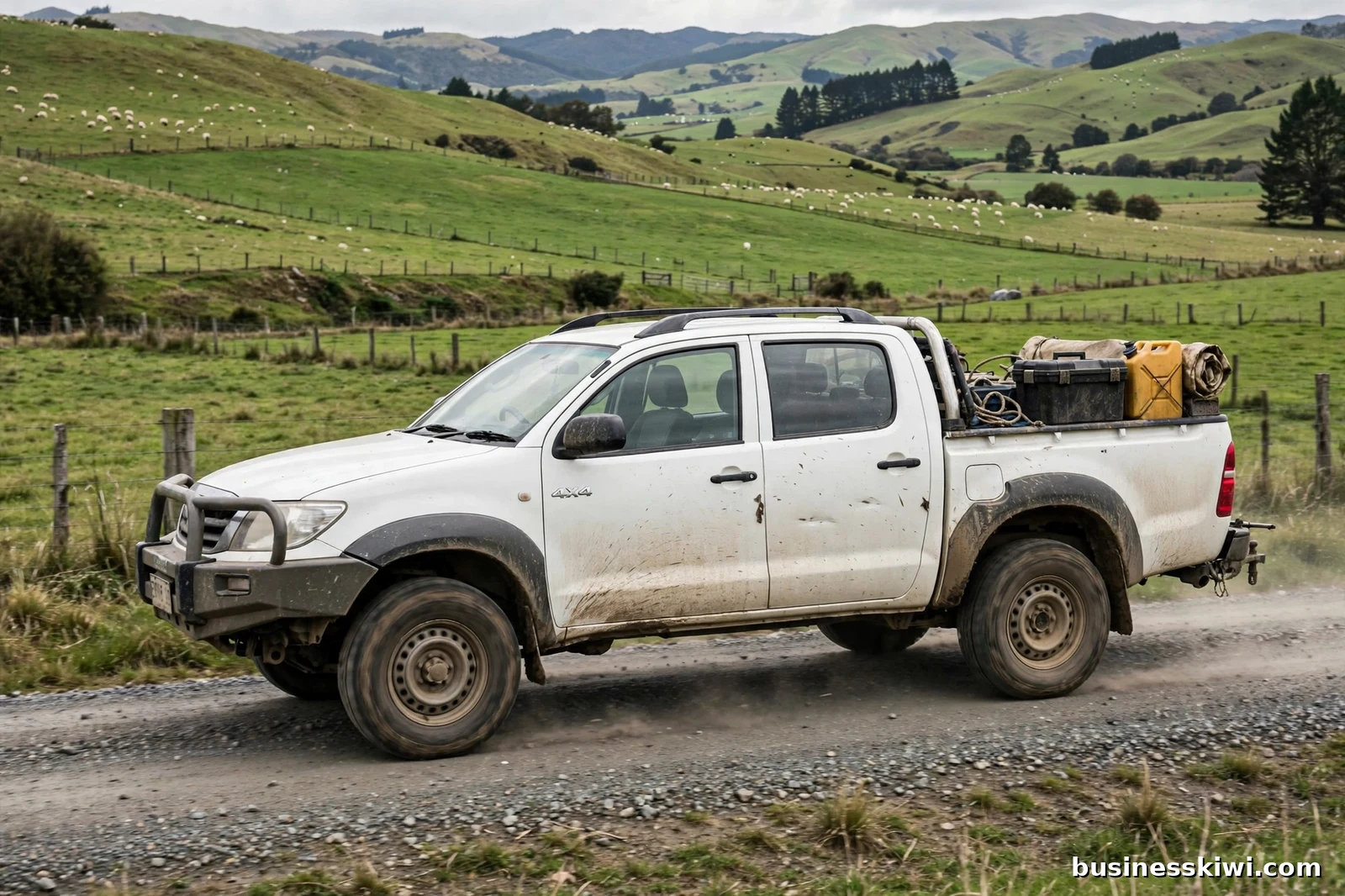
The short answer: a cheap 4×4 ute in New Zealand almost always means a used ute. Age, high kilometres, work-spec trim and fleet history are what bring the price down. The buying checks matter more than the badge: run a PPSR check for money owing before you pay, budget for diesel road user charges at $76 per 1,000 km, and if you finance it, compare the total cost of the loan, not the weekly payment.
A new double cab 4×4 ute is one of the most expensive vehicles on a New Zealand forecourt. The used market is where “cheap” lives. Ex-fleet workhorses, older generations of the big name models, and high-kilometre trade utes change hands for a fraction of their new price, and plenty of them have years of work left in them. Plenty do not. This guide explains where the cheap utes are, what makes them cheap, the checks that separate a bargain from a money pit, what they really cost to run, and how ute finance works if you need to borrow for one.
What “cheap” actually means with a 4×4 ute
Four things drive a used ute’s price down, and every cheap listing is cheap because of one or more of them.
Age and kilometres. Utes hold their value well in New Zealand, so a genuinely low price usually means an older model, a high odometer reading, or both. High kilometres are not automatically a deal breaker. A ute that has done its kilometres on highway work with full service records can be a safer buy than a younger ute with a patchy history and hard off-road use.
Specification. Single cabs and work-spec models with steel wheels, vinyl floors and few options are worth less than lifestyle double cabs with alloy wheels and leather. If the ute is for work, that is money saved on things you did not need.
Fleet history. Businesses, councils and rental fleets turn utes over in volume. They come with service records and honest wear, and they are often sold at auction or through dealer used lots at sharper prices than one-owner lifestyle utes.
Condition and history blemishes. Cosmetic damage, a worn tray, or a written record that needs checking will all pull a price down. Some of those are bargains. Some are warnings. The checks section below is how you tell the difference.
The models you will see again and again at the budget end are the same ones that dominate NZ roads: Toyota Hilux, Ford Ranger, Mitsubishi Triton, Isuzu D-Max, Nissan Navara and Mazda BT-50. Tritons often sit at the value end of the market. Hiluxes often hold the strongest prices for their age. Compare like with like: same model, same year, same kilometres, and the odd listing that is far cheaper than its twins deserves extra suspicion, not excitement.
4WD systems in plain English
Not every ute sold as a 4×4 works the same way, and the system affects both price and what the ute can do.
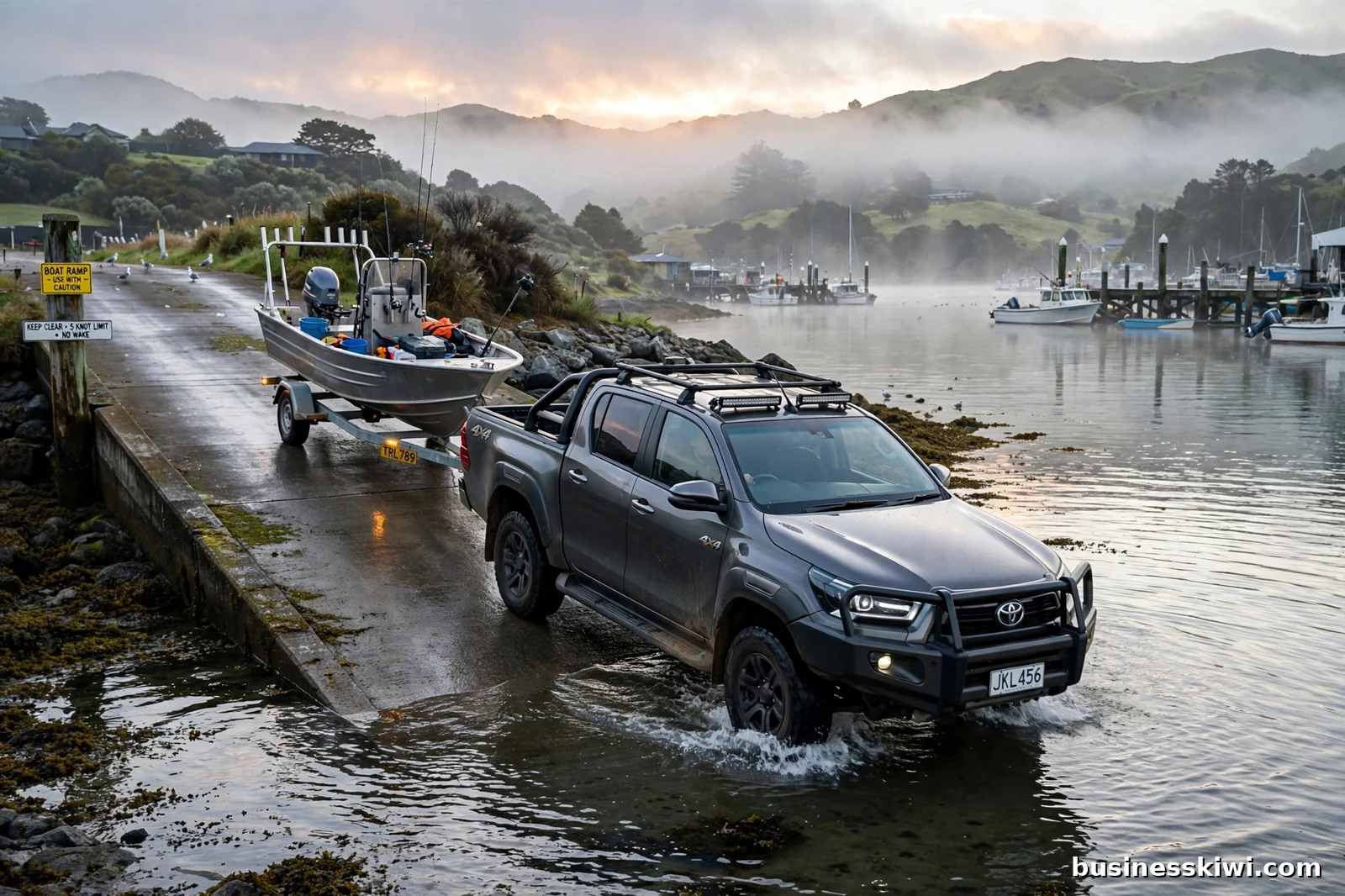
Part-time four-wheel drive is the traditional ute setup. The ute runs in two-wheel drive on sealed roads, and you engage four-wheel drive for gravel, mud, snow and boat ramps. Most have a low range for steep or heavy work. Driving on dry sealed roads in 4WD mode damages this system, which matters when you test drive one.
Full-time and automatic systems stay engaged or engage themselves when wheels slip. They are simpler to live with and common on higher-spec models, which is one reason those models cost more used.
Locking differentials and traction aids vary by model and year. If you genuinely go off road, ask what the specific ute has rather than assuming. If you do not, you are paying for hardware you will never use.
On any test drive of a part-time system, find a gravel area or quiet carpark, engage 4WD and low range, and drive slowly on full lock. Everything should engage smoothly, without grinding, flashing warning lights or rhythmic clunks. NZTA’s used car buying guidance makes the same point about listening for clunks, grinding and whining on a test drive. Those noises are expensive in a transfer case or differential.
Where to buy: dealer, private or auction
Dealers must be registered motor vehicle traders, and you can confirm registration on the Motor Vehicle Traders Register. Every dealer vehicle must display a Consumer Information Notice, the window card that shows the price, key details, and whether a security interest is registered against the vehicle. Dealers must sell with a warrant of fitness issued within the last month. The Consumer Guarantees Act applies, so the ute must be of acceptable quality, fit for purpose and match its description.
Private sales are where the lowest prices live, and where the buyer carries almost all the risk. The CGA does not apply. Your protections are your own checks, the PPSR search, and an independent inspection.
Auctions move a lot of ex-fleet utes. The process is fast and the prices can be keen, but viewing time is short and buyer fees add to the hammer price. Auction terms often limit your rights compared with a dealer purchase, so read them before bidding, not after.
The checks that protect you
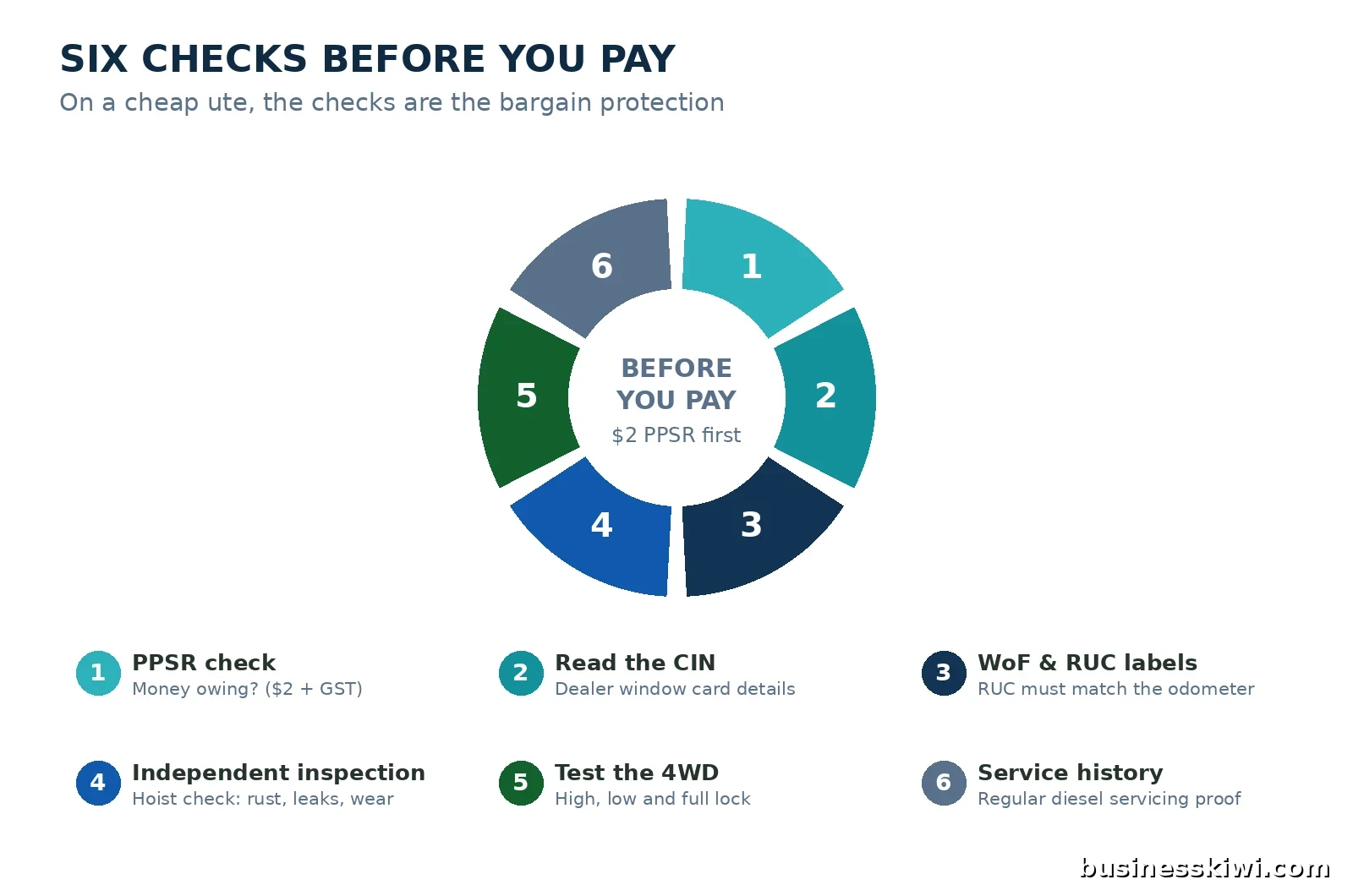
Run the PPSR check before you pay. The Personal Property Securities Register is the official record of security interests over vehicles. A search costs $2 plus GST on the Companies Office site and needs the vehicle’s VIN, chassis or plate number. If a security interest is registered, the vehicle can be repossessed from you, even though the debt belongs to a previous owner. On a private purchase this is the single most important two dollars you will spend. From a dealer, the trader must tell you if money is owing, and the CIN will show it, but the check takes minutes either way.
Read the Consumer Information Notice at a dealer. It is a legal document, not decoration. Check the odometer reading, the security interest statement, and whether the vehicle is recorded as damaged or imported with damage.
Check the WoF and the diesel RUC label. A current warrant is a minimum, not a guarantee. On a diesel ute, compare the road user charges licence on the windscreen with the odometer. If the RUC licence is behind the odometer reading, someone owes money for the distance already travelled, and sorting that out is much easier before the sale than after.
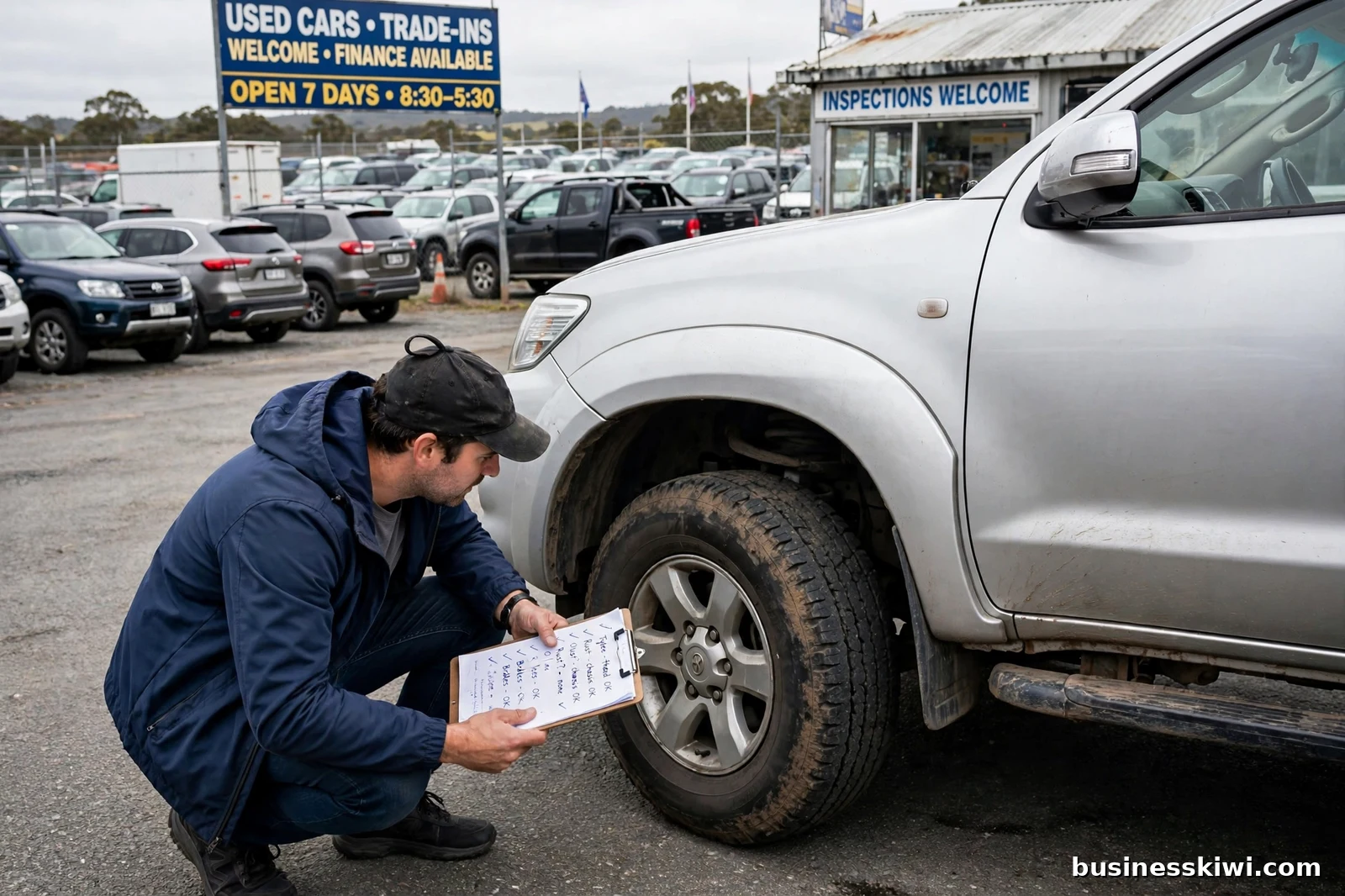
Pay for an independent pre-purchase inspection. Inspection services and workshops across NZ will put a ute on a hoist and check the things a test drive cannot show: chassis rust, underbody damage from off-road work, oil leaks, suspension wear and accident repairs. On a cheap ute, where one big repair can erase the saving, the inspection fee is cheap insurance.
Test the 4WD system and read the service history. Engage both 4WD modes as described above. Then look for regular oil and filter changes in the record. Diesel utes forgive a lot except neglected servicing.
What a cheap ute costs to run
The purchase price is the start, not the total. Budget for these from day one.
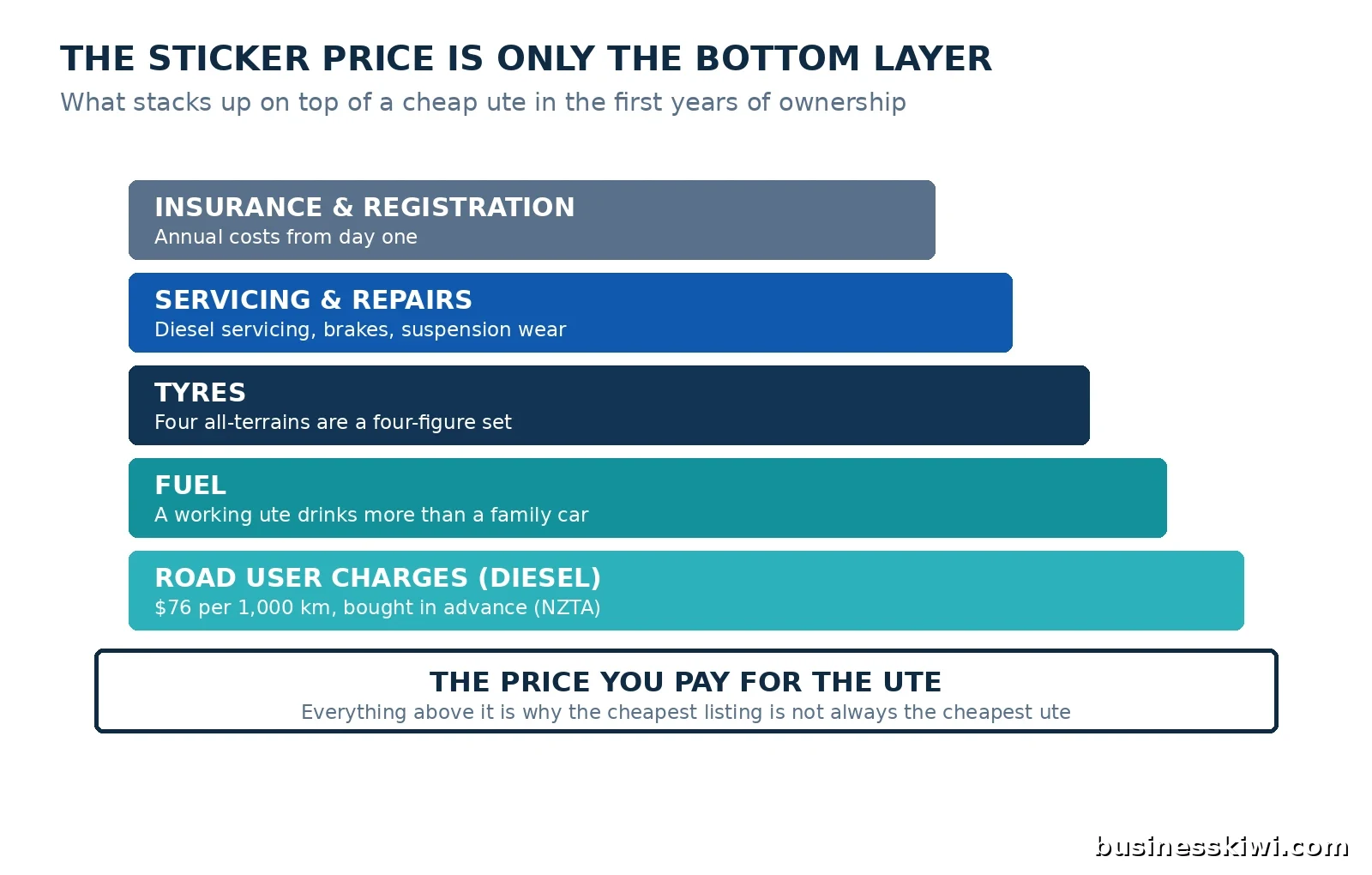
Road user charges on diesel. Most utes are diesel, and diesel vehicles do not pay fuel excise at the pump. Instead the owner buys road user charges in advance, currently $76 per 1,000 km for light vehicles at NZTA’s published rate. Drive 20,000 km a year and that is about $1,520 a year before fuel. The Government has also introduced a bill to move all light vehicles onto road user charges over time. Until any change becomes law, petrol utes keep paying excise in their fuel price and diesel utes keep buying RUC.
Fuel and tyres. A working ute uses more fuel than a family car, and 4×4 tyres cost more than car tyres, especially all-terrain patterns. Four worn all-terrains can be a four-figure replacement, so read the tyres as part of the price negotiation.
Servicing and repairs. Diesel servicing involves fuel filters and larger oil volumes. Older utes need cambelts or chains checked by model, and automatic transmissions and turbos are the expensive failures to avoid through history and inspection.
Insurance and registration. Insure at least third party from the day you buy. Registration is an annual cost, and a ute used for business may need to be recorded as such.
Ute finance: how borrowing for one works
Many buyers finance a ute rather than paying cash, and ute finance is simply a vehicle loan secured against the ute in most cases. The lender registers its interest, which is exactly what a future buyer’s PPSR check will find. Three routes are common.
Dealer finance is arranged at the yard. It is convenient and sometimes carries promotional rates on specific vehicles, but the comparison that matters is the total amount you will repay over the term, including fees, against the other options.
Bank and credit union loans may be secured against the vehicle or unsecured. Unsecured borrowing usually costs more in interest but leaves the vehicle unencumbered.
Finance companies are the third route, often faster to approve and more flexible on older vehicles and credit history, usually at a higher cost. An older, cheaper ute can be harder to finance than a newer one. Some lenders set maximum vehicle ages at the end of the term, which is worth asking about before you fall for a specific ute.
Whatever the route, NZ credit law gives you real protections. Under the Credit Contracts and Consumer Finance Act, lenders must lend responsibly, disclose the full cost of credit before you sign, and keep fees reasonable. For consumer credit contracts you generally have a right to cancel within 5 working days of receiving the disclosure documents, provided the statutory conditions are met, though you may still have to pay interest for those days and return any advance. Read the disclosure statement. It is the one document that shows the interest rate, every fee, and the total cost in writing.
A last finance point that catches ute buyers out: if the ute is written off while you owe more than the insurer pays out, the shortfall is still yours. That gap is what guaranteed asset protection insurance exists for, and our guide to car finance gap insurance explains how it works. For the full walkthrough of comparing vehicle loans, rates and terms, see our car finance guide.
Buying a ute through a business: the tax notes
If the ute is a work vehicle, two tax settings matter from day one, and both are areas where utes are often misunderstood.
GST. A GST-registered business buying a ute for its taxable activity claims the GST on the purchase in the usual way. Private use mixed into the picture needs an adjustment, so keep the business and private split honest from the start.
Fringe benefit tax. When an employer provides a vehicle that is available for an employee’s private use, fringe benefit tax generally applies. Utes have historically sat under the work-related vehicle exemption where all of the conditions are met: the vehicle is not principally designed to carry passengers, the employer’s name or logo is permanently and prominently displayed, private travel is restricted to home-to-work travel that is a condition of employment plus incidental travel, and the vehicle is not available for other private use. Double cab utes can qualify, but the signwriting and the restrictions are not optional extras. They are the exemption.
Those rules are set to change. A taxation bill introduced in September 2026 proposes replacing the current exemption approach with permitted-use categories from 1 April 2027, with inclusion rates running from 0 percent for business-only vehicles to 100 percent for full private use. It is a bill, not yet law, and the detail may shift. A business buying a fleet ute today should know the ground is moving and take advice on how the categories would treat it.
Frequently asked questions
What is the cheapest way to buy a 4×4 ute in NZ?
Usually a private purchase of an older, higher-kilometre ute, or an ex-fleet ute at auction. Those channels carry the least legal protection, so the saving has to be weighed against the cost of the checks: a PPSR search, an independent inspection, and the discipline to walk away.
Do I need to check if money is owing on a ute?
Yes, especially in a private sale. Search the Personal Property Securities Register before you pay. The search costs $2 plus GST and will show a registered security interest. A vehicle with money owing can be repossessed from you even if the debt was a previous owner’s.
How much are road user charges for a diesel ute?
NZTA’s current light vehicle rate is $76 per 1,000 km, bought in advance through distance licences. At 20,000 km a year that is about $1,520 annually, on top of diesel itself.
Can I get finance on an old, cheap ute?
Often yes, but not always. Some lenders limit the vehicle’s age at the start or end of the loan term, and older utes may only qualify with certain lenders or on shorter terms. Ask the lender about age limits before committing to a specific vehicle, and compare the total repayment cost across at least two quotes.
What is the difference between dealer and private buying rights?
A registered dealer sale is covered by the Consumer Guarantees Act, must display a Consumer Information Notice, and comes with trader obligations under the Motor Vehicle Sales Act. A private sale has none of that cover. Your remedies in a private sale are limited, mainly where the seller misled you, so your own checks do the heavy lifting.
Does a double cab ute avoid fringe benefit tax?
Not automatically. A double cab can qualify as a work-related vehicle, but only while every condition is met, including permanent signwriting and genuine restrictions on private use. A taxation bill proposes replacing the exemption with use categories from 1 April 2027, so the position is changing.
What licence do I need to tow with a ute?
A standard full car licence covers a light vehicle and trailer combination up to 6,000 kg gross combined mass. Stay within the ute’s own rated towing and payload limits as well. Those are set by the manufacturer for each model, and the lower of the limits is the one that counts.
The bottom line
Cheap 4×4 utes exist in New Zealand, and they are almost all used ones. The money is saved on age, kilometres and specification, and it is kept by doing the unglamorous work: a PPSR check, an inspection, a 4WD test, honest running-cost maths that includes $76 per 1,000 km of road user charges on a diesel, and finance compared on total cost rather than weekly payments. Buy the history and the condition, not the badge, and a cheap ute is one of the most useful vehicles you can own.
For more guides on vehicles, borrowing and business costs, browse our finance guides.