Parcel Letterboxes in NZ: Sizes, Security Features and What to Check Before You Buy
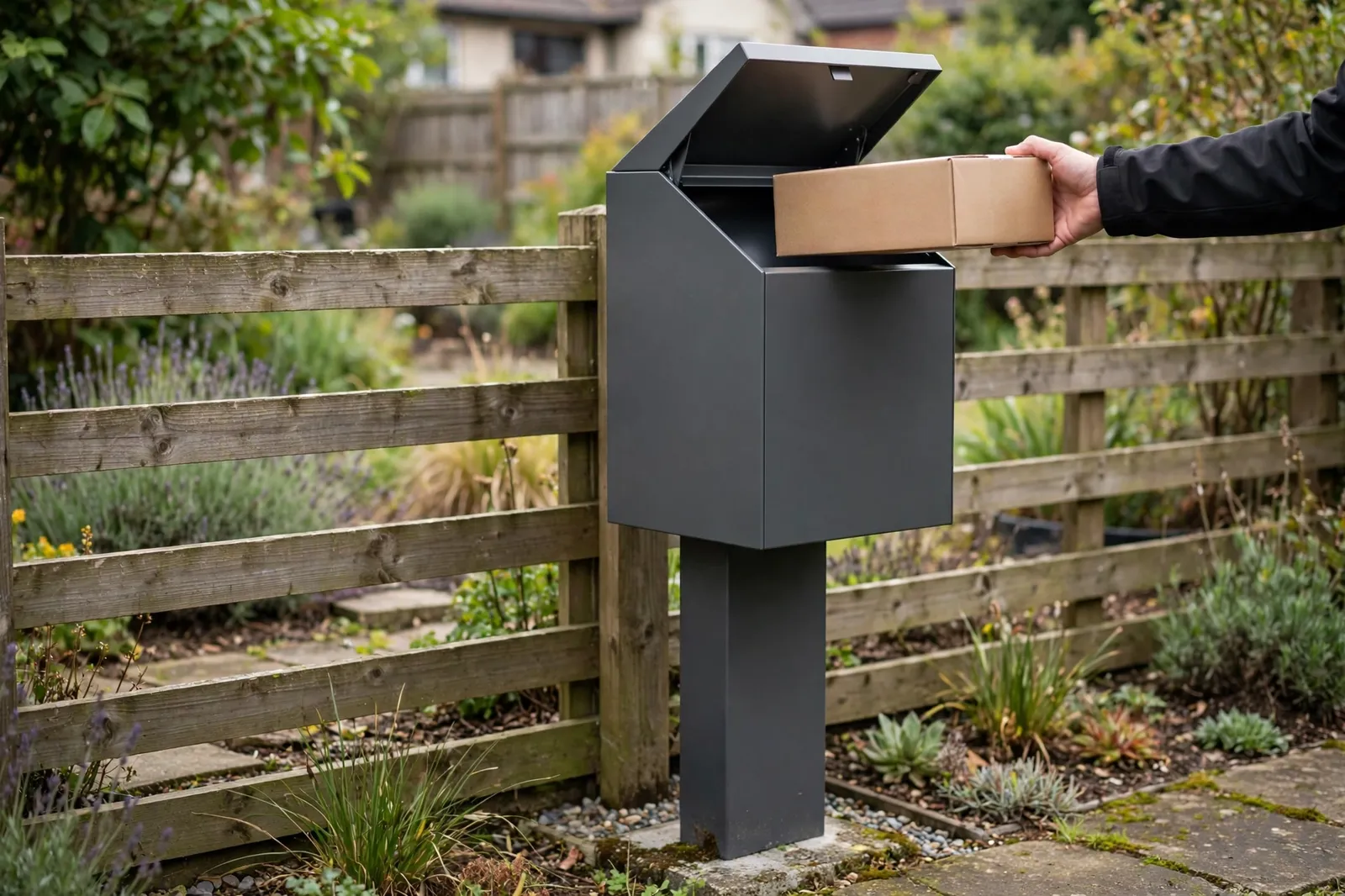
A parcel letterbox is a lockable box at your gate or front fence that takes courier deliveries when nobody is home. The courier drops the parcel through a chute or flap that only works one way, the parcel lands inside a locked compartment, and you retrieve it later with a key or a code. Done well, it ends the two familiar failures of home delivery: the card left in the letterbox saying you missed the courier, and the parcel left sitting in full view on the doorstep.
The doorstep problem is the one NZ Police keep warning about. In advice published ahead of the Christmas delivery rush, Police described parcels left on front doorsteps or in apartment building common areas as an easy target, and noted that thieves will often take any opportunity to steal. Their first tip was simple: have a secure location parcels can be left. A parcel letterbox is the permanent version of that secure location, fixed at the boundary where deliveries already happen.
There is also a fit with how mail is delivered in New Zealand. NZ Post says each of its Posties delivers to around 1,000 mailboxes every day, and its mailbox guidance has covered parcels for years: if you receive parcels, NZ Post says, you should consider having a separate parcel area in your mailbox, and the box should be large enough to hold your parcels out of sight from the street. A dedicated parcel box is that advice built properly, with room for courier parcels rather than letters alone.
This guide works through how parcel boxes work, the main types sold in New Zealand, how to size one against the parcels NZ Post actually carries, where NZ Post wants a box positioned, how rural delivery changes the picture, and what named models cost on the sellers’ own pages.
How a parcel letterbox works
The basic mechanism is a one-way drop. The courier opens a chute, flap or door at the front or side of the box, places the parcel inside, and the parcel slides or falls into a separate locked compartment below or behind. Because the parcel drops away from the opening, it cannot be fished back out through the slot it came in. You retrieve it from a lockable door, which some models put at the front and others at the rear.
Sam’s Garden, a New Zealand maker of aluminium letterboxes, describes the arrangement on its Nikau Parcel Drop: couriers place parcels through a side flap, the parcels drop securely into the bottom compartment, and the owner retrieves them using lock code access at the rear of the letterbox. Sandleford’s Canterbury parcel letterbox, sold through Bunnings New Zealand, uses a top chute design instead: the parcel goes down the chute, and retrieval is from the front, which Sandleford describes as ideal when rear access is limited.
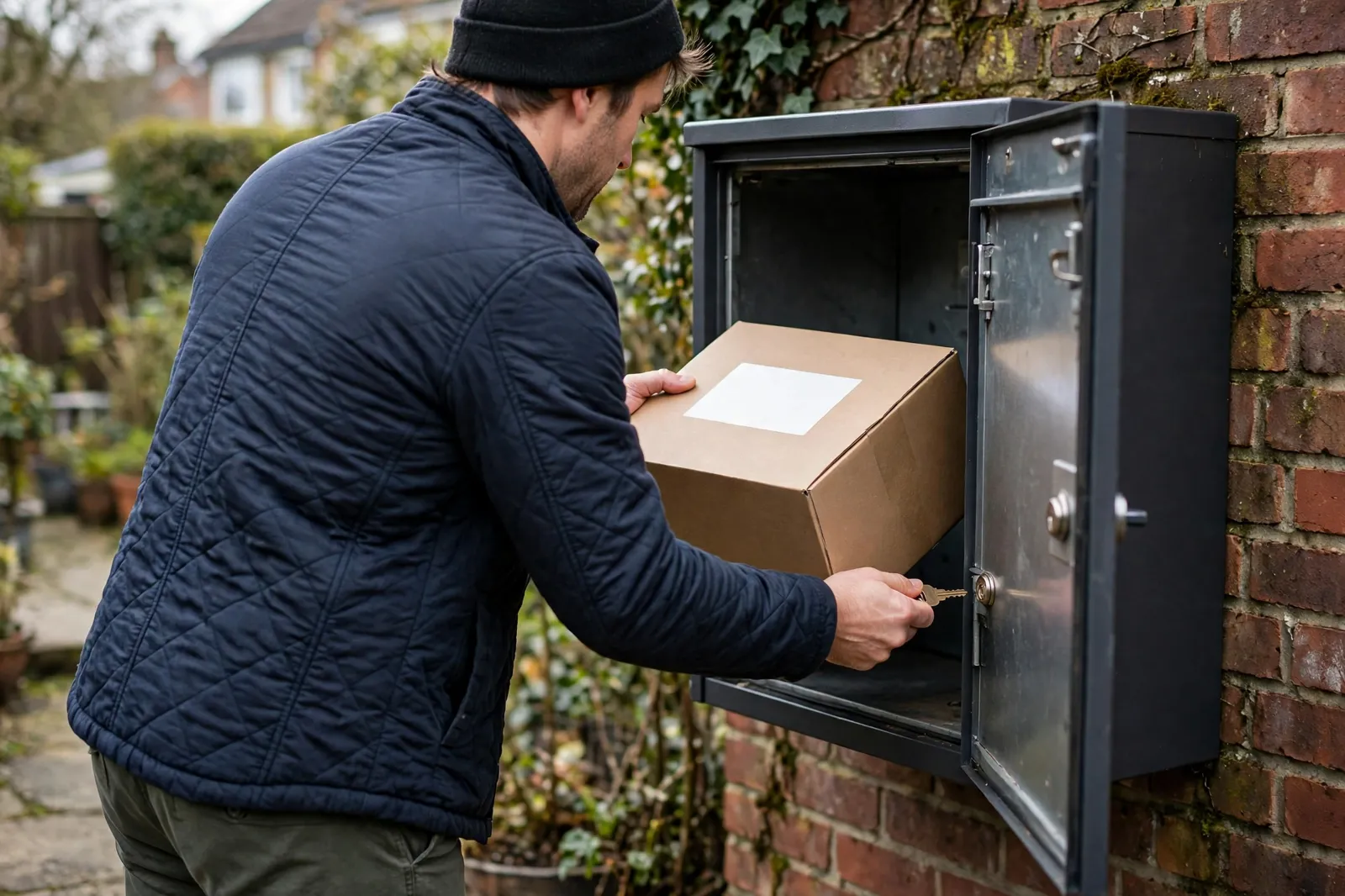
The second design family has no chute. The box is a locked compartment that the courier opens. Sam’s Garden’s smaller Kokako letterbox uses a combination lock, and the maker’s instructions give two ways to run it: include the combination in your delivery instructions, or leave the parcel box unlocked in the morning so the courier can lock it securely after delivery. That trade-off is worth understanding before you buy. A chute box needs nothing from the courier beyond dropping the parcel in, so it works with every delivery driver and every service, whether the parcel arrives with the Postie, on a courier van, or by same day courier in the evening. A code or key box depends on the driver following your instructions, which most will do when the instructions are short and the box is obvious.
Many models combine both jobs in one unit: a letter slot or letter compartment up top for mail, and the parcel compartment below. NZ Post’s mailbox guidance points the same way, recommending a main mail slot big enough to take several A4 size magazines without folding them, and a separate area for parcels if you receive them.
The main types sold in NZ
Freestanding boxes stand on the ground at the boundary, usually fixed to a concrete pad or base, and the larger models in this guide use this format. The Nikau Parcel Drop from Sam’s Garden is a freestanding column 1200mm high, 300mm wide and 330mm deep, with ground level setting and screw fixing to a concrete pad. Mitre 10 sells a Jobmate Letter and Parcel Box, a combined unit listed at 1025mm high, 475mm wide and 446mm deep. Sandleford’s parcel range at Bunnings New Zealand includes the 102cm Braeside at $459 and the 106cm Canterbury at $399.
Wall, fence and post mounted boxes suit homes where a freestanding column will not fit, or where the fence line is the natural delivery point. The Kokako from Sam’s Garden is the flexible example: it can be installed on an existing post or horizontal surface, and can also be mounted on a vertical surface such as a fence or wall. At 210mm high, 300mm wide and 400mm deep it is a smaller box, made for regular mail and medium courier packages rather than bulk deliveries.
Front access and rear access is the other split to check, and it matters more than most buyers expect. With front access, you open the retrieval door from the street side, as on the Canterbury, which Sandleford designed for properties where rear access is limited. With rear access, the courier uses the street side and you collect from inside your property, as on the Nikau Parcel Drop, which has a rear parcel door 700mm high and 260mm wide. Rear access is the more secure arrangement because the opening door never faces the street, but it only works if you can actually walk around to the back of the box on your own land.
Designer and combination units overlap all of the above. Sam’s Garden organises its own range into freestanding column, freestanding XL, and fence and post mount designs, with the letterboxes doubling as address signage: the Nikau carries a custom address panel and solar-charged lighting that illuminates the design and your address at night. That matters beyond looks, because NZ Post asks for your street number to be clearly visible, and a box that carries the number well is easier for drivers to find in a hurry.
Sizing: match the box to the parcels that actually arrive
Forget the overall height of the box for a moment. Two measurements decide whether a parcel box works: the size of the opening the parcel has to pass through, and the usable space inside once it drops. A tall box with a small drop door will refuse parcels that a shorter, wider box takes easily.
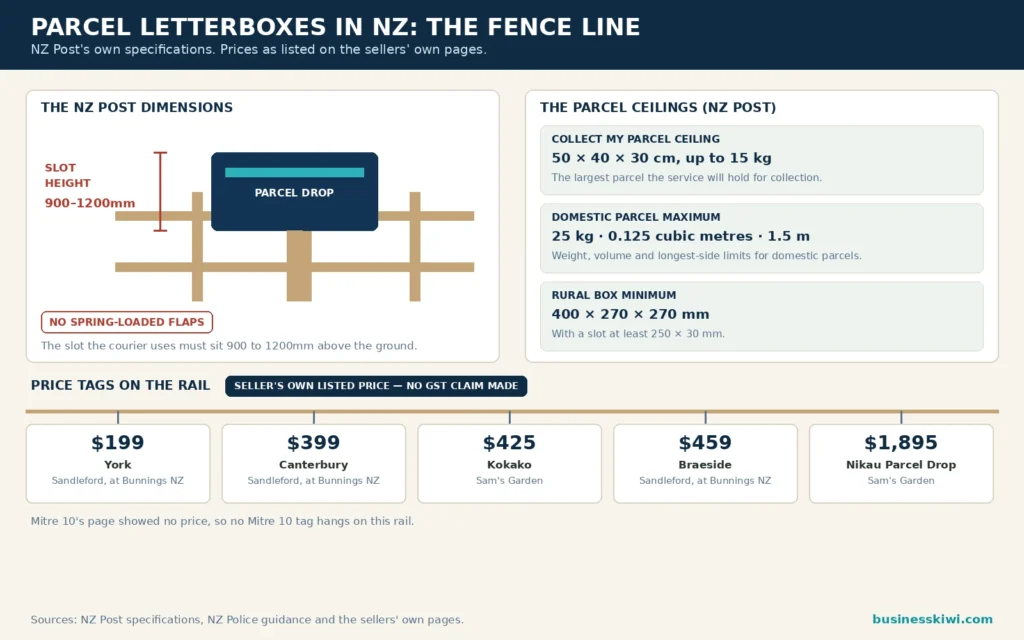
Start with the ceiling. NZ Post publishes a maximum parcel size and weight for its domestic services of 25kg, 0.125 cubic metres in volume and 1.5 metres in length. Almost nothing delivered to a home comes near that, and no home parcel box takes a 1.5 metre parcel, so treat those figures as the network’s outer limit rather than a sizing target.
A better yardstick comes from NZ Post’s own collection service. Under the Collect my parcel terms, an eligible parcel can weigh up to 15kg and measure up to 50cm by 40cm by 30cm. That is the size envelope NZ Post itself uses for ordinary consumer parcels, and a home box that can swallow a parcel of roughly that size will handle the bulk of online shopping deliveries. Boxes that cannot will still earn their keep on smaller parcels, but you should buy them knowing the limit.
Now check the opening. On the Nikau Parcel Drop, the secure parcel drop door measures 285mm by 285mm, so a rigid parcel wider or taller than that will not go in, whatever the compartment behind it could hold. On the Kokako, Sam’s Garden states the box is designed to accommodate regular mail and medium-sized courier packages, including a standard shoe box, within overall dimensions of 210mm high, 300mm wide and 400mm deep. Sandleford describes the Canterbury’s large chute as able to accommodate multiple deliveries as well as large size parcels, which points to the other capacity question: not just the biggest single parcel, but how many parcels can sit inside before you empty the box. If two or three deliveries a week is normal at your place, a box that holds one small parcel will overflow by Wednesday.
The practical method is to measure the boxes your own deliveries arrive in over a few weeks, note the largest two or three, and compare those measurements against the drop opening first and the internal compartment second. Letters are the easy part: NZ Post’s mailbox specifications ask for a slot that takes several A4 magazines unfolded and a box deep enough for the length of an A4 item, so mail drops out of sight. Any combined letter and parcel unit should be checked against that A4 test as well.
Where to put it: NZ Post’s placement guidance
NZ Post publishes mailbox specifications for standard delivery, and a parcel box that also takes your mail needs to sit comfortably inside them. The same placement sense applies to a parcel-only box, because couriers work the same street line as the Postie.
Position the box on the street line, accessible from the footpath, with the terrain around it free of obstructions and hazards. Keep access clear and maintained, with no shrubbery or obstacles in the way. Avoid locating the box on a hill, slope or bank, or up steps. The height of the mailbox must be between 900mm and 1200mm from the ground to the mail slot, a range worth keeping in mind for the letter slot of a combined unit even though the parcel chute itself will sit lower. Your street number must be clearly visible.
Two details catch people out. The first is spring-loaded flaps: NZ Post states that spring loaded flaps must not be fitted on mailboxes, because they may injure your Postie. A stiff, spring-loaded parcel chute flap on a combined box is the same hazard in a different place, so check how the drop door behaves before you buy. The second is depth: NZ Post asks for a mailbox deep enough, front to back, to take the length of an A4 item so mail can be pushed in far enough to drop out of sight securely. Parcels work the same way. If the parcel sits visible in the chute because the box is too shallow, the security you paid for is mostly theatre.
For flats and apartments, NZ Post’s guidance is that groups of outside mailboxes should be at right angles to the footpath or roadway, with the same 900mm to 1200mm slot height, and that mailboxes inside a block of five or more apartments should be lockable, on the ground floor and with a common entrance. A shared parcel box for a block needs body corporate or landlord agreement first, and the lockable, ground floor, common entrance principles are the right starting point for that conversation.
Rural addresses work differently
Rural delivery runs on its own rules, and they do not map neatly onto a lockable parcel box. NZ Post provides gate delivery only where an existing Rural Delivery service passes the property and the mailbox can be easily and safely serviced from a vehicle. Where gate delivery is not available, mail goes to a single or aggregated delivery point, the nests of mailboxes placed at an agreed location on the route. Door delivery, including for tracked parcels, is available where the dwelling is within 0.5km one way of the delivery point and there are no closed gates, unsuitable access or dogs preventing delivery.
The rural mailbox specification itself is exact. The box must have a minimum size of 400mm deep by 270mm wide by 270mm high, with a flag fitted to show mail is waiting for collection. Access is by a front-opening hinged door that opens downwards, and that door is non-locking. The mail slot must be no less than 250mm by 30mm, large enough for large magazines to be placed inside without bending or opening the door, and mail should drop out of sight. The recommended height of the mail slot is between 1m and 1.2m from the ground, so the Rural Delivery owner-driver can reach it without leaving the vehicle. The road number must be printed on the box in numerals at least 25mm high.
Read that against a parcel letterbox and the conflict is plain: NZ Post’s rural mail door must be non-locking, while the whole point of a parcel box is that it locks. The two can coexist, a compliant rural mailbox for mail alongside a parcel box for courier deliveries, but do not assume a parcel box can simply replace the rural mailbox. NZ Post advises discussing your options with your Rural Delivery owner-driver before constructing your mailbox, and says the site must be agreed with the local contractor and the NZ Post delivery team. It also notes you must comply with local bylaws, traffic regulations and phone and power cable requirements. On a rural route, that conversation comes first, the purchase second.
Security: what actually stops parcel theft
Parcel theft is opportunistic. The Police advice published on the NZ Police website is aimed at removing the opportunity, and a parcel box covers the first item on their list directly. Their tips, in their own structure, are to have a secure location parcels can be left, to send parcels to a work address or be home when they arrive, to clear your letterbox in a timely manner, to put a hold on mail delivery if you are going away, to provide clear delivery instructions so couriers can leave a package safely hidden or secured within your property, to install security cameras or security camera messaging near your letterbox or the front of your property, to consider click and collect where practical, and to be smart when disposing of packaging so passers-by cannot see you have been buying expensive items. Suspicious activity should be reported to Police on 111 if it is happening now, or 105 if it is after the fact.
Within the box itself, security comes from three things. The first is concealment: a parcel that drops out of sight, as NZ Post’s guidance requires, does not advertise itself to the street. The second is the lock. Key locks, as fitted to Sandleford’s Canterbury, are simple and need no instructions for the courier when paired with a chute. Combination and code locks, as used by Sam’s Garden, let you share access through your delivery instructions and change the code if it spreads too widely. The third is anchoring. A box that can be carried away is a container, not a security device. The Canterbury comes with masonry anchor bolts included, and the Nikau Parcel Drop is screw fixed to a concrete pad at ground level. Whichever model you choose, fix it down as the maker directs.
A parcel box is not a complete answer for everything. Signature-required deliveries still need someone home or a trip to collect, and NZ Post’s Collect my parcel service exists for parcels you would rather pick up: eligible parcels up to 15kg and 50cm by 40cm by 30cm can be delivered to a collection location instead of your address, held for 10 days, and collected with photo ID. Many households end up using both, the box for ordinary deliveries and a collection point for the valuable or oversized ones.
Weather and materials
A parcel box lives outside in New Zealand weather all year, and its contents are cardboard. The materials question is therefore about the box lasting and the parcels staying dry.
Sandleford’s letterboxes are described on Bunnings New Zealand as all galvanised steel construction with a powder coated finish, and the Canterbury parcel letterbox itself is listed as weather resistant. Galvanised steel with a powder coat is the standard construction at the hardware store end of the market: strong, repairable in the sense that it dents rather than cracks, and dependent on the coating staying intact around hinges, chutes and fixing holes.
Sam’s Garden builds from the other direction. Its letterboxes are aerospace grade aluminium, which the maker states will never rust, with a Dulux powder coated finish and hinges and fixings in marine grade stainless steel. Aluminium costs more, as the prices below show, and the marine grade fixings matter in coastal areas where standard screws and hinges are usually the first parts to corrode on any outdoor fitting.
Whichever material you choose, look at how water is kept out of the compartment rather than at the label. A chute that sheds water away from the opening, a retrieval door that overlaps its frame, and a base that keeps parcels off any water that does get in will matter more over five winters than the headline material. If the box will sit in full weather rather than under an eave or porch, weight the maker’s weather claims accordingly.
What parcel letterboxes cost in NZ
Prices below are the prices published on each seller’s own page for the named product. There is no meaningful average across a market that runs from a hardware store steel box to a made-to-order aluminium piece with custom artwork, so none is offered.
At Bunnings New Zealand, Sandleford’s 75cm York Parcel Letterbox is listed at $199, the 102cm Braeside Parcel Letterbox at $459, and the 106cm Canterbury Parcel Letterbox at $399, the model with the top chute, front access retrieval and masonry anchor bolts included.
Sam’s Garden sells direct. The Kokako letterbox, the smaller combination lock model that mounts on a post, fence or wall, is $425, with a custom colour option at $575. The Nikau Parcel Drop, the freestanding secure drop column with solar-charged lighting and a customised address plate, is $1,895, with custom colour at $2,095.
Mitre 10 lists a Jobmate Letter and Parcel Box in the same freestanding size class as the Sandleford boxes. Budget for installation on top of the purchase price where it applies: a concrete pad or post, fixings if they are not included, and, for made-to-order boxes, patience. Sam’s Garden states delivery times of two weeks for the Kokako and two to three weeks for the Nikau Parcel Drop, because address plates are custom-produced.
Installation basics
Installation is mostly fixing and positioning, and the sellers’ own guidance covers the essentials. The Canterbury includes masonry anchor bolts, so it is made to be bolted down to a masonry or concrete base. The Nikau Parcel Drop is set at ground level and screw fixed to a concrete pad. The Kokako gives you the choice: ground fixed with a post, which is not supplied, or mounted on an existing horizontal or vertical face such as a fence or wall.
Three checks before you drill anything. First, measure the finished slot height against NZ Post’s 900mm to 1200mm range for the mail slot of a combined unit. Second, stand where the courier will stand and confirm the chute or door is obvious, reachable and not blocked by a gate, planting or a parked car. Third, if you are on a rural delivery route, get the site agreed with your Rural Delivery contractor before the box goes in, as NZ Post requires, rather than after.
Once installed, the box only works if delivery drivers know about it. Add delivery instructions to your regular online shopping accounts telling couriers to use the parcel box, include the combination if your model needs one, and keep the instructions short. Police advice says to provide clear delivery instructions for couriers to leave a package safely hidden or secured within your property, and a parcel box is the secured option those instructions should point to.
Before you buy: a short checklist
- Measure your largest regular parcels, then check the drop opening size before the overall box size.
- Decide whether you need front or rear retrieval, based on whether you can reach the back of the box from your own property.
- Choose the lock type you will actually manage: a chute with a key lock for zero courier instructions, or a code lock you are willing to put in delivery instructions.
- Confirm the position against NZ Post’s guidance: street line, footpath access, clear of obstructions, street number visible, no spring-loaded flaps.
- On a rural route, talk to your Rural Delivery owner-driver before buying, and keep the compliant non-locking rural mailbox in the plan.
- Check what fixing the maker specifies, anchor bolts, concrete pad or post, and whether fixings are included.
- Weigh steel against aluminium for your site, especially within reach of coastal air.
Frequently asked questions
Do couriers need a key or code to deliver into a parcel letterbox?
With a chute or drop design, no. The courier places the parcel through the chute or flap and it falls into the locked compartment, as on Sandleford’s Canterbury and Sam’s Garden’s Nikau Parcel Drop. With a combination lock box such as the Kokako, Sam’s Garden advises either including the combination in your delivery instructions or leaving the box unlocked in the morning so the courier can lock it after delivery.
What size parcel letterbox do I need?
Measure the parcels you actually receive and compare them with the drop opening first, then the internal space. As a yardstick, NZ Post’s Collect my parcel service takes parcels up to 50cm by 40cm by 30cm and 15kg, which covers a large share of consumer deliveries. The Nikau Parcel Drop’s drop door is 285mm by 285mm, while the smaller Kokako is made for medium courier packages, including a standard shoe box.
Where should a parcel letterbox be positioned?
NZ Post’s mailbox specifications say to position the box on the street line, accessible from the footpath, with clear and unobstructed access, a clearly visible street number, and the mail slot between 900mm and 1200mm from the ground. Avoid hills, slopes, banks and steps, and do not fit spring-loaded flaps, which NZ Post prohibits on mailboxes because they can injure your Postie.
Can I use a parcel letterbox on a rural delivery route?
Yes for courier parcels, but it does not replace your rural mailbox. NZ Post’s rural specification requires a minimum box size of 400mm deep by 270mm wide by 270mm high, a flag, and a front-opening door that is non-locking. NZ Post advises discussing your options with your Rural Delivery owner-driver before constructing a mailbox, and the site must be agreed with the contractor and the NZ Post delivery team.
Will a parcel letterbox stop parcel theft?
It removes the easiest opportunity, which is what Police advice targets: parcels left on doorsteps are an easy target, and Police recommend having a secure location parcels can be left. A lockable box with the parcel out of sight, fixed down as the maker directs, covers that recommendation. It does not help with signature-required deliveries, and Police also advise clearing your letterbox promptly, putting mail on hold when you go away, and considering click and collect for suitable purchases.
What happens if a parcel is too big for the box?
The courier will leave a card or use your other delivery instructions, and you collect the parcel instead. NZ Post’s Collect my parcel service lets eligible parcels up to 15kg and 50cm by 40cm by 30cm go to a collection location, where they are held for 10 days and collected with photo ID. Sizing the box honestly at purchase keeps this rare for your regular orders.
How much does a parcel letterbox cost in NZ?
Prices on the sellers’ own pages run from $199 for Sandleford’s 75cm York at Bunnings New Zealand, through $399 for the Canterbury and $425 for Sam’s Garden’s Kokako, up to $1,895 for the made-to-order Nikau Parcel Drop. Installation costs, such as a concrete pad or a post, may be extra, and made-to-order boxes carry delivery times of two to three weeks.
Sources
- NZ Post, Mailbox specifications: http://www.nzpost.co.nz/home/receiving-mail/mailbox-specifications
- NZ Post, Rural delivery: https://www.nzpost.co.nz/personal/receiving/rural-delivery
- NZ Post, Collect my parcel terms and conditions: https://www.nzpost.co.nz/about-us/who-we-are/terms-of-business/collect-my-parcel
- NZ Post, Shipping in NZ for business: https://nzpost.co.nz/business/shipping-in-nz
- New Zealand Police, Dear sender: Police warning ahead of Christmas deliveries: https://www.police.govt.nz/news/release/dear-sender-police-warning-ahead-christmas-deliveries
- Bunnings New Zealand, Sandleford 106cm Woodland Grey Canterbury Parcel Letterbox: https://bunnings.co.nz/sandleford-106cm-woodland-grey-canterbury-parcel-letterbox_p0637328
- Bunnings New Zealand, Sandleford 75cm Black Matte York Parcel Letterbox: https://bunnings.co.nz/sandleford-75cm-black-matte-york-parcel-letterbox-black_p0374394
- Bunnings New Zealand, Sandleford 102cm Monument Braeside Parcel Letterbox: https://www.bunnings.co.nz/sandleford-102cm-monument-braeside-parcel-letterbox_p0637333
- Bunnings New Zealand, Sandleford Black and Silver Condo Post Mounting Letterbox: https://www.bunnings.co.nz/sandleford-black-and-silver-condo-post-mounting-letterbox_p0284300
- Mitre 10, Jobmate Letter and Parcel Box: https://www.mitre10.co.nz/shop/jobmate-letter-and-parcel-box-h-1025mm-w-450mm-d-420mm-black/p/246136
- Sam’s Garden, Kokako | Fantail Fern: https://samsgarden.co.nz/products/kokako-lockable-secure-parcel-letterbox-fantail-fern
- Sam’s Garden, Nikau Parcel Drop | Tui Kowhai: https://samsgarden.co.nz/products/nikau-security-parcel-letterbox-tui-kowhai
This article is general information about parcel letterboxes in New Zealand. It is not advice about any specific product, property or delivery arrangement. Product details and prices were taken from the sellers’ own pages listed above and can change at any time. Check the seller’s current product page, and NZ Post’s current mailbox and rural delivery guidance, before you buy or install.