Calendar Art in NZ: How School Art Fundraisers Work, Step by Step
The short answer
Calendar art is a school fundraiser built on children’s own artwork. Each child creates one piece of art in class. A printing provider turns that artwork into products, usually calendars, greeting cards and sketch pads, and families buy the products with their own child’s art on them. The school keeps the difference between what families pay and what the provider charges.
The model works because the art is personal. A calendar with your child’s painting on it is a keepsake and an easy Christmas gift, not a raffle ticket. In New Zealand the best known provider is Kids Art Works, which has run art fundraisers for schools since 1991 and puts the whole ordering process online. This guide explains how the fundraiser runs, what it asks of teachers and parents, what it costs, and what a school can realistically make.
What calendar art is, and why schools run it
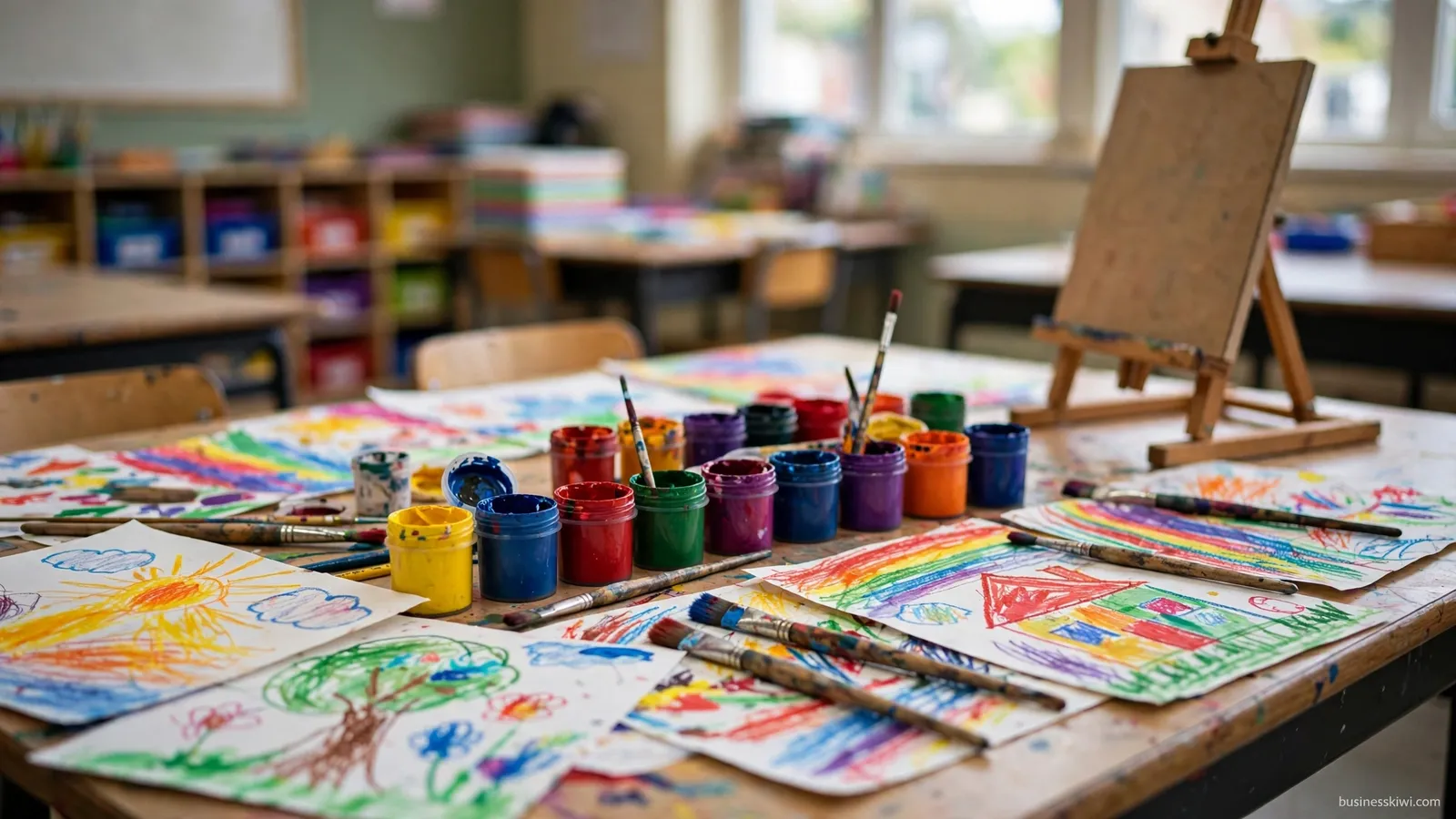
Calendar art sits inside normal class time. The artwork is made at school, often as part of the term’s art programme, and every child in the class produces a piece. The provider then reproduces that one piece of art across a small range of printed products.
Schools run it for a few practical reasons:
-
It raises money without a big event. There is no gala to staff, no baking to sell and no cash to count.
-
The workload is small. Kids Art Works says its online system cuts the organiser’s time to about 3 to 7 hours in total, where the older paper-based way took 30 to 40 hours.
-
The products sell themselves to a point. Grandparents in particular buy calendars and cards with a grandchild’s artwork on them, and the provider notes the products are light and easy to post overseas.
-
It doubles as a record. The finished calendar is a dated snapshot of a child’s drawing at that age, which is why many schools run it every year as an annual event.
Kids Art Works also points to the classroom benefits. Making the artwork gives children fine motor practice and a reason to take care with a piece of work that other people will see. The provider supplies art lesson plans to guide teachers, with projects such as quilts, mosaics and waves given as examples of art that can be turned into products.
How it runs, step by step
Providers differ in detail, but the shape of the fundraiser is consistent. This is the process as Kids Art Works describes its own system.
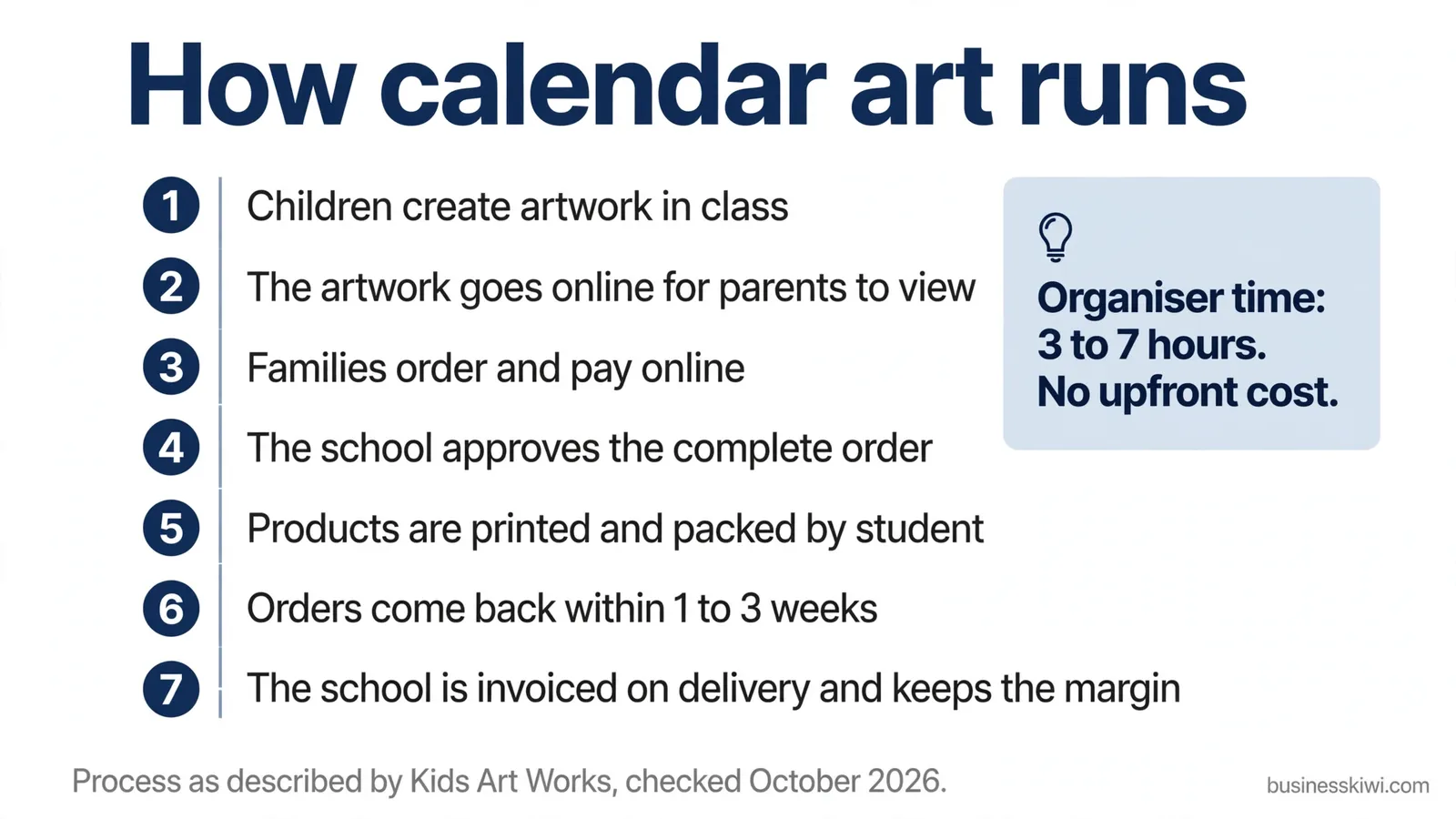
- The school signs up. A teacher or parent helper organises the fundraiser. The school can request a sample pack first to see the products and confirm the range and prices for its programme.
- Children create the artwork in class. The school can use art the children have already made, or the provider can supply special paper for the project. Most schools set aside one or two art sessions so every child finishes a piece.
- The artwork goes to the provider. The finished pieces are sent in together, one per child. Some families submit a photo of their child instead, which the provider also accepts.
- The art goes online. The provider puts each child’s artwork on its website. Parents can view their child’s actual piece before they decide what to buy, rather than ordering blind.
- Families order and pay online. Parents choose products, order and pay on the provider’s site. No order forms come back to school and no cash changes hands in the classroom.
- The school approves the order. With a school purchase, nothing is printed until the school approves the complete order for all students. The provider states that products are not made separately, so the whole school order is produced as one run.
- The provider prints and packs. Completed orders are sent back to the school within 1 to 3 weeks. Items are packed by student, so each child’s products arrive together, ready to hand out.
- The school hands the products out. Because everything is packed per child, distribution is quick. The provider invoices the school on delivery, and the amount the school raises is what remains from sales after that invoice is paid.
Two parts of that process matter most. Viewing the artwork online before ordering removes the old fear that the finished product might disappoint. Packing by student removes the sorting job that used to eat hours at the school end. Under the older paper system, completed orders took 2 to 6 weeks to come back and arrived packed by class, so a volunteer then had to sort every item by child.
What families can buy
The core range, as the provider publishes it, is:
-
Calendars for the coming year, with the child’s artwork as the feature image
-
Greeting cards, sold as a set, carrying the same artwork
-
Sketch pads, again printed with the child’s art
The school’s name and logo are displayed on the calendars, cards and sketch pads, which is part of why schools treat the fundraiser as a small piece of school pride as well as income. The provider says its range runs wider than those three items, and the exact product range and prices for a school’s programme are confirmed when the school sets the fundraiser up. Families see the full list, with prices, when they log in to view their child’s artwork and order.
One artwork is used across whichever products a family orders. A parent might buy a calendar for home, a pack of cards for Christmas, and a second calendar for grandparents, all from the same drawing.
When schools run it
Timing is driven by Christmas. The products are sold as Christmas gifts, so schools work backwards from the end of the school year.
A sensible pattern looks like this. Artwork is made in class during the second half of the year. Ordering opens for a set window, often a few weeks. The school approves the complete order, and the provider’s turnaround of 1 to 3 weeks still leaves time for products to go home before the holidays.
Spread across the whole fundraiser, the organiser’s effort is the 3 to 7 hours the provider quotes, and the provider frames that effort as spread over about a three month period rather than in one busy week. Schools that run calendar art every year usually keep the same slot in their calendar, so families come to expect it.
Art ideas that print well
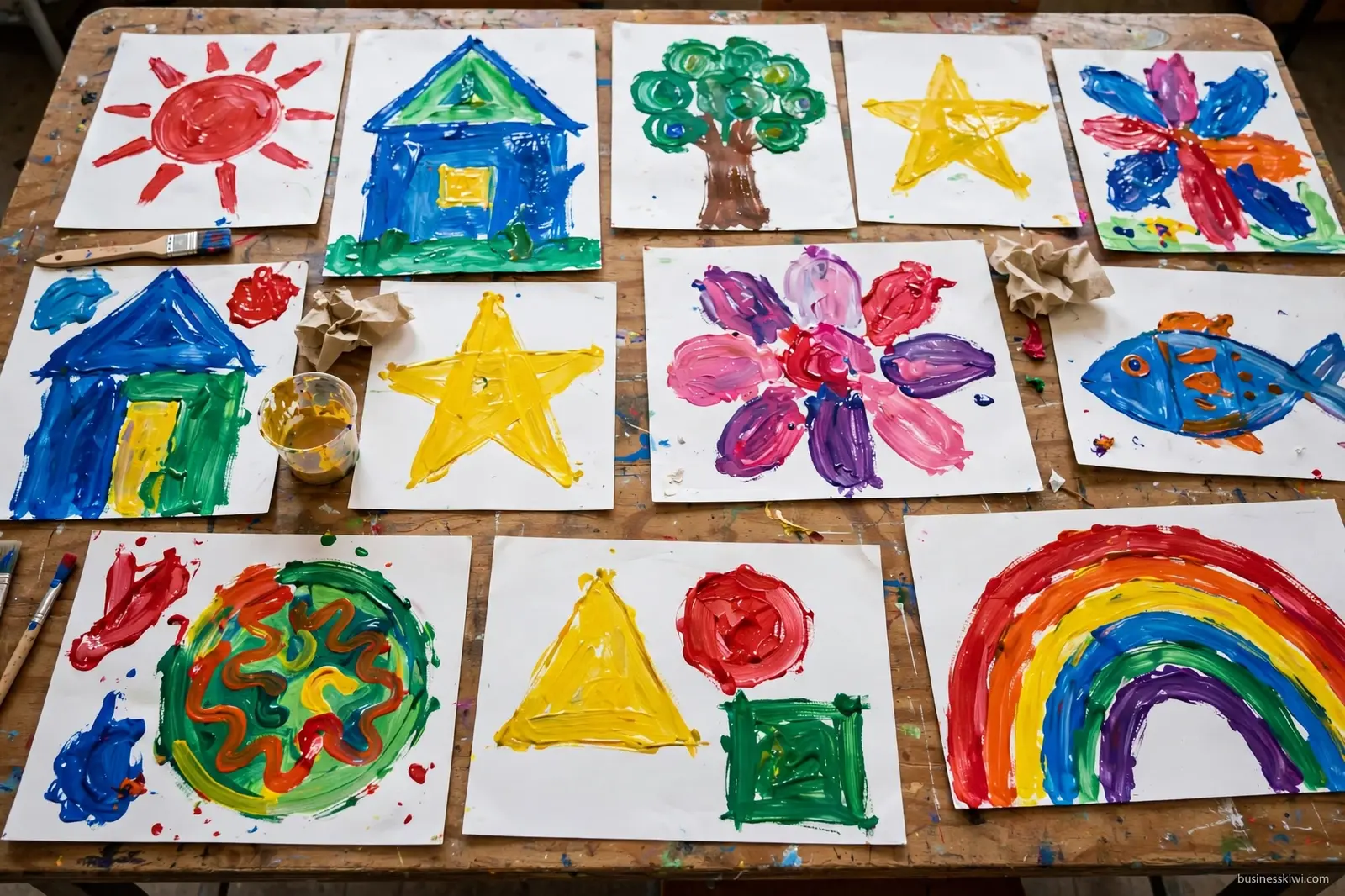
Printed products reward bold, simple artwork. Fine pencil detail and pale colours can look weak once a drawing is reproduced at calendar size. These ideas suit the format and are easy to run in a normal classroom.
Ages 5 to 7. Handprint and fingerprint art is a favourite at this age: a handprint flower garden, a fingerprint caterpillar, or a painted handprint reindeer for Christmas. Big sponge shapes, thick paint and one clear subject fill the page and print well.
Ages 8 to 10. Collage and pattern work suits this band. Paper mosaics, quilt style squares built from repeated shapes, and bold seasonal scenes such as a beach, a garden or a night sky all hold up in print. A single strong subject with a filled background works better than a busy scene with tiny figures.
Ages 11 to 13. Older students can handle more detail. The provider’s own lesson plan examples include waves and landscapes. Local scenes work well too: the school, a favourite beach, native birds or a pōhutukawa in flower. A border or frame drawn around the edge gives the printed product a finished look.
Whatever the age band, three habits help. Fill the whole page, including the background. Use strong colour rather than faint shading. Keep the child’s signature inside the artwork area, not right at the edge where trimming can clip it.
Tips for teachers and parent helpers
-
Label everything as it is finished. Write the child’s name and class on the back of each piece, or keep a class list matched to the artwork. Products are packed by student, so the provider can only pack what it can identify.
-
Let work dry fully and store it flat. Wet paint and curled paper cause delays and poor reproduction. A drying rack and a flat folder per class keep the set in good order.
-
Check the set before it goes. Count pieces against the class roll. One missing artwork means one disappointed family, and the school purchase is produced as a single run, so late additions are hard.
-
Use the provider’s paper if it is offered. Kids Art Works can supply special paper for the project. Artwork made to the provider’s size and format avoids resizing problems.
-
Start from a lesson plan. The provider supplies art lesson plans for teachers, with projects such as quilts, mosaics and waves. Using a plan keeps a whole class on one achievable design while still leaving room for each child’s own style.
-
Keep a photo of each piece. A quick photo on a class tablet gives the school a backup record and helps answer parent questions later.
-
Tell families the dates early. The order window, the approval step and the delivery time all sit in a busy term. A note home when the artwork is made, and a reminder before orders close, lifts participation.
The parent side: what to know before you order
Buying is optional. Calendar art products are purchases, not school donations, and no family has to buy anything. The artwork itself is a class activity. The Ministry of Education’s position on school costs is that children are entitled to take part in activities that are part of the curriculum without paying, and school donations are always optional payments. If a payment request from a school is unclear, the Ministry advises talking to the school first, and then the school board if the answer does not resolve it.
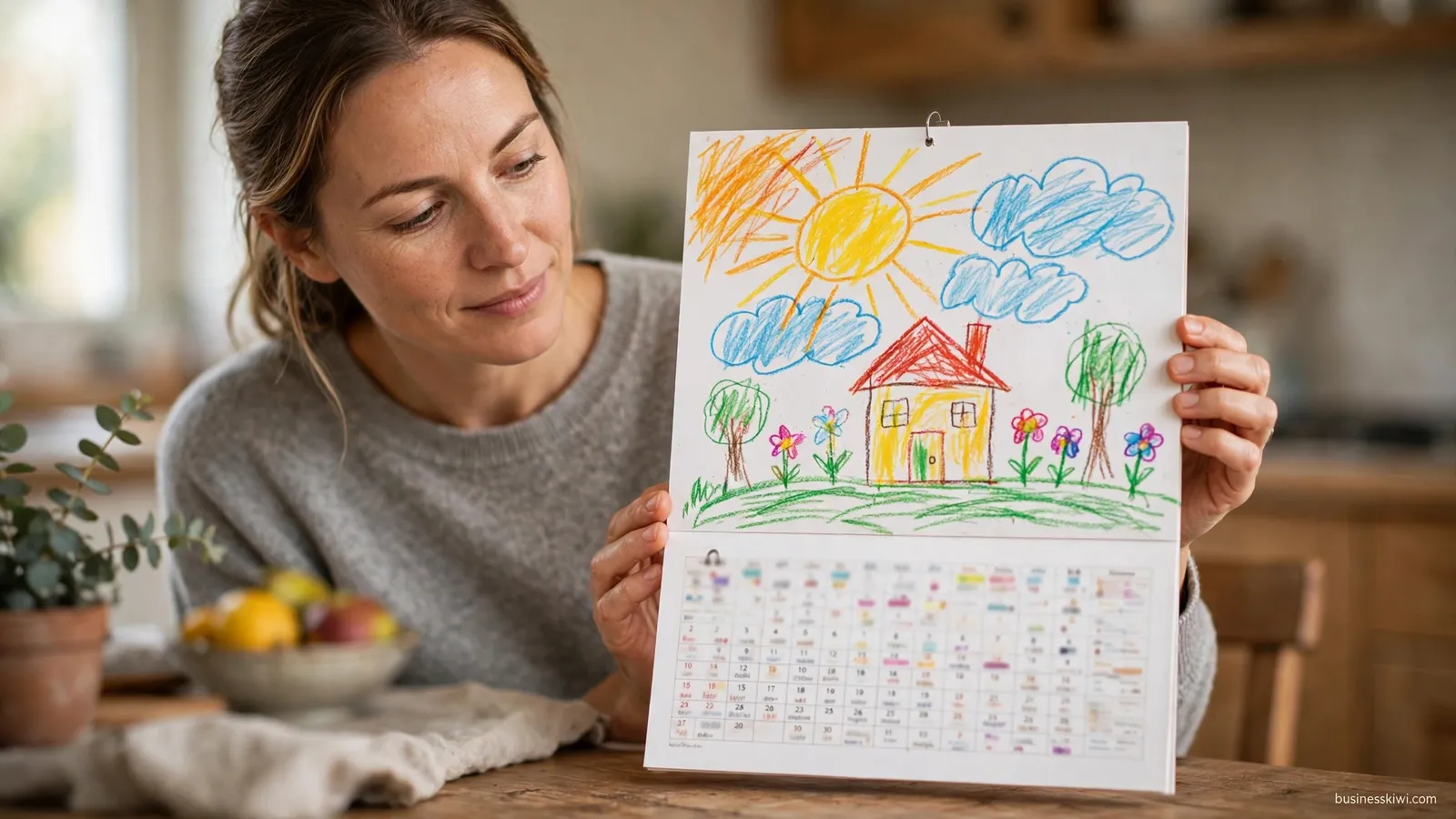
If you do order, you will view your child’s artwork online first, choose your products, and pay online. Your order comes back to the school packed with your child’s name on it. That preview step is the change parents notice most. Under the old system, families ordered from a paper form without seeing how the artwork would look on a product. The provider says parents can now see the artwork online and picture the finished calendar or cards before they pay, which has lifted confidence in the whole fundraiser.
Families who miss the school round, or who want a product outside the fundraiser, should know the provider also sells direct. Kids Art Works calls this a shop purchase. Shop purchases are not part of school fundraising, the products carry no school branding, and they are made and sent directly to your home, with a lead time of 1 to 3 weeks.
What it costs, and what the school makes
The honest answer on prices is that there is no public price list to quote. Kids Art Works does not publish per-item prices on its public pages. Prices are set for each school’s programme, confirmed when the school sets the fundraiser up, and shown to families when they view the artwork and order. Any guide that prints a fixed national price for a calendar art calendar is guessing, because the price belongs to the school’s own programme.
The cost structure for the school is clearer, and it is published by the provider:
-
No upfront cost. The provider charges the school nothing to start. It invoices the school on delivery only.
-
No cash handling. Families pay online, so the school never collects or banks order money.
-
The school’s return is the margin. What the school raises is the difference between what families paid and the provider’s invoice.
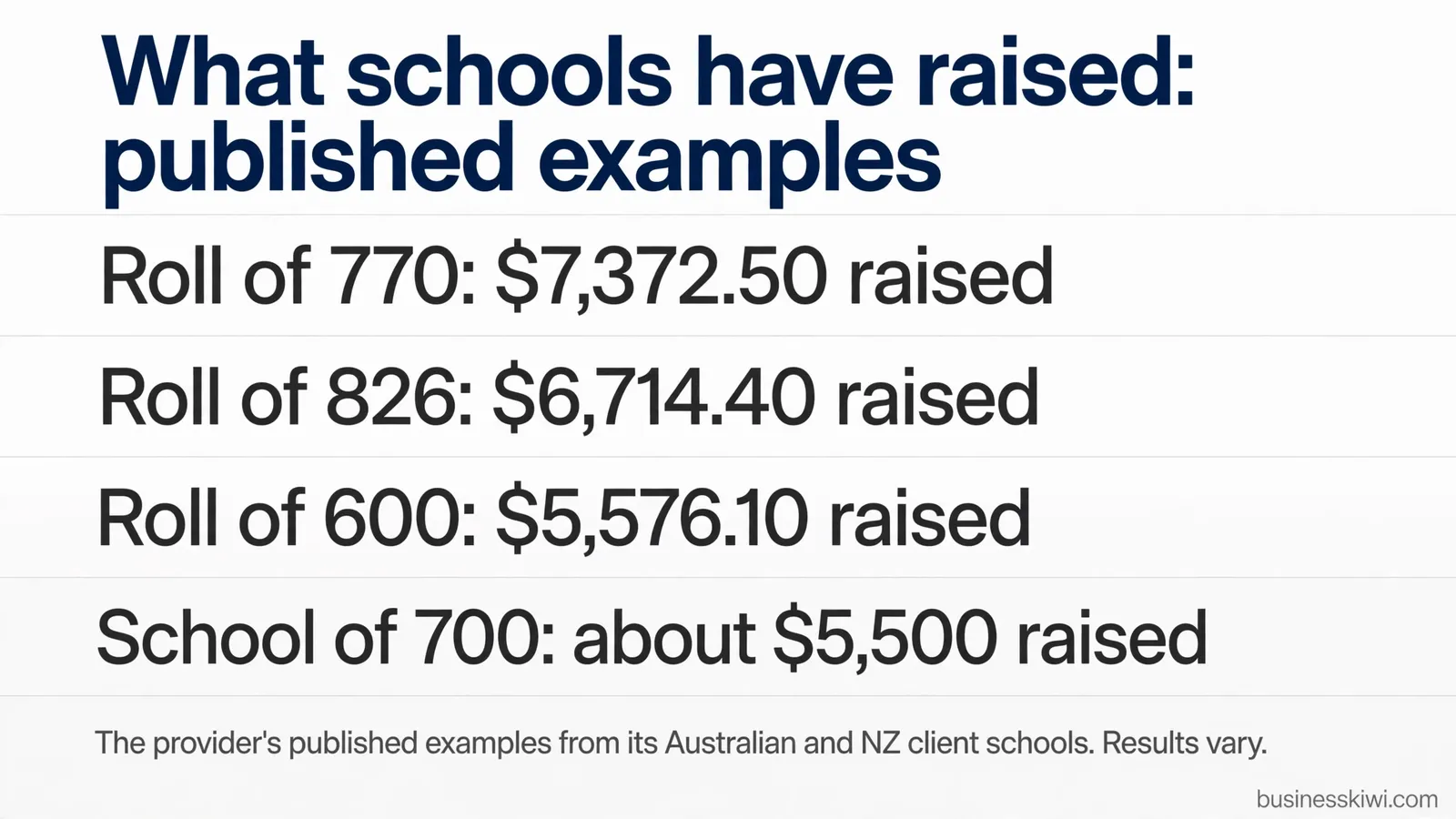
On results, the provider publishes example figures from its client schools: a school with a roll of 770 raised $7,372.50, a roll of 826 raised $6,714.40, and a roll of 600 raised $5,576.10. A parent organiser at a school of 700 students says her school raised about $5,500 with six or seven hours of her time. The provider states plainly that fundraising results vary with a number of factors, and its client base covers Australian as well as New Zealand schools, so treat these as examples of scale, not promises. Across all of its client schools, the provider says more than $1,000,000 is raised every year, from the artwork of over 250,000 children.
Before committing, a school should ask any provider four questions. What is the per-item cost to the school, and what price will families see? Is there a minimum order? What happens with late orders and mistakes? And what happens to the original artwork afterwards? The answers decide whether the margin is worth the effort for your roll size.
Related guides: our school holidays guide covers term dates and the end of the school year, our reading levels and ages guide helps match books to young readers, and our Corinna School profile shows one Porirua school in detail. For more school and parent guides, browse the Jobs & Education section.
Frequently asked questions
What is calendar art?
Calendar art is a school fundraiser where each child creates a piece of artwork in class, and a printing provider turns that artwork into products such as calendars, greeting cards and sketch pads. Families buy the products, and the school keeps the difference between the sale prices and the provider’s charges.
When do schools run calendar art?
Most schools run it in the second half of the year, because the products are bought as Christmas gifts. Artwork is made in class, families order during a set window, and the provider’s production turnaround of 1 to 3 weeks means orders still arrive before the end of term.
How much work is it for the organiser?
With the online system Kids Art Works describes, about 3 to 7 hours in total. Ordering and payment happen online, there is no cash to handle, and finished orders come back packed by student. The older paper-based way took 30 to 40 hours.
Does my child miss out if we do not buy anything?
No. Every child makes the artwork as part of the class programme. Buying the printed products is optional. The Ministry of Education’s guidance is that children take part in curriculum activities without paying, and school donations are optional.
How much do the products cost?
There is no published national price. Prices are set for each school’s programme and are shown when you view your child’s artwork and place your order. Families pay online at the time they order.
How much money can a school raise?
It depends on the roll and how many families order. Kids Art Works publishes examples from client schools ranging from about $5,500 at a school of 700 students to $7,372.50 at a school of 770. The provider itself notes that results vary, so use those figures as a scale guide only.
What if we miss the school order, or we are not part of a school fundraiser?
The provider sells direct to the public as a shop purchase. Those products are not part of school fundraising, carry no school branding, and are delivered to your home with a lead time of 1 to 3 weeks.
The bottom line
Calendar art is one of the lowest-effort school fundraisers going, because the product is something families genuinely want: their own child’s artwork, printed properly. The work sits in class time, ordering and payment happen online, and a school of a few hundred children can raise several thousand dollars for a handful of organiser hours. The catch is that pricing sits inside each school’s programme rather than on a public list, so a school should confirm the per-item costs, the prices families will see, and the expected margin before it commits. Do that, set the dates early, and let the children make art worth printing.
Sources
-
Kids Art Works, Online Art Fundraising for Schools (provider’s own site: how the online fundraiser works, organiser time, products, example amounts raised, no upfront cost), https://main.kidsartworks.com
-
Kids Art Works, ordering site (school purchase and shop purchase explained), https://kidsartworks.com
-
Ministry of Education, School costs and donations (donations are optional, curriculum activities are free to take part in, what to do about unclear payment requests), https://www.education.govt.nz/parents-and-caregivers/schools-year-0-13/starting-school/school-costs-and-donations
This article is general information about calendar art fundraisers in New Zealand schools. It is not legal, financial or education advice. Prices, product ranges and timelines are set by each provider and each school’s programme, so confirm the details of your school’s fundraiser with the school and the provider before you rely on them.