Bernard Fergusson School: Roll, Zones, Decile History and What Parents Need to Know
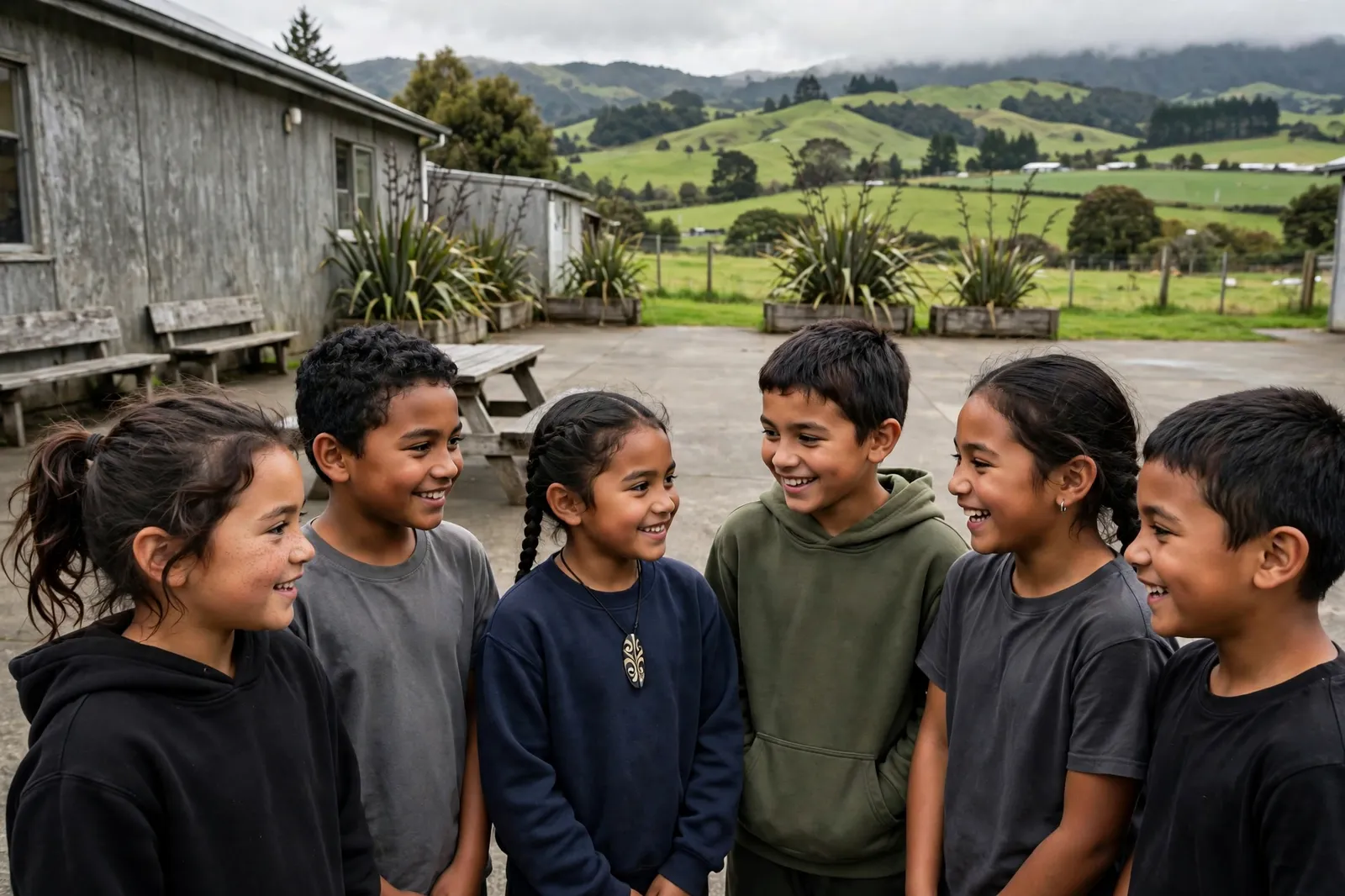
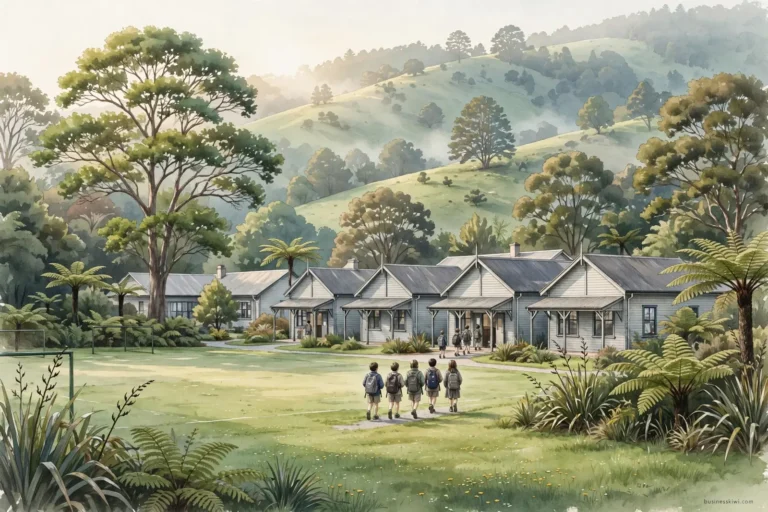
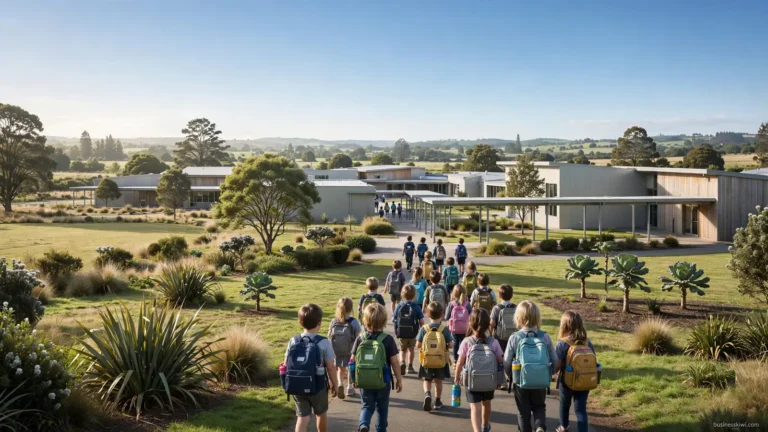
Families searching for Bernard Fergusson School are usually looking at one of the Waikato’s most distinctive primary schools. On paper it is a state full primary school for Years 1 to 8 in Ngāruawāhia. In practice it is Te Kura Kaupapa Māori o Bernard Fergusson, a kura kaupapa Māori where every child learns in Māori medium, where the Waikato River shapes the curriculum, and where the school’s story is closely tied to Tūrangawaewae Marae and the Kīngitanga. That combination matters for parents. A kura kaupapa is not simply a mainstream school with extra te reo lessons. It is a school built around a Māori philosophy of education, with its own expectations for whānau involvement, language commitment and cultural life.
This profile brings together what the Ministry of Education publishes and what the school publishes about itself: the roll, the enrolment and zoning position as actually published, deciles and what replaced them, the curriculum, costs, 2026 term dates, and the questions to ask before visiting. Where an official page does not publish a detail parents expect, this article says so rather than guessing. Confirm current details with the school office before deciding.
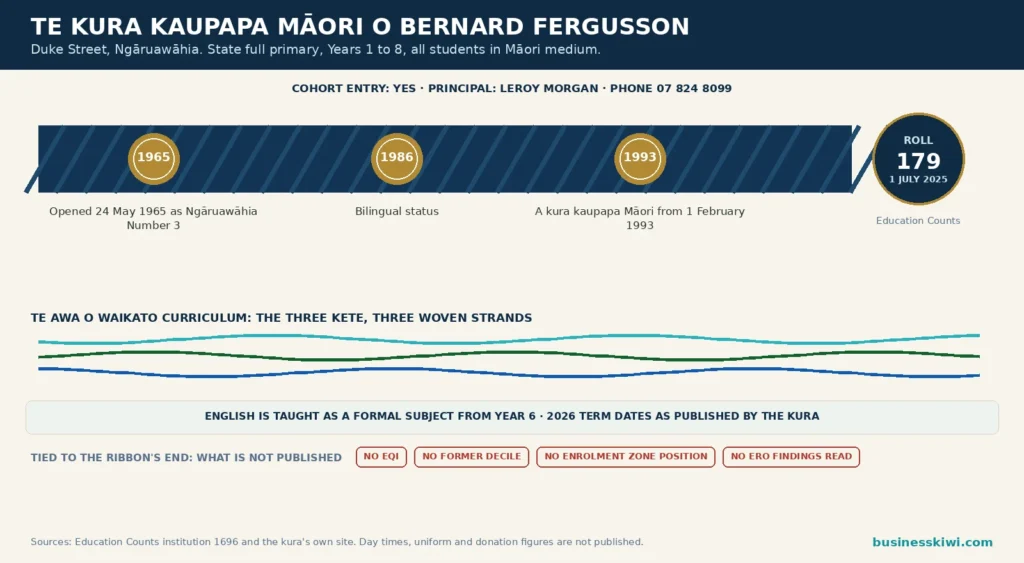
At a glance
The table uses the school’s official Ministry name, which includes its kura kaupapa Māori status. Many families still search under the shorter Bernard Fergusson School name, which was the school’s name for the first part of its history. Both names refer to the same school, institution number 1696, on Duke Street in Ngāruawāhia.
A kura kaupapa Māori, not a mainstream primary
The single most important fact for a new family is the type of school this is. Education Counts records the language of instruction as all students in Māori medium. In plain terms, teaching and learning happen through te reo Māori. The school’s own curriculum statement confirms that position for the junior and middle years, with English introduced as a formal subject later in the child’s time at the school, from Year 6 to Year 8, so that older students learn bilingually. A child who joins in Year 1 therefore starts their schooling immersed in te reo, and a whānau choosing this kura is choosing that immersion pathway for the full primary years.
Kura kaupapa Māori operate under Te Aho Matua principles in the wider sector, and this school expresses its identity through Waikato Tainui history, places and values. Its welcome message places the kura under the shelter of Tūrangawaewae Marae and its tikanga, and links the school to a well known tongi associated with Te Puea, about doing work for the benefit of the people. The school also repeats the whakataukī of Kīngi Tāwhiao that describes Ngāruawāhia as his standing place. These are not decorative lines on a website. They signal that the school sees itself as part of a tribal and community story that long predates any individual enrolment, and that whānau are joining that story when they enrol a child.
For parents weighing up options in the northern Waikato, the practical implication is straightforward. If your family wants an English medium education with some te reo as a subject, this is not that school. If your family wants your child educated primarily through te reo Māori, grounded in Waikato Tainui identity, within a co-educational state school that runs from new entrants through to the end of Year 8, then this kura is designed for exactly that purpose. Talking early with the office about language background, prior attendance at kōhanga reo or other Māori medium early learning, and what support exists for whānau who are themselves learning te reo, is a sensible first step.
History: from Ngāruawāhia Number 3 to kura kaupapa
The school’s own history pages give a clear timeline, and it helps parents understand why the current identity matters so much locally. The school opened on Monday 24 May 1965 as Ngāruawāhia Number 3, with eight classrooms and an opening roll of 275 pupils who had previously attended Ngāruawāhia Primary and who lived on the east side of the Waikato River. Its first principal was J. G. Sisley. Within weeks, a parent meeting decided the school should carry a distinguished name, and the school approached Sir Bernard Fergusson, Governor-General of New Zealand from 1962 to 1967. He agreed to the use of his name in September 1965 and officially opened Bernard Fergusson School on 4 April 1966, also becoming its patron.
Its motto, Kia Kaha Katoa, is translated by the school as be strong together. It was chosen by the first committee to reflect Māori and Pākehā working together for the benefit of all.
The second half of the history is a language story. In response to the wishes of parents and grandparents, the school became Bernard Fergusson Bilingual School in 1986, after whānau voted in favour of applying for official bilingual status and the school received that status at the end of that year. It then took its current form on 1 February 1993, becoming Te Kura Kaupapa Māori o Bernard Fergusson. That date is the important one for understanding the present school. Since 1993 it has operated as a kura kaupapa Māori rather than as a bilingual unit inside a mainstream model. Anniversaries, visits from the Fergusson family, and long standing links with Tūrangawaewae, including end of year events held at the marae in the early decades, run through the school’s published history and show a community that has actively shaped what the school became, rather than simply accepting a model handed down to it.
Ngāruawāhia and the school community
Ngāruawāhia sits at the confluence of the Waikato and Waipā rivers, north of Hamilton, and it holds a central place in Waikato Tainui life as the home of Tūrangawaewae Marae and the Kīngitanga. The school does not treat that setting as background scenery. Its curriculum uses the Waikato River itself as its central metaphor for learning, describing children as kaitiaki of the river and of their own lifelong learning journey. Its welcome and curriculum pages return repeatedly to local places, among them Taupiri, Mangatāwhiri and Te Paina, each carrying a specific history that the school weaves into what children study.
For a family moving into the district, that local grounding has practical effects. Learning is likely to involve local landmarks, local narratives and tribal history in a way that a generic national programme would not. Children are expected to develop a strong sense of where they are and whose stories belong to that place. The school’s two kapa haka groups, one described as its development group and one as its standing competitive group, are presented proudly on its home page, with acknowledgement of the teachers who have worked over two years to lift tamariki to performance standard and of the whānau who supported the kaupapa. Kapa haka here is not an optional extra tucked at the edge of the week. It is part of how the school expresses identity publicly.
Parents should also expect a whānau centred culture. The history pages show parent meetings, committees and marae gatherings shaping major decisions from the first month onward, and the curriculum names parents, board members and kaumātua alongside teachers as guides for each child. In a kura of this size families tend to know staff and each other well. The other side of that closeness is commitment. Kura kaupapa communities generally ask whānau to take part and to support the language at home where they can. Families who value that involvement tend to settle well.
Year levels and roll
Education Counts lists the school as a full primary school covering Years 1 to 8. That means a child can complete their entire primary schooling on one site, from new entrant level through to the end of intermediate age, without a separate intermediate school move at Year 7. For Ngāruawāhia families, that continuity can be a real advantage, particularly in a Māori medium pathway where staying in the same language environment for eight years supports fluency.
The most recent roll read for this profile is 179 students as at 1 July 2025, from the Ministry’s 1 July roll returns. Rolls move during the year, so treat 179 as the official snapshot for that date, not a live headcount. By year level there were 27 in Year 1, 14 in Year 2, 18 in Year 3, 30 in Year 4, 27 in Year 5, 18 in Year 6, 24 in Year 7 and 21 in Year 8. The junior school, Years 1 to 4, held 89 students and Years 5 to 8 held 90, a steady spread rather than a reliance on senior intakes.
The ethnic breakdown in the same return reflects the school’s kaupapa. Almost the entire roll is recorded as Māori, with the published table showing 179 Māori responses in a multiple response count, alongside one Pacific and one European or Pākehā response, with students counted once in the total of 179. Because ethnicity in these returns is multiple response, the group counts can add to slightly more than the total roll. The age profile tells a similar primary story, running from 25 five year olds through to 22 twelve year olds at the same date. There were no international students recorded in the return.
Education Counts did not publish an Equity Index number for this school on the profile pages read here, so no EQI figure is stated. That absence is a gap in the published pages, not a judgement about the school.
Decile history and what replaced deciles
The title of this profile mentions decile history because many parents still search for a school’s decile, and older directories still show one. Deciles were the Ministry’s former measure of the socioeconomic mix of a school’s community, running from 1 to 10, and they were once widely, and often wrongly, treated as a measure of school quality. They were never a quality rating. They described community circumstances for funding purposes only.
Deciles no longer operate as the funding system for state schools. The Ministry replaced the decile system with the Equity Index from January 2023. Under the current system, each school is given an Equity Index number based on the circumstances of its students, and that number helps determine its equity funding. A higher number indicates that students, on average, face greater socioeconomic barriers to achievement. Because deciles are historic and the Equity Index is a different measure built differently, the two numbers cannot be compared directly, and an old decile found on a third party directory should not be used to judge this kura today.
For Bernard Fergusson School specifically, this profile does not state a former decile or a current Equity Index number, because neither figure appeared on the permitted official pages read in full for this article. Parents who need the school’s current Equity Index for funding or enrolment related reasons should ask the school office or check the school’s current Education Counts profile directly, where funding information is updated by the Ministry. What parents can take from this section is the principle. Judge the kura on its programme, its language outcomes, its culture and its fit for your child, not on a retired decile label circulating on unofficial sites.
Curriculum: Te Awa o Waikato and the three kete
The school’s curriculum statement is the richest document on its website, and it deserves careful reading by any parent considering enrolment. The school bases its curriculum on Te Awa o Waikato, the Waikato River, as a symbol of lifelong learning. Children enter as young learners in Year 1 and travel a journey that the school describes in physical, intellectual, social, cultural and spiritual terms, leaving at the end of Year 8 on the edge of teenage years, prepared to contribute as young Waikato Tainui adults on national and international stages. Waka travelling the river stand for the knowledge children gather from local, regional, national and international sources, guided by Korotangi and by Waiwawa as a guiding taniwha.
Planning, the school says, begins at Tūrangawaewae, symbolising the heart of the Kīngitanga, where each teacher develops a programme matched to student needs and aligned to Te Marautanga o Aotearoa, the curriculum for Māori medium education. Along the journey sit three baskets of knowledge, each placed at a significant local site, and together they show how the school balances Māori knowledge, wider world knowledge and future pathways.
The first basket, Te Kete Mātauranga Māori, is placed at Taupiri. It holds traditional Māori knowledge across learning areas, underpinned by the Waikato dialect of te reo and its tikanga. Study topics reflect the needs identified by whānau, marae, hapū and iwi, the strengths of teachers, and iwi expertise and resources. All learning through this basket is in te reo Māori. Priority areas include Waikato Tainui landmarks, events, customs and the figures of Waikato history, especially those connected with establishing and maintaining Tūrangawaewae Marae.
The second basket, Te Kete Mātauranga Tauiwi, is placed at Mangatāwhiri, where British troops entered the Waikato in July 1863. The school is explicit about why that place was chosen. It marks where two worlds met, and it stands for the need to equip students to function effectively in the wider world as well. This basket holds knowledge across all fields of learning underpinned by English language and customs, complementing the first basket while also meeting mainstream curriculum and qualification expectations. It is through this part of the curriculum that learning becomes bilingual from Year 6 to Year 8, with English introduced as a formal subject at Year 6. Priority areas include continued literacy and numeracy development in both Māori and English, understanding the digital world, and career guidance and planning.
The third basket, Te Kete Mātauranga Koioranga, is placed at Te Paina, the original stronghold associated with Te Puea, from where families were moved to Ngāruawāhia. This basket holds traditional and modern knowledge in areas such as mathematics, higher learning and tribal affairs, drawn from both Māori and Western knowledge, and it encourages students toward career pathways that contribute to iwi growth and development. Its guiding idea, expressed in the tongi about doing work for the benefit of the people, connects individual achievement back to collective benefit.
Taken together, the three baskets give parents a clear picture of progression. The early years are fully immersed in te reo and Waikato Māori knowledge. The middle and senior years deliberately add formal English and a stronger futures focus, without stepping away from the kaupapa. Parents who want detail on how reading, writing and mathematics progress in te reo, how assessment works in Māori medium, and how the school reports progress to whānau, should ask for the school’s current curriculum and assessment information at a visit, because the public curriculum statement sets out philosophy and structure rather than year by year achievement detail.
Cultural life, kapa haka and sport
A school that publishes its kapa haka results and its crest history on its main site is telling parents what it values. Alongside the two kapa haka groups already mentioned, the home page carries the tumuaki’s welcome in te reo, the school’s founding story, and its term dates, which gives a fair sense of daily priorities. Language, performance, history and community come before administrative detail.
What ERO says: an honest gap
Parents often turn first to the Education Review Office for an independent view. This profile follows a strict rule on ERO material. It only summarises findings from an ERO report read in full.
For this school, no ERO report was located and read in full through the permitted sources during the research for this profile. The Education Counts profile links toward ERO reporting, but the report itself was not retrieved in full, and no findings are therefore stated here. That is deliberate. Inventing or guessing ERO judgements, return times or recommendations would mislead parents, and copying a summary from a third party directory would breach the sourcing standard this site works to.
Uniform, donations and other costs
Costs are the area where parents most want exact numbers, and they are also the area where this school publishes the least on the pages read for this profile. No uniform list, uniform price, stationery list, stationery cost, activity fee or school donation amount was published on the Education Counts profile or on the school website pages read in full for this article. No figure is therefore stated here. Any dollar amount for this school found on a third party site should be treated as unverified and should not be relied on.
What Education Counts does publish is the donations position. It records that donations should not be requested, unless for a school camp, which reflects the national donations scheme position for eligible state schools. Parents should ask the office, before enrolment, for a current written list covering uniform, stationery, any camp or trip contributions, and any technology requirements for senior students.
Uniform needs the same direct check. The website pages read here do not describe a current uniform, whether it is compulsory, what it includes, or where it is sold. Do not assume either a full uniform or mufti. Ask what children wear each day and what the kapa haka kakahu arrangements are.
Term dates and the school day
The school publishes its 2026 term dates on its home page, and they are reproduced here exactly as published. Term 1 runs from Tuesday 27 January to Friday 2 April 2026. Term 2 runs from Monday 20 April to Friday 3 July 2026. Term 3 runs from Monday 20 July to Friday 25 September 2026. Term 4 runs from Monday 12 October to Friday 11 December 2026. Families planning travel should cross check these school dates against the national school holidays and public holidays for the same year, and should confirm teacher only days and any kura specific closures with the office, because those additional closed days are not listed alongside the term dates on the page read for this profile.
The school day start and finish times, bell times, lunch arrangements and office hours were not published on the website pages read in full for this profile. No times are therefore stated here. Before and after school care arrangements, bus routes and eligibility, and procedures for late arrival or early collection were likewise not described on those pages. Ngāruawāhia families may have local knowledge of bus services for Māori medium students travelling from surrounding areas, including Hamilton and Huntly, but transport is a detail that must be confirmed with the office and the relevant transport provider rather than assumed from another school’s arrangements. A short phone call to 07 824 8099 will establish the current day structure far more reliably than any directory listing.
Enrolment, cohort entry and the zone position
Education Counts records two enrolment facts that parents need to understand. First, cohort entry is marked as Yes. Cohort entry means new entrants start school in groups at set points in the term, near the start and the middle of the term, rather than each child starting individually on their fifth birthday. Children must still be five before they start, and they start at the next cohort entry point after their birthday. For whānau, cohort entry changes the planning around a fifth birthday. A child who turns five just after a cohort date may wait several weeks to begin, and families should confirm the exact cohort dates for the term their child turns five, along with any transition visits the kura offers for kōhanga reo tamariki and other new entrants.
Second, the zone position needs careful wording. The Education Counts profile page read for this profile publishes no enrolment scheme details or zone map, and no zone description was found on the school website pages read in full. This profile therefore describes no boundary and states no definitive zoned or unzoned position. Confirm the current position directly with the office for your exact address before relying on it, and expect enrolment discussions to also cover whānau commitment to Māori medium education.
The step by step enrolment process is not set out on the website pages read here. In practice, phone or email the office, visit to see Māori medium learning in action, discuss language background and prior early learning, confirm cohort timing, then complete the school’s enrolment paperwork. For a mid year transfer, ask how placement across the junior and senior sections is decided. For Year 8 families, ask early about pathways to wharekura and other secondary options.
Visiting and deciding: what to ask
A visit will tell a whānau more than any profile can. Ask how te reo is supported for children with little prior Māori medium experience, how progress is tracked and reported, when English becomes a formal subject in Year 6, and what kapa haka, sport and camps involve and cost. Confirm uniform, stationery, school day times, bus arrangements and the enrolment position for your address in writing. Engaged questions are normal in a kura kaupapa community, and the answers will tell you more about fit than any roll figure.
Frequently asked questions
What is the full official name of Bernard Fergusson School?
The official Ministry of Education name is Te Kura Kaupapa Māori o Bernard Fergusson, institution number 1696. The school began as Bernard Fergusson School in 1966, became a bilingual school in 1986, and took its current kura kaupapa Māori name on 1 February 1993.
What year levels does the school cover and how big is it?
It is a full primary school for Years 1 to 8. The official roll published from the 1 July 2025 return was 179 students, spread from 27 in Year 1 to 21 in Year 8, with the largest single year level being Year 4 with 30 students.
Is all teaching in te reo Māori?
Education Counts records all students as learning in Māori medium, and the school’s curriculum confirms that all learning in the early and middle years is through te reo Māori. English is introduced as a formal subject from Year 6, so learning is bilingual in Years 6 to 8.
Does the school have an enrolment zone?
No enrolment scheme map or boundary was published on the Education Counts profile or school website pages read for this profile, so no boundary is described here. Confirm the current enrolment scheme position for your address directly with the school office before enrolling.
What was the school’s decile and what is its Equity Index?
Deciles were replaced by the Equity Index from January 2023 and are no longer the operating funding measure. Neither a former decile nor a current Equity Index number for this school appeared on the permitted official pages read in full for this profile, so neither figure is stated. Ask the office if you need the current index number.
How much are the school donation and uniform costs?
No donation amount, uniform price or stationery cost was published on the official pages read for this profile. Education Counts records that donations should not be requested unless for a school camp. Ask the office for a current written list of uniform, stationery and any camp costs for your child’s year level.
What are the 2026 term dates?
As published by the school, Term 1 is Tuesday 27 January to Friday 2 April 2026, Term 2 is Monday 20 April to Friday 3 July 2026, Term 3 is Monday 20 July to Friday 25 September 2026, and Term 4 is Monday 12 October to Friday 11 December 2026. Confirm teacher only days with the office.
What does cohort entry mean for my five year old?
Education Counts records cohort entry as Yes, which means new entrants start together at set entry points during the term after they have turned five, rather than each starting on their birthday. Contact the office for the cohort dates and transition visit arrangements for the term your child turns five.
Sources
- Education Counts, Te Kura Kaupapa Māori o Bernard Fergusson: Profile and Contact Details: https://www.educationcounts.govt.nz/find-school/school/profile?school=1696
- Education Counts, Te Kura Kaupapa Māori o Bernard Fergusson: Student Population – Year Level: https://www.educationcounts.govt.nz/find-school/school/population/year?district=15®ion=3&school=1696
- Te Kura Kaupapa Māori o Bernard Fergusson, Home page including Brief history and 2026 Term Dates: https://www.bernardfergusson.school.nz
- Te Kura Kaupapa Māori o Bernard Fergusson, Curriculum – Marau: https://www.bernardfergusson.school.nz/curriculum
- Te Kura Kaupapa Māori o Bernard Fergusson, Te Tohu o te Kura – School Crest: https://www.bernardfergusson.school.nz/about-kura-logo
- Te Kura Kaupapa Māori o Bernard Fergusson, First 25 years – Ngā tau 25 ki mua: https://www.bernardfergusson.school.nz/first-25-years
This article is general information about Te Kura Kaupapa Māori o Bernard Fergusson based on official sources published at the time of writing. School rolls, staffing, costs, term arrangements and enrolment details change. Confirm all current details directly with the school office before making enrolment or other decisions for your child.