Bird Scarer NZ: Types, Rules and How to Choose One That Works
The short answer
A bird scarer is any device that moves birds away from a crop, building or work site without harming them. In New Zealand the main types are gas cannons, electronic scarers that play distress or predator calls, laser scarers, pyrotechnics, visual deterrents such as predator kites and reflective tape, and physical exclusion, meaning netting, spikes and spinning perch deterrents. No single type works everywhere for long, because birds learn. The setups that hold up combine two or more methods, move them around, and run only while the crop or site is genuinely at risk. Loud devices are also regulated. District plans set noise limits, hours and firing rates for audible scarers, and the rules differ from district to district, so check your own council’s plan before you buy anything that makes a bang.
The main types of bird scarer
Gas cannons
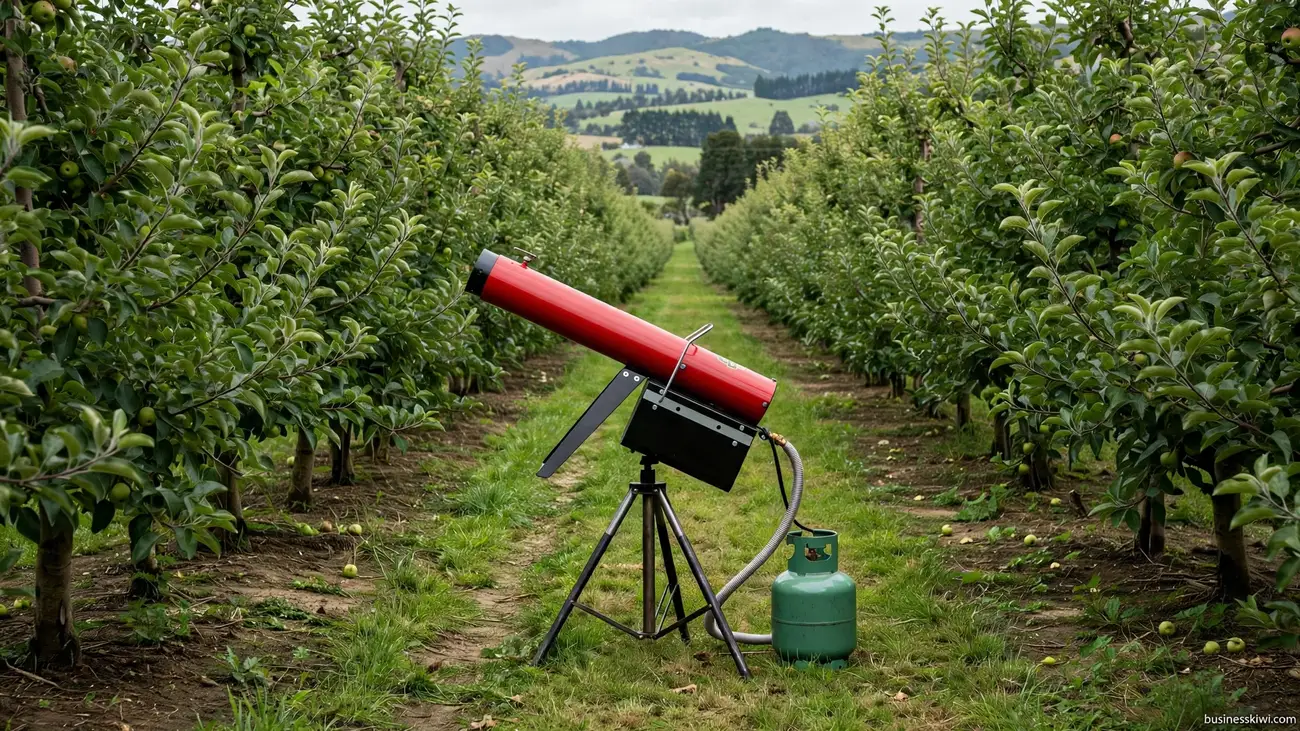
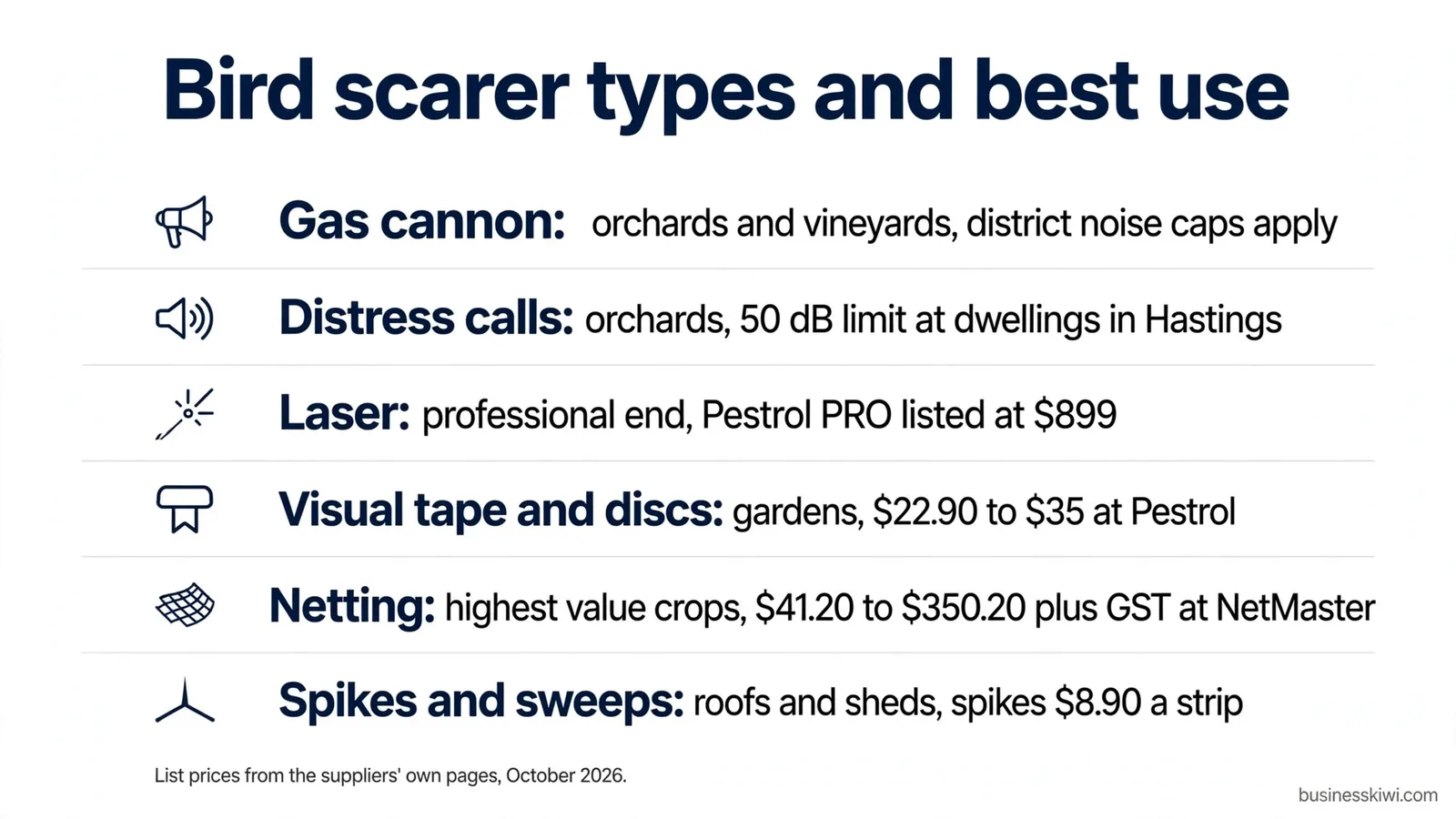
The gas cannon, also called a scare gun or banger, is the workhorse of New Zealand horticulture. It burns LPG or propane and fires a loud, gunshot-like blast at timed intervals. Whakatāne District Council describes these impulsive devices simply: they are gas propelled and sound like a loud boom.
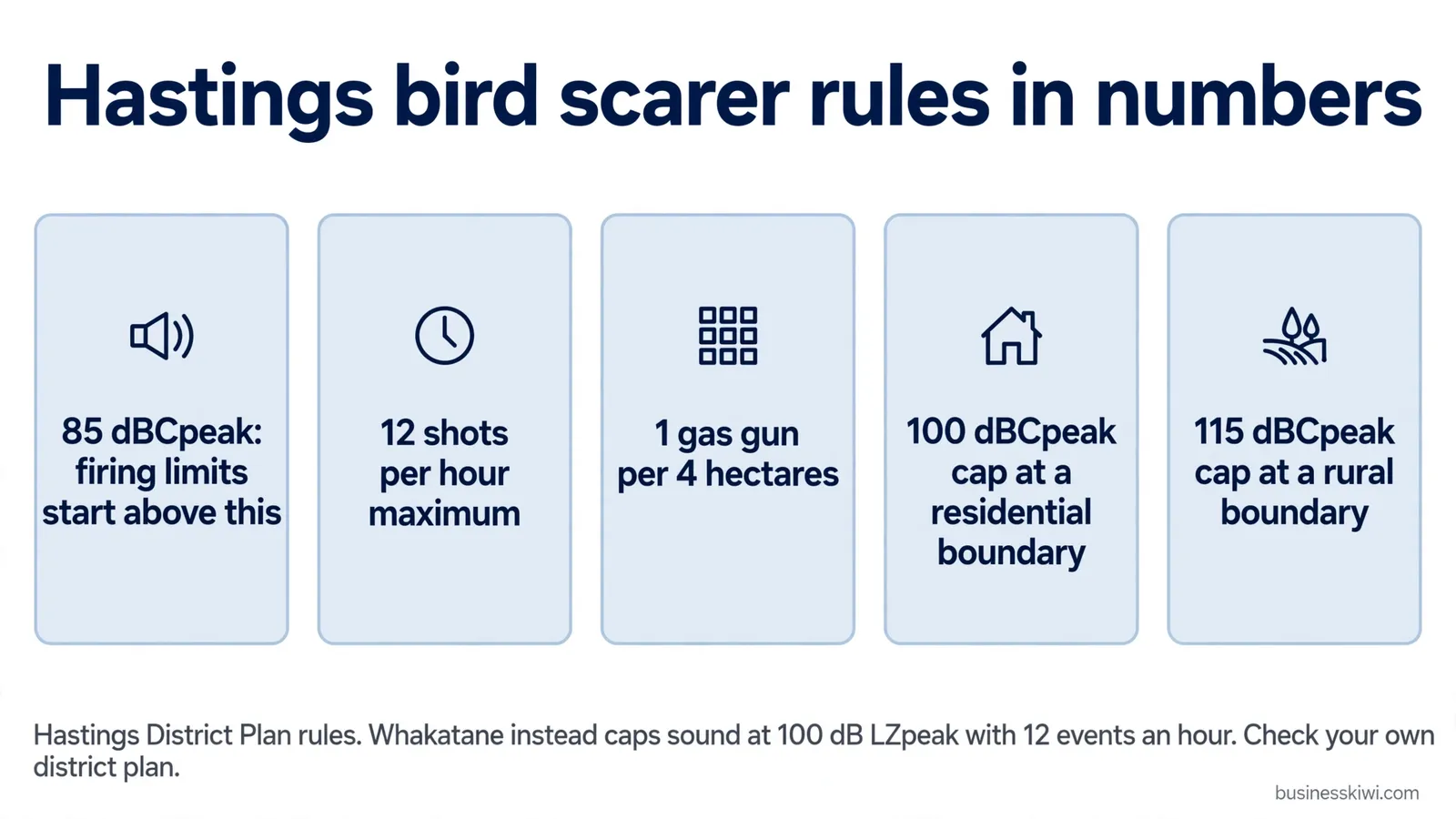
Growers use them because one unit can protect a reasonable area of orchard or vineyard through bud break, fruit set and harvest, the periods when birds do the most damage. Hastings District Council’s plan rules give a sense of the scale: in that district, only one gas gun may operate on each 4 hectares of land, and a property smaller than 4 hectares gets a single device. Cannons are cheap to run and simple, but they are the type neighbours notice most, and they are the type councils regulate hardest. Birds also learn a fixed firing pattern quickly, so a cannon left in one spot on a metronome setting fades fast.
Electronic and acoustic scarers
Electronic scarers replace the bang with recorded sound. Most play the distress calls of the pest species itself, or predator calls, through one or more speakers. Whakatāne’s district plan calls these non-impulsive devices and describes them as often high pitched predator alarm sounds. Hastings groups them as audible avian distress alarms and limits them separately from gas guns: at the notional boundary of a rural dwelling, or anywhere in a residential zone, they must not exceed 50 dB LAeq measured over 15 minutes.
Smaller electronic units sold for homes and sheds include ultrasonic repellers, which councils also list among the recognised bird control methods. Treat ultrasonic claims cautiously. The sound is hard for people to hear, which makes it neighbour friendly, but results vary and it is best used as one layer in a wider setup rather than the whole answer.
Laser scarers
Laser scarers sweep a moving beam of laser light across a crop, roof or water surface. Birds treat the approaching beam as a physical threat and leave, and because the pattern keeps changing, a laser does not present the same fixed picture as a static decoy. NZ supplier Birdzout sells handheld lasers and automatic units such as the Auto Laser Ultimate MK2 for kiwifruit, vineyard and building work, and its range is built around protecting kiwifruit buds and keeping gulls off buildings. Pestrol sells a Laser Bird Repeller PRO, listed at $899 on its website. Lasers sit at the professional end of the market. Follow the maker’s eye safety instructions exactly, and never point a laser toward roads or aircraft.
Pyrotechnics
Pyrotechnic scarers fire a cartridge that travels and then bursts with a flash and a bang. They are used mainly by airport wildlife teams and professional pest controllers, because someone has to be present, choose the moment and fire at the birds that are actually there. That human judgement is their strength: the stimulus is never on a timer, so birds struggle to learn it. Hastings District Council’s rules cover firearms used for bird scaring alongside gas guns, with the same ban on night use. Because pyrotechnics involve a launcher or firearm and an explosive cartridge, treat them as specialist gear. Check firearms requirements and your council’s rules first, and store cartridges exactly as the maker directs.
Visual deterrents
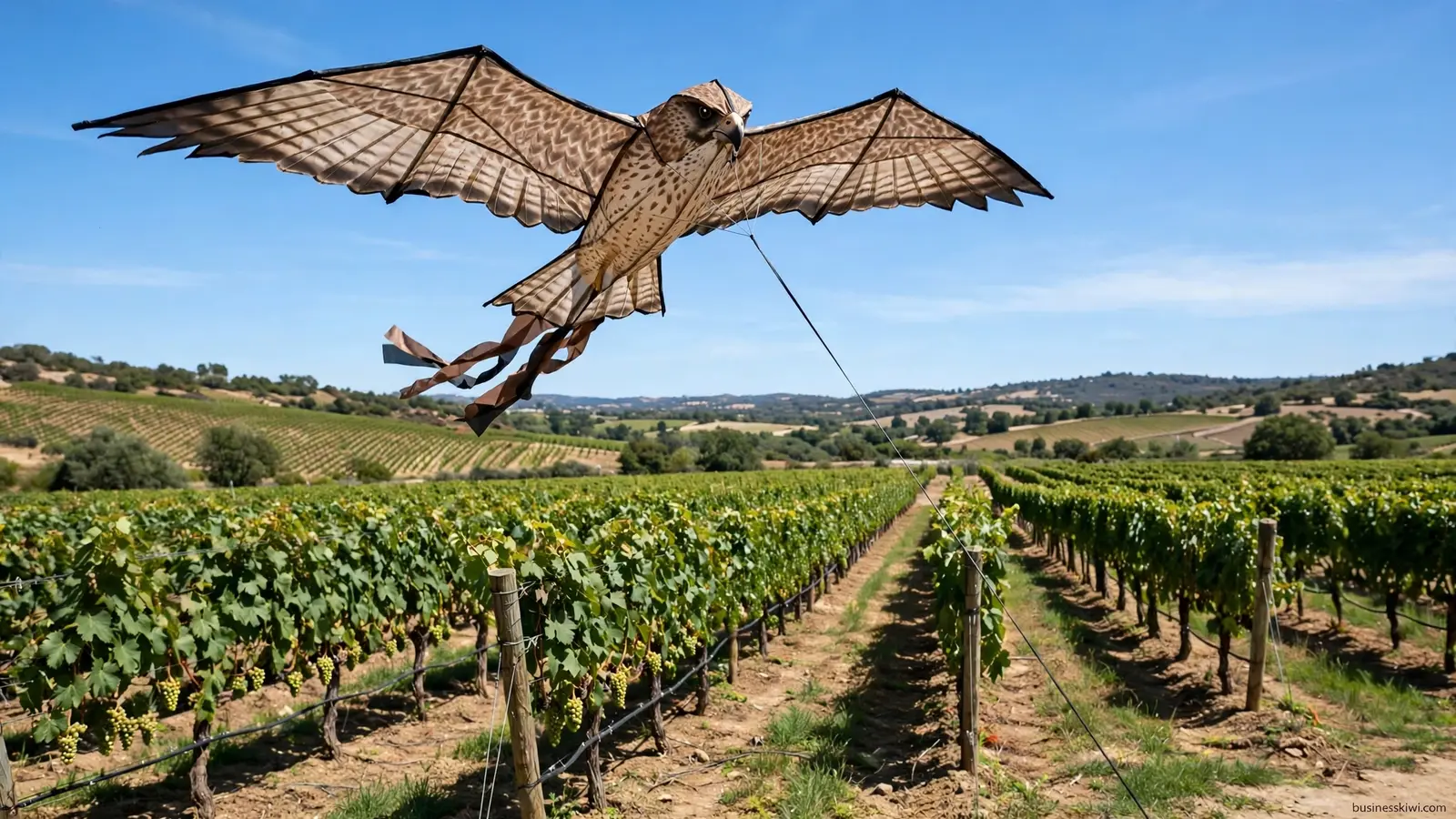
Visual deterrents work on eyesight rather than hearing. The group includes predator kites and hawk silhouette kites that swoop and dive in the wind, reflective scare tape that flashes in sunlight, spinning reflective discs and rods, predator eye balloons, and decoy birds. Birdzout sells a predator kite package as part of its NZ range. At the budget end, Pestrol lists bird scare tape at $30 to $35, a Predator Eyes scarer at $27 and reflective discs at $22.90.
Visuals are quiet, cheap and safe, which makes them the natural first step near houses. Their weakness is habituation. A kite that hangs in the same tree for a month becomes part of the scenery, so move them often and pair them with something else.
Netting and physical exclusion
Exclusion does not scare birds at all. It simply shuts them out, which is why it is the most reliable method of all where it can be fitted. Netting goes over whole blocks, individual rows or single trees. NZ netting supplier NetMaster sells a 30g diamond bird net, a knitted HDPE mono-filament net with reinforced selvedge edges, in sizes from 4 by 25 metres up to 10 by 100 metres, priced from $41.20 to $350.20 plus GST depending on size.
For buildings, the equivalents are spikes and spinning deterrents. Pestrol’s S6 spike strips are 52 cm long with a 7.5 cm base, a 19 cm spike spread and stainless steel spikes on a UV protected polycarbonate base. They fix to ledges, gutters, beams and signs with screws, nails, zip ties or adhesive, and are listed at $8.90 a strip. Its BirdSweep 360 is a wind driven unit with 13 flexible stainless steel arms covering a 244 cm circle from one mounting point, listed at $35.40. It needs no power, makes no noise, and suits roofs, air conditioning units, warehouses and boats.
Habituation: why scarers stop working
Birds are quick learners, and a scarer is only frightening while it is unpredictable. A cannon that fires every ten minutes from the same corner, a kite that never moves, a call that loops identically for weeks: each one teaches the flock that the threat is empty. Once birds feed happily beside a device, the device can even work against you, marking the block as a place where noise happens and nothing follows.
Working practice is built around staying unpredictable. Move devices every few days. Vary firing times rather than running a fixed interval. Combine types, so a visual deterrent backs up an acoustic one and netting protects the highest value rows. Start scaring before birds establish a feeding habit, not after, and run audible devices only during the risk window instead of all season. Councils write a version of this into their rules: shot limits and daylight only hours keep devices occasional by law as well as by good practice.
Choosing by setting
Orchards and vineyards. This is where gas cannons, distress call systems and lasers earn their keep. Match the tool to the pressure period, usually bud break and the run into harvest, and plan for the district plan rules from day one. Netting gives the surest protection on high value blocks and is the standard answer where bird pressure is heavy every year.
Farm buildings and yards. Birds around sheds, silos and stock facilities are usually a roosting and mess problem rather than a crop problem. Spikes on beams and ledges, a BirdSweep style spinner over yards and doorways, and netting across open bays solve most of it quietly, with no noise issues at all.
Roofs, warehouses and commercial sites. Start with exclusion: spikes, sweeps and netting over the favoured perches and entry points. Gulls on large roofs may need a laser or a managed programme from a bird control contractor. Avoid audible scarers in built up areas; the noise rules are tighter and complaints arrive quickly.
Home gardens and small blocks. Keep it quiet and visual. Tape, discs, predator eyes and a kite, moved every few days, protect fruit trees and vegetable beds without upsetting anyone. Netting individual trees is cheap and certain. Ultrasonic units can be added, but expect them to support the visuals, not replace them.

The rules in New Zealand
Noise rules sit in district plans. There is no single national rule for bird scarers. Each council sets its own limits, and the two examples below show how much they can differ in detail while agreeing in spirit.
Hastings District Plan section 25.1.7A covers gas guns, firearms used for scaring, and audible avian distress alarms. None of them may operate between half an hour after sunset and half an hour before sunrise. Anyone using one must put a legible notice on the road frontage with the operator’s name, address and phone number. For gas guns, if the noise at a residential boundary, or at the notional boundary of a noise sensitive activity in the rural zone, stays at or below 85 dBCpeak, there is no limit on shots. Above that level, the gun is limited to 4 events an hour or 12 individual shots an hour, where an event is up to three shots inside one minute. Two absolute caps apply: 100 dBCpeak at any residential zone boundary and 115 dBCpeak at the notional boundary of a noise sensitive activity in a rural zone. The council notes that meeting the caps points to setbacks of roughly 420 metres and 150 metres respectively when a gun faces the boundary, and less when it faces away.
Whakatāne’s operative District Plan rule 11.2.6.2 takes a simpler form. Devices may run from half an hour before sunrise to half an hour after sunset, the maximum sound is 100 dB LZpeak, firing is limited to 12 individual events an hour, a road frontage notice is required, and variable noise devices such as distress calls must not exceed 50 dBA SEL. Whakatāne also shows where the debate is heading: its Proposed Plan Change 6 would have cut the limit to 85 dB Lcpeak, but the council withdrew the change in June 2024 after mediation, and the kiwifruit industry is developing a best practice guide instead.
Protected birds. Scaring is legal because it moves birds on without harming them, and Whakatāne’s council notes the devices are not designed to harm birds. The Wildlife Act 1953, administered by the Department of Conservation, absolutely protects almost all native birds. Without a DOC permit it is an offence to catch, hunt or kill them, and the protection covers eggs and feathers as well. Common crop pests such as starlings, magpies and Canada geese are listed as unprotected, and a few partially protected species can be controlled by a landowner when they are damaging property, but anything that injures or kills a protected bird needs DOC authorisation first. When in doubt, scare, do not harm, and ask DOC.
Airports. Bird control at airports is a specialist job run by the aerodrome operator under Civil Aviation rules, because bird strike is a safety hazard. If your land is near an airport, talk to the operator before using loud scarers or pyrotechnics, and keep lasers well away from aircraft.
Set-up and placement basics
Site audible devices as far from neighbouring houses as the block allows, and point them away from boundaries where you can; both councils note that direction changes how loud a device sounds at a boundary. Work to the density your district allows, such as Hastings’ one device per 4 hectares, rather than clustering guns. Put the road frontage notice up before the device starts, with a phone number that someone actually answers. Tell near neighbours when the season starts and when it will end. Keep a simple log of firing times and any complaints; if a complaint does land, a log and a responsive operator settle most of them.
What it costs
Prices vary widely by type. At the low end, Pestrol lists scare tape at $30 to $35, predator eye scarers at $27 and S6 spike strips at $8.90 each. A BirdSweep 360 spinning deterrent is listed at $35.40. Netting from NetMaster runs from $41.20 to $350.20 plus GST depending on the size of the net. A Pestrol Laser Bird Repeller PRO is listed at $899, and automatic laser systems from specialist suppliers sit above that. Gas cannons are usually sold through rural supply stores; the suppliers we read do not publish cannon prices online, so budget on quotes rather than list prices.
Watch-outs
- A scarer that breaks the district plan limits is a noise complaint waiting to happen, and councils can require changes or a resource consent.
- Sagging, loose netting can tangle birds. Fit nets taut, check them often, and remove them when the season ends.
- Cheap spikes with wide gaps let small birds land between the rows. Match the spike pattern to the bird size, as Pestrol’s own range does with narrow and wide base options.
- Lasers demand eye safety discipline. Buy from a reputable supplier, follow the maker’s instructions, and keep beams off roads, people and aircraft.
- LPG cannons are gas appliances. Leak check connections, store bottles upright and secured, and keep the muzzle area clear.
Related guides: birds roosting under rooftop solar panels are a common exclusion job, and our stock tank guide covers another piece of farm infrastructure. For more business and rural guides, browse the Business & Industry section.
Frequently asked questions
What is the best bird scarer for an orchard?
There is no single best device. Most orchards run a combination: a gas cannon or distress call system for area coverage, visual deterrents that move around the block, and netting on the highest value rows. The combination matters more than any one product, because birds learn single devices quickly.
Are bird scarers legal in New Zealand?
Yes, as a permitted activity in most districts, provided you meet your district plan’s noise rules. Those rules typically limit operating hours to daylight, cap the noise level at boundaries, limit how often a device can fire, and require a notice on your road frontage with your contact details. Check your own council’s plan, because the numbers differ by district.
How loud can a gas gun be?
It depends on the district. In Hastings, gas guns face absolute caps of 100 dBCpeak at a residential zone boundary and 115 dBCpeak at the notional boundary of a noise sensitive rural activity, with firing limits once noise at a boundary passes 85 dBCpeak. In Whakatāne the maximum is 100 dB LZpeak with no more than 12 events an hour. Your district will have its own figures.
Do birds get used to bird scarers?
Yes. Habituation is the central problem of bird scaring. Birds learn that a fixed, predictable stimulus is harmless, sometimes within days. Moving devices regularly, varying timing and type, combining methods and scaring only during the real risk period all slow the learning down.
What bird scarer works best on roofs and warehouses?
Physical exclusion. Spikes stop birds landing on ledges, beams and signs, spinning sweep deterrents clear larger flat areas, and netting closes off bays and voids. These methods are silent, run constantly and do not habituate the way noise based scarers do.
Can I scare protected native birds away from my crop?
Scaring that moves birds on without harming them is the normal, lawful approach. What you cannot do without a Department of Conservation permit is catch, hunt, kill or injure absolutely protected species, which covers almost all native birds under the Wildlife Act 1953. If a protected species is causing serious damage, talk to DOC about your options before doing anything lethal.
How much does a bird scarer cost in NZ?
Simple visual deterrents start under $30: scare tape, predator eyes and reflective discs all sit in the $22.90 to $35 range at Pestrol. Spike strips are listed at $8.90 each, a spinning BirdSweep at $35.40, and bird netting from $41.20 plus GST for a small net. Electronic and laser units cost more, with a laser repeller listed at $899, and gas cannons are generally priced by quote through rural suppliers.
The bottom line
Buy for your setting, not for the loudest bang. Exclusion wins wherever it can be fitted, visual deterrents handle small scale problems quietly, and gas cannons, acoustic systems and lasers earn their place on orchards and vineyards during the short windows when crops are at risk. Whatever you choose, run it inside your district plan’s noise rules, keep it moving and unpredictable, and remember that the neighbours you keep on side are part of the system working.
Sources
- Hastings District Council, Bird Scarers (noise control): https://www.hastingsdc.govt.nz/services/environmental-health-and-safety/noise-control/bird-scarers/
- Whakatāne District Council, Proposed Plan Change 6, Audible Bird Scaring Devices (includes operative District Plan rule 11.2.6.2): https://www.whakatane.govt.nz/documents/council-plans/operative-district-plan-2017/completed-plan-changes/proposed-plan-change-6
- Department of Conservation, Wildlife Act 1953: https://www.doc.govt.nz/about-us/our-role/legislation/wildlife-act/
- NetMaster, 30g Diamond Bird Net: https://netmaster.co.nz/product/30g-diamond-bird-net/
- Pestrol, BirdSweep 360 bird deterrent, 244 cm (8 ft): https://www.pestrol.co.nz/buy-online/pestrol-bird-perch-deterrent-244cm-8ft/
- Pestrol, S6 Wide Base Bird Spikes (52 cm): https://www.pestrol.co.nz/buy-online/pestrol-s6-wide-base-bird-spikes-52cm/
- Pestrol, Bird control product range: https://www.pestrol.co.nz/product-tag/bird-control/
- Birdzout (Maintrac Group), Bird deterrent systems range: https://www.maintracgroup.com/collections/birds
This article is general information about bird scarers in New Zealand. It is not legal or professional pest control advice. Noise rules for audible bird scarers are set in district plans and vary between districts, so check your own council’s current rules before using one. Protected birds are covered by the Wildlife Act 1953 and must not be harmed without authorisation from the Department of Conservation. Always follow the manufacturer’s safety instructions for gas powered and pyrotechnic devices, including gas storage and firing clearances.