Karaka School: Enrolment, Uniform and Life at Papakura’s Semi-Rural Full Primary
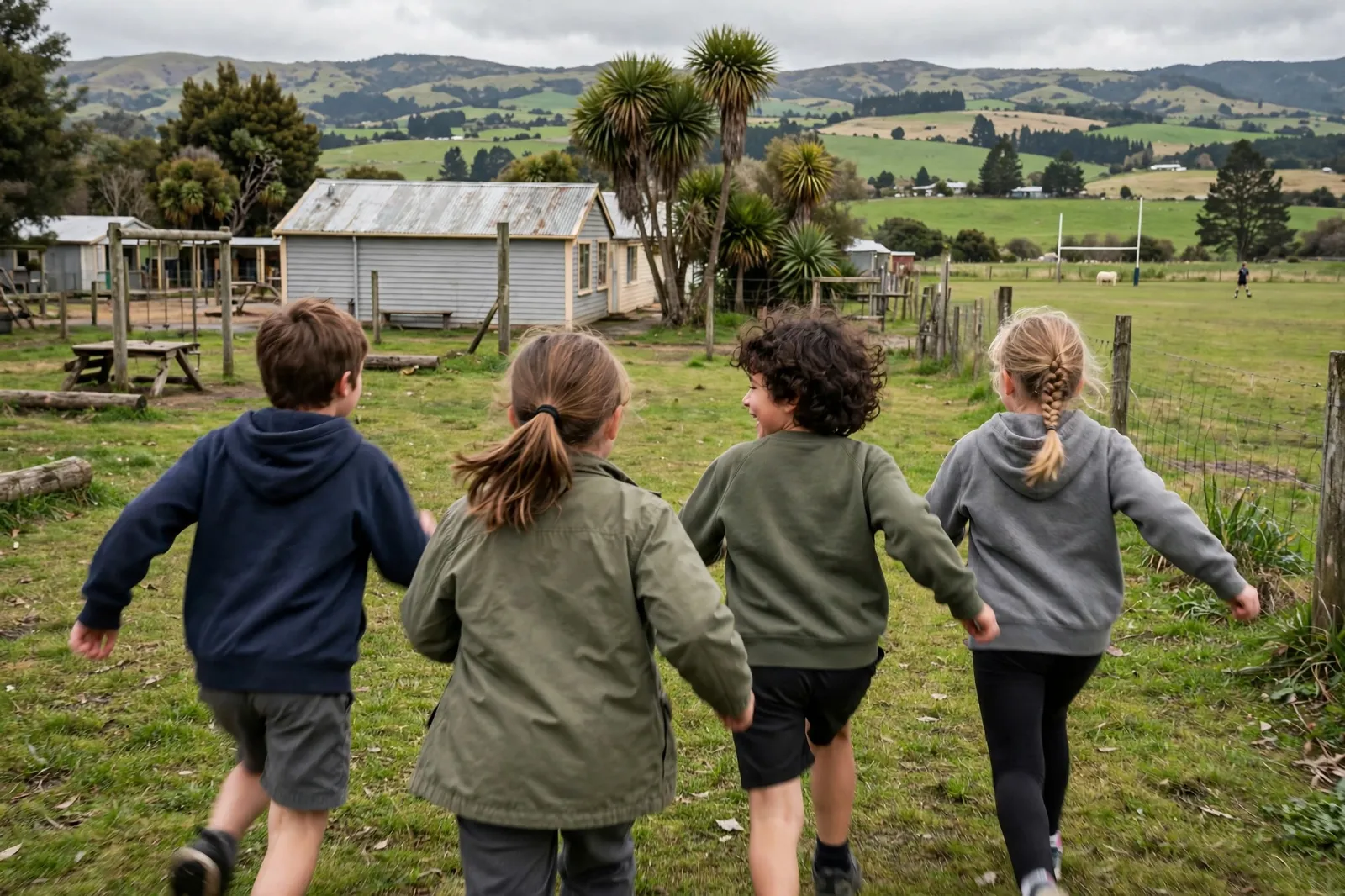
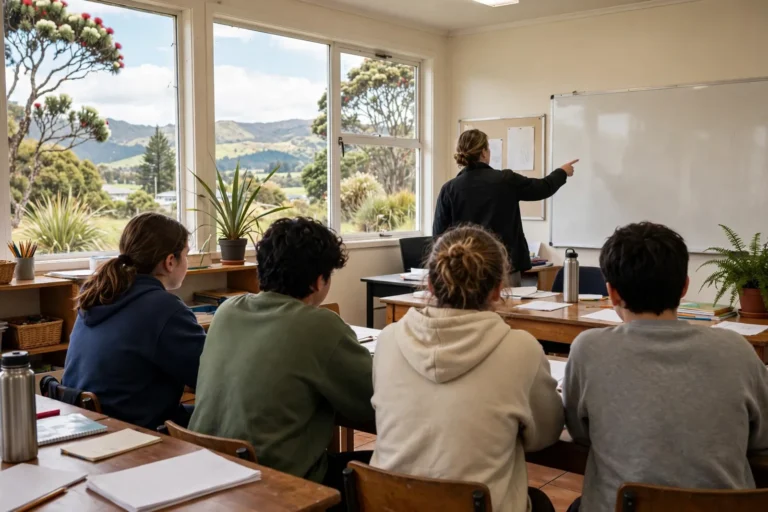
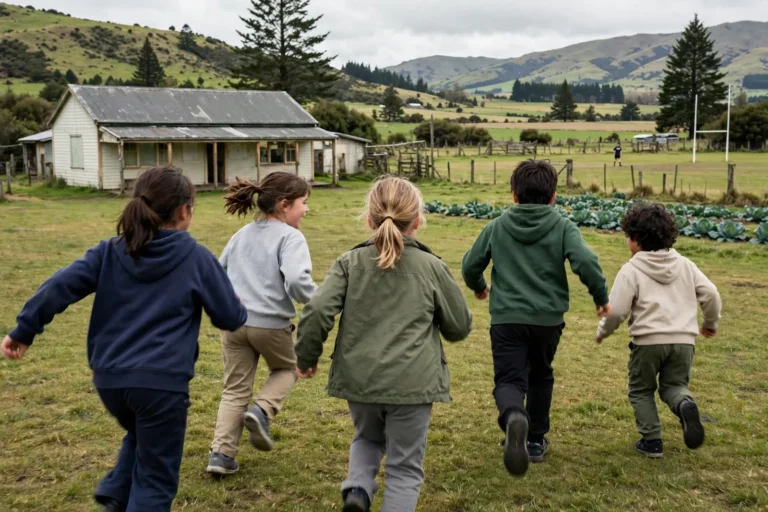
Karaka School is a state full primary school on Blackbridge Road in Karaka, the rural community on Papakura’s southern edge, and it has been teaching local children since 1903. It is a small school by Auckland standards, with a roll in the low two hundreds, and it still runs on the rhythms of a country school: an annual agricultural day, a swimming pool on site, houses named for native trees, and close ties to the farms and lifestyle blocks around it. At the same time it sits only a few minutes from the Drury motorway interchange, so many of its families live one foot in the country and one foot in the city.
This profile brings together what the Ministry of Education, the Education Review Office and the school itself publish about Karaka School: its roll and makeup, how enrolment and the school zone work, what the uniform costs, what the school says about its own teaching, and what ERO found when it reviewed the school in August 2025. Where an official source does not publish a detail families often ask about, this article says so plainly rather than filling the gap with a guess.
Karaka School at a glance
Where Karaka School is, and the community it serves
The school sits at 12 Blackbridge Road, just off Karaka Road, in a tree-studded rural setting beside the Pukekohe Highway, State Highway 22. In her welcome message on the school’s website, the principal places the school 4 kilometres from the Southern Motorway’s Drury off ramp and 8 kilometres from Pukekohe, which gives a fair picture of its catchment: a semi-rural pocket between Papakura, Drury and the Franklin countryside. The Education Review Office describes Karaka as a semi-rural school, and the school’s own annual report describes it the same way, a full primary in South Auckland with deep roots in its farming community.
Karaka School was established in 1903, so it has served the district for more than 120 years. Few events show that heritage better than its Agricultural Day, which the school calls a highlight of its calendar each year and which remains a fixture of rural school life in the Franklin area. Education outside the classroom and sport are also named by the school as important parts of its culture, and the school maintains its own swimming pool, with its annual reporting recording spending on pool maintenance, chemicals and water testing compliance.
The school belongs to the Rosehill Pathways Kāhui Ako, a community of learning of thirteen schools that, on the school’s own description, includes one secondary school, eight full primary schools, two contributing schools, one intermediate school and one specialist school. The grouping exists to strengthen the pathway children take through the local schools as they move from primary to secondary education.
Karaka also works in partnership with mana whenua. The school’s annual reporting describes a school haka written for the school in collaboration with Ngāti Tamaoho, waiata as part of learning, and staff professional learning led by the iwi, with the school’s strategic goals aligned to the Ngāti Tamaoho Education Plan. The school’s whakataukī, “Ka whangaia, ka tupu, ka puawai”, is translated by the school as “That which is nurtured, grows and blossoms”, and it carries through into the school’s vision and values, covered below.
The roll: how big Karaka School is and who learns there
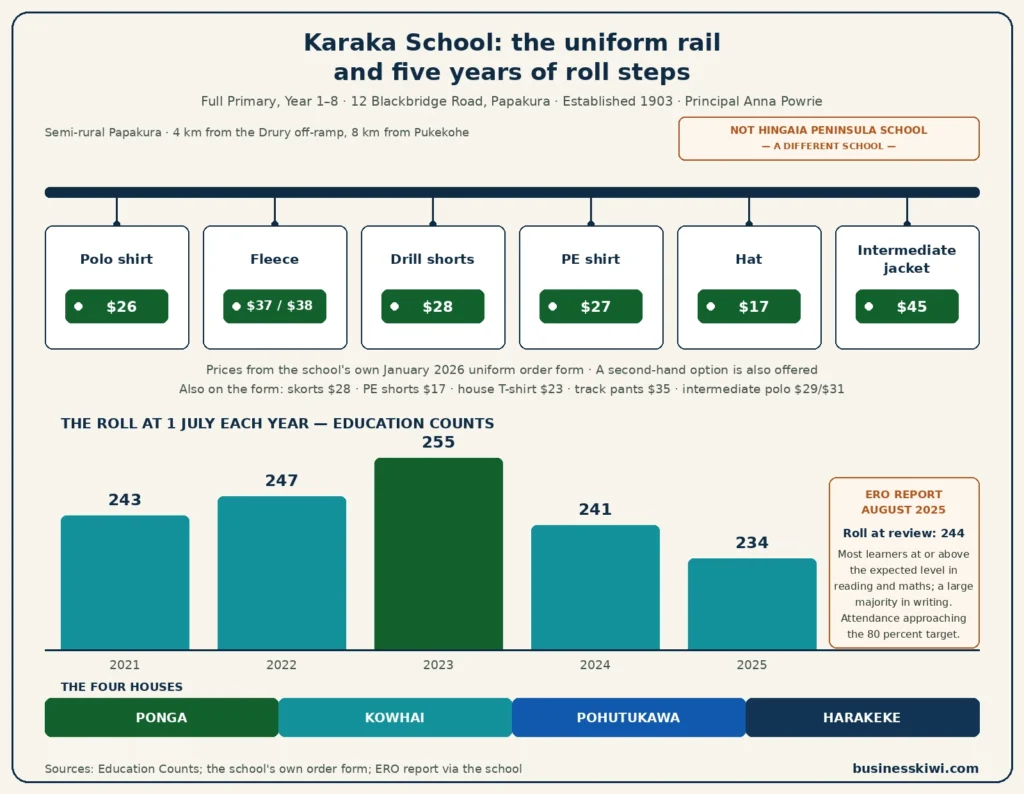
Karaka is a small school, and its roll has been steady for several years. The Ministry of Education’s 1 July roll returns, published on Education Counts, put the total roll at 243 in 2021, 247 in 2022, 255 in 2023, 241 in 2024 and 234 in 2025. The school’s own annual report tells a similar story from its February counts, recording February rolls of 236 in 2021, 232 in 2022, 240 in 2023 and 237 in 2024. When ERO reviewed the school in August 2025, it recorded a total roll of 244. The small differences are a matter of timing: each count is a snapshot taken on a different date.
The 1 July 2025 return shows the makeup of the roll. Of the 234 students, 174 identified as European/Pākehā, 40 as Asian, 37 as Māori, 23 as Pacific and 6 as MELAA (Middle Eastern, Latin American and African). Ethnicity in these returns is multiple response, meaning a student who identifies with more than one ethnic group is counted in each, so the group figures add to more than the total roll. The gender split was 119 girls and 115 boys, and the school had no international students. ERO’s summary matches this picture in broad terms, noting that most students identify as Pākehā/New Zealand European and 16 percent identify as Māori.
For families comparing schools, the practical meaning of these numbers is that Karaka is a genuinely small full primary, where children spend up to eight years in the same community, and whole-school events such as house days and community picnics are built into the year.
Year levels, the school day and term dates
Education Counts classifies Karaka as a full primary school covering Year 1 to Year 8. The school itself describes its range as Year 0 to 8, which reflects the way new entrants are counted in their first year: children who turn five during the year begin as Year 0 or Year 1 depending on when they start. Either way, a child can complete their whole primary schooling at Karaka, from their fifth birthday through to the end of Year 8, before moving on to secondary school.
One detail worth knowing is that the Ministry records Karaka as not operating cohort entry. At schools with cohort entry, new entrants start in groups at set points in the term. At Karaka, entry is continuous, so a child can start on or shortly after their fifth birthday rather than waiting for the next cohort date, and the school’s annual planning includes a transition to school programme for incoming five year olds, with parent sessions and school visits.
The school publishes its term dates on its website a year or more ahead. Its published dates for 2027 are:
The same page notes the public holidays that fall inside those terms, including Waitangi Day observed on Monday 8 February, Good Friday on 26 March with the school also closed on Easter Tuesday 30 March, King’s Birthday on Monday 7 June, Matariki on Friday 25 June and Labour Day on Monday 25 October, with a teacher only day in Term 1 still to be confirmed. The school’s current published pages do not list its daily bell times, so families who need the exact start and finish times for the school day should confirm them with the school office, as times can change from year to year.
Enrolment and the enrolment zone
Enrolment at Karaka School is governed by an enrolment scheme, as the school states on its enrolment page. That has two practical consequences. First, children who live inside the school’s home zone have a right to enrol. Second, the school can only take children from outside the zone when it has places available, and those places are allocated each year through a set process with fixed deadlines and, where applications exceed places, a ballot.
A word of caution about the zone itself: the school’s enrolment page says that details of the school zone are available from the school office and on the school website, but the pages published by the school and the Ministry that were read for this article do not set out the written boundary description of the home zone. Zone boundaries are legal descriptions tied to named roads and property lines, and being one street outside the line changes an application from a right to a ballot entry. Families should confirm whether their address is in zone directly with the school office, or through the Ministry of Education’s school directory, before relying on it.
For in-zone families, the process is straightforward. The school takes enrolments through an online enrolment form, submitted with the documentation the school requires, and it welcomes school visits from in-zone families before enrolment. Parents can arrange a visit by phoning the office on 09 294 8166 or emailing the school.
Out-of-zone enrolment works on an annual cycle. Each year the board decides how many places are likely to be available the following year for students who live outside the home zone, and publishes the number, the application process and the closing date in the newsletter and on the website. For 2027 entry, the school published that out-of-zone applications closed on Tuesday 14 October 2026, with a ballot date of Wednesday 21 October 2026. The school said it was accepting applications from families in priority categories two to five, with a limited number of places for other applicants, who fall into the sixth priority, decided by ballot.
The places on offer for 2027 also show how tight out-of-zone entry can be at a small school. The school listed a limited number of spaces at Year 1, Year 3 and Year 4, and no places at all at Year 2, Year 5 or Year 6. Year 0 places were to be reviewed in March 2027, which would determine whether a second ballot was held for the rest of that year, for children born on or after 1 May 2022 whose birthday falls before the end of the 2027 school year. Places in Year 7 and Year 8 are reviewed each term, and the school invites parents to contact it about intermediate-level enrolment.
Where there are more applicants than places, the school’s published policy follows the standard national order of priority. First priority goes to students accepted into an approved special programme, which the school notes is not applicable at Karaka. Second priority goes to siblings of current students, third to siblings of former students, fourth to children of former students, fifth to children of board employees or board members, and sixth to all other applicants. If applications within the second, third, fourth or fifth priority groups exceed the places available, selection inside that group is by ballot, and applicants claiming sibling-based priority have to provide proof of the relationship.
Uniform and what it costs
Karaka School has a uniform, and it is sold through the school’s own uniform shop, which is run through the PTA. The school’s January 2026 uniform order form lists the range and prices, all in New Zealand dollars:
Most sizes run from 4 to 14, and selected garments are also available in small men’s sizes. The intermediate range reflects the school’s full primary structure: Year 7 and 8 students wear a distinct polo and jacket rather than the junior uniform. The school also has four houses, Ponga, Kowhai, Pohutukawa and Harakeke, and the house T-shirts are sold through the same order form for house days and events. Second-hand uniforms are also available through the shop, which the order form lists as an option for families wanting to keep costs down.
Ordering is deliberately low-tech. Families fill in the order form and email it to the uniform shop, orders are filled once payment has been received, and the school advises when the order is ready for collection. Payment can be made at the office, by direct credit to the school’s PTA account, or through Kindo, the school’s online payment system, and no order is released before payment. Prices do change, so treat the figures above as the school’s published January 2026 prices and check the current order form on the school website before budgeting exactly.
On donations, the position is easy to state and important not to overstate. The Ministry of Education records Karaka School as a school where donations may be requested. Neither the school’s enrolment and uniform material nor its other published pages read for this article state a current donation amount, so this profile does not quote one. Families who want to know what donation, if any, the school currently requests should ask the office, which can also explain what the donation covers and what payment arrangements are available.
Teaching, programmes and school culture
The school’s own framing starts with its whakataukī and values. Alongside “Ka whangaia, ka tupu, ka puawai”, the school names five values: Akoranga (learning), Hiranga (excellence), Urutau (adaptability), Whakaute (respect) and Poipoi (nurture). ERO found those values well embedded and consistently upheld and celebrated across the school, which is a stronger statement than simply listing them on a wall.
In her message to families, the principal describes a community of learners working collaboratively, with a holistic approach to education, engaging classrooms and visible learning pathways that help students identify their strengths and next steps. She points to the ways parents are drawn into that learning: three-way conferences involving teacher, parent and student, an extensive outdoor education programme, sports, committees and the annual agricultural day. The school’s annual plan adds learner-led conferences, community picnics and house days, a weekly newsletter, and reporting to parents through the HERO app, along with whānau hui and fono held at least twice a year so Māori and Pasifika voices are part of decision making.
Two named programmes give a flavour of the school’s wider curriculum. Learning Enrichment Options, shortened to LEO, and the school’s Discovery programme sit alongside the core classroom programme, and the school’s annual reporting describes cultural groups in kapa haka, Pasifika and Asian performance being built and celebrated, with waiata and the local pepeha part of everyday learning. Teaching programmes, on both the school’s account and ERO’s, concentrate heavily on reading, writing and mathematics, with staff professional development in those subjects, while the local curriculum is built around connections to the school’s community and area.
The school’s stated aim, in its own annual reporting, is growing young leaders who are confident in their learning, adaptable, nurturing and respectful, and who consistently strive for excellence. Student leadership roles, house leadership and the senior Year 7 and 8 programme are the visible machinery behind that aim.
What ERO found in August 2025
The Education Review Office published its most recent report on Karaka School in August 2025, following earlier reports in 2019 and 2016. ERO reports are the closest thing New Zealand schools have to an independent inspection, and this one is broadly positive.
ERO’s headline judgement was that success and progress for learners is increasing, supported by high-quality teaching practice. On achievement in the foundational skills, ERO reported that most learners meet or exceed the expected curriculum level in reading, with results equitable for all groups of learners; that a large majority meet or exceed the expected level in writing, with results becoming more equitable; and that most learners meet or exceed the expected level in mathematics, also with results becoming more equitable. The school, ERO said, is making progress towards the Government’s reading, writing and mathematics targets and is likely to meet them by 2030.
Attendance is the report’s main watch point. ERO found the school approaching the Government target of 80 percent regular attendance, with regular attendance improving, and it identified implementing the school’s attendance plan, and monitoring whether the new initiatives are working, as a key priority. The other priorities ERO set were increasing equitable and excellent outcomes in reading, writing and mathematics for all groups, aligning the school’s mathematics and literacy programmes and assessment with changes to the New Zealand Curriculum, and building the leadership capacity of middle leaders.
Among the strengths ERO named were an inclusive environment in which students engage very well and show a strong sense of belonging and wellbeing, a curriculum that connects students with their community and local area, clear expectations from leaders for planning, teaching and assessment, a board and leadership team with a cohesive strategic direction, and effective partnerships with parents, who contribute time and skills to learning. ERO also recorded that the board attested to meeting regulatory and legislative requirements across board administration, curriculum, health, safety and welfare, and personnel management, and that the board is taking reasonable steps to ensure student health and safety. ERO noted that a new principal had been appointed since the previous review. The next public report is due within four years of the 2025 report.
Practical notes for parents
A few practical points pull the profile together. The school office is the first port of call for almost everything: enrolment questions, zone confirmation, visits and uniform queries all run through the office on 09 294 8166 or admin@karaka.school.nz. The postal address, for anything that needs to be sent, is 12 Blackbridge Road RD 1, Papakura 2580, and the street address is the same road without the RD designation.
Families enrolling a five year old should note the continuous entry position: there is no need to wait for a term-based cohort intake, and the school runs transition visits and parent sessions for incoming new entrants. Families outside the zone should work to the published annual timetable rather than applying speculatively mid-year, because out-of-zone places are set once a year by the board, with the exception of Year 7 and 8 places, which are reviewed termly. And families costing the uniform should use the current order form on the school website, as the prices in this article are the January 2026 list and the shop’s range changes over time.
Finally, a nearby-name warning that catches some families out. Karaka School is not the same school as Hingaia Peninsula School, the full primary school on Papaka Road in Hingaia, a few kilometres away. The two are separate schools with separate enrolment schemes, separate principals and separate Ministry listings, and living in one school’s zone says nothing about the other. Check which zone an address falls into before assuming.
Frequently asked questions
Is Karaka School zoned?
Yes. Enrolment is governed by an enrolment scheme, so children who live in the home zone can enrol as of right, and children outside the zone can only be taken when places are available. The written boundary description is held by the school, so confirm your address with the school office.
How do out-of-zone applications work at Karaka School?
The board sets the number of out-of-zone places each year and publishes the closing date and ballot date on the school website and in its newsletter. For 2027, applications closed on Tuesday 14 October 2026 with a ballot on Wednesday 21 October 2026. Applications are considered in the national priority order, starting with siblings of current students, and oversubscribed priority groups are decided by ballot.
What year levels does Karaka School cover?
It is a full primary school. The Ministry of Education lists it as Year 1 to Year 8, and the school describes its range as Year 0 to 8, reflecting new entrants who start in the year they turn five. Children can stay from age five through to the end of Year 8.
How many students go to Karaka School?
The Ministry of Education’s 1 July 2025 roll return recorded 234 students. ERO recorded a roll of 244 when it reviewed the school in August 2025. The roll has sat in the low to mid two hundreds for the past five years.
Who is the principal of Karaka School?
Anna Powrie. The Ministry of Education’s directory lists her as principal, and she signs the principal’s welcome message on the school’s own website in that role. ERO’s 2025 report notes that a new principal had been appointed since the previous review.
Does Karaka School have a uniform, and what does it cost?
Yes. Uniform is sold through the school’s uniform shop. On the school’s January 2026 order form, a short sleeve polo is $26, a fleece sweatshirt is $37 for children’s sizes, drill shorts and girls’ skorts are $28 each, the PE shirt is $27 with PE shorts at $17, hats are $17, and the intermediate jacket for Year 7 and 8 students is $45. Second-hand uniforms are also available.
Does Karaka School ask for a school donation?
The Ministry of Education records the school as one where donations may be requested. The school’s published pages read for this article do not state a current donation amount, so ask the school office for the current figure and what it covers.
What did ERO say about Karaka School?
In its August 2025 report, ERO judged that success and progress for learners is increasing, with most learners meeting or exceeding expected curriculum levels in reading and mathematics and a large majority in writing. It named attendance as the main area to keep improving, with the school approaching the Government’s 80 percent regular attendance target.
Sources
- Ministry of Education, Education Counts: Karaka School profile and contact details (institution 1325), educationcounts.govt.nz
- Ministry of Education, Education Counts: Karaka School student population trends, 1 July roll returns 2021 to 2025, educationcounts.govt.nz
- Education Review Office: Karaka School report, August 2025, read in full (also published on the school’s website)
- Karaka School: Enrolment page, including out-of-zone enrolments for 2027 and the order of priority, karaka.school.nz
- Karaka School: Uniform Shop Order Form, January 2026, karaka.school.nz
- Karaka School: Principal’s welcome message, karaka.school.nz
- Karaka School: Contact Us page, karaka.school.nz
- Karaka School: School Term Dates 2027, karaka.school.nz
- Karaka School: Annual Reporting Requirements 2023/2024 (annual plan and annual report), karaka.school.nz
This article is general information about Karaka School drawn from official sources published by the Ministry of Education, the Education Review Office and the school itself. School details such as rolls, staffing, uniform prices, term dates and enrolment places change over time, so confirm anything you are relying on with the school office or on the school’s website before making decisions for your family.