On-Road Costs in NZ: Rego, Road User Charges, WoF and What a Year Really Costs
The short answer
On-road costs are the official charges that make a vehicle legal to drive in New Zealand. They are registration, vehicle licensing (rego), road user charges (RUC) on some vehicles, warrant of fitness (WoF) inspections, and number plates.
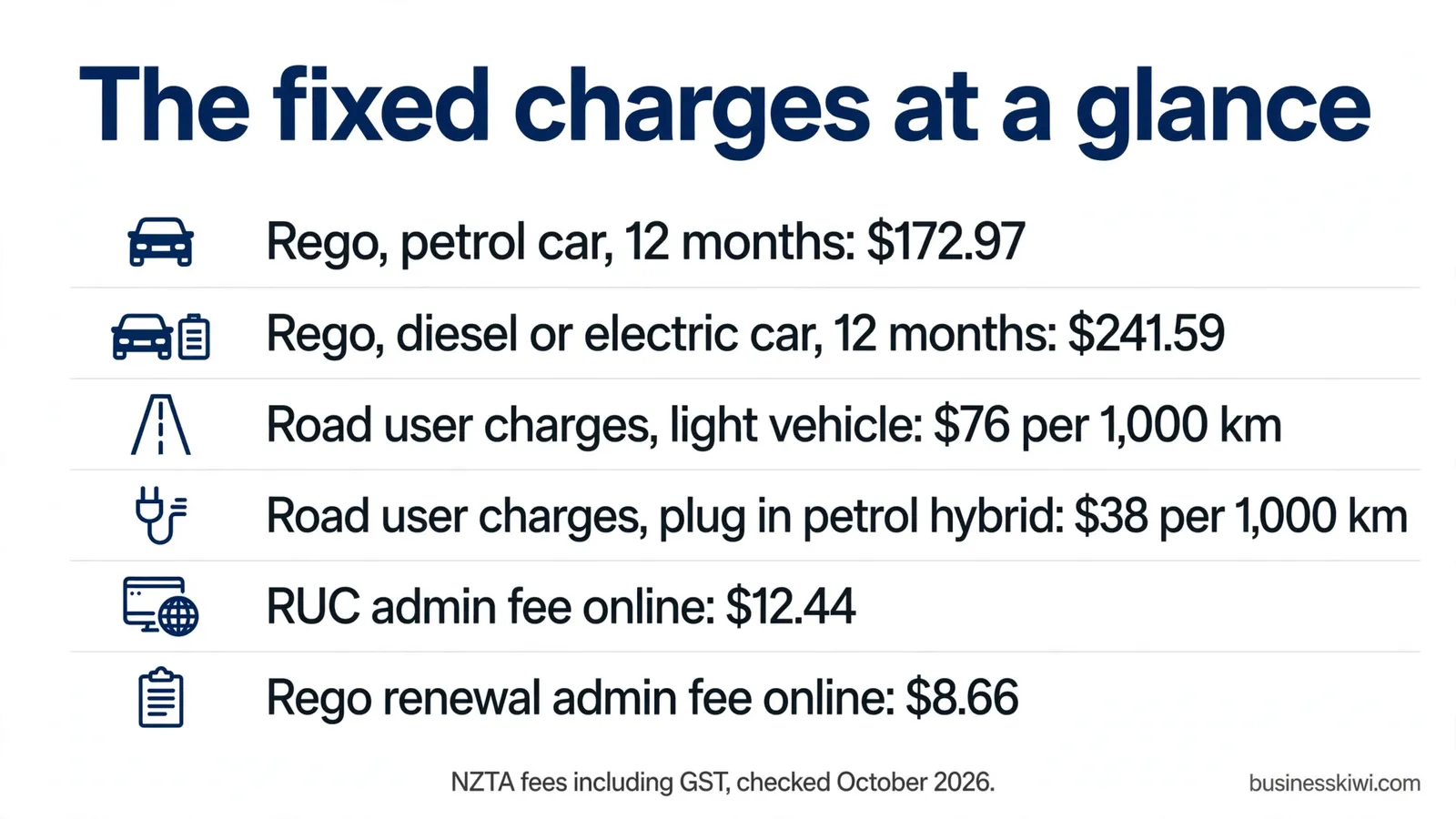
For a private petrol car, the only fixed government charge each year is rego: $172.97 for 12 months, including GST and the online administration fee. A diesel car or a battery electric car pays more: $241.59 for 12 months of rego, plus RUC at $76 per 1,000 kilometres. Drive 12,000 kilometres in a year and the government charges for a diesel or electric car come to $1,166.03 all up.
Fuel, insurance, tyres and servicing sit on top of these charges. They matter just as much to your budget, but no government agency sets them, and this guide covers them only in general terms.
What “on-road costs” means when you buy a car
When a dealer advertises a car at one price and then adds on-road costs, the phrase has a specific meaning. Consumer Protection, part of the Ministry of Business, Innovation and Employment, describes on-road costs as everything you need to legally get your car on the road. That means a current warrant of fitness, registration, a vehicle licence (rego), and road user charges if you buy a diesel vehicle.
The total price of a car may or may not include these costs. Consumer Protection advises buyers to ask the dealer whether the total price includes or excludes on-road costs. If the costs are included, ask for a breakdown of what is in them. The dealer should tell you if on-road costs are not included, so the extra amount should never come as a surprise after you have bought the car.
Some dealers advertise a driveaway price, which means on-road costs are already in the figure. Others advertise a lower price plus on-road costs. Two cars that look different in price can end up costing the same once the second car’s on-road costs are added, so compare the totals, not the headlines.
Buying privately is different. There is no dealer to prepare the car, so you and the seller need to agree who pays for a fresh WoF, any rego owing, and any RUC owing on a diesel or electric vehicle. Changing the registered person into your name (form MR13B) is free, whether you do it online or at an agent.
Rego: the yearly licence fee
Every vehicle used on the road must be licensed continuously. This is the charge most people call rego. You choose a period of 3, 6 or 12 months, and the fee covers a licence fee, an ACC levy and an administration fee. NZTA’s published tables include the online administration fee and GST, so the figures below are what you actually pay if you renew online.
For a private car, 12 months costs $172.97 for petrol and $241.59 for diesel or electric. The 3-month and 6-month options cost more per month: petrol is $49.75 for 3 months and $90.82 for 6 months, while diesel or electric is $66.90 for 3 months and $125.13 for 6 months. Buying 12 months at a time is the cheapest way to pay.
Hybrids follow their fuel. A petrol hybrid pays the petrol fee, and a diesel hybrid pays the diesel fee, according to NZTA. Other vehicles cost more or less than cars: a light trailer or caravan is $69.04 for 12 months, while a private motorcycle over 600cc is $590.20, because the ACC levy inside the fee is much higher for motorcycles.
Why does a diesel car cost $68.62 more a year to license than a petrol car? Part of the answer is the ACC levy. NZTA points out that petrol vehicles also pay an ACC levy in the price of petrol at the pump. Vehicles that do not buy petrol carry more of their levy inside the rego bill instead.
Two timing points are worth knowing. The annual licence fee part of rego went up on 1 January 2025 and again on 1 January 2026, the first increases to that part of the fee since 1994. And if a vehicle sits unused, you can put its licence on hold online for free rather than letting it lapse.
Rego is only summarised here. The full fee tables for every vehicle type, the exemptions, and what happens if a licence lapses are a topic of their own.

Road user charges: the per-kilometre charge
Everyone who uses New Zealand roads contributes to their upkeep, but they pay in two different ways. As NZTA puts it, most road users pay fuel tax when they buy petrol, through fuel excise duty. Drivers of diesel vehicles and light electric vehicles pay through road user charges instead.
RUC is a distance charge. You pre-pay in units of 1,000 kilometres, and the licence label sits in the windscreen beside the rego label. To buy a licence you need the vehicle’s plate number and its current odometer reading. RUC licences for light vehicles do not expire, so a licence simply runs out when you have driven the distance you paid for.
The current rates, GST included, are $76 per 1,000 kilometres for a light vehicle up to 3,500 kilograms, and $82 per 1,000 kilometres between 3,501 and 6,000 kilograms. Every purchase also carries an administration fee of $12.44 online or $13.71 at an agent, per licence.
Electric vehicles have paid RUC since 1 April 2024, when a long-running exemption ended. A battery electric car in the 1,001 to 3,500 kilogram range pays the full $76 rate. A plug-in petrol hybrid pays $38 per 1,000 kilometres, because it also pays some fuel excise in its petrol. A plug-in diesel hybrid pays the full $76. An ordinary petrol hybrid pays no RUC at all, because it pays excise at the pump. Very light electric vehicles under 1,000 kilograms, such as electric motorcycles and mopeds, are exempt. Heavy electric vehicles over 3,500 kilograms must start paying RUC from 1 July 2027.
The practical point is that RUC is a real running cost that petrol cars never see. At 12,000 kilometres a year, a diesel or electric car pays $912 in RUC alone, before any administration fees. When you compare a diesel car with a petrol car, that $912 belongs in the sums.
The WoF: a real cost, but not a government fee
A warrant of fitness is a regular safety check. NZTA sets the standards and appoints the inspecting organisations, and there are around 3,200 WoF agents in New Zealand. The check covers items such as tyres, brakes, lights, steering, suspension, safety belts and structural rust. It is not a pre-purchase inspection: it does not cover the engine, gearbox, clutch or general mechanical condition.
NZTA does not set or publish a WoF inspection fee. Each inspecting organisation charges its own price, so what you pay depends on where you go. Ask the price when you book, and remember that any repairs needed to pass are extra. Because no official fee exists, this guide does not quote one.
How often you need a WoF depends on the vehicle’s age. A brand new vehicle is issued a WoF for three years. Vehicles first registered anywhere in the world on or after 1 January 2000 need a WoF every 12 months. Vehicles first registered before 1 January 2000 need one every 6 months. Light vintage and veteran vehicles over 40 years old moved to annual inspections from 1 September 2025.
That pattern changes soon. From 1 November 2026, new light vehicles will not need their second WoF until they are four years old. Light vehicles aged 4 to 14 years move to a WoF every two years, in phases: vehicles registered on or after 1 November 2019 change from November 2026, and vehicles registered between November 2013 and October 2019 change from November 2027. Vehicles over 26 years old move from six-monthly to annual checks. The fine for driving with a WoF that expired more than two months ago also rises from $200 to $350.
Number plates and one-off fees
A vehicle’s plates are part of its first registration. NZTA’s registration totals include a number plate fee, along with the registration fee, licence fee, ACC levy and administration fee. Registering a private petrol car of 1301 to 2600cc with 12 months of licensing costs $325.74 in total, against $172.97 to renew the rego a year later.
Some vehicles attract extra one-off charges at first registration. NZTA lists a tyre stewardship fee of $38.24 for a passenger car, a synthetic greenhouse gas levy of $53.26 for a passenger car or van, a VIN data maintenance fee of $8.60 for vehicles new to New Zealand, and a clean car standard administration fee of $22.46 for most light vehicles first registered from 1 July 2025.
Plates later in a vehicle’s life are cheaper. A replacement pair of standard plates costs $29.11 including GST, under NZTA’s fee schedule. A replacement rego label costs $7.94 online or $14.05 at an agent. Personalised plates are a separate purchase on top of these fees.
Smaller administration charges round out the picture. Renewing rego costs an $8.66 administration fee online or $11.99 at an agent, and the cheaper online fee is the one already built into NZTA’s published rego tables. Changing the registered person is free. Cancelling a registration costs $10.02.
What a year on the road adds up to
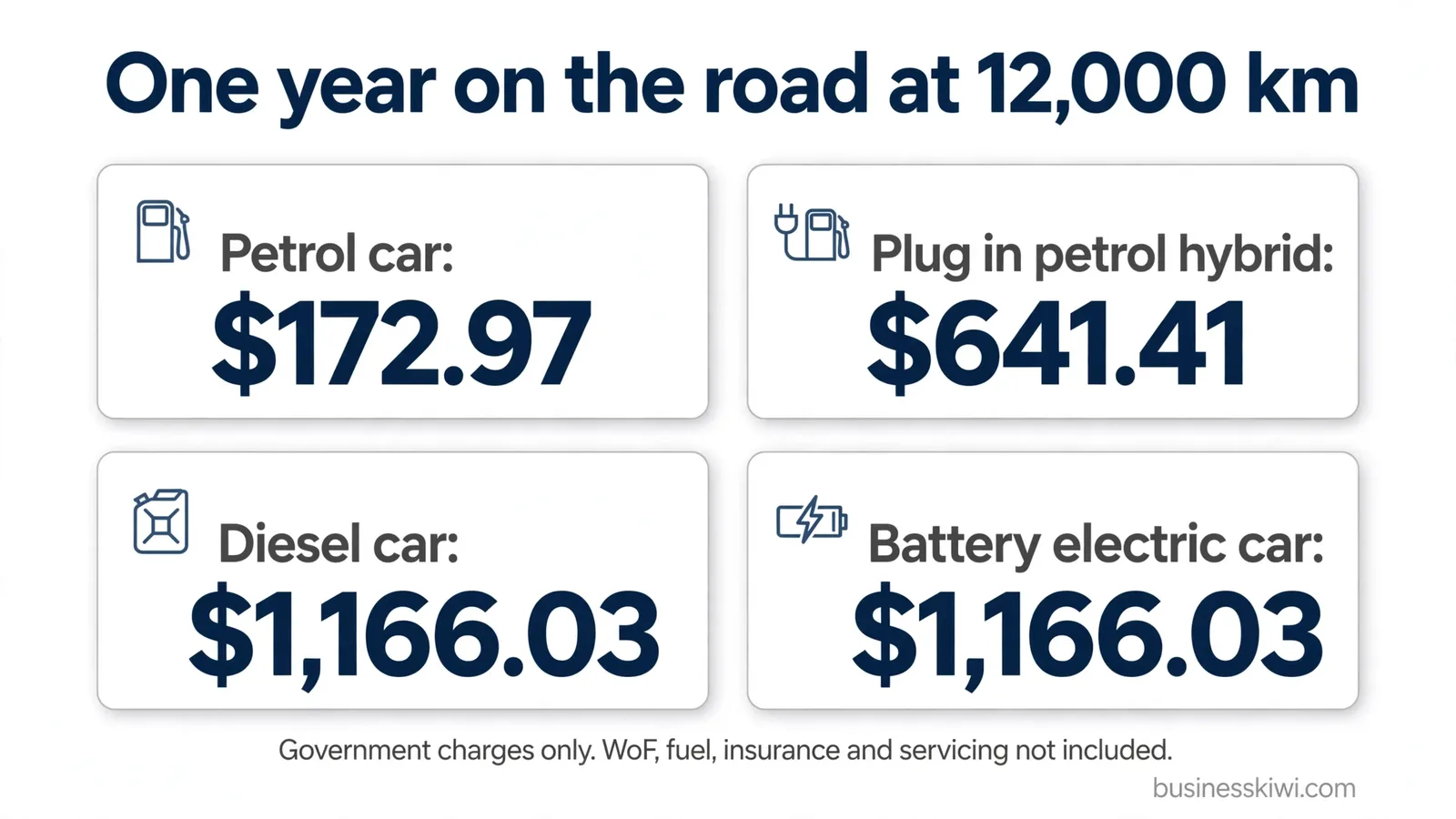
Here is the yearly picture for a private car that travels 12,000 kilometres, using only the NZTA figures above. The WoF is left out of the totals because its price is set by each inspecting organisation, and fuel, insurance and servicing are on top.
A petrol car pays rego of $172.97 and no RUC, so its government charges are $172.97 for the year.
A diesel car pays rego of $241.59, plus RUC of $912 (12 units of 1,000 kilometres at $76), plus one online administration fee of $12.44 if the year’s distance is bought in a single purchase. The total is $1,166.03. A battery electric car pays exactly the same, because it shares the diesel rego fee and the $76 RUC rate.
A plug-in petrol hybrid sits in between. It pays petrol rego of $172.97, plus RUC of $456 (12 units at $38), plus the $12.44 administration fee, for a total of $641.41.
Administration fees reward a little planning. RUC bought month by month in 1,000-kilometre units would attract the $12.44 fee twelve times. Bigger purchases mean fewer fees, although you are paying further ahead.
How and where to pay
Most of these charges can be paid online through NZTA’s website, and online is the cheaper channel. Renewing rego online carries an $8.66 administration fee against $11.99 at an agent, and buying RUC online costs $12.44 against $13.71 at an agent. NZTA agents can still handle every transaction in person if you prefer.
Keep the paperwork simple. For RUC you need the plate number and a current odometer reading. For rego renewals, the renewal notice or the plate number is enough. If a vehicle will be off the road for a while, put the licence on hold online for free instead of paying for months you will not use.

Watch-outs
Ask for the on-road costs breakdown. If a dealer’s price excludes on-road costs, get the included items and the amount in writing before you sign. Consumer Protection is clear that these costs should not come as a surprise after purchase.
Check the RUC on a used diesel or electric vehicle. NZTA receives an odometer reading every time a vehicle goes through a WoF inspection, and it matches those readings against RUC paid. If a previous owner has underpaid, the shortfall surfaces. Compare the distance on the RUC label with the odometer before you buy.
Do not run short rego terms by habit. Four 3-month renewals of a petrol car cost $199 over a year, against $172.97 for a single 12-month renewal. The short terms exist for cash flow and for vehicles about to be sold, not as the default.
Remember what a WoF does not check. A fresh WoF means the car met safety standards on the day. It says nothing about the engine, gearbox or how long the car will last, so it is not a substitute for a pre-purchase inspection.
Budget for insurance separately. Insurance is usually the largest on-road cost after fuel, and it is compulsory in practice if you have finance on the car, even though third party insurance is not legally required in New Zealand. Prices vary too much between drivers and vehicles for any official figure to exist, so get quotes for the actual car before you commit.
Related guides: our car registration guide carries the full rego fee tables for every vehicle type, and our car insurance guide covers the other big yearly cost of running a car. For more business guides, browse the Business & Industry section.
Frequently asked questions
What are on-road costs when buying a car?
On-road costs are everything needed to legally get the car on the road: a current warrant of fitness, registration, a vehicle licence (rego), and road user charges if the vehicle is diesel. Ask the dealer whether they are included in the price, and ask for a breakdown.
How much is rego for a car in New Zealand?
For a private car, 12 months costs $172.97 for petrol and $241.59 for diesel or electric, including GST and the online administration fee. Shorter 3-month and 6-month terms are available but cost more per month.
Do petrol cars pay road user charges?
No. Petrol drivers pay fuel excise duty in the price of petrol instead. Road user charges apply to diesel vehicles, electric vehicles and plug-in hybrids, and to vehicles over 3,500 kilograms.
How much RUC does a diesel car pay in a year?
The rate is $76 per 1,000 kilometres, plus an administration fee each time you buy. At 12,000 kilometres a year that is $912 in charges, plus $12.44 if you buy the whole distance online in one purchase.
How much does a WoF cost?
NZTA does not set the price. Each inspecting organisation charges its own fee, so ask when you book. Repairs needed to pass are extra, and there are around 3,200 WoF agents in New Zealand to choose from.
Why is rego more expensive for diesel and electric cars?
Part of the difference is the ACC levy inside the fee. Petrol vehicles also pay an ACC levy in the price of petrol at the pump, so vehicles that never buy petrol carry more of their levy inside the rego bill. The difference for a private car is $68.62 a year.
What changes on 1 November 2026?
WoF inspections become less frequent for many light vehicles. New vehicles will not need a second WoF until age four, vehicles aged 4 to 14 years move to two-yearly checks in phases, and vehicles over 26 years old move from six-monthly to annual checks.
The bottom line
On-road costs are predictable once you know which charges apply to your vehicle. A petrol car costs $172.97 a year in rego and nothing more in government charges. A diesel or electric car adds RUC that grows with every kilometre, reaching $1,166.03 a year at 12,000 kilometres. Add a WoF at whatever your local inspecting organisation charges, keep the licence on hold when the vehicle is off the road, and always get a dealer’s on-road costs in writing before you buy.
Sources
-
NZ Transport Agency Waka Kotahi, Licensing (rego) fees: http://nzta.govt.nz/vehicles/licensing-rego/vehicle-fees/licensing-fees
-
NZ Transport Agency Waka Kotahi, Registration fees: http://nzta.govt.nz/vehicles/licensing-rego/vehicle-fees/registration-fees
-
NZ Transport Agency Waka Kotahi, Administration fees: https://www.nzta.govt.nz/vehicles/licensing-rego/vehicle-fees/administration-fees
-
NZ Transport Agency Waka Kotahi, RUC rates and transaction fees: https://nzta.govt.nz/vehicles/road-user-charges/ruc-rates-and-transaction-fees
-
NZ Transport Agency Waka Kotahi, RUC for electric vehicles: https://nzta.govt.nz/vehicles/road-user-charges/ruc-for-electric-vehicles
-
NZ Transport Agency Waka Kotahi, Electric vehicles and plug-in hybrids to start paying road user charges from 1 April 2024 (media release): https://nzta.govt.nz/media-releases/electric-vehicles-and-plug-in-hybrids-to-start-paying-road-user-charges-from-1-april-2024
-
NZ Transport Agency Waka Kotahi, Warrant of fitness: https://nzta.govt.nz/vehicles/warrants-and-certificates/warrant-of-fitness
-
NZ Transport Agency Waka Kotahi, Vehicle Inspection Portal, Changes to light vehicle inspections from 1 November 2026: https://vehicleinspection.nzta.govt.nz/news/changes-to-light-vehicle-inspections-from-1-november-2026
-
NZ Transport Agency Waka Kotahi, Changes to regulatory fees and charges (from 1 October 2023): https://www.nzta.govt.nz/assets/regulatory/funding-and-fees/Changes-to-fees-and-charges-downloadable-October-2023.pdf
-
Consumer Protection (MBIE), Car sales contracts and warranties: https://www.consumerprotection.govt.nz/help-product-service/cars/paying-registering-insuring-car/car-sales-contracts-warranties
This article is general information about on-road costs for vehicles in New Zealand. It is not financial or legal advice. Government fees and charges change from time to time, so confirm the current figures on the NZTA website before you buy, renew or pay.