Sliding Gates in NZ: How They Work, What They Cost and How to Buy One That Fits
The short answer
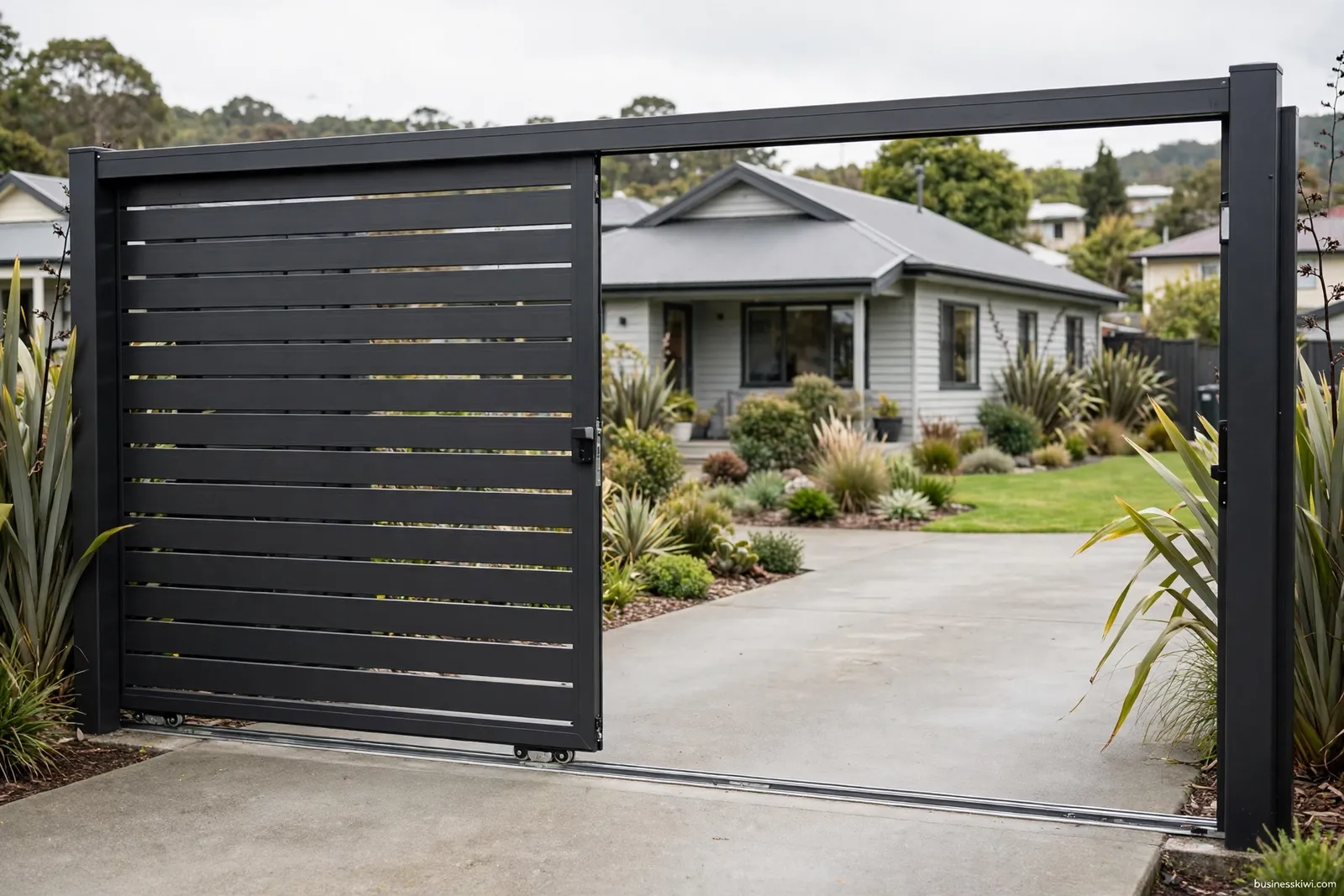
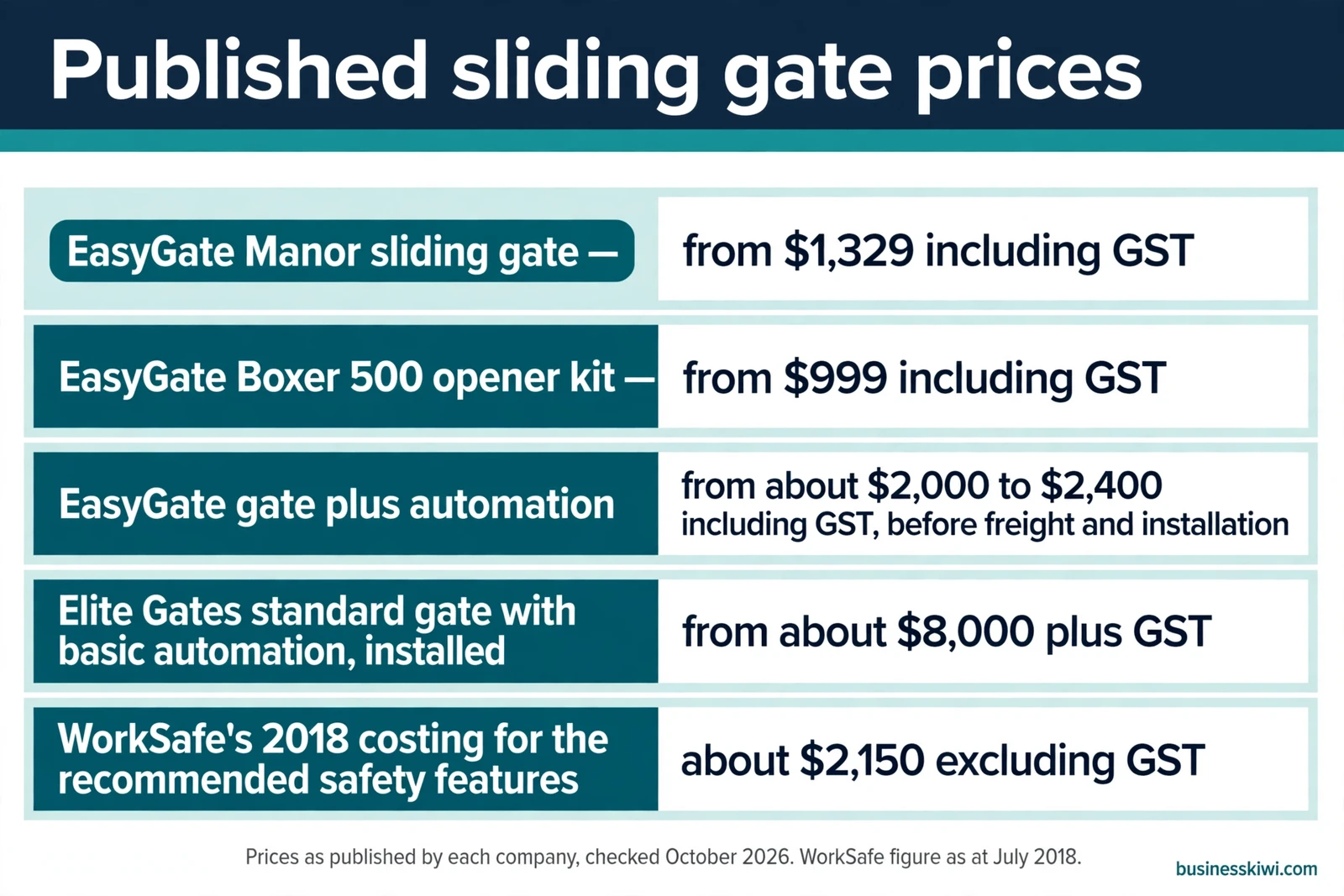
A sliding gate, sometimes sold as a rolling gate, closes a driveway by moving sideways along the fence line instead of swinging in an arc. It runs in one of two ways. A track gate carries its weight on wheels that roll along a steel track fixed across the driveway. A cantilever gate hangs above the ground on carriage wheels and needs no track at all. Aluminium is the material most NZ makers lead with, because it does not rust and keeps the gate light. EasyGate, a Tauranga manufacturer, publishes sliding gates from $1,329 including GST and a sliding gate opener kit from $999 including GST. An installed standard sliding gate with basic automation starts at around $8,000 plus GST at Elite Gates in Auckland. Many makers, including Warner, quote each job instead of publishing prices.
How a sliding gate works
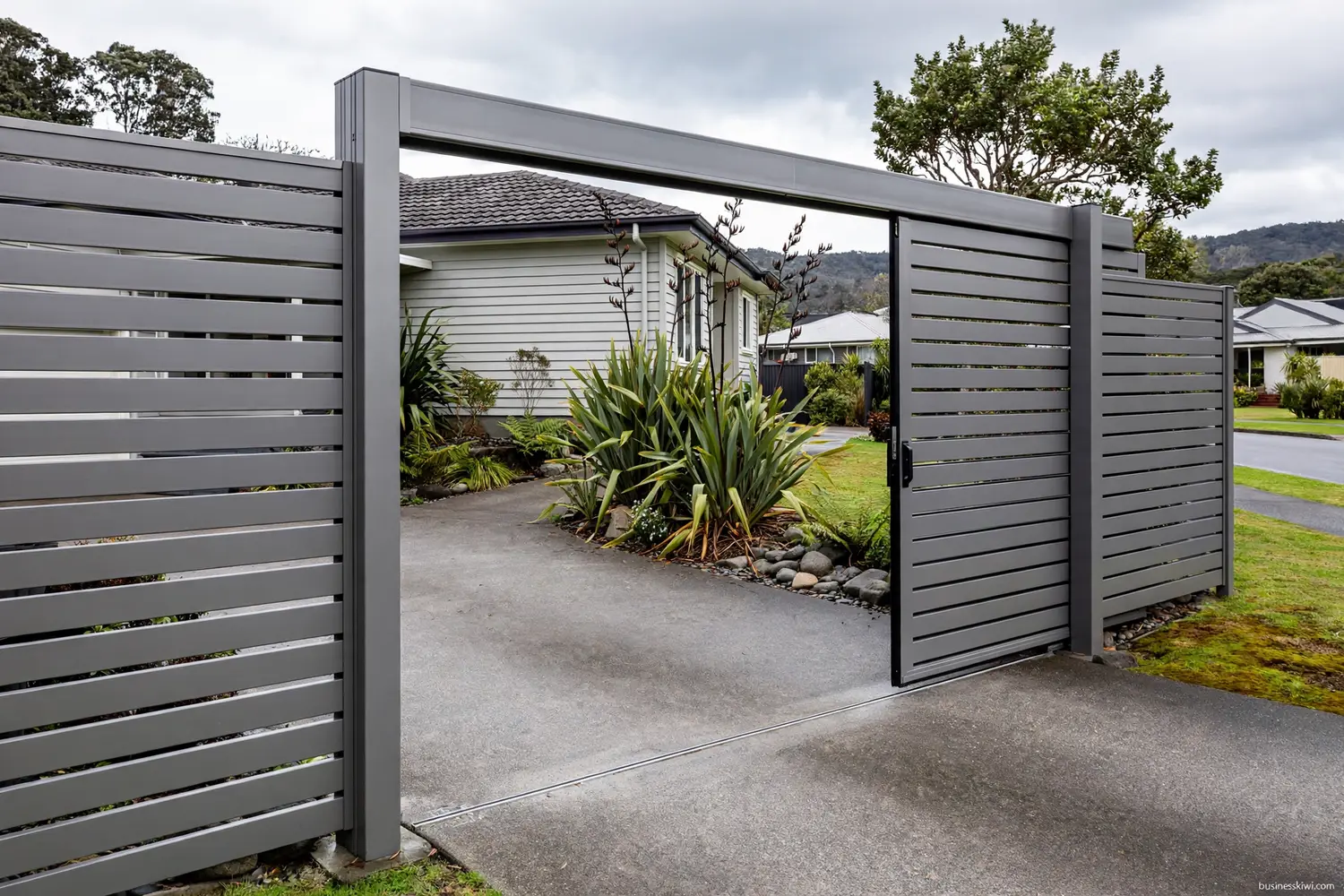
Every sliding gate does the same basic job. A single rigid leaf sits across the driveway opening, held upright by guide rollers at the posts, and travels sideways into clear space beside the boundary when it opens. The difference between the two systems is how the leaf carries its own weight while it moves.
Track gates: wheels on a ground track
On a track gate, wheels fitted into the bottom of the gate run on a wheel track laid across the driveway. The track needs a level, solid foundation, and it has to run the full travel of the gate. EasyGate supplies its Manor sliding gate with the wheels inserted, enough wheel track for double the length of the gate, concrete anchor pins to fix the track, a top guide bracket with two rollers, an end catcher and a gate stopper. The gate is built around a heavy bottom rail, 100mm by 50mm on the Manor, because that rail carries the wheels and suits automatic openers. Track gates are the standard, widely sold system. Their weakness is the track itself: dirt, leaves, mud and snow building up in it cause problems, which is the point EasyGate sells its cantilever design on.
Cantilever gates: hung, with a counterbalance tail
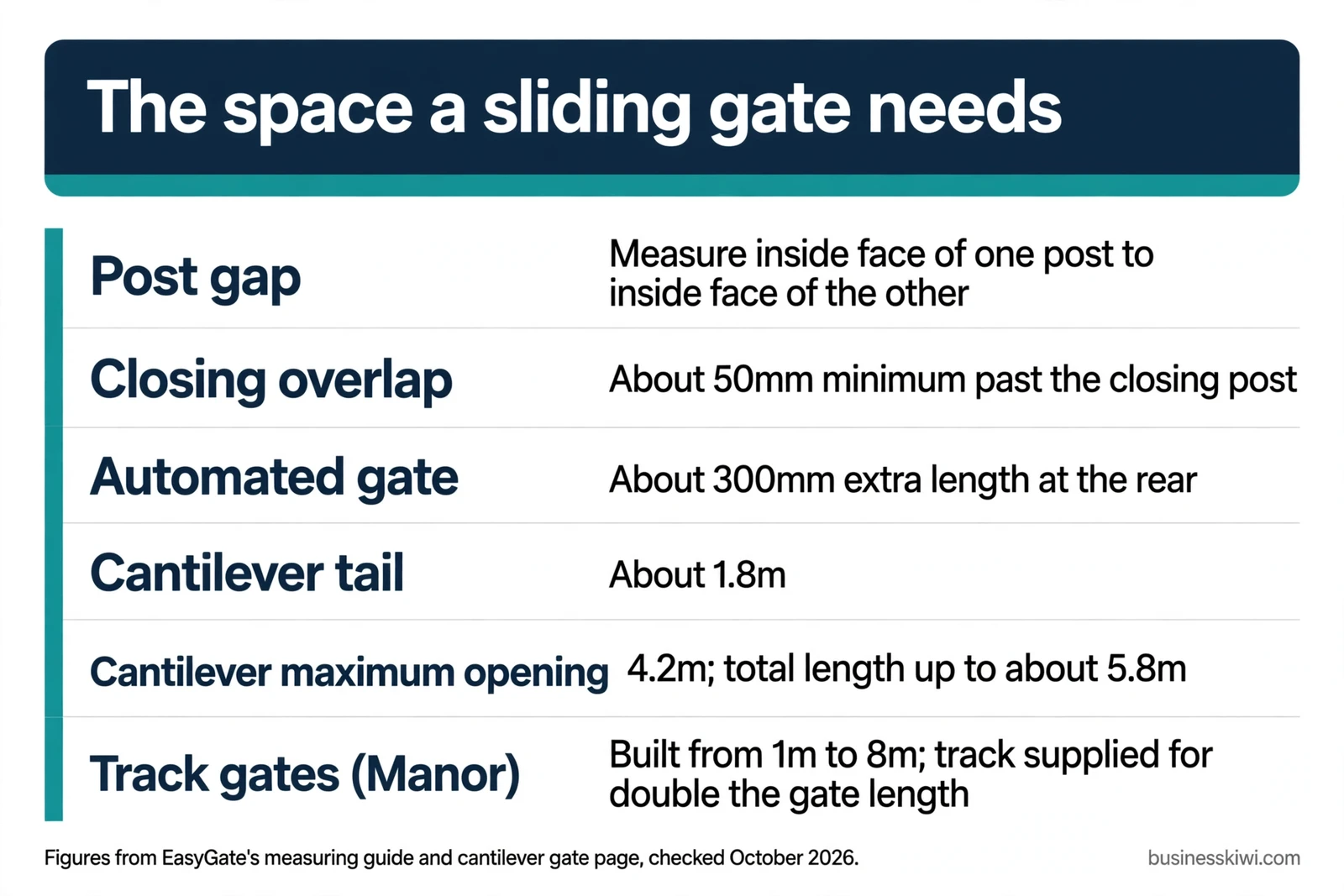
A cantilever gate never touches the ground. It is suspended above the driveway and works on a counterbalance principle. A tail section extends past the gate post, and the gate hangs from carriage wheels mounted on a concrete footing beside the opening. Because there is no track, a cantilever gate suits uneven, sloped or unsealed surfaces such as gravel, where a ground track would be hard to lay and keep clean. The trade-off is length and weight discipline. On EasyGate’s standard cantilever system, openings run up to 4.2 metres, and the diagonal counterbalance tail adds about 1.8 metres, giving a maximum total gate length of about 5.8 metres. Solid, heavy styles are restricted on cantilever builds: EasyGate does not offer its tongue and groove, slat or louvre styles as cantilever gates, because the infill weight and the wind load on a solid face work against the overhang.
| Feature | Track sliding gate | Cantilever sliding gate |
|---|---|---|
| How it moves | Wheels in the gate run on a track fixed across the driveway | Suspended above the ground on carriage wheels; no ground track |
| Ground it suits | Level surface with foundations for the track | Uneven, sloped or unsealed ground, including gravel |
| Extra length needed | Track runs to double the gate length; the gate needs its full length of clear side space | A counterbalance tail adds length, about 1.8m on EasyGate’s standard system |
| Size range (EasyGate) | Manor gates built from 1m to 8m long | Standard openings up to 4.2m; total length up to about 5.8m |
| Known weakness | Dirt, leaves and mud can build up in the track | Solid, heavy infill styles are restricted by weight and wind load |
Materials: aluminium, steel and the timber look
Aluminium is the default material in the NZ market. EasyGate builds only aluminium gates and points to two practical reasons: aluminium will not rust, and it is lighter than steel while staying robust, which matters every time the gate moves. Elite Gates recommends aluminium and steel for minimum upkeep, noting that both are more robust than timber because weather and temperature do not affect them the same way. Its aluminium gates are powder coated, so there is no painting or staining, and a hose off is all the cleaning they need.
Steel is the second metal option. Elite Gates sells manual gates in powder coated aluminium or galvanised steel, and galvanised steel turns up where a heavier, more industrial gate is wanted. A steel gate weighs more, which flows through to wheels, footings and motor size.
Real timber sliding gates are uncommon in the ranges these makers publish. What you can buy instead is the timber look in aluminium. Warner’s Heritage range is the clear example: traditional timber style gates, but made in aluminium, fully powder coated, so they do not warp the way a timber gate can. For a solid privacy face rather than pickets, the common styles are slats, louvres and tongue and groove patterns, all in powder coated aluminium.
Sizing and the space a sliding gate needs
A sliding gate lives or dies on the space beside the driveway. The gate has to park somewhere when it is open, and it parks along the fence line. EasyGate’s measuring guide is blunt about it: there must be enough clear side space for the complete gate, including its tail, to move fully clear of the opening. Fences, walls, buildings, downpipes and landscaping all count as obstructions. If the side space is not there, a standard sliding gate will not work, and makers fall back on telescopic or cantilever layouts for tight sites.
The key measurement is the Post Gap, the distance from the inside face of one gate post to the inside face of the other. The maker calculates the finished gate length from that figure, adding the allowances the system needs. At the closing end, EasyGate allows approximately 50mm minimum overlap past the inside face of the closing post, so the closed gate seals against the post. An automated gate needs approximately 300mm of additional length at the rear, for the guide roller and automation arrangement. A manual gate gets a tail at the rear instead, which keeps the top guide roller inside the gate post and the gate upright and aligned.
You also need to state the opening direction, judged standing on the street side looking towards your property: does the gate slide left to right to open, or right to left? That decides which end carries the extra length and where the guide rollers and motor sit. Height is measured from the driveway or finished ground level to where you want the top of the gate to finish. EasyGate gives 1.5 metres or 1.8 metres as typical finished heights, and Elite Gates says the same two heights are the most common it sees. The maker then allows for wheels and track in the manufactured height. If the ground falls across the entrance, the maker may build a raked sliding gate whose frame follows the slope.
Manual or automated
A manual sliding gate is the simple version: a leaf on wheels, a latch or lock, and your own effort. Elite Gates describes its manual gates as a cost-effective way to secure a property. Manual suits a gate you open a few times a day and can reach easily. Even so, most driveway sliding gates are sold automation ready or automated from the start.
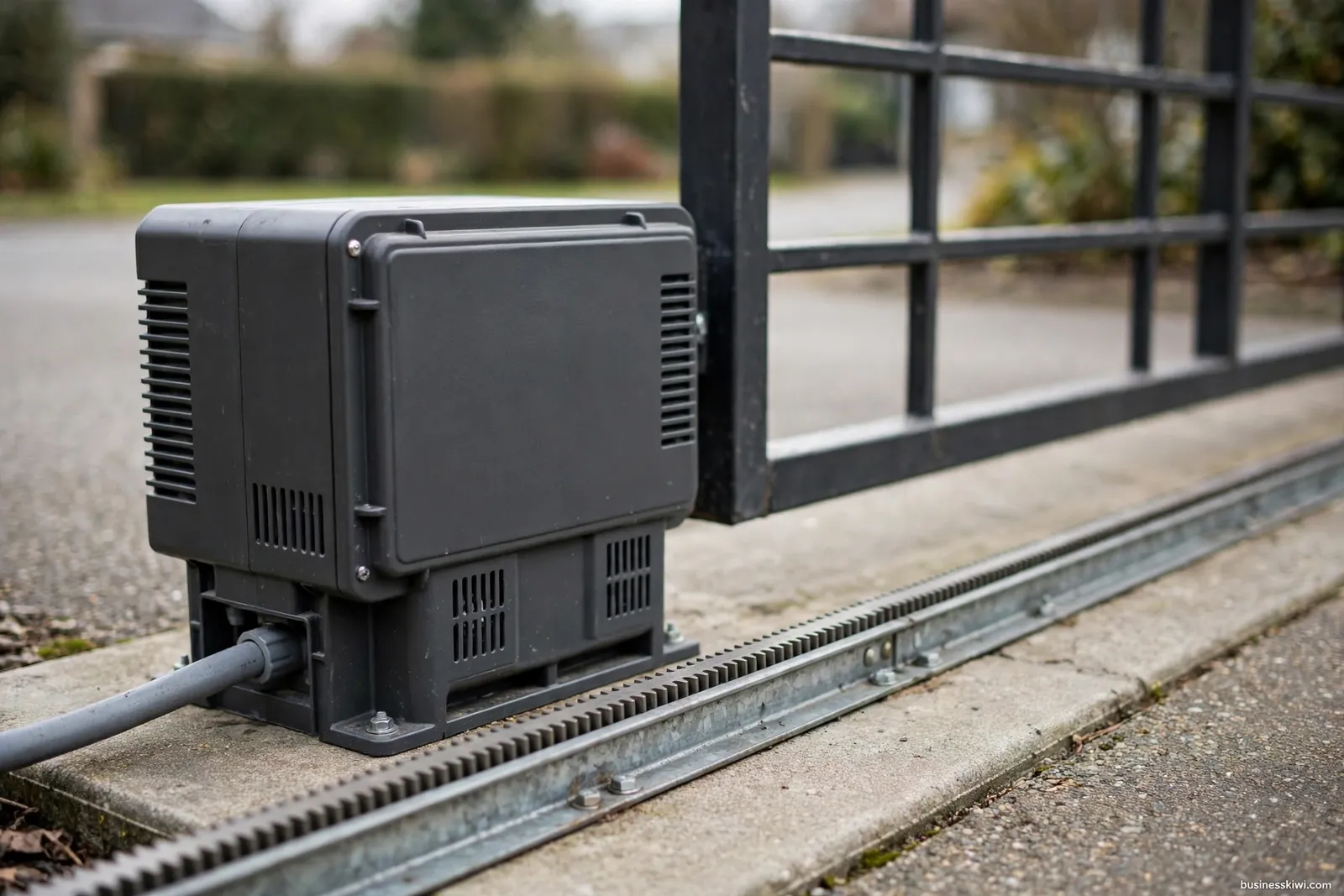
Automation adds a motor, a control board and a way of telling the gate to move, and the motor drives the leaf along its track or rail. EasyGate’s systems generally use extra-low voltage 24 volt motors. Its Plug-n-Go transformer, included with its automation kits, converts 230 to 240 volt mains power down to a 24 volt supply, and it can sit at a power point at the house or garage, with a low voltage cable run out to the gate. That avoids running mains power the full length of the drive. Elite Gates uses the same approach, a step down transformer at an outdoor plug with low voltage cable to the gate. Warner uses Italian DEA motors with metal gearboxes and digital controllers, and its REV sliding motor is aimed at gates that open and close frequently and at heavier gates. Solar is the third power route. Progates offers solar powered gates for properties where the gate sits a long way from the nearest mains, and Elite Gates offers automation powered by solar or hardwired into the home system.
Control options are the visible part. Remotes work like a garage door remote: one press starts the gate opening, and systems can often be programmed to close automatically. EasyGate also supplies wireless keypads and vehicle detection. Elite Gates lists keypads, intercoms, phone apps and remotes, with two keychain remotes in its standard package. Warner offers remotes, keypad access, Bluetooth phone control and video intercoms. Warner also makes a practical point about timing: automation can generally be added later, but tell the maker when you order the gate, because it may need conduit in any concrete areas before they are poured. EasyGate adds a condition of its own: an existing gate can be automated if it is in good condition and moves freely by hand, because a motor should never be used to overcome problems with the gate itself.
Safety on automated gates
An automated gate is a heavy moving machine in a space people walk through, and NZ has an official warning on exactly this point. WorkSafe New Zealand issued a safety alert in July 2018 after a child was trapped and injured by an automated gate at a public park. The child was pulled into the space where the opening gate retracts, in under 45 seconds. That gate had a photo-electric beam, but the beam only stopped the gate while it was closing, not while it was opening. WorkSafe’s lesson: automated gates without safety devices are hazardous opening and closing.
WorkSafe recommends considering warning signage telling people to keep clear when the gate activates, a buzzer, beeper or flashing beacon to warn that movement is coming, a pressure sensor on the gate’s leading edge, and torque limiting on the motor or gearbox, plus a momentary automatic reversal so anything trapped is released. It also recommends an accessible, clearly labelled emergency stop button programmed with momentary reverse, and an accessible, clearly labelled emergency gate release. At the time of the alert, WorkSafe put the combined cost of those features at approximately $2,150 excluding GST. The alert is written for businesses that install or control automated gates, and whether all the features are reasonably practicable depends on the gate, but the list is the best NZ checklist to hold a home quote against too.
At maker level, the device you will be quoted most often is the safety beam, also called a photocell beam. EasyGate recommends safety beams on all automated driveway gates. The beam creates an invisible line across the gate opening, and if a vehicle, person or other obstruction breaks it, the control system detects the obstruction and responds as programmed. EasyGate says beams matter most with auto-close on, with remote activation, where vehicles may stop in a closing gate’s path, and where children may be near the gate. Treat beams as part of the system, not an upgrade to haggle away.
Prices: what NZ companies publish
Published prices are the exception in this market. EasyGate publishes the most. Its Manor sliding gate starts from $1,329 including GST, and its sliding gates are built to order from 1 metre to 8 metres long, so the price rises with size and style. The gate price includes the standard sliding hardware listed above. Its Boxer 500 automatic sliding gate opener kit starts from $999 including GST. Bought together, EasyGate says a gate and automation combination can start from approximately $2,000 to $2,400 including GST, before freight, installation and extra accessories. Sloping gates made to measure cost about 15 percent extra.
Elite Gates publishes one installed figure: a standard sliding gate with its basic automation package starts at around $8,000 plus GST. That is a supplied and installed Auckland price, not directly comparable to a factory-direct gate price, but it shows the installed end of the market once posts, concrete, wiring and labour are in.
Warner does not publish gate or automation prices on the pages that describe them. It works by measure and quote through its branches. Progates likewise describes its gates, automation and solar options without the pages read for this guide showing gate prices. The extras that move a quote are size, solid versus open styles, custom colours, heavier duty motors and access control gear.
Consents and boundary rules
MBIE’s guidance on building work that does not need a building consent covers fences under exemption 21 of Schedule 1 of the Building Act 2004. Building work in connection with a fence or hoarding not exceeding 2.5 metres in height above the supporting ground does not need a building consent. Pool fences are carved out and always need consent. The guidance does not name driveway gates separately, so this article does not claim a gate-specific exemption. Two cautions from the same guidance apply. Boundary fences still have to comply with the Fencing Act 1978. And district plans often require a resource consent for fences over a certain height, usually over two metres, whatever the Building Act says. Check your district plan, or ask the council, before building to a height your plan restricts.
Buying and installation checks
Start with the site, not the catalogue. Measure the Post Gap accurately, settle the opening direction from the street side, and pace out the side space the open gate will occupy, including its tail. Photograph the entrance. Makers ask for those measurements and photos before quoting.
Ask what the price includes. On a track gate, check the wheels, track, guide bracket, end catcher and stopper are all in the price, as they are with EasyGate’s Manor. On a cantilever quote, check the carriage system, mounting plates and guide brackets are included, and confirm your style is one the maker will build as a cantilever. Confirm the gate is automation ready even if you are not automating today, and ask about conduit through any concrete yet to be poured.
On automation, ask which safety devices are in the package, and price the quote against WorkSafe’s list: safety beams at minimum, plus a leading edge pressure sensor, torque limiting with reversal, warning devices and a labelled emergency stop and release where they fit your gate. Ask who does the mains electrical work. EasyGate and Elite Gates design around low voltage at the gate, but any 230 to 240 volt work belongs to an appropriately qualified person. Finally, ask about the manual release. Every automated gate needs a way to open it in a power cut, and you should be shown how it works before the installer leaves.
Related guides: our fence posts NZ guide covers the posts a gate hangs from, our fence pailing guide covers the fence line itself, and our footpath signs guide covers the frontage. More home and property guides are in the Business and Industry section.
Frequently asked questions
What is the difference between a sliding gate and a rolling gate?
Nothing in practice. Rolling gate is another name for the same product, a gate that travels sideways on wheels or rollers instead of swinging. NZ makers mostly sell them as sliding gates.
How much space does a sliding gate need beside the driveway?
Enough clear space for the complete gate, including its tail, to move fully clear of the opening, as EasyGate’s measuring guide puts it. An automated gate needs about 300mm of extra length at the rear, and a cantilever gate carries a counterbalance tail of about 1.8 metres on EasyGate’s standard system.
Can a sliding gate work on a sloping or gravel driveway?
Yes, with the right type. A cantilever gate is the maker’s answer to uneven, sloped or unsealed surfaces, because it hangs above the ground and needs no track. For ground that falls across the entrance, makers such as EasyGate build raked sliding gates that follow the slope.
How much does a sliding gate cost in NZ?
Published figures give the shape of it. EasyGate’s Manor sliding gate starts from $1,329 including GST, with a sliding opener kit from $999 including GST. Elite Gates starts a standard sliding gate with basic automation, installed, at around $8,000 plus GST. Many makers quote per job instead.
Can I add automation to my existing sliding gate later?
Usually yes, if the gate is sound. EasyGate says an existing sliding gate can be automated provided it is in good condition and moves freely by hand, because a motor should not be used to overcome faults in the gate. Warner agrees automation can usually be added later.
Do I need safety beams on an automated sliding gate?
EasyGate recommends safety beams on all automated driveway gates, especially with auto-close on. WorkSafe’s NZ safety alert lists more: a leading edge pressure sensor, torque limiting with automatic reversal, warning devices and a labelled emergency stop and release.
Do I need a building consent for a driveway sliding gate?
MBIE’s guidance exempts building work on fences up to 2.5 metres high from needing a building consent, but it does not name driveway gates separately. District plans can also require a resource consent for fences over a certain height, usually over two metres. Check your district plan or ask your council.
Bottom line
A sliding gate suits driveways that are short, sloped or short on swinging room, provided the fence line has space for the gate to park. Choose track for a standard, level site and cantilever for rough, sloped or gravel ground. Aluminium gives the lightest, lowest upkeep leaf, and the timber look is available in aluminium if you want it. Budget from published figures where you can, insist on the safety devices WorkSafe lists, and measure the Post Gap and side space before you talk to anyone.
Sources
- EasyGate, Support and Frequently Asked Questions (measuring, pricing, automation, safety beams): https://www.easygate.co.nz/support-faq
- EasyGate, Cantilever Sliding Gate: https://www.easygate.co.nz/product/cantilever-sliding-gate
- EasyGate, Manor Style (Flat Top) Sliding Gate: https://www.easygate.co.nz/product/manor-style-flat-top-sliding-gate
- WorkSafe New Zealand, Automated gates safety alert, 24 July 2018: https://www.worksafe.govt.nz/about-us/news-and-media/automated-gates-safety-alert
- Warner Fences, Driveway Gates: http://warnerfences.co.nz/gates/driveway-gates/
- Warner Fences, Sliding and Swing Gate Automation: https://warnerfences.co.nz/automation/gate-automation/
- Elite Gates, Gate Styles: https://www.elitegates.co.nz/gates
- Elite Gates, Frequently Asked Questions: https://www.elitegates.co.nz/faq
- Progates, Driveway and Sliding Gates Automation Auckland (product range, automation and solar): https://progates.co.nz/
- MBIE, Building work that does not require a building consent, Schedule 1 exemptions guidance, section 9.1 Fences and hoardings (exemption 21): https://www.building.govt.nz/assets/Uploads/projects-and-consents/building-work-consent-not-required-guidance.pdf
This article is general information about sliding gates for New Zealand driveways. It is not site-specific advice. Gate prices, designs and safety requirements change, and what suits one driveway may not suit another. Check current prices with the maker, confirm consent and district plan requirements with your council for your site, and use appropriately qualified people for electrical and installation work.