Concrete Sealer NZ: Uses, Types, Specifications & NZ Guide
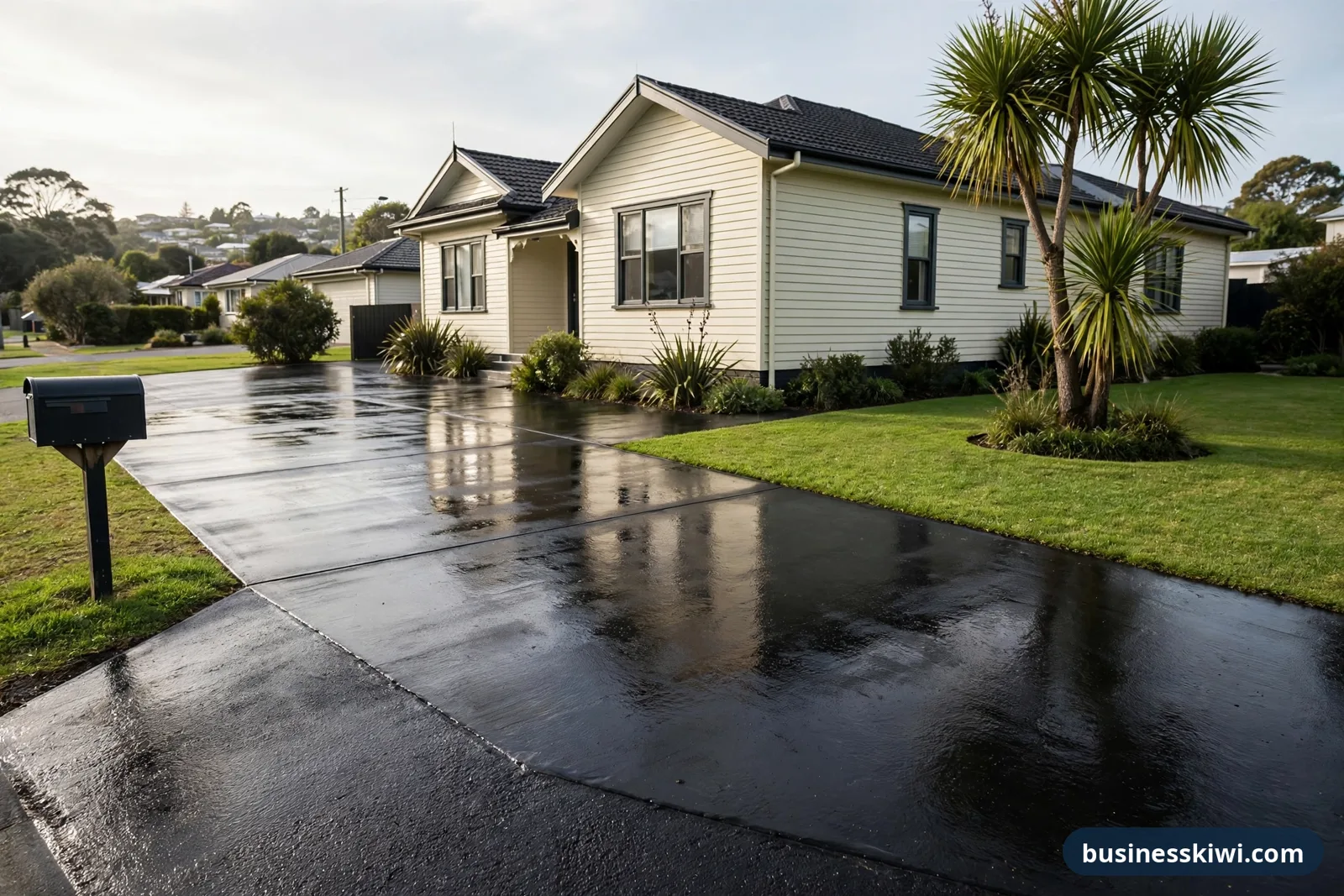
The short answer: A concrete sealer protects concrete from water, stains, tyre marks and wear. Film-forming sealers (acrylic, polyurethane and epoxy) sit on top of the surface and can add gloss. Penetrating sealers (silane and siloxane repellents) soak in, leave the look unchanged and keep water out while the concrete breathes. Match the type to the surface and the traffic, prepare properly, and follow the datasheet for coats, coverage and curing times.
Concrete looks indestructible, but it is porous. Rain soaks in, oil and fertiliser stain it, and the surface slowly wears in the paths that tyres and feet follow. A sealer slows all of that down and makes hosing down far easier. The catch is choice: shelves carry acrylics, epoxies, polyurethanes and invisible penetrating treatments, in water-based and solvent-based versions, and the wrong pick can peel, blister or turn slippery.
This guide explains the types, what each one suits, and how a sealing job runs from preparation to final cure. Specifications come from the manufacturers’ own datasheets for products sold in New Zealand, with the product named wherever a figure appears.
The two families: film formers and penetrating sealers
Every concrete sealer works in one of two ways.
Film-forming sealers dry to a continuous skin over the surface. Acrylics, polyurethanes and epoxies all work this way. The film resists stains, tyre marks and abrasion, and it creates the finish, from matt to a deep wet-look gloss. Because the protection sits on top, it can wear in traffic lanes and fail if moisture pushes up from below.
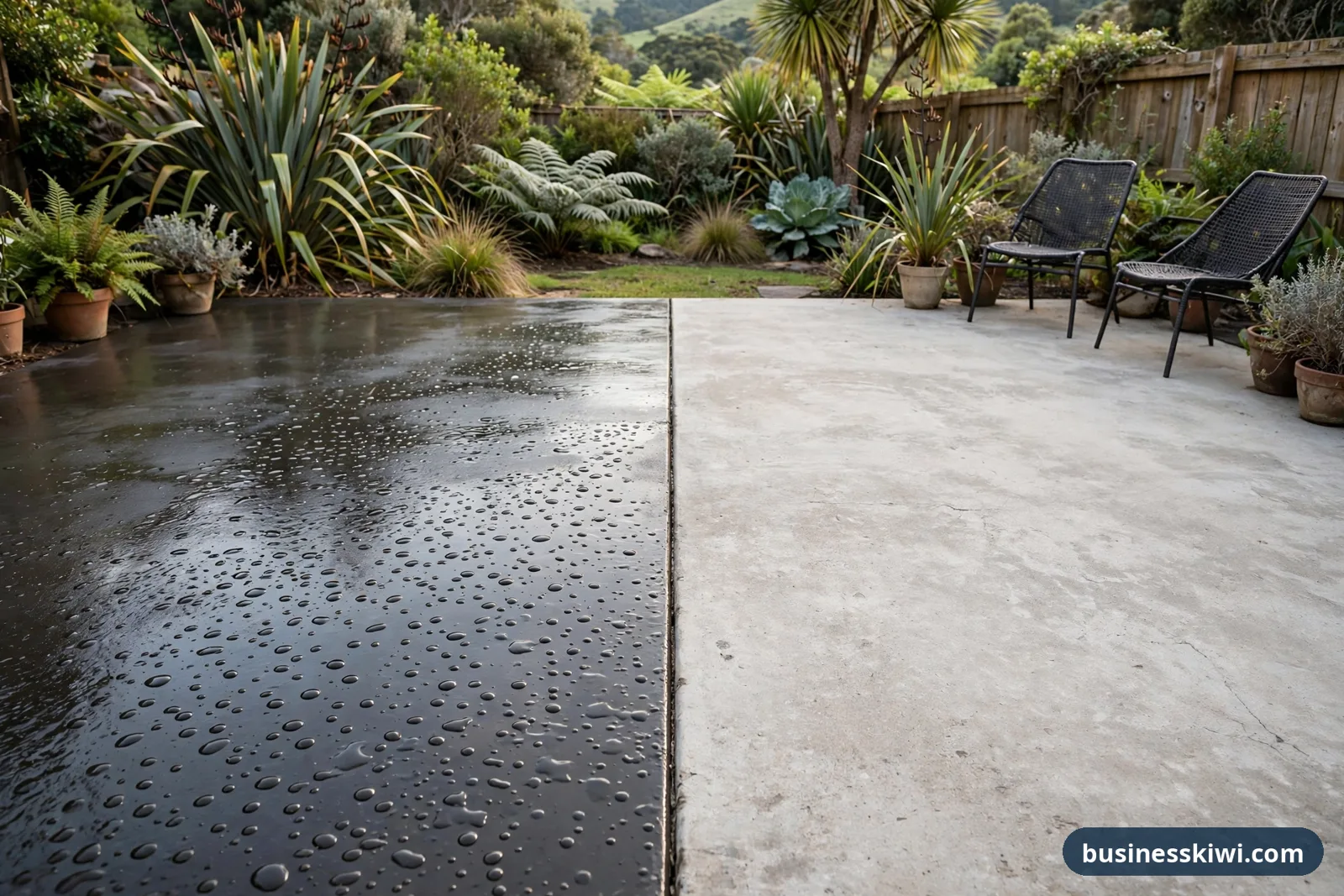
Penetrating sealers soak into the pores and line them with a water-repellent treatment, without forming a film. Silane and siloxane products such as Resene Aquapel and Sika’s Sikagard-740 W work this way. The surface looks exactly as it did before, water beads instead of soaking in, and the concrete still breathes. Resene’s Aquapel datasheet is clear about the limit: a penetrating repellent will not waterproof against driving rain or water under pressure.
The main sealer types, compared
| Sealer type | How it protects | Finish options | Best for | Coverage and coats, from the maker’s datasheet |
|---|---|---|---|---|
| Solvent-based acrylic | Film on the surface | Matt or semi-gloss, wet look | Driveways, pavers, stamped and coloured concrete | Avista General Purpose: 3–6 m²/L, recoat 2 hours |
| Water-based acrylic | Film on the surface | Clear, dries to a semi-gloss look | Paths, patios, low-odour jobs | Avista Waterbased: 5–10 m²/L, recoat 2 hours |
| Two-pack polyurethane | Hard, chemical-resistant film | High gloss, non-yellowing | Polished concrete, bench tops, flake floors | Avista 2 Pack Urethane: 3–10 m²/L, recoat 3–24 hours |
| Two-pack epoxy | Thick, hard film, often tinted | Low sheen to gloss, colours and flake | Garage floors and internal floors only | Avista High Solids Epoxy: 10 m²/L, recoat 10–12 hours |
| Penetrating silane or siloxane | Soaks in, no film | No change to appearance | Natural-look driveways, tilt slab, blockwork | Resene Aquapel: 11 m²/L on concrete, one coat to saturation |
Acrylic sealers
Acrylic is the workhorse for driveways and paving. Solvent-based versions such as Dulux Avista General Purpose deepen the colour of the concrete and give the familiar wet look, in matt or semi-gloss. Nutech’s PaveCoat datasheet specifies two coats at 4 m² per litre per coat, at least two hours between coats, and five days curing before vehicle traffic. Water-based acrylics trade a little of that colour-deepening effect for low odour and water clean-up.
Polyurethane sealers
Two-pack polyurethanes sit a step up in hardness and chemical resistance. Dulux’s Avista 2 Pack Urethane is a high-gloss, non-yellowing clear sealer cleared for interior and exterior use, including over polished concrete and bench tops. The trade-offs are in the datasheet: a pot life of about three to four hours at 25°C once mixed, and a recoat window of three to 24 hours, so the second coat has to be planned, not improvised.
Epoxy sealers and floor coatings
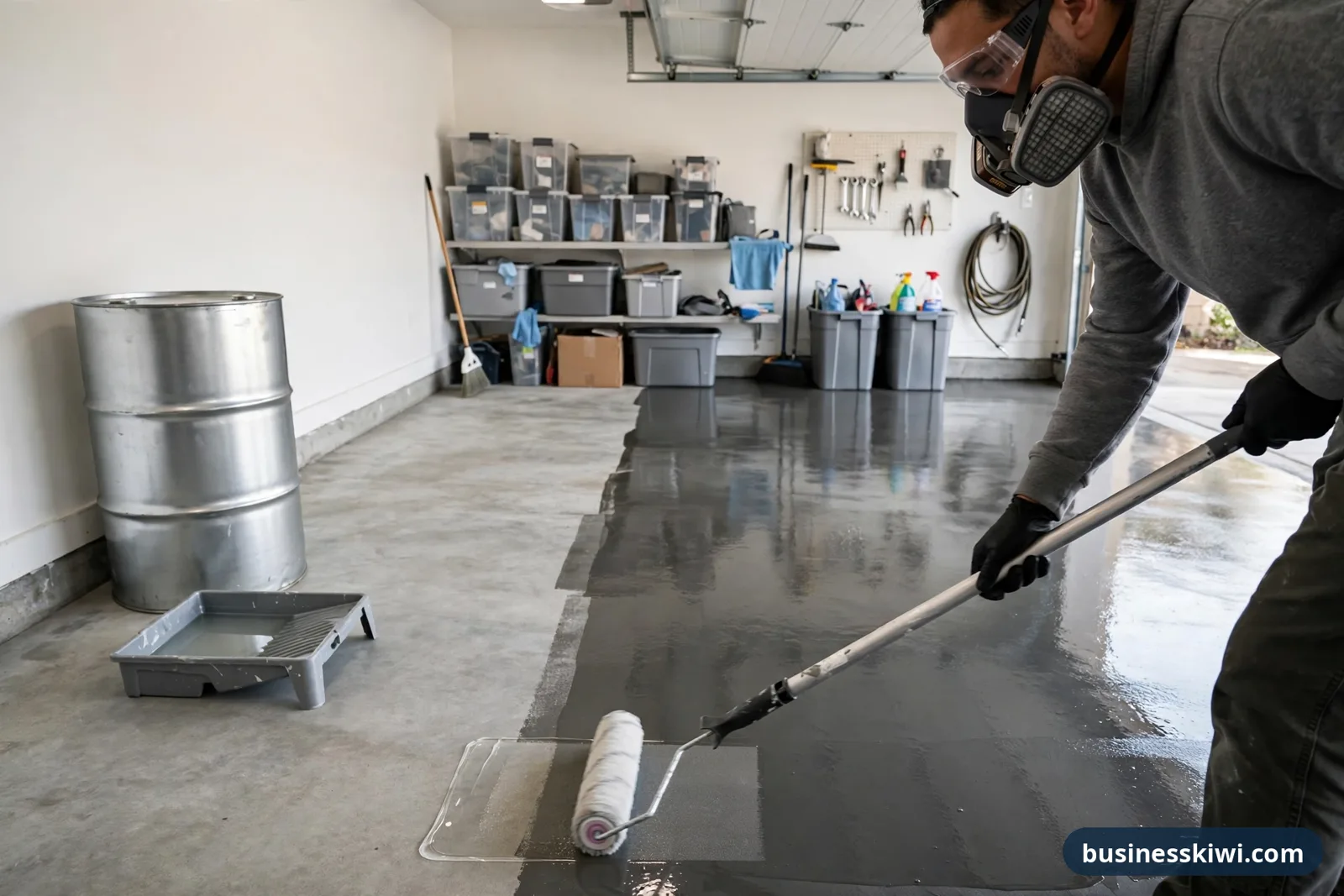
Epoxies are the garage floor specialists. They are two-pack systems mixed on site, can be tinted or finished with decorative flake, and shrug off the oil, fuel and hot-tyre punishment that destroys thinner films. Dulux’s Avista High Solids Epoxy covers 10 m² per litre with a 10 to 12 hour recoat, but its pot life is just 25 minutes at 25°C, which is why epoxy floors are usually a two-person job. Standard epoxies are for internal floors, because sunlight degrades them.
Penetrating silane and siloxane sealers
Penetrating repellents suit concrete whose look you want to keep: plain driveways, tilt slab and blockwork. Resene Aquapel, an oligomeric siloxane, is usually applied in one coat to saturation, at about 11 m² per litre on concrete but only 2.5 m² per litre on thirsty concrete block. Sika’s Sikagard-740 W, a silane treatment, goes on wet on wet in two to three coats at 100 to 150 grams per square metre per coat. Neither adds gloss, neither peels, and neither stops water under pressure.
Water-based or solvent-based?
The base changes the working experience more than the result. Solvent-based sealers generally bite into the surface better, deepen colour more, and are the traditional choice over previously sealed concrete, because a water-based coat may not bond to an old solvent-based film. They also fume strongly and are flammable.
Water-based sealers have low odour and clean up in water. Resene puts the VOC content of its waterborne Aquapel at under 10 grams per litre, a fraction of the solvent load a solvent-based product carries.
Finish: gloss, semi-gloss or matt
Gloss is a look, not a measure of protection. High gloss darkens concrete most and shows wear and dust first; semi-gloss is the middle ground most driveway acrylics are sold in; matt keeps the colour lift without the shine; penetrating sealers change nothing at all.
One caution travels with gloss. Any smooth film gets slippery when wet: Dulux’s datasheet for its general purpose sealer calls for a slip-reducing additive on smooth surfaces, pool surrounds and anywhere water sits. On a pool deck, sloped drive or entry path, factor the additive, a matt finish or a penetrating sealer into the choice from the start.
Matching the sealer to the surface
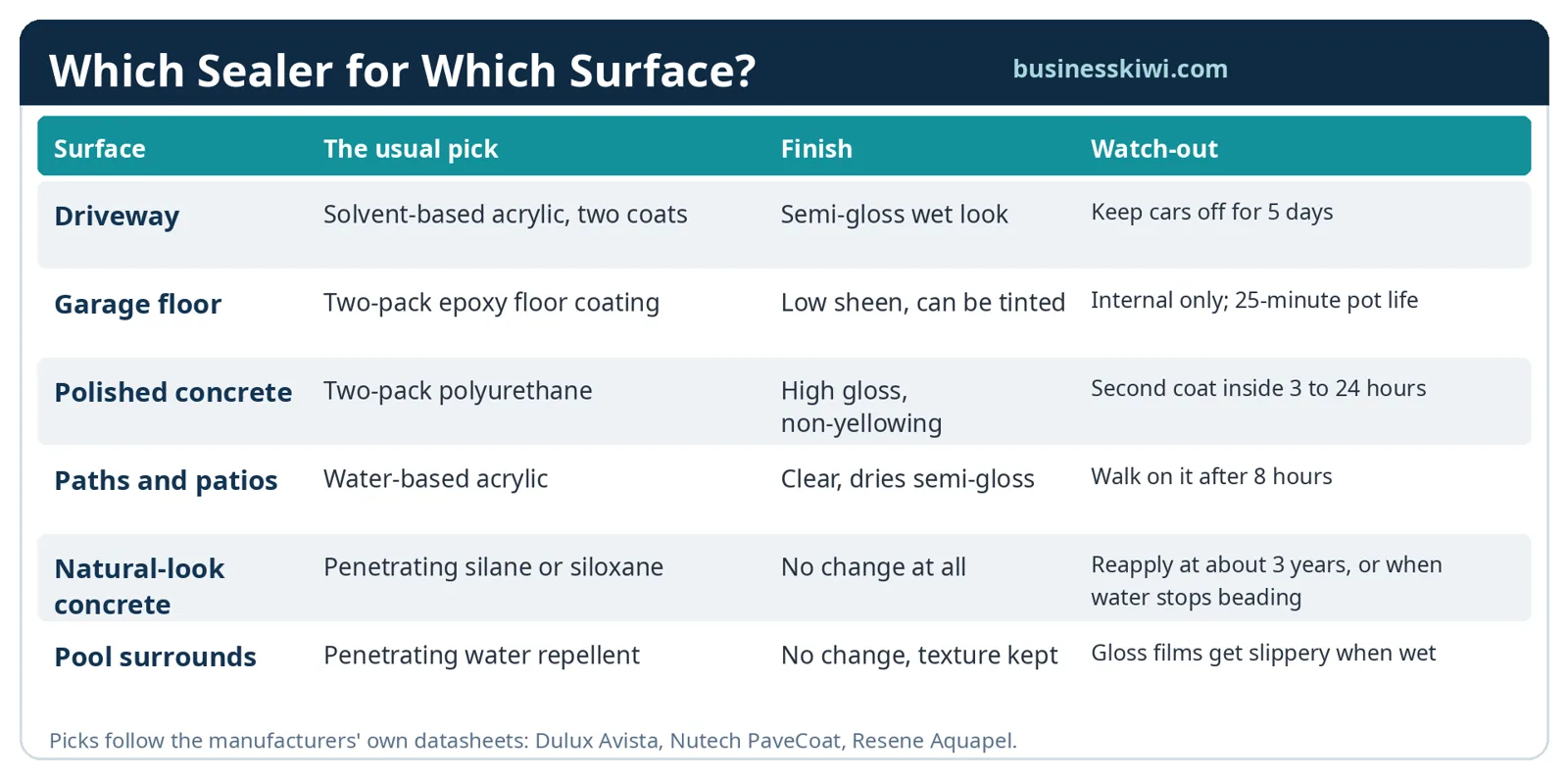
Driveways. A solvent-based acrylic in two coats is the standard answer for plain, coloured and stamped concrete, with a penetrating silane or siloxane the better pick where you want no change in look. Respect the vehicle curing time before parking on it.
Garage floors. Epoxy, or epoxy overcoated with polyurethane, handles hot tyres, dropped tools and oil. If you are costing a new workshop or shed floor at the same time, our guide to shed prices in NZ covers the build side.
Polished concrete. Use a sealer the maker clears for polished surfaces. Two-pack polyurethane is the film option; Resene notes its solventborne Aquapel is the variant for highly polished concrete, where the waterborne version is not recommended.
Exterior paving and paths. Any exterior acrylic works; choose matt or add slip resistance where the path is smooth, shaded and damp for much of the year.
Wet areas. Around pools, slip resistance decides the product before gloss does. Penetrating repellents keep the surface texture as it is, which is why they are often the safest choice there.
Preparing the surface: the steps that decide the result
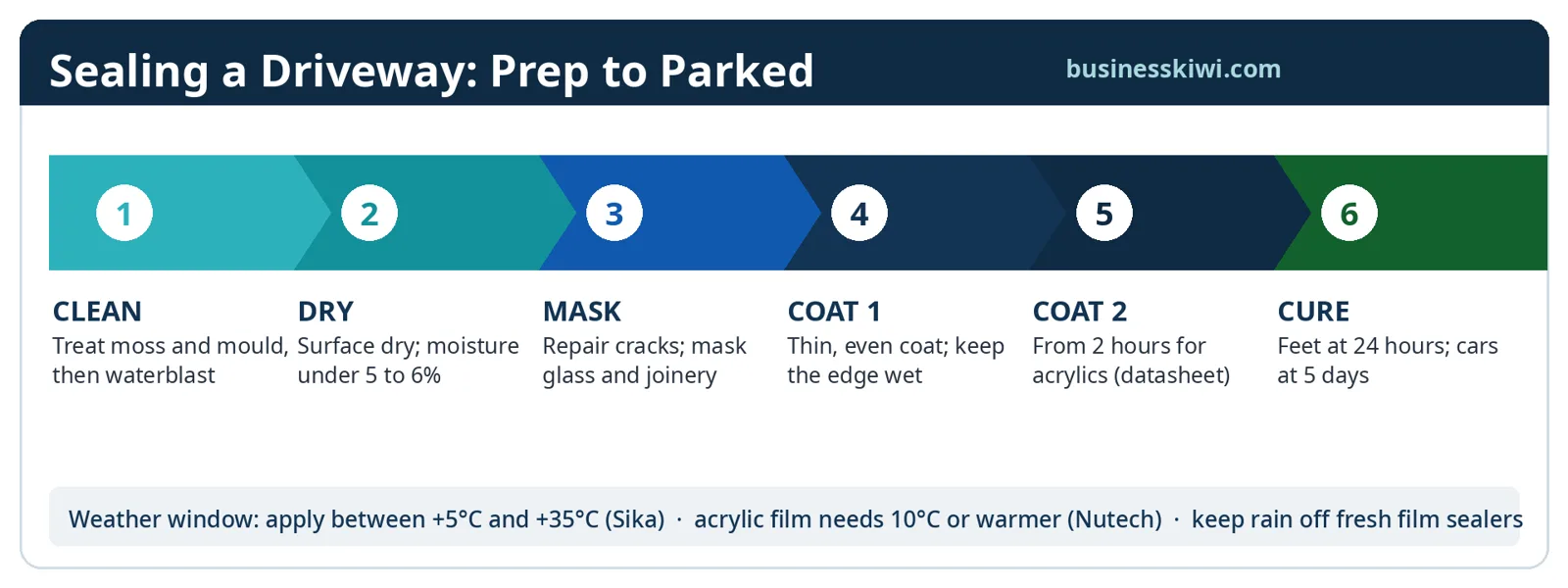
Sealer failures are usually preparation failures. Every datasheet behind this guide starts with the same demands: clean, dry, and free of dirt, oil, grease, moss and loose material.
- Treat moss and mould first. Resene’s datasheets say to treat growth first and let the treatment work.
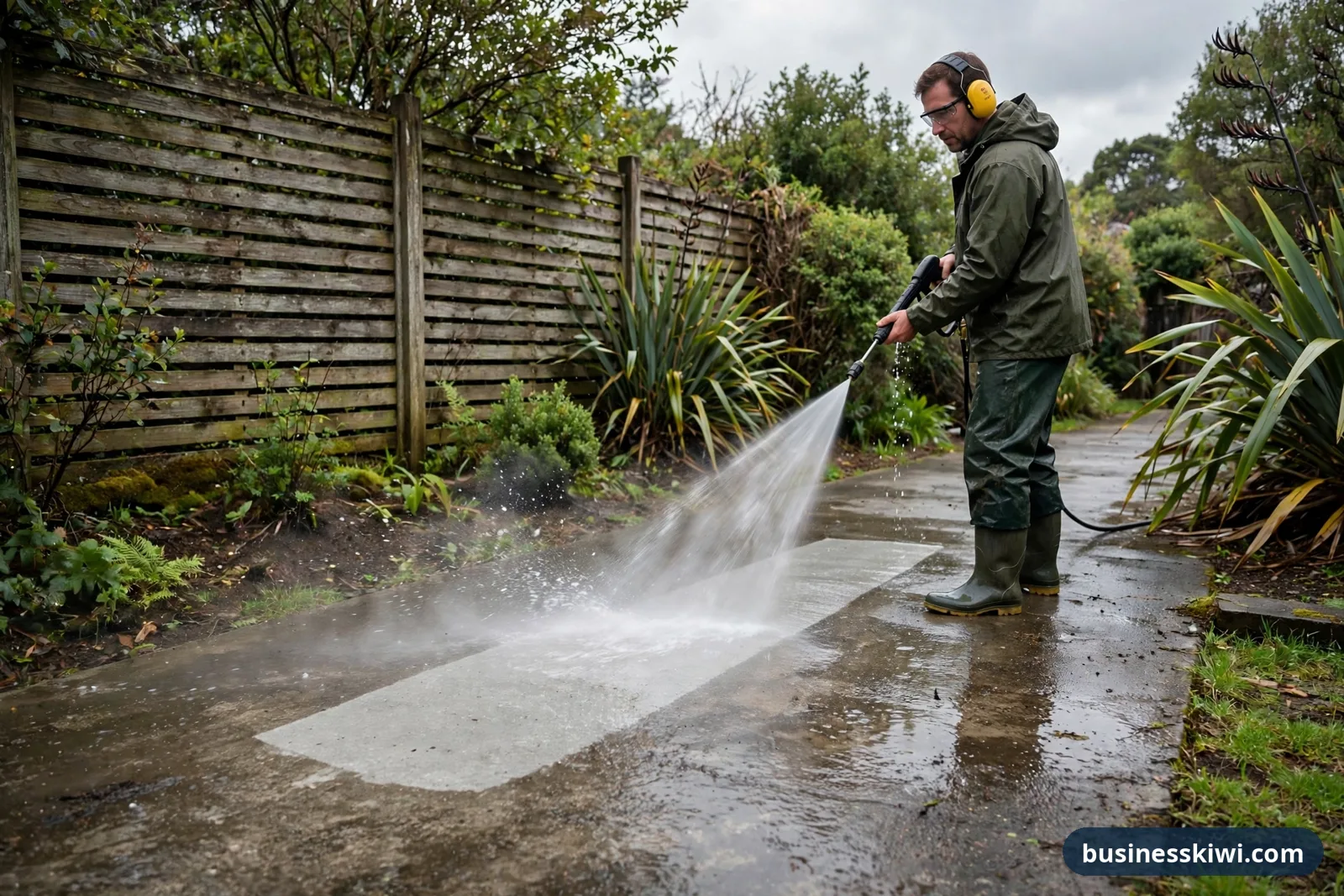
- Waterblast. Resene calls waterblasting the best exterior preparation method. It strips dirt and weak material in one pass.
- Degrease oil spots. Oil and grease stop sealers bonding. Scrub stained areas with a concrete degreaser and rinse well.
- Repair and mask. Fill cracks, let repairs cure, then mask walls, joinery and garden edges. Resene warns that Aquapel can stain glass, so keep it off windows and aluminium joinery. A roll of flexible plastic sheet protects plants and paths from drips.
- Let it dry properly. This is the step people rush. Sika’s Sikagard-740 W sheet sets substrate moisture below 5 to 6 percent, and new concrete must be fully cured before any sealer goes on. A day of sun after waterblasting is a minimum, not a guarantee.
Applying the sealer: the working sequence
Film-forming acrylics go on with a solvent-resistant roller or broom, in thin, even coats. Thick coats are the enemy: Dulux warns that sealer allowed to pool can bubble as it dries. Plan the job so you always finish at an edge or a control joint, and keep a wet edge as you go.
Coat counts come from the datasheet, not habit. Acrylic systems are usually two coats, with the first coat sometimes thinned to help it bite: Nutech specifies the first PaveCoat diluted by half on smooth, steel-trowelled concrete and by a fifth on rough finishes. Penetrating products work differently. Apply them to saturation in one pass, or wet on wet for Sikagard-740 W, and stop when the surface will not take more.
Temperature matters at both ends. Nutech’s datasheet sets a minimum film-forming temperature of 10°C and warns against applying onto hot concrete in direct sun above 30°C. Sika gives an application window of +5°C to +35°C for Sikagard-740 W.
Drying and curing: when can you walk and drive on it?
Dry to touch is not cured, and the gap between the two catches people out. Dulux’s general purpose acrylic needs rain kept off for at least two hours, feet off for at least 24 hours, and cars off for a minimum of five days. Its water-based sealer is faster to walk on, at eight hours, but still needs four days before vehicles and six hours of protection from rain. Two-pack products cure by chemical reaction, so their clock is the recoat and pot life windows above. Penetrating sealers are the exception: Aquapel soaks in over up to 48 hours, and Resene notes that maximum water repellency develops after a few days of weathering.
Coverage: working out how much to buy
Do the maths from the datasheet rate for the product you have chosen. A 60 square metre driveway sealed with a solvent acrylic at 3 to 6 m² per litre needs 10 to 20 litres per coat, so 20 to 40 litres for two coats. The same area in a penetrating repellent at 11 m² per litre needs under six litres, because one coat usually saturates dense concrete. Porosity is the wildcard: Resene’s Aquapel rate falls to 2.5 m² per litre on concrete block, so a thirsty surface can double or triple your volume. Buy for the worst case.
Safety and ventilation
Solvent-based sealers are the main hazard in this work. WorkSafe New Zealand’s safety alert on organic solvents records workers dying after exposure in enclosed, poorly ventilated spaces, and its guidance is blunt: substitute a water-based product where you can, ventilate with open doors and windows or mechanical extraction, keep lids on containers, and treat a fit-tested respirator with an organic vapour cartridge as the last resort, not the plan. Dulux’s sealer datasheet matches at product level: respirator, solvent-resistant gloves, safety eyewear, and ventilation even in covered outdoor areas. Keep solvent products away from ignition sources, and never use solvents to wash sealer off skin.
Watch-outs: the mistakes that ruin a sealing job
- Sealing damp concrete. Moisture trapped under a film turns it milky or lifts it off. If in doubt, wait another day.
- Sealing fresh concrete too early. New concrete must be fully cured and dry. Sealing early locks in moisture and invites a white, patchy film.
- Skipping the second coat, or rushing it. Coat counts and recoat windows are in the datasheet because the system needs them.
- Mixing bases. A water-based sealer over an old solvent-based film is a classic peeling recipe. Test a patch, or stay with the same base.
- Ignoring the weather. Rain inside the protection window marks film sealers and dilutes penetrating treatments before they soak in.
- Choosing gloss for a wet area. Looks great in the brochure, treacherous in July. Use the slip additive or change the plan.
Maintenance and resealing
Sealing is not a once-ever job. Penetrating repellents fade gradually, and Resene’s datasheet gives the test and the interval in plain terms: reapply usually every three years, or sooner when water stops beading and starts soaking in instead. Film-forming acrylics wear in the traffic lanes first. Watch for the wet look going patchy and water darkening the concrete in the tyre tracks; that is the surface asking for a maintenance coat after a thorough clean. Two-pack polyurethane and epoxy floors last longest, and mostly need cleaning rather than recoating until the film itself is damaged.
How to choose: five questions
- Do you want the concrete to look different? If not, the answer is a penetrating sealer and the list gets short.
- What traffic does it carry: feet, cars, or workshop punishment? Feet suit acrylic, cars suit acrylic done properly, workshops point to epoxy.
- Is it inside or outside? Standard epoxies stay inside; acrylics, polyurethanes and penetrating sealers handle weather.
- How slippery will it be wet? Decide the finish and the slip additive before you buy.
- What was on it before? Match the base, or test carefully, because adhesion failures show up as peeling within months.
For more building and trade reference guides like this one, browse our Business and Industry category.
Frequently asked questions
How many coats of concrete sealer do I need?
Most film-forming acrylic systems need two coats; Nutech’s PaveCoat datasheet specifies two coats at 4 m² per litre per coat, at least two hours apart. Penetrating sealers differ: Resene Aquapel is usually one coat applied to saturation, while Sika’s Sikagard-740 W goes on wet on wet in two to three passes.
How long before I can drive on a newly sealed driveway?
For Dulux’s general purpose solvent acrylic, a minimum of five days before vehicle traffic; its water-based sealer needs four days. Foot traffic is much sooner, at 24 hours and eight hours. Treat those as minimums in mild weather, and add time in winter.
Can I seal new concrete straight after it is laid?
No. Manufacturers require new concrete to be fully cured and dry, and Sika’s Sikagard-740 W datasheet puts substrate moisture below 5 to 6 percent. Sealing too early traps moisture and causes white, patchy films.
Does a penetrating sealer change how concrete looks?
No. Silane and siloxane repellents such as Resene Aquapel soak in without forming a film, so colour and finish stay as they were. What changes is water behaviour: it beads instead of soaking in. They will not waterproof against driving rain or water under pressure.
What coverage should I expect per litre?
It depends on the product and the porosity of the concrete. Dulux rates its general purpose acrylic at 3 to 6 m² per litre and its water-based sealer at 5 to 10 m² per litre. Resene Aquapel reaches 11 m² per litre on dense concrete but only 2.5 m² per litre on concrete block.
Is a water-based or solvent-based sealer safer to use?
Water-based sealers have low odour and very low solvent content; Resene lists Aquapel’s VOC at under 10 grams per litre. WorkSafe New Zealand advises substituting water-based products where possible, because solvent vapour can build up dangerously in enclosed spaces.
How do I know when concrete needs resealing?
Use the water test. Splash water on the surface: if it beads, the sealer is working; if it soaks in and darkens the concrete, protection has worn away. Resene’s datasheet gives the same test for Aquapel and puts reapplication at usually every three years.