Omokoroa Pre School: Hours, Ages and What Parents Need to Know
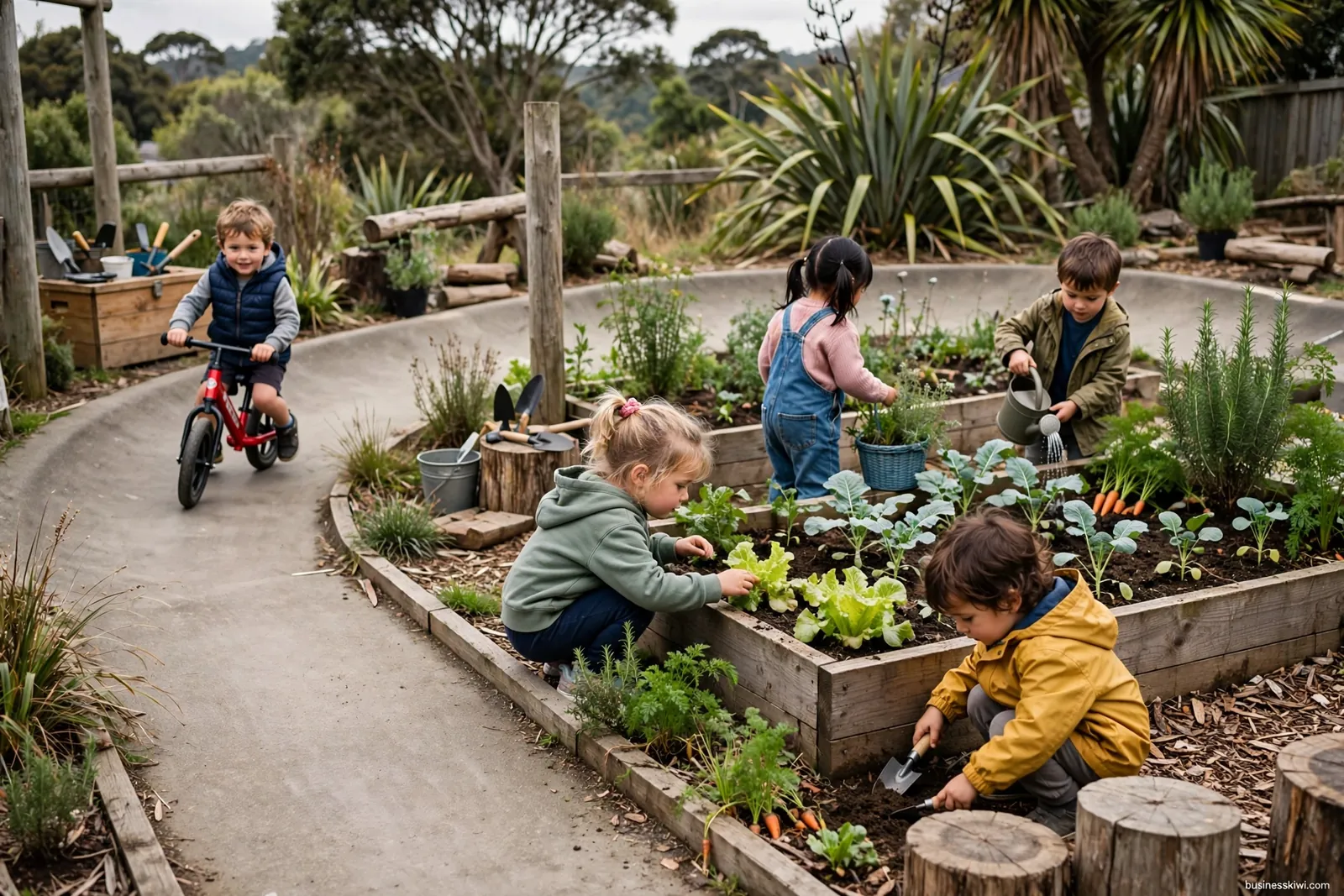
Omokoroa Pre School is a privately owned education and care centre at 144 Margaret Drive in Ōmokoroa, the fast-growing peninsula suburb north of Tauranga. It takes children from babies through to six year olds, runs three age-based rooms including a dedicated transition to school classroom, and is open all year on weekdays. The centre cooks every meal on site, keeps its gardens and bike track at the centre of daily life, and describes itself as a home away from home.
This profile is drawn from the official record: the centre’s Ministry of Education directory profile, its Education Review Office (ERO) reports, the centre’s own website and its current parent information booklet. Where those sources disagree with each other, both versions are given rather than one being quietly chosen. That happens more than once here. The licensed maximum on the Ministry’s current record is not the number ERO recorded at its last two reviews, and the centre’s own website gives two different closing times on different pages. Each case is flagged where it arises.
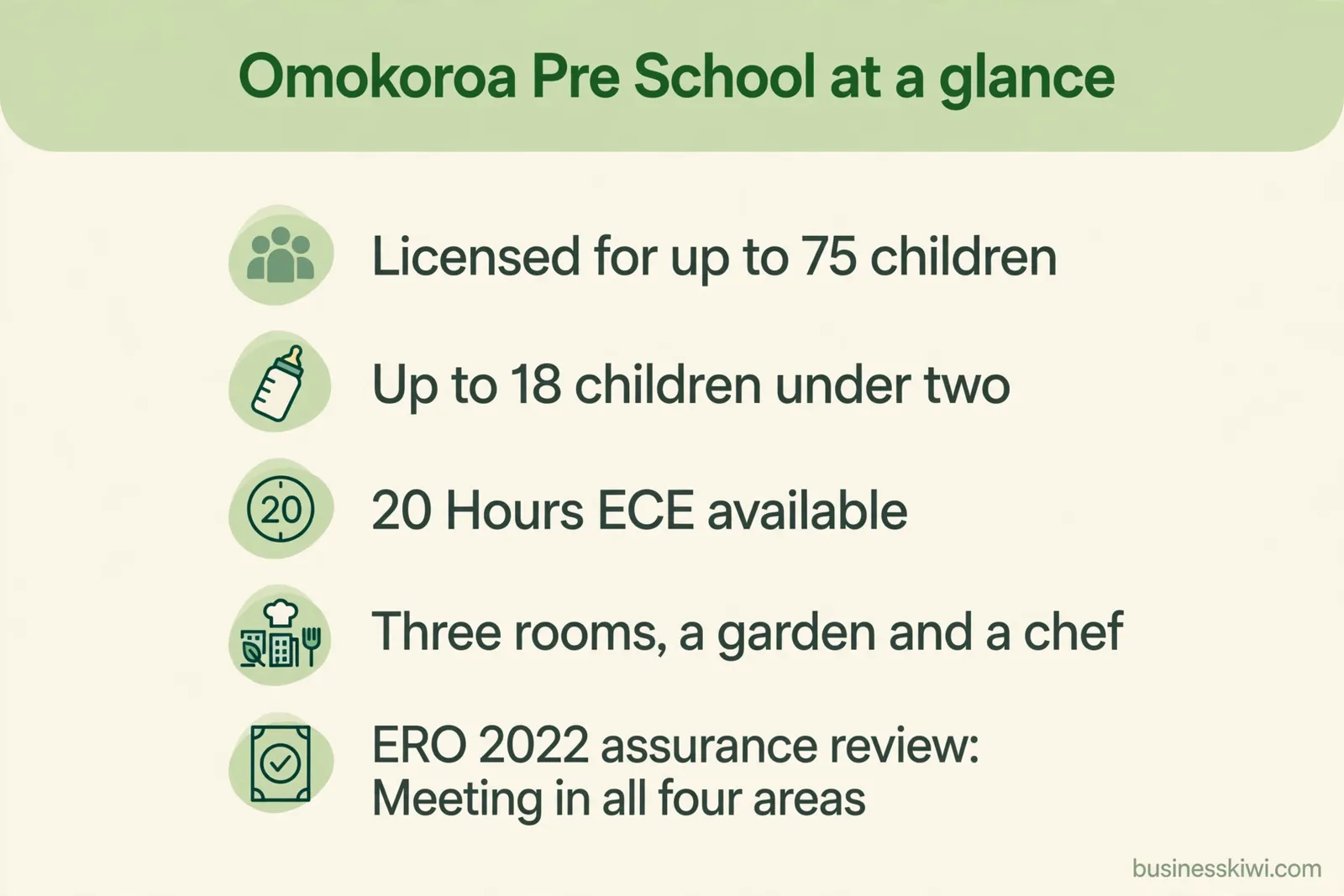
Omokoroa Pre School at a glance
One naming point before anything else. The Ministry of Education and ERO both record the service as Omokoroa Pre School, three separate words, and that is the spelling used in this profile. The centre itself writes its name as one word, Omokoroa Preschool, on its website, its booklet and its signage style. Both names refer to the same centre at the same address, with the same service number. The suburb’s official place name is Ōmokoroa, with a macron, which none of the official sources for the centre uses in the centre’s name.
The centre and how it is run
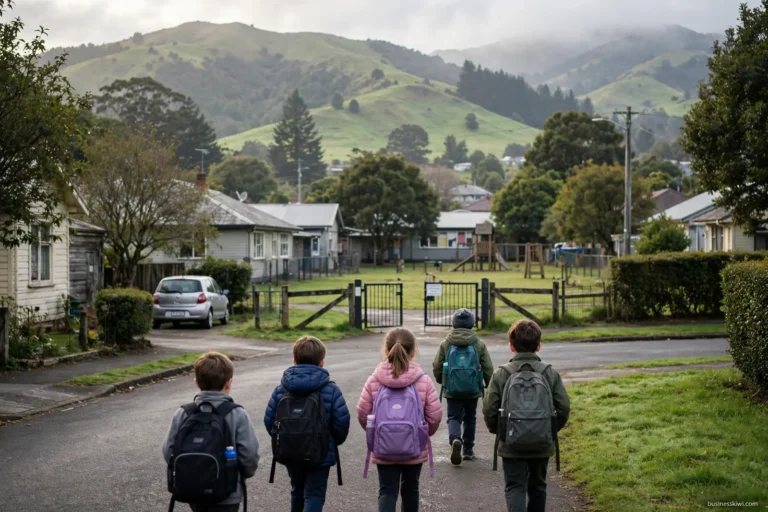
The centre opened in 2015, according to ERO’s first review of it in 2017, and it is purpose-built. It sits in a residential part of Ōmokoroa, within a short drive of the two local primary schools its older children move on to. Ownership changed in March 2020, and ERO’s most recent report records that the Ministry of Education provided support to the centre following that change. ERO describes the service as governed and managed by the owner and a centre manager. The centre’s own website names that person: its team page lists Robyn as Owner/Centre Manager, and its parent booklet carries an introduction from Robyn describing her background in work with couples and families before early childhood education.
The centre is privately owned rather than run by a trust, a kindergarten association or a national chain, and it presents that as part of its character, calling itself family owned on its homepage. Decisions about fees, hours and enrolment sit with the centre’s own management, which is why so much of the practical detail in this profile comes from the centre’s own documents rather than a head office.
The licence position needs care, because the official sources give two different ceilings. Education Counts, the Ministry’s directory, currently records the centre as licensed for a maximum of 75 children, including up to 18 children under two. ERO’s reports, both the September 2017 Education Review and the February 2022 Assurance Review, record the centre as licensed for 53 children, including up to 18 aged under two. The under-two maximum agrees everywhere. The total does not. The most likely reading is that the licence has been extended since ERO last reviewed the centre in early 2022, but no permitted source says that in so many words, so this profile simply reports both figures with their dates and sources. Parents comparing centres should work from the current Education Counts figure of 75, and can ask the centre to confirm it.
Roll numbers also move between snapshots, and they count something different from the licence. A roll is the number of children enrolled across the week, not the number present at one time, which is why a roll can sit near or even above a daily licence figure at a centre where many children attend part weeks. ERO’s current listing shows a total roll of 43. Its February 2022 report recorded a service roll of 37, and its 2017 report recorded 75. None of the sources explains the pattern, and this profile does not speculate about it.
Philosophy: relationships, rituals and learning through play
The centre’s parent booklet states its mantra as weaving an environment of play and discovery, for lifelong learning and growth. Underneath that sits a particular view of how young children settle and learn. The booklet describes an environment prepared with intention and aroha, where children feel contented enough to explore freely, and it puts responsive, reciprocal relationships at the foundation of everything: with children, with their families and among the teaching team itself.
Three ideas run through the centre’s own documents. The first is play as the vehicle for learning, with children choosing their activities and teachers extending what children start rather than directing from the front. The second is ritual. The centre is unusually deliberate about this: mindful, intentional rituals around the routines of the day are described as the key to children feeling safe, because predictability tells a child what happens next. The third is summed up in a short phrase the booklet returns to: “I hear you”. The centre presents those three words as the essence of its teaching, the practice of noticing what a child is communicating long before the child can put it into words.
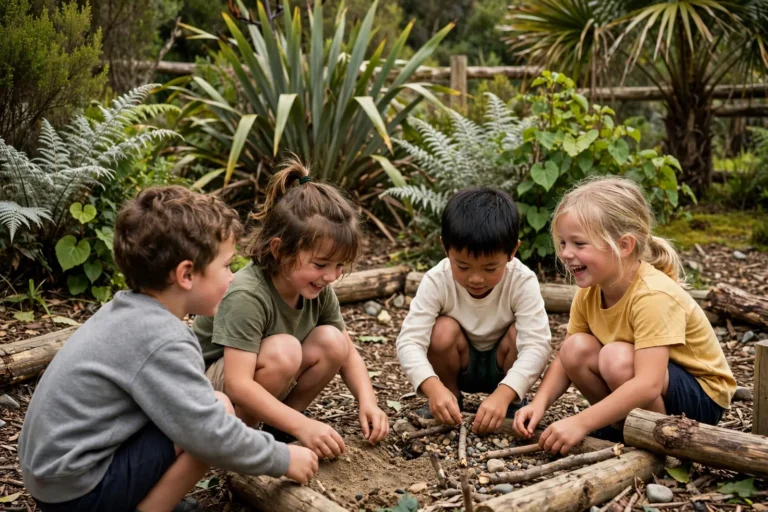
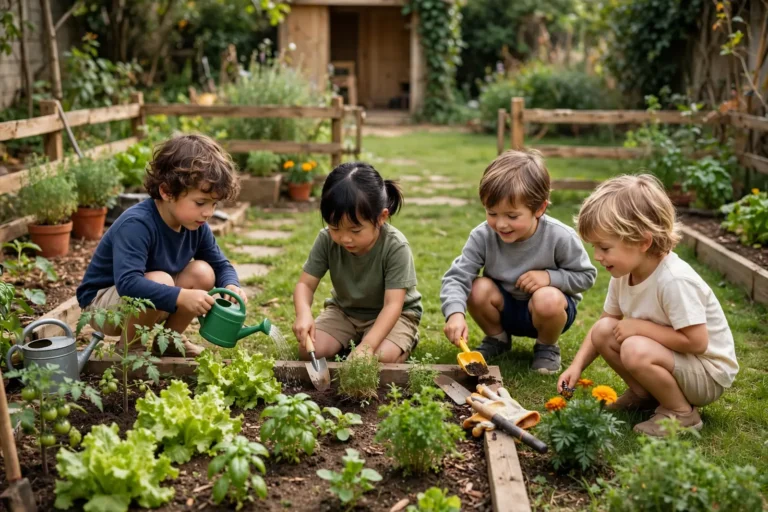
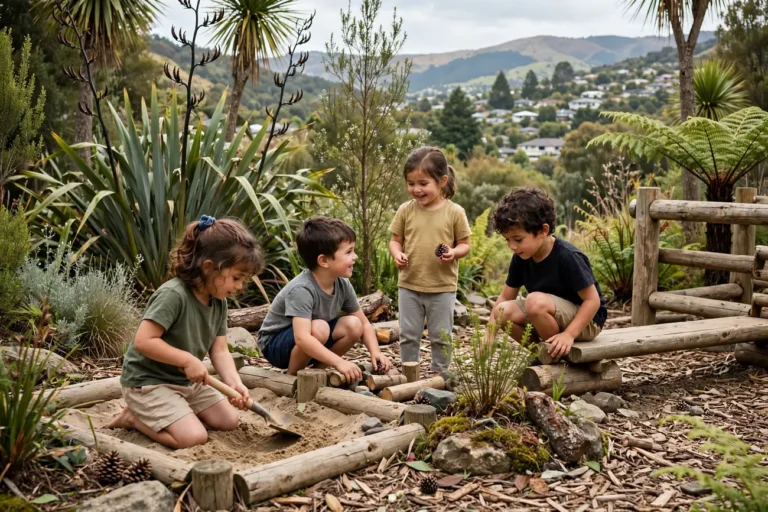
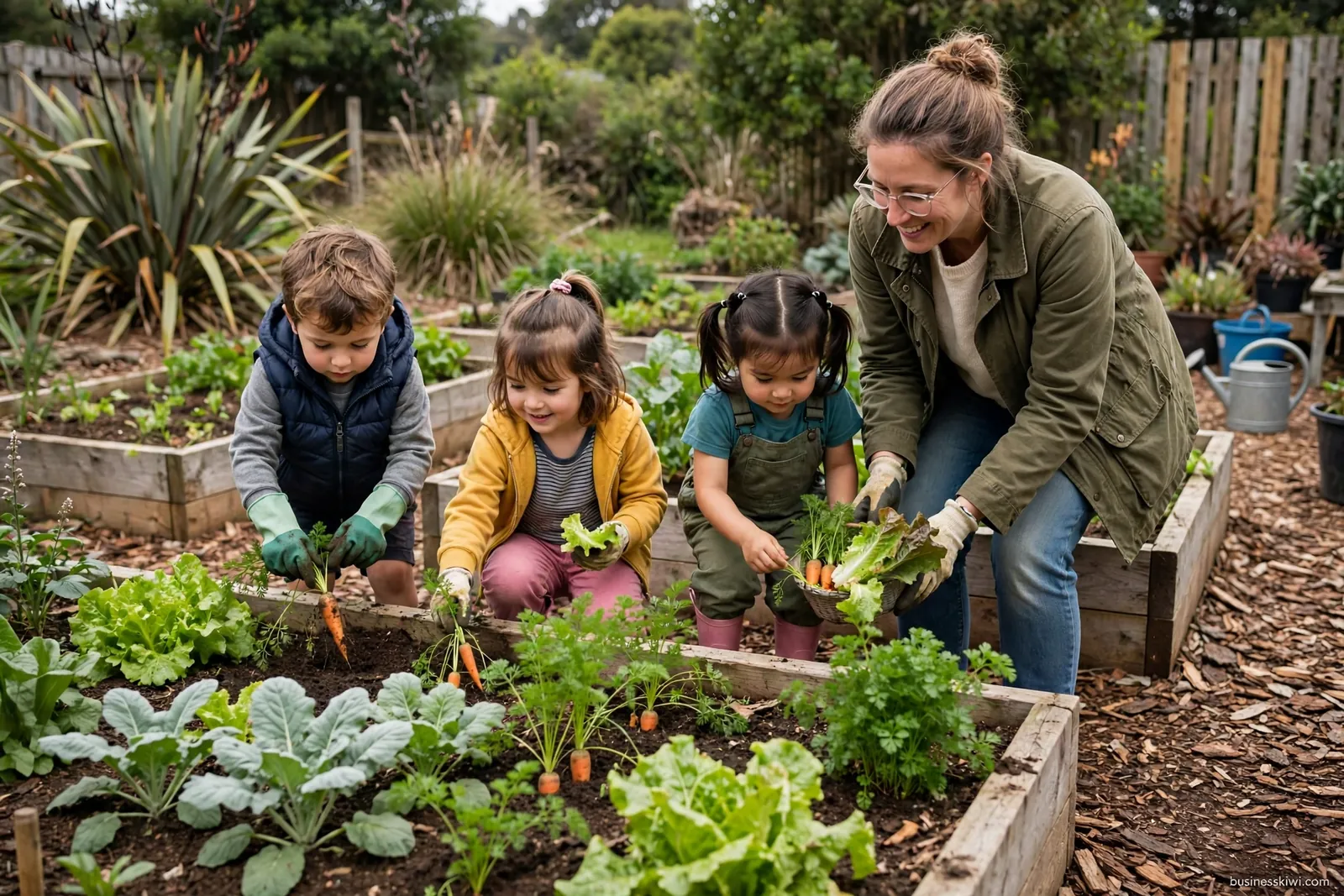
The natural environment is part of the philosophy rather than a backdrop. The booklet calls the garden central to daily routines and rituals, talks about children developing a deep love for Papatūānuku, and treats growing and harvesting food as real learning. The Over 2s page of the website carries the whakataukī “Poipoia te kākano, kia puāwai”, nurture the seed and it will blossom, and the infants and toddlers page carries another: “Ahakoa he iti he taonga”, although it is small, it is precious.
Formally, the teachers are guided by Te Whāriki, the national early childhood curriculum, and the booklet names its strands, belonging, well-being, communication, contribution and exploration, as the framework for programme development. ERO’s 2022 review confirmed the centre’s philosophy statement guides its operation, and recorded that the unique place of Māori as tangata whenua is acknowledged and reflected in the curriculum.
The programme: three rooms, a garden and a chef
The centre now works across three rooms, and the split is by age. The Infants and Toddlers Room takes the youngest children, generally from 6 months to 2 years. The Pre School Room is for 2 to 4 year olds. The oldest group, 4 to 6 year olds, has its own transition to school classroom. Parents should note that this three-room picture comes from the centre’s current website and its 2026 parent booklet. ERO’s reports, in 2017 and again in 2022, described two age-based rooms. The transition classroom is the obvious candidate for what has changed since, and the booklet itself says the centre now has a classroom designed for that purpose. The two pictures are both official; they are simply from different years.
For the under twos, the centre describes a calm, inviting room with free movement between indoors and outdoors, natural resources to handle, and peaceful, respectful caregiving practices built around each baby’s home routine. There is a dedicated sleep room for the under twos, and over twos sleep after lunch where parents request it.
For the over twos, the emphasis is on play, social interaction, life skills and the natural environment. Children grow and harvest produce from the garden for their kai, and the outdoor area, with its bike track, climbing trees and fruit trees, is available through the day and across the seasons. The indoor environment leans on natural materials and loose parts, with mindfulness activities and shared rituals punctuating the free play.
The 4 to 6 year old room is where the programme turns deliberately towards school. The centre describes a daily transition programme in a purpose-built room: group learning, questioning and creative problem solving, early literacy and numeracy woven into play, weekly excursions out of the classroom, and a lunchbox day on Wednesdays so children practise the practical routine of a school lunch. The Over 4s page makes the same points in terms of independence, collaboration, emotional resilience and self-management.
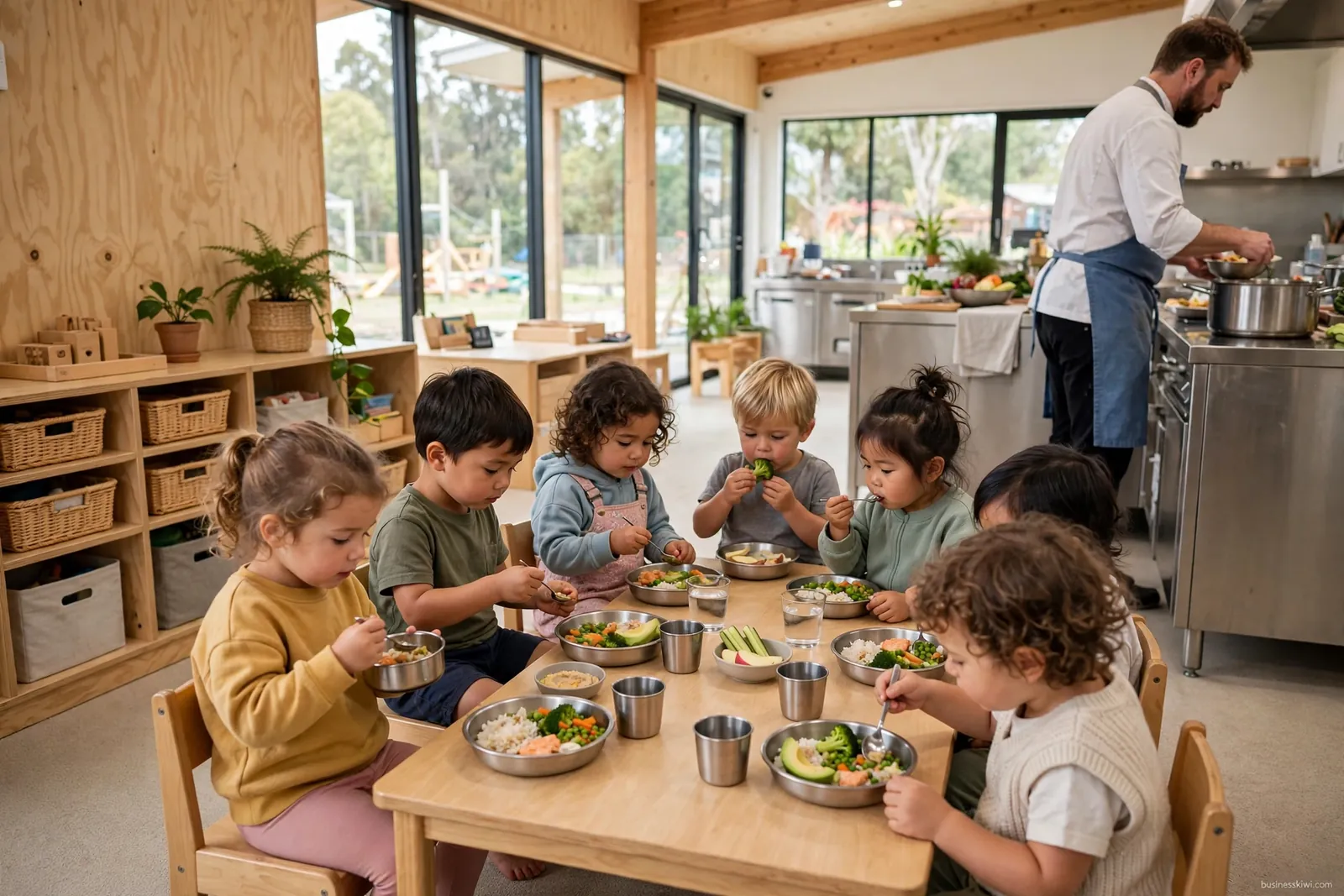
Food is a genuine feature of this centre rather than an afterthought. A chef cooks on site daily, and morning tea, lunch and afternoon tea are all included in the fees. The menu is designed by a paediatric nutritionist, seasonal winter and summer menus are published on the website, and the centre says it participates in the Healthy Hearts Awards. One practical exception: the kitchen closes for two weeks over the Christmas period, and children bring lunchboxes during those weeks.
Parents can follow learning through Storypark, the online portfolio platform the centre uses for learning stories, photos and videos. The booklet says portfolios inform both the teachers’ planning and reporting to parents, and families can contribute to them. Excursions beyond the centre are part of the programme too, planned against learning objectives, advised in advance, and run with written parent permission. The homepage also mentions extra-curricular activities families can choose, although it does not detail them there.
Hours, sessions and the shape of the year
This is not a term-time-only kindergarten. The centre is open Monday to Friday all year, closed on public holidays, with shorter hours across a two-week period at Christmas. Children enrol for a minimum of two days per week, and bookings are by the week rather than by the session.
On the actual opening hours, the centre’s own publications disagree with each other, and parents should know that before they plan around them. Most of the website, including the About Us page and the footer carried across the site, gives the hours as 7.00am to 5.30pm, and the parent booklet says the same. The website’s Contact Us page, however, states opening hours as 7.00am to 6.00pm, in two places on that page. Everything else agrees: the opening time is 7.00am, weekdays only, public holidays closed. The closing time is either 5.30pm or 6.00pm depending on which of the centre’s pages you read. Confirm the current closing time with the centre directly, because a late pick-up fee may apply, and prompt pick-up is something the booklet stresses.
Because the centre runs all year, the school holidays do not shut it down the way they close a term-based kindergarten, which is the arrangement many Ōmokoroa families with mixed-age children are looking for. Office hours for messages and enquiries are the same as opening hours, and the centre asks families to sign children in and out daily, as the Ministry requires, and to phone ahead if a child will be absent.
Fees and 20 Hours ECE: what is published, and what is not
The centre does not publish its fees. No fee schedule, hourly rate or session charge appears on its website, in its parent booklet or on its Education Counts profile. Both the website and the booklet say the same thing instead: a fees schedule is available from the office, and the booklet adds that the schedule is forwarded to families on enrolment. So no dollar figure for attending Omokoroa Pre School appears in this profile, and any fee figure attached to this centre’s name on a third-party listing site should be treated with caution, because the centre itself has not published one.
What the centre’s own documents do explain is the structure around the fees. Fees are set by the centre’s management and paid weekly in advance, by automatic payment. They apply during absences, including illness and holidays, and on statutory holidays. Children are enrolled per week and charged per week, and a full week’s fee applies if a child leaves part-way through a week. Meals are included, as covered above. Two weeks’ written notice is required to withdraw a child. None of that tells a family what a week will actually cost, which makes asking for the current schedule, in writing, before enrolling the single most useful step a parent can take here.
The funding side is clearer. Education Counts records the centre as offering 20 Hours ECE, and the centre’s own material confirms it participates. The Ministry’s definition of the scheme is that children aged three and over in licensed services can receive up to 20 hours a week of early childhood education with no compulsory fees. The centre’s website and booklet phrase their eligibility slightly more narrowly, saying all children between the ages of 3 and 4 years are eligible for the 20 hours subsidy. The small difference in wording is worth a question at enrolment if your child is five, or stays on towards six in the transition room, because the centre’s documents do not address that case directly.
Two other forms of help are mentioned in the centre’s own material. The About Us page says a WINZ Childcare Subsidy may be available depending on income and family size, and suggests speaking to the manager. The booklet adds that the FamilyBoost subsidy may be available, applied for online and paid directly to caregivers. Neither document gives rates or thresholds, and this profile does not either. Children under three sit outside 20 Hours ECE entirely, so for babies and toddlers the unpublished fee schedule is the whole of the cost picture.
What ERO found
The centre’s most recent ERO report is an Akanuku Assurance Review dated 17 February 2022, with the review team on site in December 2021. An assurance review is the shorter compliance-focused review ERO uses after a change of ownership, among other triggers, and this centre had changed ownership in March 2020. It is worth understanding what kind of document it is: it judges whether the service meets regulatory standards, rather than grading the quality of teaching the way the fuller Akarangi Quality Evaluation does.
On that measure, the centre met the standard in every area. ERO’s judgements were Meeting for curriculum, Meeting for premises and facilities, Meeting for health and safety, and Meeting for governance, management and administration. ERO’s summary line was that, at the time of the review, the service was taking reasonable steps to meet regulatory standards.
The review’s findings describe a settled centre. Reviewers recorded positive, meaningful interactions between children and adults supporting social competence; premises whose design supports a range of indoor and outdoor experiences including physically active play; a curriculum informed by assessment, planning and evaluation; parents’ aspirations feeding into individualised learning plans; and teachers seeking guidance from external agencies for children with additional learning needs. The review recorded a roll of 37 and qualified teachers at 80 to 99 percent. The two key next steps ERO set were to keep strengthening assessment, planning and evaluation with a focus on valued learning outcomes, and to strengthen how well the documented information about each child’s learning reflects their identity, language and culture. ERO said the next review is likely to be an Akarangi Quality Evaluation. No Akarangi report for this centre appears on ERO’s institution page yet, so the 2022 assurance review remains the most recent ERO word, and parents should read it as a picture of the centre in late 2021 rather than today.
The earlier report, an Education Review dated 27 September 2017 with the team on site that August, was the centre’s first review, two years after it opened. Reviewers found committed leaders and teachers building reciprocal relationships with families, a well-designed play-based curriculum making deliberate use of natural resources, a strong emphasis on literacy and numeracy, tikanga Māori and te reo Māori practices such as waiata, karakia and pōwhiri integrated into the programme, and effective governance by the owner. The 2017 report recorded a roll of 75, qualified teachers at 80 percent or more, and reported ratios of 1:3 for under twos and 1:6 for over twos, both noted as better than minimum requirements. Its next steps concerned the four year old programme, the balance between teacher-led activities and children’s interests, and professional learning for infant and toddler teaching. Those ratio and staffing figures belong to 2017. The centre still describes its ratios as better than Ministry standards, but it publishes no current numbers, and neither does ERO’s 2022 report, so no current ratio is stated in this profile.
The teaching team
The centre’s website publishes its current team by first name and role. Robyn is listed as Owner/Centre Manager. There are three head teachers, Nikki, Teresa and Frank, which matches the three-room structure. The teachers listed are Monique, Charlotte, Elizabeth, Faith, Kim and Miriam, with Sami and Judy as reliever teachers. Aaminah is the centre’s chef, and Trudy and Jackie work in accounts and administration. First names only are published, which is the centre’s own practice, and this profile follows it.
The booklet’s account of the teaching team is brief and general: it says the centre employs experienced, trained early childhood teachers, that most are highly experienced, and that there is a structured induction programme for teachers who are still in training. On qualifications, the most recent figure from any permitted source is ERO’s February 2022 band of 80 to 99 percent qualified teachers. The centre does not publish a current percentage, a headcount against the roll, or its current ratios, so parents wanting the present-day picture should ask who will be in their child’s room, how many of the team are qualified and registered teachers, and what the ratios are at the start and end of the day when numbers taper.
Enrolling, step by step
- Start with a registration form. Enrolment begins with the form, and admission is decided case by case.
- Visit the centre. An open door policy means you can drop in during opening hours.
- Settle in before the first day. Visit with your child for at least five days before starting; a transition teacher is allocated to each new child.
- Pack the essentials. A named bag, three changes of clothes, nappies if your child uses them, named bottles, a drink bottle, and a sunhat or beanie for the season.
- Ask for the fee schedule in writing. Include what a two-day week costs and how 20 Hours ECE is applied to your child’s days.
- Get in touch. Ring 07 548 2626, email admin@omokpreschool.co.nz, or enquire through the centre’s website.
Enrolling: what to do next
Enrolment starts with a registration form. The booklet says admission is on a case-by-case basis, and that funding rules do not allow a child to be enrolled at two services for the same hours. Visits are not just allowed but built into the process: the centre runs an open door policy, invites parents to drop in during opening hours, and its settling-in procedure encourages families to visit with their child for at least five days before starting, so the child meets the teachers and other children first. A transition teacher is allocated to each new child, parents are asked to say goodbye properly when they leave rather than slip away, and comfort toys or blankets from home are welcome.
The practical checklist from the centre’s own booklet is worth knowing before you start. You will need a named bag, three changes of clothes, shoes or sandals, nappies if your child uses them (cloth nappies are accepted, with liners and a bag for used ones), named bottles, a drink bottle, and a sunhat or beanie depending on the season. Hats are compulsory outside in the summer terms, and the centre reapplies sunscreen at lunchtime. Fees begin on the weekly cycle described above, and two weeks’ written notice is needed if your child leaves.
Questions worth asking, given what the official record does not settle: ask for the current fee schedule in writing, including what a two-day week costs and how 20 Hours ECE is applied to your child’s days. Ask whether the centre closes at 5.30pm or 6.00pm, since its own website gives both. Ask for the current licensed maximum and the ratios in your child’s room, given Education Counts and ERO record different licence numbers. Ask when the next ERO review is expected, since the last one was an assurance review in early 2022. And ask how the transition room works in practice for a child who turns five but is not yet starting school, including whether the 20 Hours ECE wording on the website, which mentions 3 and 4 year olds, affects what you pay for a five year old.
The centre can be contacted on 07 548 2626 or at admin@omokpreschool.co.nz, and enquiries can also be made through its website. It is at 144 Margaret Drive, Omokoroa, Tauranga 3114.
Frequently asked questions
Where is Omokoroa Pre School?
It is at 144 Margaret Drive in Ōmokoroa, Tauranga 3114. The Ministry of Education service number is 46656, the phone number is 07 548 2626 and the email is admin@omokpreschool.co.nz.
What ages does Omokoroa Pre School take?
Education Counts records the service as providing for all ages. The centre itself describes children aged 0 to 6 years, with babies generally starting from about 6 months in its Infants and Toddlers Room, then a Pre School Room for 2 to 4 year olds and a transition to school classroom for 4 to 6 year olds. Children must enrol for a minimum of two days per week.
How many children can attend?
Education Counts currently records a licensed maximum of 75 children, including up to 18 under two. ERO recorded the licence as 53 children in both its 2017 and 2022 reports, so the centre’s licence appears to have been extended since ERO last reviewed it. ERO’s current listing shows a roll of 43. Confirm the current licence and availability with the centre.
What are the opening hours?
Monday to Friday, opening at 7.00am, closed on public holidays, all year round with shorter hours over two weeks at Christmas. The closing time is stated inconsistently by the centre itself: most of its website and its parent booklet say 5.30pm, while its Contact Us page says 6.00pm. Check the current closing time before you rely on it, because a late pick-up fee may apply.
How much does Omokoroa Pre School cost?
The centre does not publish its fees. Its website and parent booklet both say a fees schedule is available from the office, and the booklet says the schedule is forwarded on enrolment. Fees are paid weekly in advance, apply during absences and on statutory holidays, and include all meals. Ask for the current schedule in writing before you enrol. Fee figures on third-party listing sites are not the centre’s published prices.
Does it offer 20 Hours ECE?
Yes. Education Counts records the centre as offering 20 Hours ECE, and the centre’s own material confirms participation. The Ministry describes the scheme as up to 20 hours a week with no compulsory fees for children aged three and over; the centre’s website phrases eligibility as applying to children aged 3 and 4 years, so check how it applies if your child is five.
What did ERO say about Omokoroa Pre School?
ERO’s most recent report, an Akanuku Assurance Review dated 17 February 2022, judged the centre to be Meeting regulatory standards in all four areas assessed: curriculum, premises and facilities, health and safety, and governance, management and administration. It set two next steps around assessment, planning and evaluation. ERO said the next review is likely to be a fuller Akarangi Quality Evaluation. The centre’s first review, in September 2017, found a well-designed play-based curriculum, strong family relationships and ratios better than minimum requirements at that time.
How do I enrol my child?
Complete a registration form through the centre, and visit first if you can: the centre has an open door policy and encourages settling visits over at least five days before a child starts. Contact the centre on 07 548 2626 or admin@omokpreschool.co.nz. Admission is case by case, a two-day weekly minimum applies, and two weeks’ written notice is required when a child leaves.
Sources
- Ministry of Education, Education Counts, Omokoroa Pre School: Profile and Contact Details: https://www.educationcounts.govt.nz/find-an-els/els/profile-and-contact-details?district=22&ece=46656®ion=4
- Education Review Office, Omokoroa Pre School institution page, including the Akanuku Assurance Review dated 17 February 2022 and the Education Review dated 27 September 2017: https://ero.govt.nz/institution/46656/omokoroa-pre-school
- Omokoroa Preschool, the centre’s own website (home, about us, our team, under 2s, over 2s, over 4s and contact pages): https://www.omokoroapreschool.co.nz/
- Omokoroa Preschool, Parent Information booklet (2026): https://www.omokoroapreschool.co.nz/wp-content/uploads/2026/03/Omokoroa-Preschool-A5-Booklet-2026-1.pdf
This article is general information about Omokoroa Pre School, drawn from the official sources listed above at the time of writing. Fees, hours, licence details, staffing and ERO findings change over time, and some of the centre’s own published details currently disagree with each other, as noted in the article. Confirm the details that matter to your family directly with the centre before making enrolment decisions.