Concrete Cutting Cost in NZ: What You Pay Per Metre and Why
The short answer
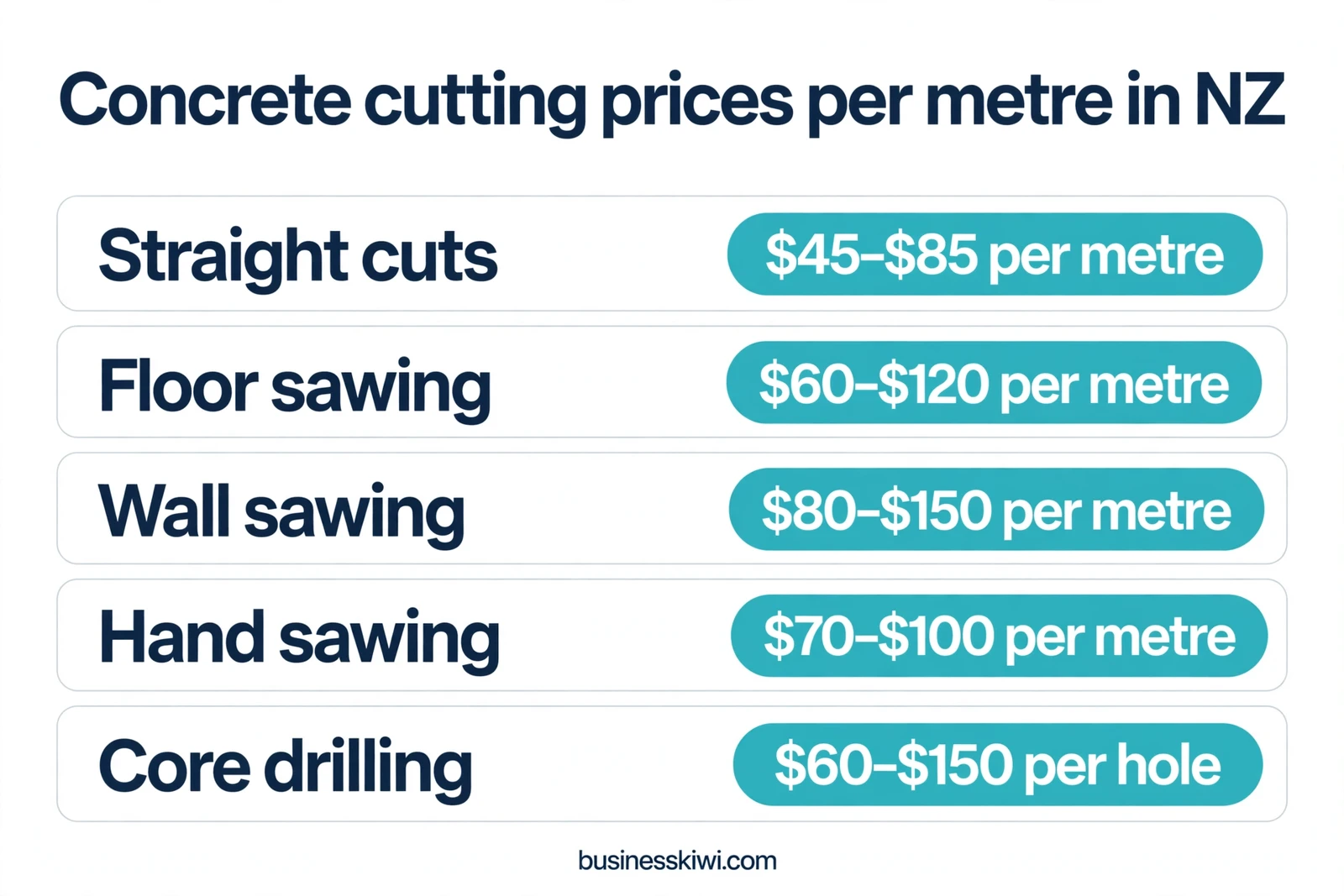
Cutting concrete in New Zealand typically costs between $45 and $85 per metre for a basic straight cut. That range comes from a New Zealand concrete cutting company that publishes its prices, and it covers standard work on an accessible flat surface. Core drilling, which makes round holes rather than straight cuts, usually runs from $60 to $150 per hole. Your job may sit outside those ranges. Thickness, steel reinforcing, access, location and urgency all move the price, sometimes by a lot. This guide works through the published figures, what changes them, and how to get a quote you can trust.
If you need one number to budget with, use $45 to $85 per metre for straight cuts and $60 to $150 per hole for core drilling. A small residential job, such as a few metres of driveway cutting, often lands between $250 and $400 all up when a professional does it. Larger or harder work, such as cutting reinforced concrete or working on a second-storey wall, can go beyond $150 per metre. None of these figures is a fixed national rate. No government agency and no industry body publishes one. Every job is quoted on its own details, so treat the numbers here as a starting point and get two or three written quotes for your own site.
One warning before the detail: the price ranges in this guide come from a supplier’s own published pages, and those pages do not state whether GST is included. Always ask whether a quote is GST inclusive. At 15 percent, GST is the difference between a fair price and a nasty surprise.
What concrete cutting actually covers
Concrete cutting is controlled, precise removal. It is not demolition. A cutter makes a clean line or a clean hole exactly where it is needed and leaves the rest of the structure alone. Homeowners and builders across New Zealand call for it in a handful of common situations.
Driveways are the most frequent residential job. A cracked section gets isolated with straight cuts so only the damaged part is removed. Expansion joints are cut into large slabs to control where cracks form. Floors are cut when a renovation needs new plumbing, drainage or underfloor heating lines run through a slab. Walls are cut to create openings for doors, windows and vents, including in block and concrete walls. Trenches are cut for cables and pipes. Core drilling makes round holes for plumbing, ventilation and electrical access, and it removes a neat cylinder of concrete with little damage around it.
The method matters to the price, because each one uses different gear and takes a different amount of time.
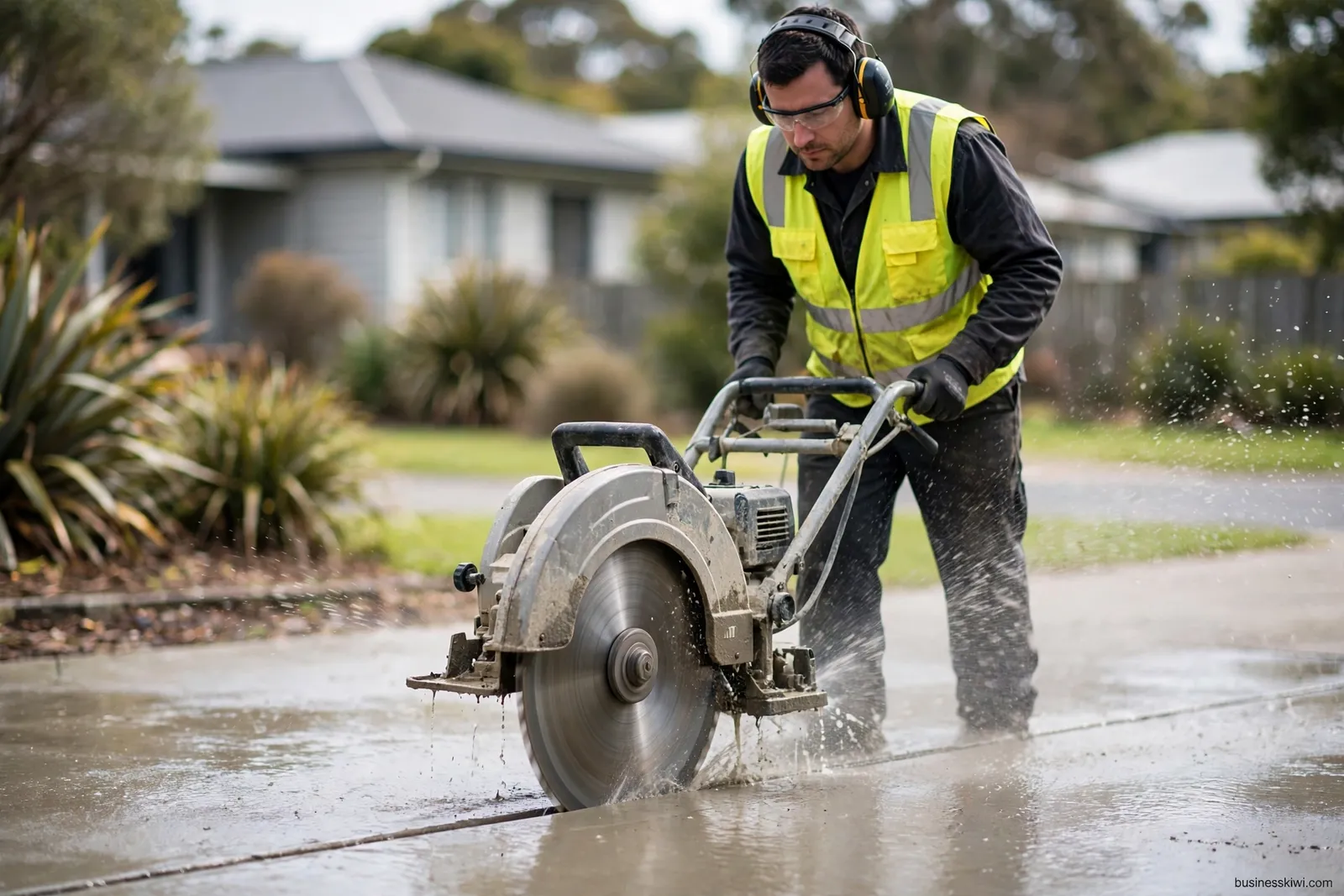
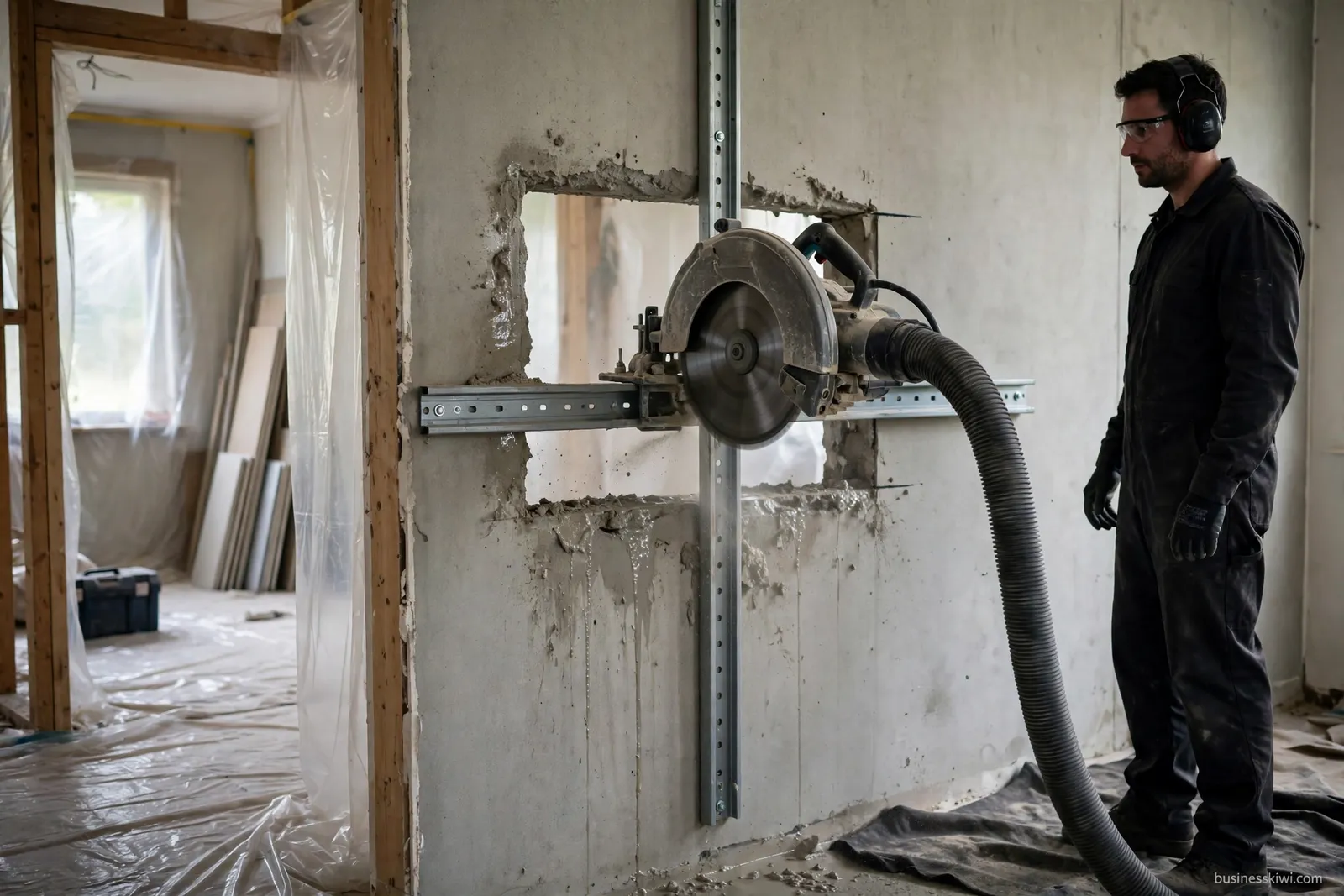
Saw cutting is the most common method. A diamond-tipped circular blade, mounted on a handheld saw or a walk-behind machine, cuts flat surfaces such as driveways, slabs and footpaths. Wall sawing uses a track-mounted saw to cut vertical surfaces with precision, and it costs more because of the setup and the labour involved. Core drilling uses a hollow diamond bit to bore round holes. Hand sawing uses a smaller saw for tight spaces where a big machine cannot reach. Wire sawing uses a cable strung with diamond beads and is reserved for very thick sections, pillars and heavy beams, mostly on commercial work.
How much it costs per metre
The table below brings together the published figures from Concrete Cutters Auckland, a New Zealand company that lists its prices on its own website. Use it as a guide to what a job should cost, not as a promise. Your quote depends on your concrete and your site.
| Service | Typical published range |
|---|---|
| Straight cuts, standard flat work | $45 to $85 per metre |
| Floor sawing | $60 to $120 per metre |
| Wall sawing | $80 to $150 per metre |
| Hand sawing in tight spaces | $70 to $100 per metre |
| Core drilling | $60 to $150 per hole |
| Core drilling, Auckland rates | $50 to $120 per hole |
| Full slab cutting and removal | $300 to $1,000 or more |
| Concrete disposal | $100 to $400 or more |
| Hourly rate, larger or complex jobs | $150 to $250 per hour |
| Minimum call-out fee | Often around $150 |
A few of those rows deserve a closer look. Basic driveway or patio cuts can come in as low as $60 per metre. Heavier work, such as cutting reinforced concrete or working on a second-storey wall, can go beyond $150 per metre. A small slab section, like a patio or a shed base, might cost under $500 to cut out. A larger driveway slab or a structural floor can pass $1,000, especially when steel reinforcing is present.
Core drilling is priced per hole, not per metre, because the cost turns on the diameter and the depth of the hole rather than on length. A small hole under 100mm across is cheaper. A wide or deep hole costs more, and cutting through reinforcing adds to the price again.
What it costs in different parts of the country
Prices are not the same everywhere in New Zealand. Labour rates, demand and access to equipment all differ by region. The same supplier publishes a regional breakdown, and it shows a clear pattern.
| Region | Straight cuts (per metre) | Core drilling (per hole) | Disposal (approx.) |
|---|---|---|---|
| Auckland | $55 to $85 | $80 to $150 | $200 to $400 |
| Wellington | $50 to $80 | $70 to $140 | $150 to $350 |
| Christchurch | $45 to $75 | $60 to $120 | $100 to $300 |
Auckland tends to be the most expensive of the three, which the supplier puts down to higher operating costs and traffic delays. Wellington pricing depends heavily on site access, with hilly areas and tight urban zones pushing the price up. Christchurch is usually the most affordable for standard residential work. If you live outside the main centres, ask about travel charges. Some companies add a fee for jobs a long way from their base, and it is better to find that out before the crew arrives than on the invoice.
What pushes the price per metre up or down
Two jobs that look identical on the phone can be quoted hundreds of dollars apart. The reasons are practical, and knowing them helps you read a quote properly.
Thickness and strength. This is the biggest single driver. A thin footpath slab cuts fast. A thick garage floor or an industrial slab takes longer, wears blades faster and costs more. Older concrete can be harder still, because years of curing make it denser. The jump from a 100mm residential slab to a 300mm industrial floor is the difference between a quick job and a long one.
Steel reinforcing. Concrete with mesh or rebar inside is slower to cut and harder on blades. Blades wear out far sooner on heavily reinforced material, and blades are a real cost in this work. The contractor has to allow for that, and you pay for it. If your slab has post-tension cables, the job is in a different category again. Those cables sit under extreme tension, and cutting one without knowing where it runs is dangerous. A scan to locate them comes first, and that is a separate cost.
Access. A driveway at the front of a flat section is cheap to reach. A slab at the back of a tight property, down stairs, or inside a room the crew has to carry gear through, costs more in labour time. If the job needs scaffolding or a raised platform, that goes on the quote too.
Job size. Small jobs carry a minimum charge. A contractor that sends a crew and a truck for a single short cut will often charge a call-out fee of around $150, because the travel and setup cost the same whether the cut is one metre or ten. Larger jobs spread those fixed costs over more metres, which is why the per-metre rate can look better on a bigger job.
Equipment. Handheld saws suit small or interior cuts. Driveways and commercial slabs need walk-behind or track-mounted saws. Diamond blades, wet cutting setups and dust extraction all add operating cost, and the quote reflects the gear the job actually needs.
Urgency. Booking ahead is cheaper. Same-day or after-hours work usually carries a premium, because the contractor has to rearrange other jobs or pay overtime. If the work can wait a week, it usually costs less.
Disposal. Cutting is only part of the job. The rubble has to go somewhere. Some quotes include removal and clean-up. Others do not, and disposal can add $100 to $400 or more depending on volume. A skip bin is the usual alternative, and it is a separate cost. Always ask whether removal is in the price.
GST and travel. As noted above, some quotes are GST exclusive and some are inclusive. The 15 percent difference is large enough to change which quote is actually cheapest. Travel fees work the same way. Ask both questions before you compare anything.
How quotes are priced
Concrete cutting is usually priced in one of three ways, and the method changes what you pay.
Per metre pricing suits straightforward linear work: straight cuts in a driveway, a floor or a wall. It is the most predictable model, because you can measure the cut and multiply. Per hour pricing suits complex work, hard-to-reach areas, or jobs that need several tool changes. It is fair when the work is genuinely uncertain, but it leaves you exposed if the job runs long. Per job pricing, a fixed quote for the whole task, gives the most certainty. It works best for small, well-defined residential jobs where the contractor can see exactly what is involved.
No model is best in every case. For a small cut, a fixed per-job price may beat a per-metre rate once the call-out fee is counted. For a long run of identical cuts, per metre is usually the cleanest deal. Ask for the quote in writing, itemised, with labour, equipment, travel, disposal and GST shown separately. An itemised quote is the only kind you can fairly compare with another.
DIY or hire a professional
Hiring a concrete saw in New Zealand costs around $100 to $200 per day, before blades, safety gear and transport. A basic residential job done by a professional might start around $250 to $400 in total. Put those two figures side by side and the gap is smaller than most people expect, because the hire figure leaves out the blade, the protective gear, the disposal and your own time.
DIY makes sense for small, low-risk work. Trimming a garden slab or cutting a single paver is the kind of job a confident homeowner can handle with the right blade and a steady hand. It does not make sense for structural concrete, large slabs, internal walls, or any cut near plumbing and electrical lines. A wrong cut in those places can cost far more to fix than the professional would have charged in the first place.
The risks of DIY are concrete and specific. The wrong blade overheats or wears out mid-cut. An uneven hand leaves jagged edges that make the next stage of the build harder. Dust without proper control is a health hazard, which the next section covers. Blade kickback and flying debris can injure. And a cut through a post-tension cable or a live service line is a genuine emergency, not a mistake you can undo.
If you do hire out, check that the contractor can show past work on jobs like yours, that the quote is written and itemised, and that clean-up and disposal are covered. A slightly higher price from a contractor who explains the job clearly is usually better value than the cheapest quote with vague terms.

Safety: silica dust is the real risk
Cutting concrete creates dust, and that dust is the most serious hazard in this work. Concrete contains silica. When concrete is cut, ground or drilled, it releases respirable crystalline silica dust: particles so small they cannot always be seen, and small enough to lodge deep in the lungs.
WorkSafe New Zealand’s guidance on silica dust is direct about the consequences. Breathing in this dust can cause silicosis, a scarring of lung tissue that causes shortness of breath and can keep developing even after exposure stops. The effects are permanent. Long-term exposure at high levels can also cause lung cancer and chronic obstructive pulmonary disease. These are not remote risks for occasional exposure, but they are the reason the controls exist and why they matter on every job.
The controls WorkSafe sets out are practical. Keep the material wet while cutting, using water spray or on-tool water suppression. Use tools fitted with dust extraction. Clean up with an H-class HEPA-filtered vacuum, never a household vacuum, and never dry sweep or blow dust away with compressed air. Set up exclusion zones so other people stay clear of the work area. Respirators should conform to AS/NZS 1716, be selected under AS/NZS 1715, and be fit tested for the worker wearing them. Protective clothing and gloves are standard, and dust-covered clothes should stay at work rather than being worn home.
For a homeowner, the practical point is simple. Ask the contractor what dust controls they use before they start. Wet cutting and extraction are the marks of a professional crew. A contractor who dry cuts a slab inside your house without extraction is cutting corners on the thing that matters most. If you are doing a small DIY cut yourself, the same rules apply on a smaller scale: keep the cut wet, wear a properly fitted P2 respirator, eye protection, hearing protection and gloves, and keep other people, especially children, out of the area.
Do you need a building consent or a permit?
Cutting concrete is not always just a trade job. Sometimes it is building work, and building work has rules.
Under Schedule 1 of the Building Act 2004, some work on internal walls and doorways in an existing building does not need a building consent. The exemption does not apply where the wall is load-bearing, a bracing element, a fire separation wall, part of a specified system, or made of masonry units such as brick, burnt clay, concrete or stone laid in mortar. MBIE’s Building Performance guidance gives the example of a hotel owner cutting a new opening in a masonry wall that turns out to be load-bearing: a building consent is required. The same logic applies to a house. Cutting an opening in a concrete or block wall that carries load, braces the building, or separates fire areas needs a consent, and it needs an engineer or a Licensed Building Practitioner involved before the saw starts.
Cutting a flat slab, a driveway or a footpath is a different question, and it usually turns on where the work sits. Work that touches a public footpath, a driveway crossing, or ground near utility lines may need a permit or approval from your local council. Your contractor should be able to tell you whether one is needed, and if there is any doubt, a short call to the council before work starts is cheaper than a fine or a redo afterwards. All building work, consented or not, must still comply with the Building Code.
How to get a fair quote
Getting a good price is mostly a matter of asking the right questions and giving the contractor the information they need. A short checklist covers it.
First, describe the job properly. Tell each contractor the length of the cut, the thickness of the concrete, whether it is reinforced, where the cut is, and how easy the site is to reach. Photos and rough measurements help, and they make the quotes more accurate.
Second, get two or three written quotes, and make sure each one is itemised. Labour, equipment, travel, disposal and GST should all be shown. If one quote is far cheaper than the others, ask what it leaves out. Vague wording and missing line items are where surprise charges hide.
Third, ask the four questions that catch most problems. Is clean-up and disposal included? Is there a minimum call-out fee? Is the quote GST inclusive? What dust controls will the crew use? The answers tell you as much about the contractor as the price does.
Fourth, clear the area before the crew arrives. Moving furniture, clearing access and marking the cut lines saves labour time, and labour time is what you are paying for. If the job can be booked in advance rather than urgently, and if other cutting or drilling work can be bundled into the same visit, the total usually comes down.
Finally, check the contractor’s past work. Before-and-after photos of similar jobs and recent reviews are worth more than a low price. A contractor who has cut dozens of driveways like yours will price yours accurately. One who has not may price it hopefully, and hope is not a budget.

Mistakes that add hundreds to the bill
A few common mistakes turn a straightforward job into an expensive one.
Assuming disposal is included is the most frequent. Many people find out after the cutting is done that removal is a separate charge, or that they need to hire a skip bin themselves. The fix is one question before you book.
Forgetting GST and travel is the second. A quote that looks cheap on paper can grow by 15 percent for GST and more again for travel if you live outside the main centres. Ask whether both are included.
Ignoring permits is the third. Cutting into a public path or near utilities without checking with the council can lead to fines, delays, or work that has to be redone. The check is free. The redo is not.
Choosing the cheapest quote without reading it is the fourth. Low prices with vague terms often mean corners cut on equipment, safety or finish. A rough edge or a damaged slab costs more to fix than the saving was worth.
Not checking for reinforcing or services before cutting is the fifth. Hitting a post-tension cable or a live line is dangerous and expensive. A scan and a services check are part of a professional job, not an optional extra.
If the cutting is part of a bigger job, our guides to shed prices in NZ, the cheapest way to build a house in NZ and one-bedroom granny flats explain the costs around the cutting work, and the Business and Industry section has more building guides.
Frequently asked questions
How much does concrete cutting cost per metre in NZ?
For standard straight cuts, typically $45 to $85 per metre. Wall sawing runs higher at $80 to $150 per metre, and floor sawing sits between the two at $60 to $120 per metre. Prices vary with concrete thickness, reinforcing, access and region, and the published ranges do not state whether GST is included, so ask.
What factors affect concrete cutting prices in NZ?
Thickness and strength of the concrete, steel reinforcing, site access, job size, the equipment needed, urgency, disposal, travel and GST. The biggest single driver is usually thickness combined with reinforcing, because both slow the cut and wear blades faster.
Is core drilling more expensive than straight cuts?
Usually, yes, per unit. Core drilling runs from $60 to $150 per hole, depending on diameter and depth, while a straight cut is priced per metre. The two are not directly comparable, because a hole and a cut are different tasks, but core drilling uses specialised gear and takes longer per unit of work.
Can I cut concrete myself to save money?
For small, low-risk jobs, such as trimming a garden slab, yes, if you have the right blade and protective gear. For structural concrete, large slabs, internal walls, or cuts near services, hire a professional. The hire cost of a saw alone is $100 to $200 per day before blades and gear, so the saving is often smaller than it looks.
Do I need a permit for concrete cutting work?
Sometimes. Cutting an opening in a load-bearing or masonry wall needs a building consent. Work on public footpaths, driveway crossings or near utility lines may need council approval. Always check with your local council before the work starts, and let your contractor advise you.
Is clean-up included in the cost?
Not always. Some contractors include site clean-up and disposal in the quote. Others charge separately, and disposal can add $100 to $400 or more. Ask before booking, and get the answer in writing.
How long does a typical concrete cutting job take?
Most small residential jobs are finished within a few hours. Larger or more complex jobs can take a full day or longer, depending on access, thickness and the number of cuts. Your contractor should be able to give you a time estimate with the quote.
A note on the figures in this guide
All prices in this guide come from one New Zealand concrete cutting company that publishes its prices on its own website, checked in November 2026. No national rate exists, and no other New Zealand supplier we checked publishes a per-metre price list, so these figures are the best published guide available rather than a market average. Treat them as a starting point. Your quote is the figure that matters, and it should be written, itemised and GST clear.
This guide is general information, not professional, legal or engineering advice. Concrete cutting can affect the structure of a building and the health of the people doing it. Talk to a Licensed Building Practitioner, an engineer or your local council before cutting structural concrete, and follow WorkSafe guidance on silica dust.