Shipping Containers for Sale NZ: Sizes, Grades, Prices and What to Check Before You Buy
The short answer
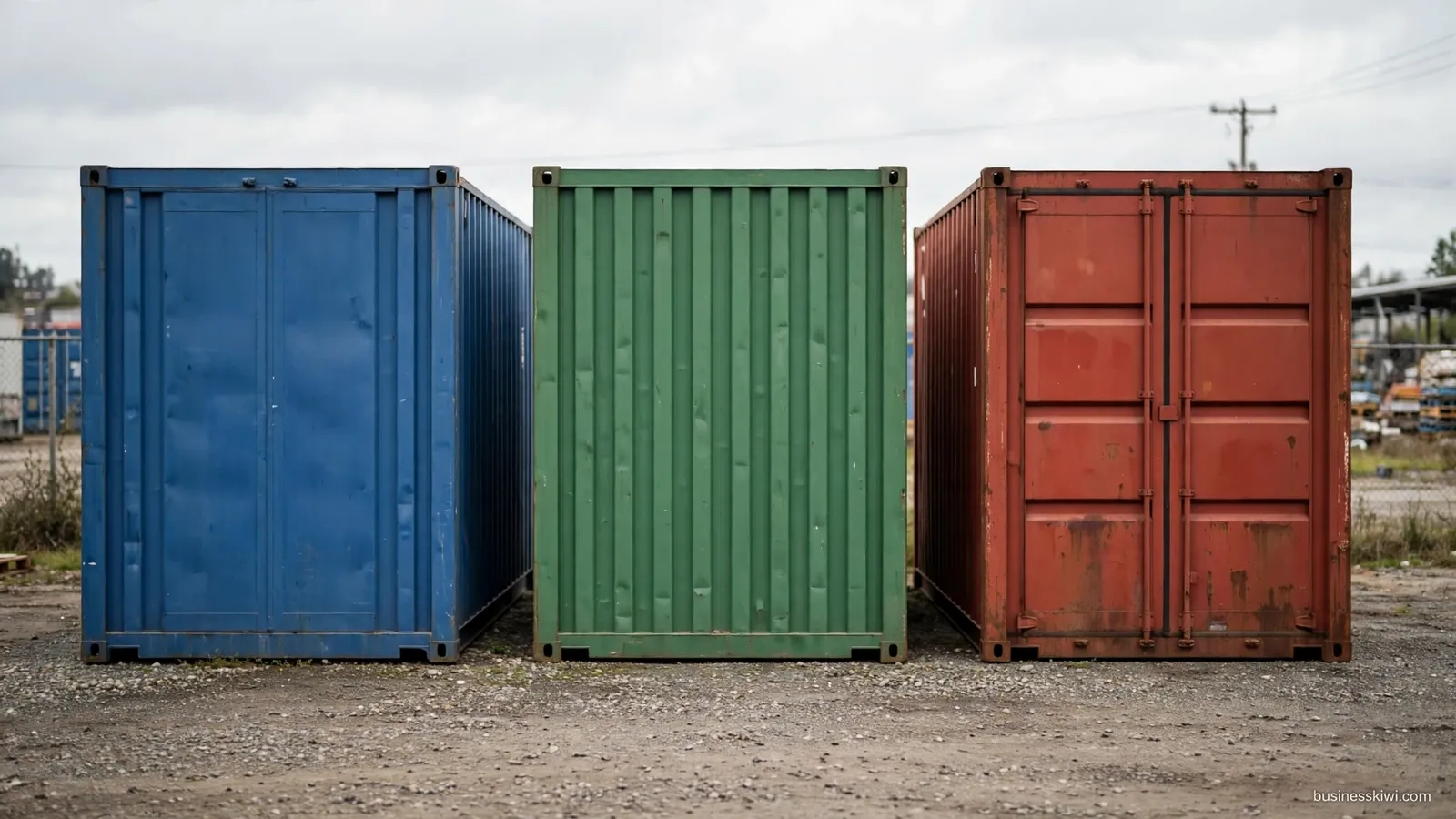
A shipping container is one of the simplest ways to add secure, weatherproof storage to a home, farm or business site in New Zealand. Suppliers sell them in sizes from 8ft up to 40ft, in types from standard dry boxes to refrigerated units, and in grades from brand new down to cheap as-is units with known faults. The box itself is only part of the purchase. Grade, delivery method and site access drive the real cost, and the rules about placing a container on your land depend on what you use it for. Buy the grade that matches the job, sight the actual container before you pay, and confirm the delivery truck can reach the spot before the sale is final.
Sizes and dimensions
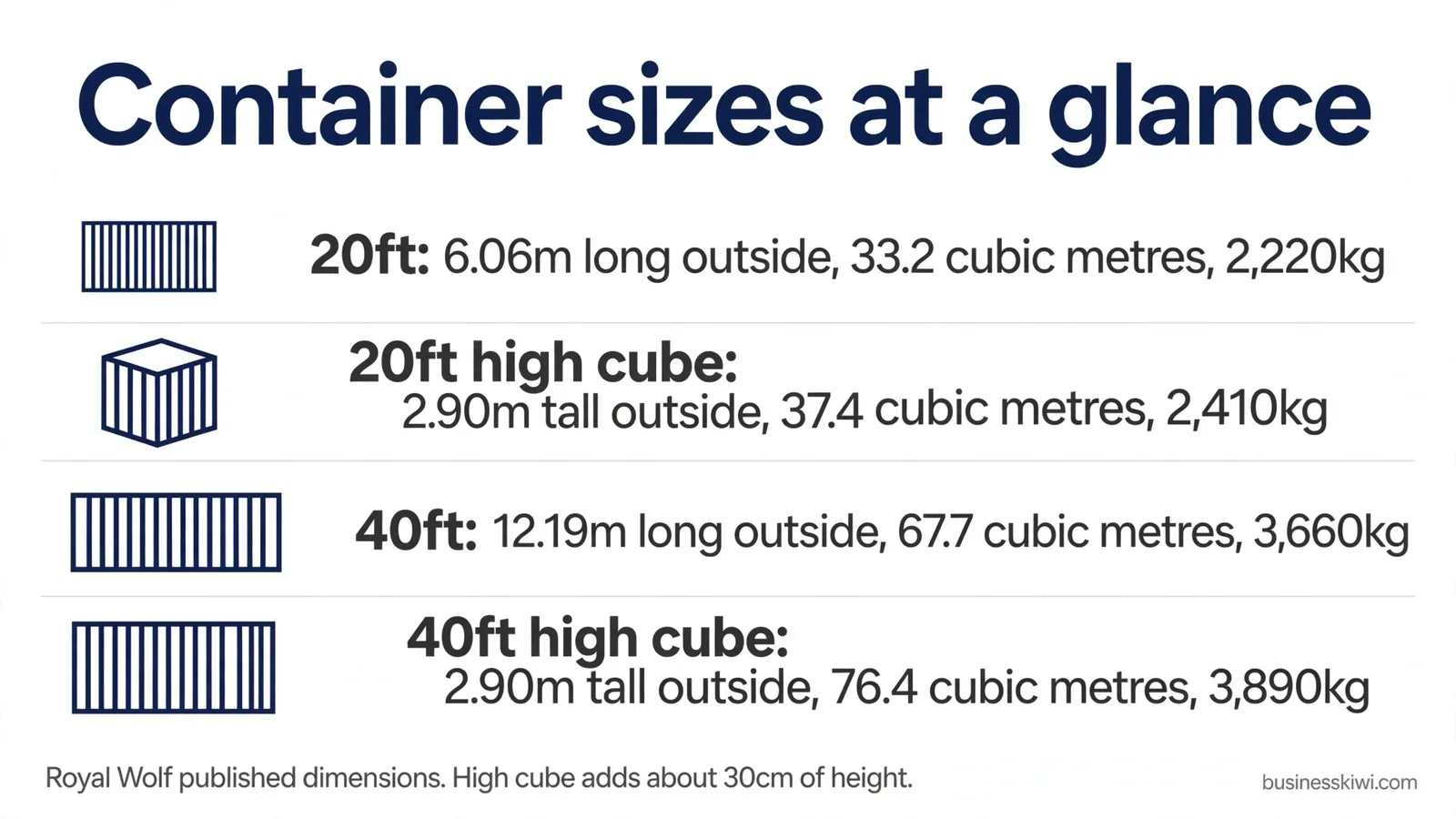
Most buyers choose between a 20ft and a 40ft container, but smaller and taller options exist. Royal Wolf sells used units in 8ft, 10ft, 20ft and 40ft sizes. The small units suit tight sites, and high cube versions add roughly 30cm of extra height, which helps with tall machinery, racking and stacked goods.
Royal Wolf publishes the following dimensions for its standard range. Internal measurements matter most for storage, because the walls and door gear take up space.
| Size | External (L x W x H) | Internal (L x W x H) | Weight | Capacity |
|---|---|---|---|---|
| 20ft | 6.06m x 2.44m x 2.59m | 5.90m x 2.35m x 2.39m | 2,220kg | 33.2 cubic metres |
| 20ft high cube | 6.06m x 2.44m x 2.90m | 5.90m x 2.35m x 2.70m | 2,410kg | 37.4 cubic metres |
| 40ft | 12.19m x 2.44m x 2.59m | 12.03m x 2.35m x 2.39m | 3,660kg | 67.7 cubic metres |
| 40ft high cube | 12.19m x 2.44m x 2.90m | 12.03m x 2.35m x 2.70m | 3,890kg | 76.4 cubic metres |
A 20ft container holds the contents of a typical three to four bedroom home, according to Royal Wolf. A 40ft roughly doubles the floor space. Every container is built from heavy grade corrosion-resistant steel, often called Corten steel, which is why retired shipping boxes survive outdoors for years.
The main types
The standard dry container, sometimes called general purpose, is the plain steel box most people picture, and it suits dry storage of tools, stock, furniture and farm gear. High cube is the same box with extra height.
Refrigerated containers, called reefers, have an insulated body and a refrigeration unit. Royal Wolf’s reefer range uses Carrier refrigeration technology. Its single-phase chiller units hold temperatures from 0°C to 20°C and need a 15 amp, 240 volt supply. Its three-phase chillers run from -25°C to 20°C and need 32 amps at 415 volts. SEA Containers sells used reefers rated between -20°C and +18°C. Check the power supply at your site first, because a reefer is only useful if you can run it.
Side-opening containers have full-length doors along one or both sides, which suits pallet loading and gear you reach often. Open-top containers have a removable roof covered by a tarpaulin, so cargo can be crane-loaded from above. Flat racks have collapsible ends or sides for oversized loads such as machinery and timber. Insulated containers have foam-filled walls that soften temperature swings without active refrigeration. Dangerous goods containers are built for compliant storage of hazardous substances. Most buyers only need the dry box, but the special types solve real problems.
Grades explained: one-trip, cargo worthy, wind and watertight, as-is
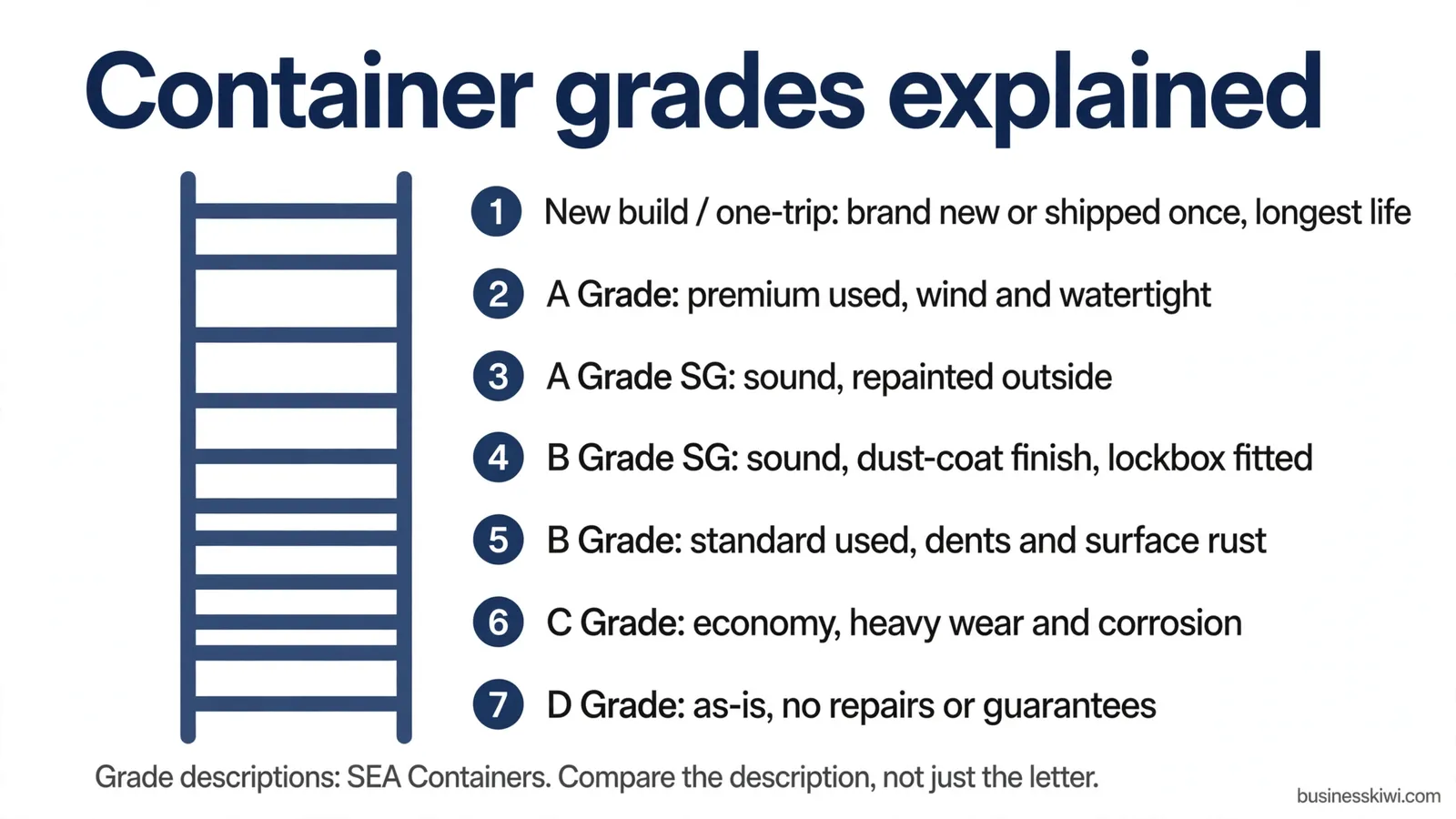
Grade language is where buyers most often get confused, because each supplier uses its own labels. SEA Containers publishes one of the clearest ladders in the NZ market.
- New build (one-trip): brand new from the manufacturer, or shipped once with cargo and then sold. Longest service life, best appearance, highest price.
- A Grade (premium used): structurally excellent used units, wind and watertight, with minimal cosmetic wear.
- A Grade SG: a structurally sound unit repainted externally to lift its presentation.
- B Grade SG: sound used units with a light internal dust-coat finish and a lockbox fitted. Moderate dents, scratches and surface rust are normal.
- B Grade (standard used): structurally sound, no dust-coat, with visible dents, scratches and surface rust consistent with age and service.
- C Grade (economy): heavily used ex-shipping line units with significant wear, repairs, dents and corrosion. A budget storage option.
- D Grade (as-is): sold in existing condition with no repairs or guarantees. These may need structural or weatherproofing repairs. Two terms cut across the grades. Cargo worthy means the container has been inspected and certified as fit to ship cargo internationally. Wind and watertight, often shortened to WWT, means the box keeps weather out, which is what storage buyers actually need. An as-is unit carries no promise about either.
The CSC plate is the container’s metal safety approval plate. CSC stands for the Container Safety Convention, the international safety standard for containers, and a valid plate is required for any container used for ocean transport. Under the Periodic Examination Scheme described by SEA Containers, new containers carry CSC validity for five years, and used containers can have it extended by a maximum of 30 months from the inspection date. SEA Containers can also fit CSC plates to its B Grade units on request, valid for a standard 12 months. If the container will only ever sit on your land, a lapsed plate does not matter. If you plan to ship goods in it, the plate and its dates are essential.
What to inspect before you buy
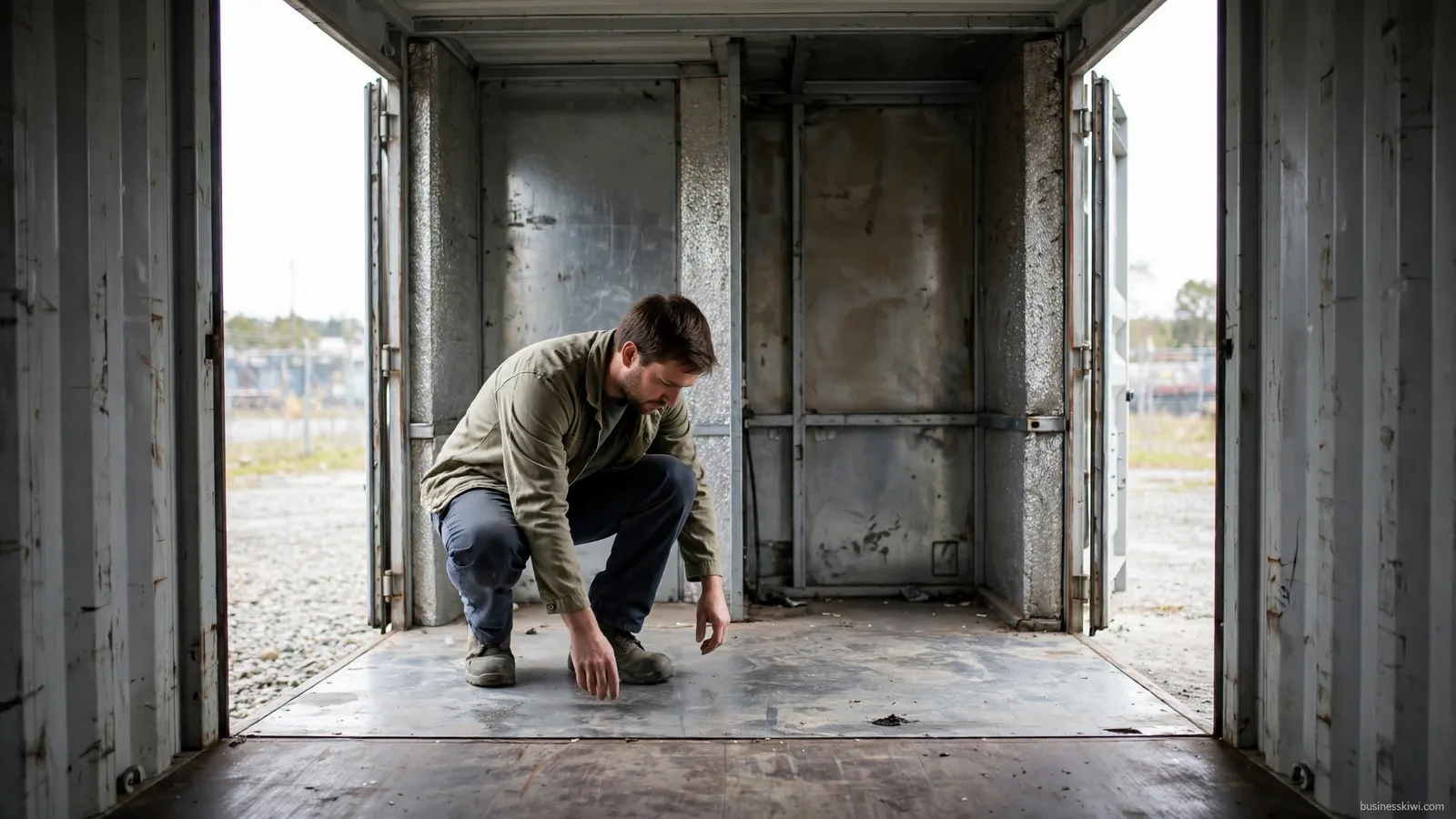
Photos are a starting point, not a substitute for standing in front of the box. Royal Wolf sells its used units by inspection appointment only, and SEA Containers depots also work on viewings by appointment.
- Doors and seals: open and close both doors. They should swing freely and seal evenly all round. Perished or torn seals let water in. A container sitting out of level can also make doors bind, so judge stiff doors carefully.
- Floor: walk the whole floor. It should feel solid underfoot with no soft spots, delamination or holes. Floor damage is a common fault in cheap units.
- Rust: surface rust and scuffs are normal on used grades. Deep corrosion, rust holes and heavy pitting on corner posts or cross members are structural worries, not cosmetics.
- Roof and walls: look for patches, dents that break the weather line, and daylight showing through. Getting inside and closing the doors on a bright day is the classic watertight test.
- CSC plate: if you need the container for shipping, check the plate is present and its inspection dates are current.
- Container number: match the number on the box to the listing, so the unit you inspected is the unit that arrives.
SEA Containers says it inspects structural integrity, door seals, floor condition and overall function before a used container joins its inventory, and its maintenance advice is simple: check door seals annually and treat rust promptly.
Delivery and site preparation
Delivery is arranged with the supplier and is usually priced separately. Royal Wolf states plainly that its listed prices do not include delivery. Three truck types do most NZ deliveries.
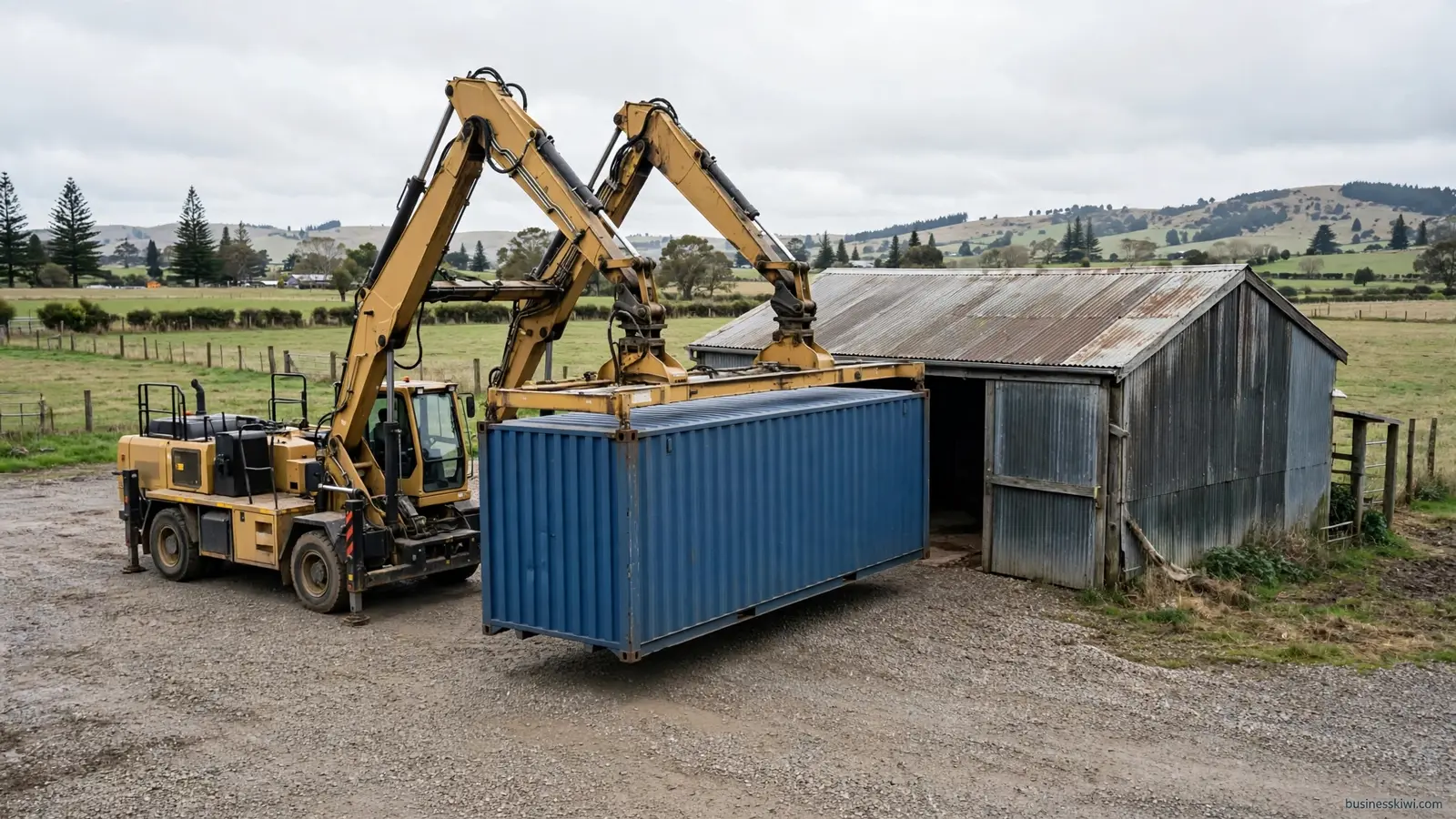
A swinglift, or side loader, carries the container on a trailer and lifts it off to the driver’s side, setting it down about 500mm from the trailer. A container transport guide published by Hamilton Relocations gives typical swinglift requirements: lifting capacity up to 10,000kg, at least 3.5 metres of gate width, 6 metres of width at the drop zone, about 4.4 metres of height on the truck, 6.5 metres of clearance for the lifting arms, and a truck 9 to 10 metres long plus room to exit. A swinglift cannot lift a container over a fence.
A hiab is a truck-mounted crane. It can lift a container over a small fence or obstruction and place it more precisely. The same guide puts typical hiab limits at 5,500kg, less if the crane has to reach further. A hiab needs about 3 metres of gate access, a further 3.5 to 4 metres for its stabiliser legs, about 4.2 metres of height for the loaded truck, 10 metres of overhead clearance for the crane, and 10 metres of length to unload a 20ft unit.
A tilt tray slides the container off the back of the truck. ContainerCo’s ContainerShop notes that a tilt-bed truck eases off-loading but places the container less precisely than a crane, and that wooden or concrete feet under the container are standard practice, particularly on moist ground.
Whichever truck comes, the landing area must be level and dry, or the container twists slightly and the doors become hard to open and close. Decide which way the doors should face, doors to cab or doors to rear, and tell the supplier before loading, because it cannot be changed on the day.
The rules: consents and council requirements
A shipping container counts as a building under section 8 of the Building Act 2004, according to Grey District Council’s published guide on shipping containers. The same guide states that placing or moving a container on a property is not building work, so no consent is needed just to put one on your land.
Use is what changes the answer. Under that council’s guide, a container used for storage, like a garage or garden shed, needs no building consent where there is no formed foundation or ground-bearing slab and no other building work. The guide says to locate it at least 1 metre from a legal boundary, otherwise fire rating requirements and an associated building consent may apply. Once building work enters the picture, such as a formed foundation or slab with hold-down fixings, services, a roof or internal fittings, a building consent is required. Occupied uses move the container out of the storage category altogether: the guide shows consent required for a private workshop, a sleepout, a private office, housing, and commercial or industrial uses beyond storage.
Two cautions matter. First, that guide deals with Building Act requirements only, and it says so itself. District plan rules about placement, appearance and land use are separate, and they differ between districts. Second, it is one council’s published guide, so treat it as a worked example of how the framework applies rather than a national ruling. Check your own council’s rules before the container arrives, especially if boundaries are close.
Modifications at a guide level
Suppliers modify containers themselves, and buying the modification with the box is usually simpler. Royal Wolf lists side and roller doors, windows, shutters and skylights, racks, work benches and shelving, air conditioning, whirly birds and ventilators, electrical fitouts, access ramps, security bars and lock boxes, and custom painting. SEA Containers offers personnel doors, windows, ventilation, electrical installations, insulation packages and lock boxes.
Ventilation deserves a mention because condensation is the most common complaint in storage containers. Steel boxes sweat when warm moist air meets cold steel, and ventilators or whirly birds are the standard supplier fix. Insulation packages reduce the problem further. Cutting openings changes a container’s structure, so treat structural changes as supplier or engineer work, not a weekend job. Converting a container into a dwelling is a different project with its own consent path, and it is outside what this guide covers.
Hire vs buy
Hiring suits short building projects, seasonal storage, events and moves. Buying suits permanent storage, farm use and any fit-out you want to keep.
SEA Containers publishes hire rates that give a useful yardstick. Under its current prepaid six-month hire offer, a 20ft A Grade container hires at $110 plus GST per month, a 20ft B Grade at $84 plus GST per month, a 40ft high cube A Grade at $212.50 plus GST per month, and a 40ft high cube B Grade at $165 plus GST per month. Rates change and conditions apply, so treat those figures as published examples, not quotes. Royal Wolf’s used stock includes ex-hire units, which is why many clearance containers have a working history behind them. As a rough test, price the months you realistically need against the purchase price of the grade you are looking at, and remember that a bought container keeps a resale value that hire never builds.
Prices and what drives them
Container pricing in NZ is largely listing and quote based, so treat any single figure as an example rather than a going rate. One live example from Royal Wolf’s own listings: a 40ft high cube container in Auckland, graded Economy and ex-hire, listed at $6,095 including GST and discounted to $6,000 including GST, with delivery extra and inspection by appointment. SEA Containers says used containers usually cost 30 to 50 percent less than new equivalents, framed as a general guide rather than a price list.
The drivers are consistent across suppliers. Size is the obvious one: a 40ft costs more than a 20ft, and high cube adds a premium. Grade is the big one: condition moves price more than age does, which is why the grade ladder exists. Type matters, because reefers, side-openers and modified units cost more than plain dry boxes. Delivery distance from the depot adds up, and modifications are priced per job. If a price looks far below the pack, read the grade description twice. The discount usually lives in the condition.
Watch-outs
- As-is means as-is. D Grade and as-is units can need structural or weatherproofing repairs. Price in the repair work before calling it a bargain.
- Delivery is extra. Listed prices commonly exclude it, and difficult access can push the cost up. Confirm the truck type and the total delivered price in writing.
- Short reserve windows. Royal Wolf holds reserved containers for a maximum of 7 days. Have your site and payment ready before you commit.
- Photos flatter. Listings show the unit at its best. Inspect in person, or ask for current photos of the specific container number you are buying.
- Payment scams exist. Royal Wolf warns customers on its own pages to verify they are dealing with the company before paying. Pay through the supplier’s official channels only, and be suspicious of marketplace listings using a real supplier’s name and photos.
- Rules follow use, not the box. Storage is simple. Once a container becomes a workshop, office or sleepout, consent requirements change. Check first.
Related guides: turning a container into a dwelling is a different project (see our transportable homes guide), and our shed prices guide covers the other common storage option. For more business and rural guides, browse the Business & Industry section.
Frequently asked questions
What size shipping container should I buy?
A 20ft is the default choice for household storage, tools and small business stock, and Royal Wolf notes it holds the contents of a typical three to four bedroom home. Choose a 40ft for vehicles, machinery or bulk stock, a high cube if your goods are tall, and an 8ft or 10ft where space is tight.
What does one-trip mean?
A one-trip container is effectively new. It was manufactured overseas, shipped once carrying cargo, and then sold. SEA Containers groups new build and one-trip units at the top of its grade ladder, with the longest service life and the premium price to match.
Do I need a building consent for a shipping container?
For plain storage, generally no, provided no building work is involved. Grey District Council’s guide states that placing a container is not building work, and storage use with no formed foundation needs no consent, though it should sit at least 1 metre from a boundary. Foundations, services, fittings or occupied uses such as a workshop, office or sleepout do need consent, and district plan rules are separate.
How much does delivery cost?
There is no standard figure in the sources used for this guide. Suppliers price delivery separately from the container, and the cost depends on distance from the depot, the truck type your access requires, and the container’s size. Get the delivered price in writing before you buy.
Can I inspect a container before buying it?
Yes, and you should. Royal Wolf sells used containers by inspection appointment only, and SEA Containers arranges depot viewings by appointment. Check the doors, seals, floor and roof, and match the container number to the paperwork.
What is a CSC plate and do I need one?
The CSC plate is the container’s safety approval plate under the Container Safety Convention. A valid plate is required if the container will be used for ocean transport. New containers carry five years of validity under the Periodic Examination Scheme, with extensions of up to 30 months after inspection. For storage on land, a current plate is not needed.
Is it better to hire or buy a shipping container?
Hire for needs measured in months, such as a renovation, a build or seasonal overflow. Buy for permanent storage, farm use or any unit you plan to modify. Compare published hire rates, such as SEA Containers’ 20ft B Grade at $84 plus GST per month under its current prepaid offer, against the purchase price of a similar grade, and factor in resale value.
The bottom line
Buying a shipping container in NZ is straightforward once you separate the three decisions: the size and type that fit the job, the grade that honestly matches your condition expectations, and the delivery that suits your access. One-trip and A Grade units cost more because they ask less of you. Cheap as-is units cost less because the work transfers to you. Sight the box, confirm the delivered price, and ask your council before the use goes beyond storage.
Sources
- Royal Wolf NZ, Used Shipping Containers (clearance listings): https://www.royalwolf.co.nz/clearance/20ft-high-cube-container-auckland-spsu1300952
- Royal Wolf NZ, 40ft High Cube Container listing, Auckland (container RWTU4414323): https://www.royalwolf.co.nz/clearance/40ft-high-cube-container-auckland-rwtu4414323
- Royal Wolf NZ, 20ft and 40ft Container Flyer (NZ): https://www.royalwolf.co.nz/uploads/files/brochures/00PrintNumber/20ft___40ft_Flyer_FINAL_-_NZ.pdf
- Royal Wolf NZ, Refrigerated Containers brochure: https://www.royalwolf.co.nz/uploads/files/brochures/Refrigerated Containers/Reefers Brochure – WEB-Small.pdf
- SEA Containers NZ, Used Containers for Sale: https://www.seacontainers.co.nz/container-sales/used-shipping-containers/
- SEA Containers NZ, Shipping Containers Hamilton: https://www.seacontainers.co.nz/depot-locations/shipping-containers-hamilton/
- SEA Containers NZ, SEA Containers Partner Deals (hire rates and partner offers): https://www.seacontainers.co.nz/sea-containers-partner-deals/
- Hamilton Relocations, Container Transport: Truck Options (delivery guide): https://hamiltonrelocations.co.nz/wp-content/uploads/2023/08/Container-Transport-Self-Load-Unload.pdf
- ContainerCo (ContainerShop), How Do You Transport a 40ft Shipping Container: https://www.containershop.nz/how-do-you-transport-a-40ft-shipping-container/
- Grey District Council, Customer and Designer Guide IS 34: Shipping Containers: https://www.greydc.govt.nz/repository/libraries/id:2cvtsvtyv1cxbyz1k6uz/hierarchy/sitecollectiondocuments/Your%20Home/Building%20Consents%20and%20Information/guides/IS34_ShippingContainers.pdf
This article is general information about shipping containers for sale in New Zealand. It is not building, legal or financial advice. Prices, hire rates and stock change without notice, and the examples given were published by the named suppliers when this guide was prepared. Always inspect the actual container you are buying, confirm the full delivered price in writing, and check building consent and district plan requirements with your own council for your property and your intended use, because rules vary by district and by what the container is used for.