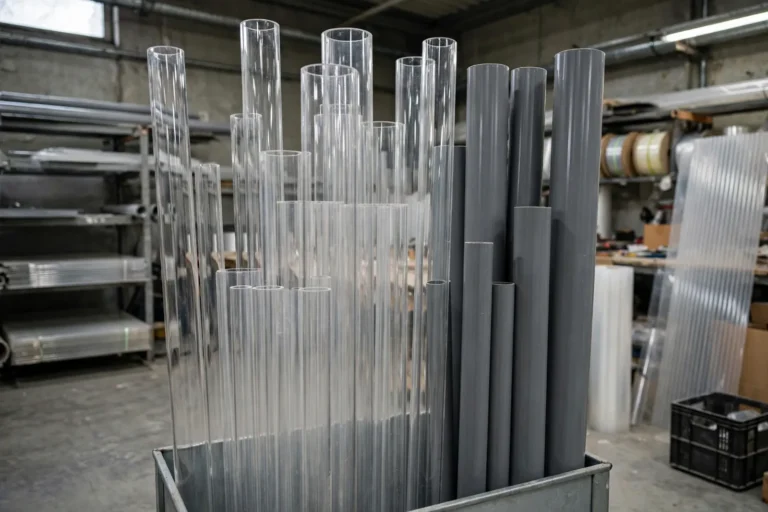
Composite Decking in NZ: Ranges, Prices and How to Choose
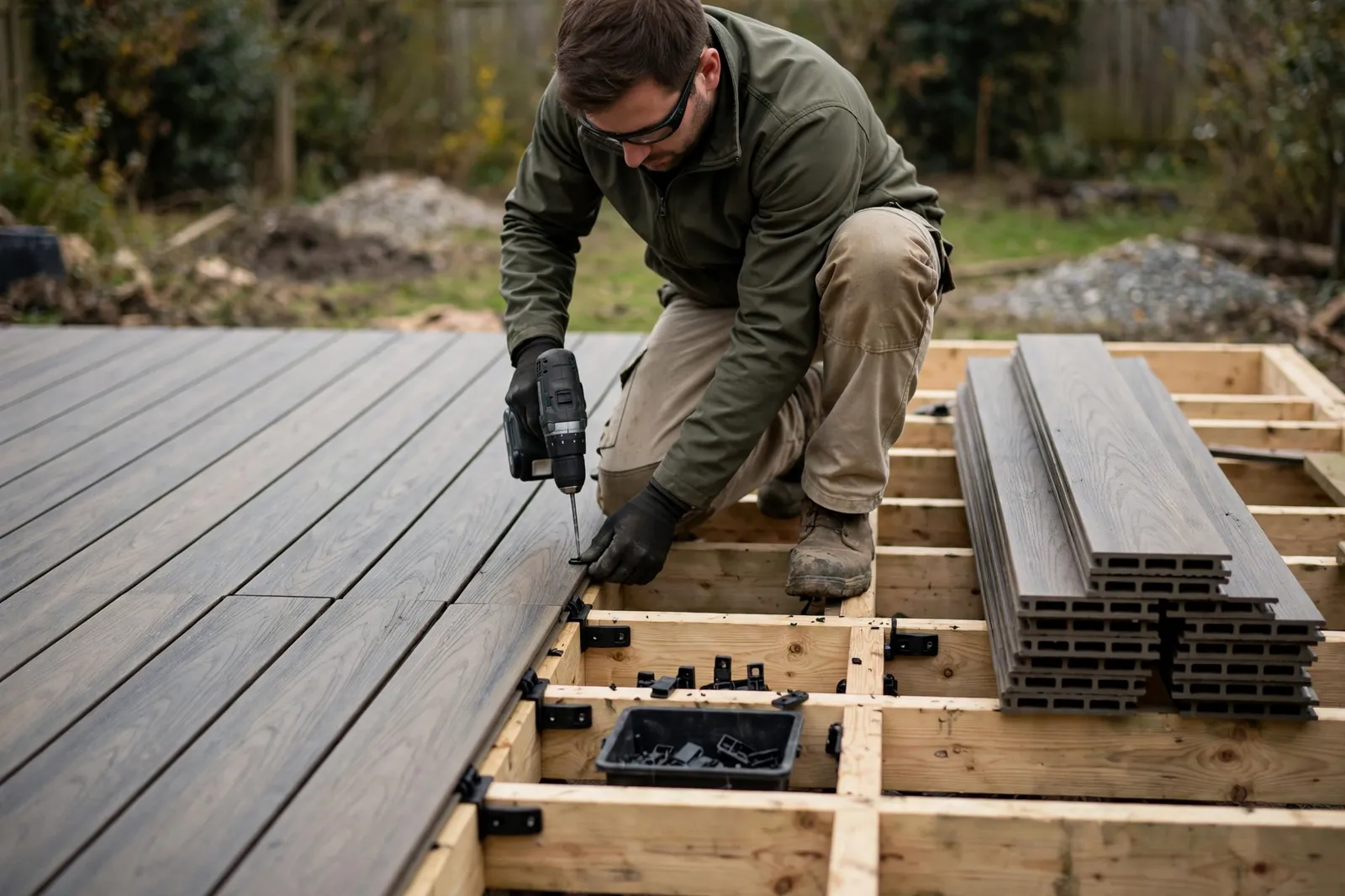
A timber deck in New Zealand asks for regular work. It needs cleaning, oiling or staining, and sooner or later it will throw up a splinter, a popped screw or a board that has cupped in the sun. Composite decking exists because plenty of homeowners would rather spend their weekends on the deck than on maintaining it. The boards look like timber and are sold on the promise that you fit them once and then mostly leave them alone.
That promise is broadly true, but the detail matters. Composite boards are not one product: they are made from different recipes, finished in different ways, fixed differently and backed by warranties that vary a lot from brand to brand. The cheapest board per length is not always the cheapest deck once fixings and waste are counted.
What composite boards are made of
Most composite decking is wood plastic composite, or WPC. BiForm describes it as a mix of wood products, plastic and additives, moulded into boards using heat and pressure. The wood part is normally ground timber fibre or wood flour rather than chips, and the plastic part is most often polyethylene. Additives such as colour pigments, UV protectants and anti-fungal agents are blended in before the mixture is extruded into a board profile.
The proportions differ by brand, and the makers treat their recipes as a selling point. BiForm states that its boards are 60 percent FSC certified timber fibre and 30 percent recycled HDPE plastic, with the balance made up of colour, UV protectant and mould inhibitors. It deliberately runs a lower plastic content than the roughly 50 percent it says is common in WPC, arguing that more timber fibre suits New Zealand’s high UV and reduces thermal movement. Ekodeck says its Classic boards are made from over 90 percent reclaimed and recycled materials, combining recycled HDPE plastic with reclaimed timber fibre.
The second big divide is the surface. Older style WPC boards, sometimes called uncapped boards, are the same material all the way through. BiForm’s boards are extruded without a plastic coating, and Ekodeck Classic has a sanded finish with the same colour and consistency through the whole board. The advantage is that surface marks can be sanded out, because there is no separate skin to damage.
Capped boards take a different approach. A co-extruded polymer shell is bonded around the composite core during manufacture, wrapping the board in a protective skin. Ekodeck’s Designer Series uses this method: its Durashell coating is a 100 percent polymer layer that Ekodeck says shields the core from moisture and gives the boards their stain resistance and variable timber grain finish. Capped boards generally resist staining better, because spills sit on the polymer skin rather than soaking into exposed wood fibre. The trade-off is that the skin is the finish, so deep damage cannot simply be sanded back the way it can on an uncapped board.
There is also a third material family that is not WPC at all. Millboard, sold in New Zealand by Forté, is a resin mineral composite. Its boards are moulded from a polyurethane resin and mineral composite core with a textured surface layer called Lastane, and the material contains no wood at all. Millboard lists a recycled content of 38 percent, including limestone diverted from landfill, bonded in polymer resin. Because there is no timber fibre in the board, there is nothing in it to rot, and Millboard describes the boards as entirely wood free.
The main ranges sold in New Zealand
BiForm Solid Composite Decking. BiForm is a New Zealand company based in East Tamaki, Auckland, with the strongest local compliance story of the ranges here. BiForm says its solid composite decking is the only WPC product on the market appraised by BRANZ as meeting New Zealand Building Code standards, and the current appraisal, BRANZ Appraisal No. 680 (2025), covers the range for decks built to NZS 3604 or on proprietary aluminium framing. There are three profiles. Form 130 is the stocked residential board, Form 140 is a heavier board manufactured to order, and Forest Board is a face-fixed board for people who want a traditional screwed-down look. All three are solid, dual faced boards with a smooth face on one side and a grooved face on the other, sold in a single length of 4850mm. BiForm publishes six colours for the Form profiles and three colours for Forest Board.
Ekodeck Classic. Ekodeck has been sold in New Zealand since 2009 and is stocked nationally through Bunnings. Classic is its original uncapped WPC range: a traditional wood plastic composite with a textured, sanded finish and the same colour all the way through the board, so scratches can be sanded out. Ekodeck’s product guide gives Classic a slip resistance rating of R11 and P5, and the New Zealand site describes the boards as colourfast, with no rotting, warping or splintering. Bunnings lists the Classic board in Greystone, one of two colours it shows for the range.
Ekodeck Designer Series. The Designer Series is Ekodeck’s capped range and the step up in price and finish. The Durashell polymer coating wraps the board, and the surface has a natural, variable timber grain rather than a uniform colour. Ekodeck rates it R10 and P5 for slip resistance in its product guide, describes the stain resistance as superior to Classic, and makes the boards from over 80 percent reclaimed and recycled materials. Six colours are offered, and Bunnings sells the boards in dual tone colour pairings such as Backbeach with Leatherwood and Alpine Ash with Ironwood. Matching solid edge boards are sold for the Designer Series.
Millboard. Millboard is a British made premium range brought into New Zealand exclusively by Forté, according to Forté. The boards are hand moulded from selected oak boards, so the grain detail comes from real timber moulds, and the Lastane surface is a soft touch elastomer layer that Millboard says gives high slip resistance and flexes back over its special fixing screws so the screw heads are barely visible. Forté lists two collections, Enhanced Grain and Weathered Oak. There is no wood fibre in the boards at all, which puts Millboard in a different category from the WPC ranges.
Board sizes and profiles
Composite boards are bigger and more uniform than most decking timber, and every range standardises on one width and one length, which makes quantity calculations simple.
BiForm Form 130 measures 130mm wide by 19mm thick by 4850mm long, covers 135mm per board once the fixing gap is included, and needs 7.4 lineal metres per square metre of deck. Form 140 measures 140mm by 25mm by 4850mm, covers 145mm and needs 6.9 lineal metres per square metre. Forest Board measures 138mm by 20mm by 4850mm and covers 143mm including its 5mm gap. The boards are heavy: BiForm lists Form 130 at 15.13kg per board and Form 140 at 21.19kg.
Both Ekodeck ranges use one board size, 137mm wide by 23mm thick by 5400mm long. The 5.4 metre length means fewer butt joins on long decks, although Ekodeck recommends breaker boards on decks longer than one board length to manage expansion and contraction. Millboard’s Enhanced Grain board is wider and thicker again at 176mm by 32mm by 3600mm, listed at 16.9kg per square metre, with about 1.54 boards needed per square metre.
Profile shape matters as much as dimensions. Solid boards, which all three BiForm profiles and Millboard are, carry their full cross section everywhere. Some imported boards are hollow, with internal voids that reduce weight and cost. BiForm argues against hollow profiles for New Zealand, saying moisture can sit inside the cavities in our high humidity and stress the board as the top surface heats at a different rate from the damp underside.
Edge profile decides how the board is fixed. Grooved edge boards have a channel along each side that accepts a hidden clip. Square edge boards have no channel and are face screwed, or used where the edge will be visible, such as the deck perimeter and stair treads. BiForm’s Form boards have a centred rebate on both edges for concealed clips, plus a matching edge board with a channel on one side only. Forest Board has no fixing channel at all, because it is designed to be surface fixed like hardwood.
Fixing systems
Hidden clip systems are now the default for composite decking, and each brand has its own.
Ekodeck’s system is called Quickfix. Standard clips sit in the groove of the board on every joist and automatically set the gap between boards, with kits made for either 3mm or 6mm board spacing and for timber or metal joists. One locking clip is placed at the centre joist of each board to stop the boards creeping along the deck, and C-clips secure the first board, fascias and breaker boards. Ekodeck says the system installs at least 30 percent faster than traditional top fixing.
BiForm uses its own concealed clips for the Form profiles. The BRANZ appraisal records that the clips are black HDPE, used with stainless steel screws, and that they provide a 5mm gap between boards. Stainless steel stop clips clamp into the edge rebate and are recommended where butt joints are unavoidable or creep is a concern. Forest Board takes the opposite approach: it is face fixed with a pair of composite deck screws into every joist, using coloured 316 stainless steel screws so the fixings read as part of the design, much like a hardwood deck.
Millboard’s fixings are different again. Its Durafix screws are driven through the face of the board, but they are designed to be nearly invisible: they are a required part of the system under Millboard’s warranty, need no pre-drilling or countersinking, and the Lastane surface flexes back over the screw head, leaving what Millboard calls a minimal witness mark. Forté advises against using an impact driver for these screws, as it can break the screw head and stop the board pulling down tight to the frame.
Whichever system you choose, the fixings are proprietary, so budget for the brand’s own clips or screws. Mixing generic clips with a grooved board can void the warranty and produce uneven gaps.
Composite vs timber, on published points
Manufacturers publish their own comparisons with timber, and the points they make are consistent across brands.
Maintenance is the headline difference. Ekodeck’s product guide comparison table states that Ekodeck does not require regular oiling or sealing, while timber does. BiForm says its decking needs no oiling, staining or painting. Forté says Millboard requires no staining, sealing or sanding. No composite maker claims zero work: all of them still require cleaning, which is covered below.
On durability, the makers say composite boards will not splinter, cup, twist or warp the way timber can, and will not rot or decay. Ekodeck adds that its boards resist termites and do not leach tannins, which matters near light coloured paving or a pool. Millboard’s position is that a board with no wood content cannot rot or warp and will not host insect infestation.
On lifespan, separate test evidence from marketing. BRANZ’s appraisal of BiForm says the decking can be expected to have a serviceable life in excess of 15 years, comparable to timber decking, and confirms it meets the Building Code durability requirement of 15 years. Forté publishes a more generous comparison for Millboard, saying its boards can typically last up to 35 to 40 years subject to environment, whereas real timber decking typically lasts 10 to 15 years. Treat that as the supplier’s claim for its own product rather than a measured average, and weigh the written warranty, covered below, more heavily than any lifespan figure.
On looks, composite boards are straight, uniform and knot free, so there is less sorting and waste than with timber. The trade-off is a repeating grain pattern, and slight colour variation between batches, as BiForm notes in its FAQs.
Subframe, spacing and ventilation requirements
Composite boards are generally less stiff than hardwood, so joist spacings are tighter than many people expect.
BiForm sets a maximum joist spacing of 400mm for Form 130 and Forest Board, and 450mm for the thicker Form 140. Ekodeck’s product guide, which sets its spans using AS/NZS 1170.1 load actions, allows 450mm joist spacing for both Classic and Designer Series in residential use, reducing to 400mm on stairs and landings, and 400mm for Designer Series or 350mm for Classic in commercial use. Forté recommends 400mm joist centres for Millboard in residential work and 300mm for commercial applications. If you are reusing an existing frame built for timber at wider spacings, measure it before you order boards, because adding extra joists is far easier before the decking goes down.
Ground clearance and airflow are the quiet killers of decks, timber and composite alike. The BRANZ appraisal for BiForm requires a minimum ground clearance of 300mm over unpaved ground, and 50mm minimum over waterproof membrane decks and balconies. Ekodeck’s guide sets minimum ground clearances for the Designer Series of 40mm where there is adequate drainage and 90mm where there is not. Follow the figure published for the board you are buying, and keep the under-deck area ventilated and free of leaf litter.
Gaps are functional, not cosmetic. Composite boards expand and contract with temperature, mostly along their length. BiForm says its Form profiles move approximately 1mm per metre between night and midday, and recommends a picture frame design with a breaker board at right angles on decks of 5 metres or more, rather than staggered butt joints through the deck. Ekodeck publishes an end gap table that varies the butt gap by board length and installation temperature, and likewise recommends breaker boards on decks longer than 5.4 metres. Millboard moves much less: Millboard puts its movement at up to 0.2 percent of board length, and specifies a 4mm gap between the sides of Enhanced Grain boards, a 1mm gap between board ends, and a 10mm gap between the boards and any solid surface to help drainage.
Storage before installation is part of the specification too. The BRANZ appraisal says BiForm boards must be transported and stacked flat, well supported, off the ground and sheltered from direct sunlight, and always carried on edge. The same discipline suits any brand: keep boards flat, dry and covered, with a tarpaulin over the stack if they are sitting outside, so they are all at a similar temperature when you cut and fix them.
Colour fade, staining, scratching and heat
No composite keeps its day-one colour forever, and the honest makers say so. BiForm states plainly that after the first summer its board colour will have lightened by 5 to 10 percent, and will then remain stable, with slight variation between batches because the boards are made from recycled material. BRANZ’s appraisal of BiForm notes the same pattern: minor colour loss during stabilisation over the first few months, and some further loss over time from weathering. For Millboard, Forté publishes a specific test result: the boards were UV stability tested to BS EN ISO 4892-2 with a 2 percent LRV shift over 5000 hours, which Forté describes as an exceptional result. Ekodeck says its Classic boards remain colourfast, and that the Designer Series Durashell coating shields boards against discolouration. A published test figure tells you more than an adjective.
Staining behaviour splits along the capped and uncapped line. On a capped board such as Ekodeck Designer Series, the polymer skin is non-absorbent, so food, drink and barbecue grease sit on the surface and can be wiped or washed off, which is why Ekodeck describes its stain resistance as superior. On uncapped boards the wood fibre is part of the surface, so spills should be cleaned promptly; BRANZ’s maintenance notes for BiForm say stains from grease, oil or tannin can be removed with a degreaser followed by a wash. Millboard’s Lastane finish is described by Forté as highly resistant to many stains, with the caveat that strong dyes, berries and animal droppings should be removed as soon as possible.
Scratching follows the same pattern. Ekodeck Classic can be sanded to remove scratches and marks, because the colour runs through the board; the BRANZ appraisal confirms BiForm can be sanded with 60 grit paper along the grain, with the sanded area re-weathering to match over a few months, and warns against dragging heavy objects across the surface. A capped board cannot be sanded without cutting through its skin, and Millboard’s approach is different again: small scratches are touched up with Millboard touch-up paint, and dents or gouges are filled and then painted to blend.
Heat underfoot is a real consideration in New Zealand summers. BiForm says its boards run at a similar temperature to a comparably coloured timber surface, that lighter colours heat up less, and that its boards have no plastic coating, which it says can be much hotter underfoot. Forté is equally direct about Millboard: it can get hot in the sun, darker colours especially, so lighter colours are recommended where surface temperature is a concern. On a north facing deck used barefoot, colour choice matters as much as brand.
Cleaning and care
Composite care is washing, not coating. None of the ranges here needs oiling, painting, sealing or staining, and Millboard says paint or stain will not adhere properly to its surface and should not be applied.
BiForm recommends six-monthly cleaning to keep its deck looking like new, using a broom or mop for general cleaning and its own deck cleaner for a deeper wash. The care detail in the BRANZ appraisal is more specific: clean at least annually with a soft brush, warm water and BiForm Deck Cleaner, which is a sodium percarbonate cleaner, and never use abrasive cleaners, thinners, solvents or petrol. The appraisal also notes the boards contain an anti-fungal additive, but that mould or mildew can still develop if damp leaf mould is left sitting on the surface, a good reason to sweep decks under trees.
Ekodeck’s position is simpler: no oiling, painting or sealing, and for the Designer Series, a good clean every now and then is all that is needed. Forté recommends cleaning a Millboard deck twice a year: wet the surface, apply a foaming cleaner, scrub with a hard bristle brush, and rinse thoroughly so the solution does not dry on the surface.
The shared routine is simple: sweep regularly, wash once or twice a year, clear debris from the gaps, and deal with grease spots promptly. That is the main reason people pay more for composite in the first place.
Warranties, as published
Read warranty years brand by brand, because the terms behind the number differ.
BiForm backs all of its decking profiles with a 25 year limited warranty. Ekodeck Classic carries a 15 year warranty. Ekodeck Designer Series carries a warranty of up to 25 years; check the warranty document for the term that applies to your application before relying on the headline figure. Millboard lists a residential warranty of 25 years and a commercial warranty of 10 years for its Enhanced Grain boards on its own product pages.
Three cautions apply to all of them. First, these are limited warranties with conditions, typically including correct installation with the brand’s own fixings; Millboard states outright that using its Durafix screws is a requirement of its limited warranty. Second, a warranty period is not a guaranteed service life: BRANZ assessed BiForm’s decking against the Building Code’s 15 year durability requirement, separately from BiForm’s 25 year warranty. Third, commercial use can shorten the term, as the Millboard figures show. Keep your invoice and a record of the fixings used, because you will need both if you ever claim.
What the ranges cost
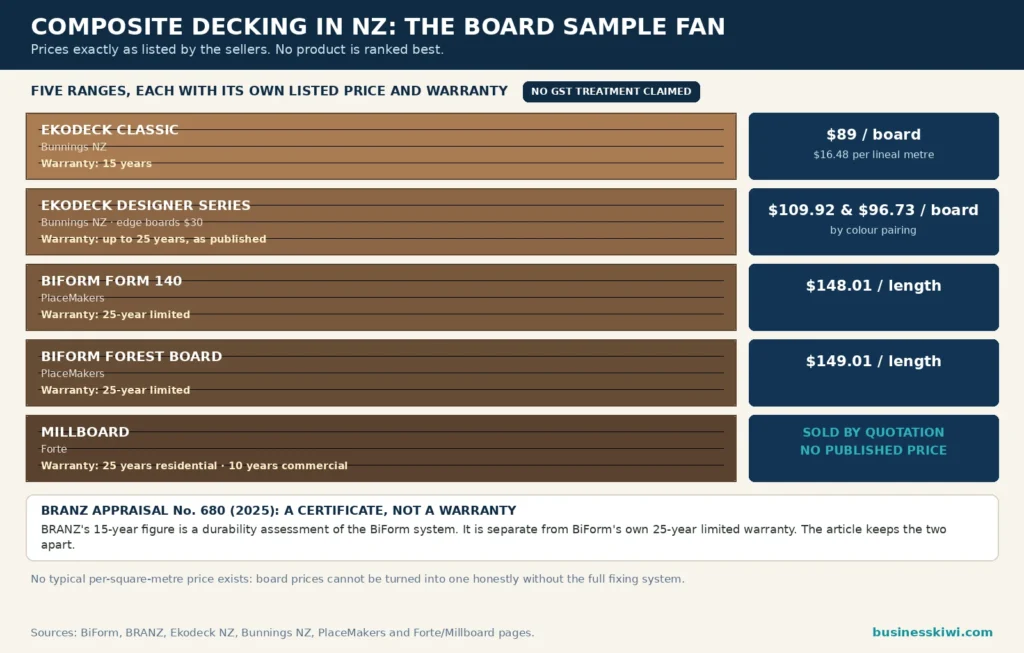
Prices below are the listed prices on the sellers’ own New Zealand websites when checked for this guide. Neither page stated a GST treatment for these listings, so the figures are presented exactly as listed. Prices change, and PlaceMakers pricing is store based, so confirm at your branch before ordering.
At Bunnings New Zealand, the Ekodeck Classic board, 137mm by 23mm in a 5.4 metre length in Greystone, is listed at $89 per board ($16.48 per lineal metre). The Ekodeck Designer Series board in the same size is listed at $109.92 per board ($20.36 per lineal metre) in the Backbeach with Leatherwood and Alpine Ash with Ironwood colour pairings, and at $96.73 per board ($17.91 per lineal metre) in Riverbank Red with Estate Brown. Designer Series edge boards are listed at $30 each ($5.56 per lineal metre).
At PlaceMakers, the BiForm Form 140 board in Cedar Brown, 140mm by 25mm in a 4.85 metre length, is listed at $148.01 per length, and the BiForm Forest Board in Forest Brown, 138mm by 20mm in a 4.85 metre length, is listed at $149.01 per length. Form 140 is BiForm’s made-to-order heavy profile, so treat those figures as the top of its range rather than its entry price.
Millboard has no shelf price to quote: Forté sells it by quotation and positions it at a premium, so expect a quoted package price covering boards, fixings and edging profiles.
To compare boards fairly, convert each price to a cost per square metre using the cover each maker publishes, and add the fixing system: clip kits or screws are a real cost on every deck, as are extra boards for breaker boards and picture frame borders. If the deck is part of a wider backyard project, price the whole job together, including the subframe and any other work you are doing at the same time, from fence posts and retaining to kitset garages and sheds, so the board price sits in its proper context.
Pre-purchase checklist
- Measure your frame first. Check joist spacing against the maximum the board maker publishes, and budget for extra joists if the frame is too wide.
- Decide capped or uncapped. Choose capped for stain resistance and a variegated timber look; choose uncapped if you want to be able to sand out marks.
- Check the warranty document, not the brochure. Confirm the term for your use and any requirement to use the brand’s own fixings.
- Price per square metre, not per board. Use the published cover figures, then add clips or screws, edge boards and an allowance for waste and breaker boards.
- Think about heat and colour together. On a north facing deck used barefoot, a lighter colour will be kinder underfoot.
- Ask about slip resistance where it matters. Around pools and spas, compare published ratings, such as Ekodeck Classic’s R11 and P5 and the R11 classification in BiForm’s BRANZ appraisal.
- Confirm local stock and support. A range stocked by a national retailer or a New Zealand based supplier is easier to top up and claim against than a one-off import.
- Order a sample. Ekodeck offers a free sample kit in New Zealand and Forté offers Millboard samples. Check the board in your own light, wet and dry, before committing.
Frequently asked questions
How long does composite decking last?
Warranty terms are the firmest figures available: 25 years limited for BiForm, 15 years for Ekodeck Classic, up to 25 years for Ekodeck Designer Series, and 25 years residential or 10 years commercial for Millboard Enhanced Grain. Separately, BRANZ assessed BiForm’s decking as meeting the Building Code durability requirement of 15 years, with a serviceable life in excess of 15 years. A warranty is a promise with conditions, not a guaranteed lifespan, so correct installation and cleaning still decide how long a deck actually lasts.
Does composite decking fade?
Yes, to a degree. BiForm states its colour lightens by 5 to 10 percent after the first summer and then stays stable. Forté publishes a UV test result for Millboard of a 2 percent LRV shift over 5000 hours of testing. Ekodeck describes Classic as colourfast and says the Designer Series Durashell coating protects against discolouration. Expect some early settling of colour on any board, and order all your boards from one batch where you can.
Can composite decking be used around a pool or spa?
BiForm says its decking is unaffected by salt or chlorinated water, and its BRANZ appraisal records an R11 slip classification on both faces of the board. Ekodeck’s product guide rates Classic at R11 and P5 and the Designer Series at R10 and P5. Check the rating published for the board you are buying, and keep pool decks swept and washed, because any surface gets slippery with algae or leaf build-up.
Does composite decking get hot in the sun?
It can. BiForm says its boards run at a similar temperature to a comparably coloured timber surface, and that lighter colours heat up less. Forté warns that Millboard can get hot in the sun and that darker colours may be uncomfortable in bare feet. On an exposed north facing deck, a pale board from any range will be more comfortable than a charcoal one.
How much does composite decking cost in New Zealand?
On the listings checked for this guide, Bunnings lists the Ekodeck Classic 5.4 metre board at $89 and Designer Series boards at $96.73 to $109.92 depending on colour, while PlaceMakers lists BiForm Form 140 at $148.01 per 4.85 metre length and Forest Board at $149.01 per length. Millboard is sold by Forté by quotation. Add fixings, edge boards and waste to any board price before comparing with timber.
Can composite decking go on an existing timber frame?
Generally yes, provided the frame is sound and the joist spacing suits the board. BiForm’s appraisal covers decks on conventional timber framing built to NZS 3604 as well as aluminium framing, and Ekodeck sells Quickfix kits for timber and metal joists. Maximum spacings run from 350mm to 450mm depending on the board and application, tighter than many older decks were built at, so check the frame before you order.
Do I need to oil, stain or seal composite decking?
No. Every range in this guide is sold on the basis that no oiling, painting, staining or sealing is required. Millboard goes further and says paint or stain is unlikely to adhere to its surface and should not be applied. Your maintenance is washing, once or twice a year, following the maker’s care guide.
Sources
- BiForm, Composite Decking Boards: https://biform.co.nz/products-services/composite-decking-boards/
- BiForm, Decking FAQs: https://biform.co.nz/resources/faqs
- BRANZ, Appraisal No. 680 (2025), BiForm Solid Composite Decking: https://biform.co.nz/hubfs/BiForm_theme_2026/Documents/680_2025.pdf?hsLang=en-nz
- Ekodeck, Classic Composite Decking: https://ekodeck.co.nz/products/composite-decking/classic/
- Ekodeck, Designer Series Composite Decking: https://ekodeck.co.nz/products/composite-decking/designer-series/
- Ekodeck, Product Guide v11.25: https://www.ekodeck.com.au/wp-content/uploads/Ekodeck-Product-Guide-v11.25.pdf
- Bunnings New Zealand, Composite Decking: https://www.bunnings.co.nz/products/building-hardware/timber/decking/composite-decking
- PlaceMakers, BiForm Form Composite Decking Cedar Brown 140 x 25 x 4850mm: https://www.placemakers.co.nz/online/timber-plywood/decking/composite-decking/decking-composite/form-composite-decking-cedar-brown-140-x-25-x-4850mm/p/1930535
- Forté, Millboard Engineered Decking: https://forte.co.nz/collections/millboard
- Millboard, Brushed Basalt Enhanced Grain Composite Decking 176mm: https://millboard.com/en-gb/shop/composite-decking/enhanced-grain-brushed-basalt-176mm/
This article is general information about composite decking products sold in New Zealand, based on what manufacturers and retailers published when it was researched. It is not building advice for a specific project. Prices, colours and specifications change, so confirm current details with the manufacturer or retailer, follow the installation literature for the product you buy, and check Building Code requirements with your council or a licensed building practitioner before starting work.