Fence Pailings in NZ: Sizes, Treatment, Quantities and How to Choose Well
The short answer
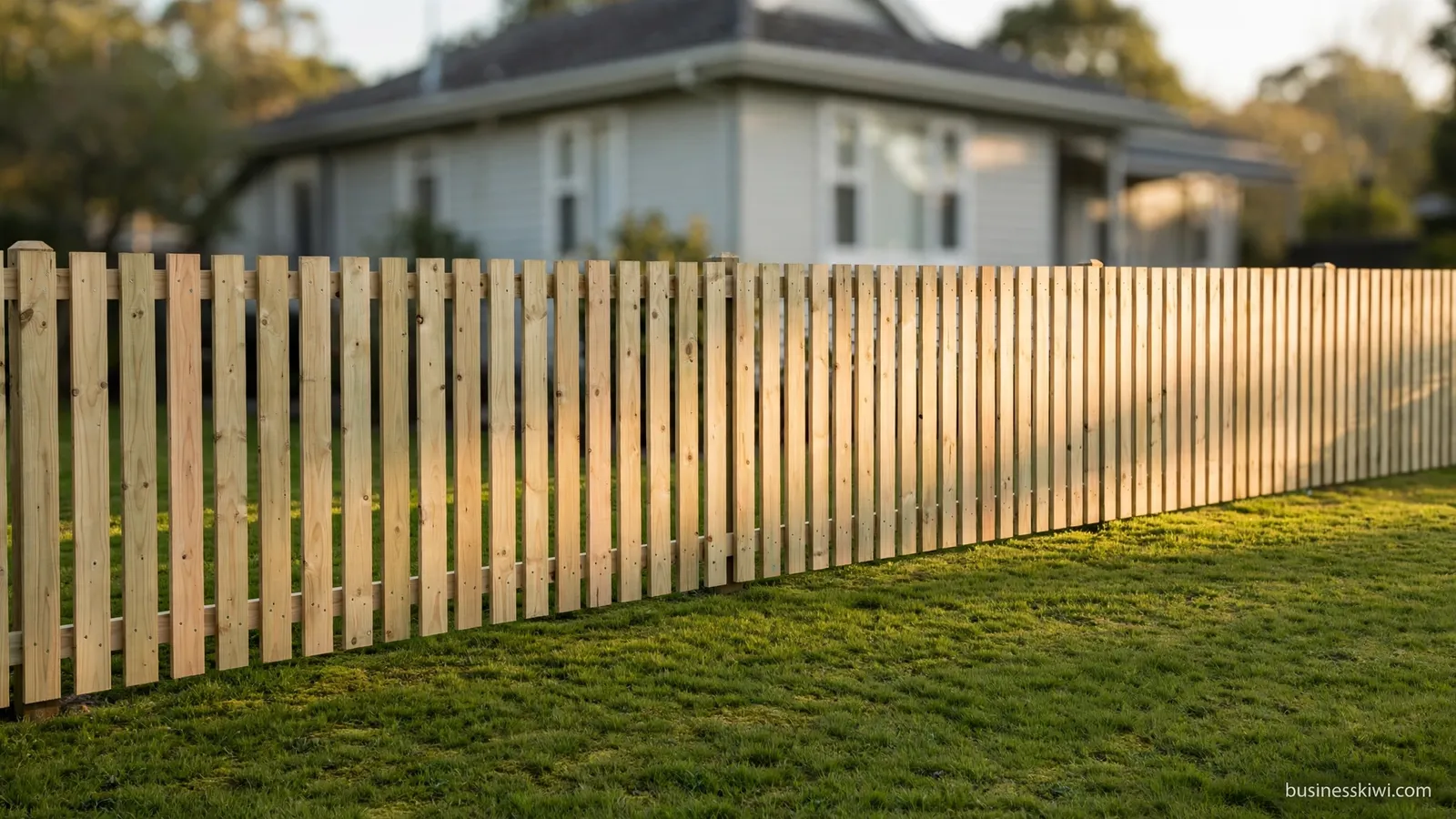
A fence pailing is the vertical board that forms the face of a timber fence. Palings are nailed side by side to horizontal rails, and the rails are fixed to posts set in the ground. The spelling varies: you will see both pailing and paling on NZ product labels, and they mean the same board.
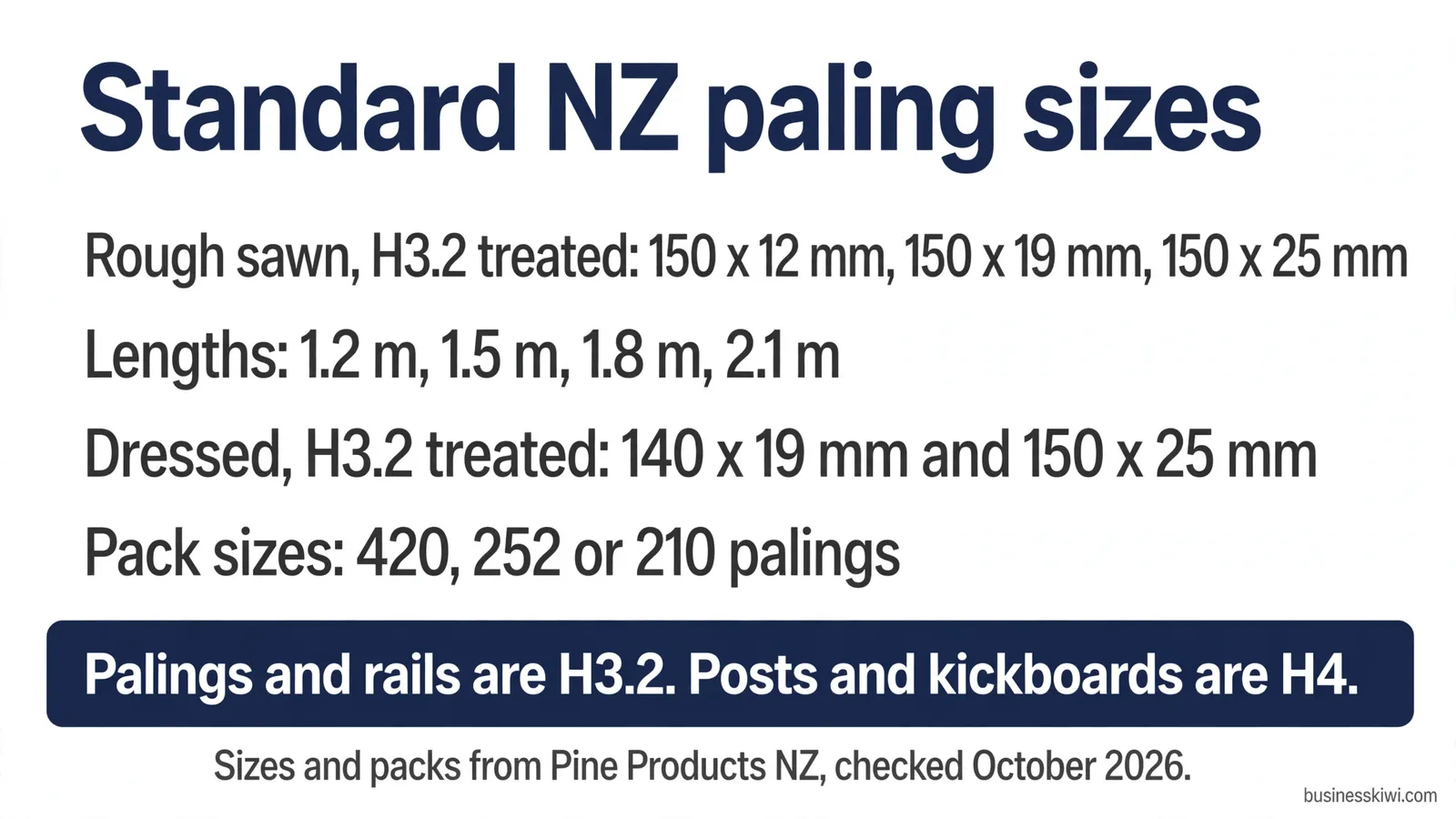
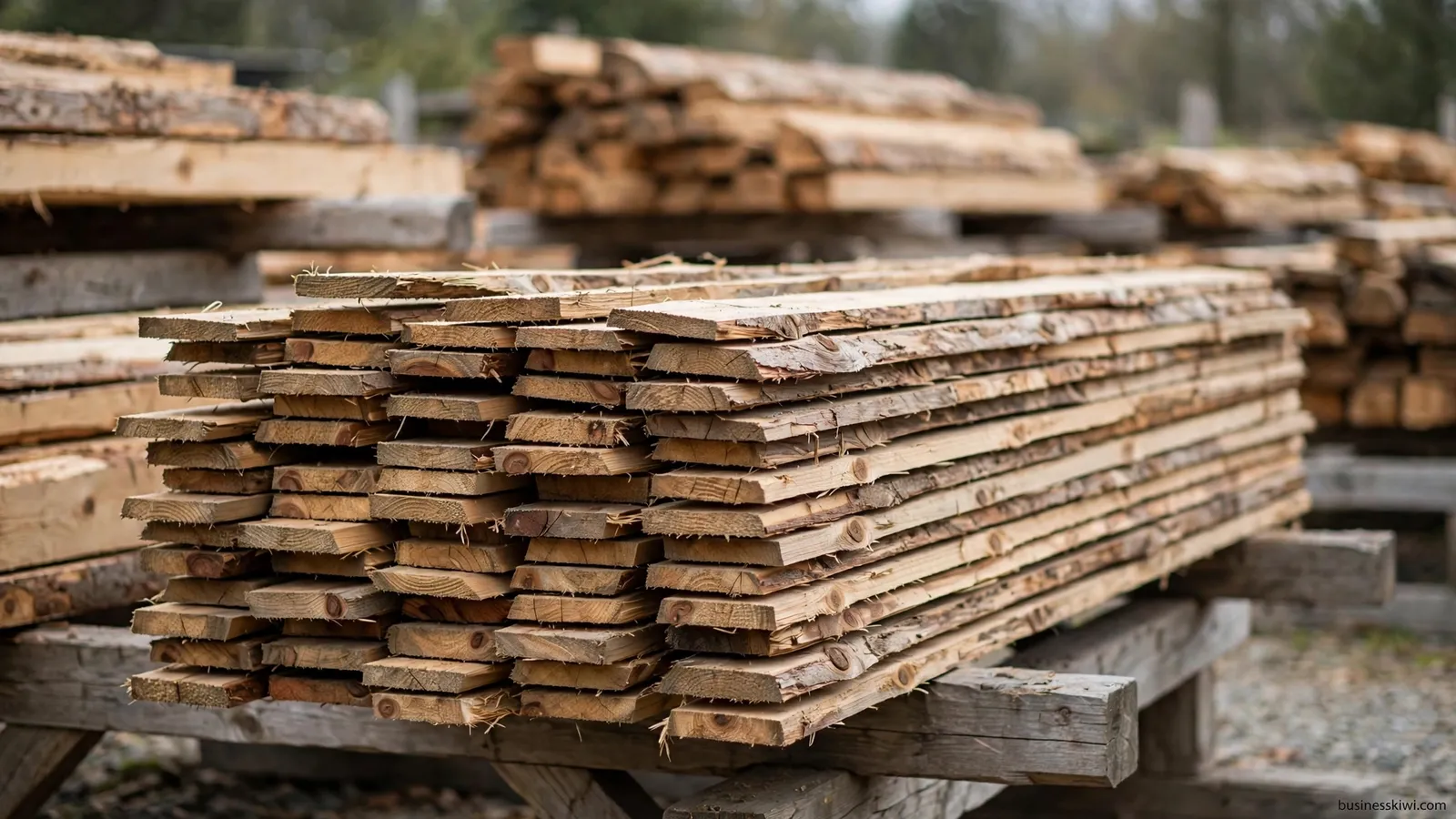
The standard NZ paling is radiata pine, 150mm wide and 19mm thick, treated to hazard class H3.2 for outdoor use above ground. Pine Products, a Christchurch manufacturer, makes its rough sawn palings in 150mm widths at 12mm, 19mm and 25mm thick, in lengths of 1.2m, 1.5m, 1.8m and 2.1m. The 1.8m length is the one that suits the common 1.8m privacy fence. Everything else in this guide builds on those basics: profiles, treatment, quantities, costs, fitting, quality checks and care.
Pailing sizes and profiles
NZ palings are sold by their cross-section and length. Width and thickness come first, then the length that sets your fence height.
The core range, as published by Pine Products in its product catalogue, is:
-
Rough sawn H3.2 palings, 150 x 12mm, in 1.2m, 1.5m, 1.8m and 2.1m lengths
-
Rough sawn H3.2 palings, 150 x 19mm, in 1.2m, 1.5m, 1.8m and 2.1m lengths
-
Rough sawn H3.2 palings, 150 x 25mm, in 1.2m, 1.5m, 1.8m and 2.1m lengths
-
Dressed H3.2 palings (dressed four sides), 140 x 19mm
-
Dressed H3.2 palings, 100 x 25mm at 1.8m, and 150 x 25mm in 1.2m, 1.5m, 1.8m and 2.1m lengths
Auckland fence manufacturer Hampden specs its standard close-boarded panel with the same two main boards: palings of 150 x 19mm or 150 x 25mm, rough sawn, at 1800mm high. That agreement across a manufacturer and a fence maker is a good sign that 150mm wide in 19mm or 25mm is the settled NZ standard.
Thickness is the main choice after width. The 12mm board is the light, low-cost option. It carries about a third less timber than the 19mm board, so it flexes more and is best kept for low fences and sheltered lines. The 19mm board is the everyday standard for a full-height boundary fence. The 25mm board carries roughly a third more timber than the 19mm, which makes a stiffer, heavier fence face that stands up better to knocks and wind pressure.
Finish is the second choice. Rough sawn palings come off the saw with a textured surface. They are the standard ute-load board for boundary fences, and paint or stain sits well on the texture. Dressed palings are planed smooth on all four sides, which Pine Products describes as smooth and precision cut, for fencing that needs a clean, refined finish. Dressing takes timber off the board, so a dressed paling finishes narrower: 140mm where the rough sawn board is 150mm. Allow for that difference in your quantity maths.
Most palings have a plain square top. The tidy way to finish the top line is a capping rail: Pine Products makes H3.2 fence capping in 90 x 45mm and 140 x 45mm, and its fencing guidance recommends capping to keep water out of the end grain and improve the look. Narrower dressed boards of 40 x 19mm and 70 x 19mm are also made to order, and square pickets (50 x 25mm, 75 x 25mm and 100 x 25mm) are the related product for decorative front fences rather than full boundary runs.
Timber species and treatment
Radiata pine is the NZ paling timber. It is plantation grown here, it takes preservative treatment well, and every paling in the manufacturer ranges above is radiata. The grade sold for palings is merchant grade. Under Pine Products’ grading guidelines, merchant grade allows knots and defects that are generally sound and tight, but it does not allow dead knots, decaying timber or broken pieces. Expect a working board with visible grain and knots, not a furniture finish.
Treatment is what makes a soft pine board survive outdoors. NZ uses hazard classes, marked H followed by a number, to match treatment strength to exposure. The NZ Timber Preservation Council explains the scale: the class stamped on the timber shows the level of treatment it received against decay, moisture and insect attack.
Palings are class H3.2. The Council lists palings as a typical H3.2 use, and describes the class as timber that can be exposed to the weather above ground, or be protected from the weather but still at risk of moisture entrapment. Pine Products puts it in plain words on its products page: H3.2 is for outside, above ground, with periodic wetting where the timber can dry out, and some leaching. Typical H3.2 preservatives listed by the Council include CCA, copper quat, copper azole, copper naphthenate and micronised copper azoles.
Two neighbouring classes matter when you buy. H3.1 is the lighter outdoor class: it is non-structural, must be painted, and is used for joinery, cladding and fascia, so it is not the class to accept for palings. H4 is the stronger class for timber in direct ground contact, and its typical uses include fence posts. A paling fence is a system of classes working together: H4 where timber touches the ground, H3.2 everywhere above it.
That split drives one firm rule. Palings are above-ground boards and should not sit in soil or leaf litter. Keep the bottom of the fence clear of the ground, or protect the base with an H4 kickboard, a ground-contact board that Pine Products makes in a 188 x 21mm profile and recommends at ground level to protect the palings above it.
How many pailings do you need?
The maths is simple once you fix three numbers: the fence length, the paling width, and the gap you will leave between boards.
Each paling covers its own width plus one gap. Divide the fence length by that combined figure, then round up to a whole board. Add about 5 percent for cuts, end bays and the odd board you reject on the day.
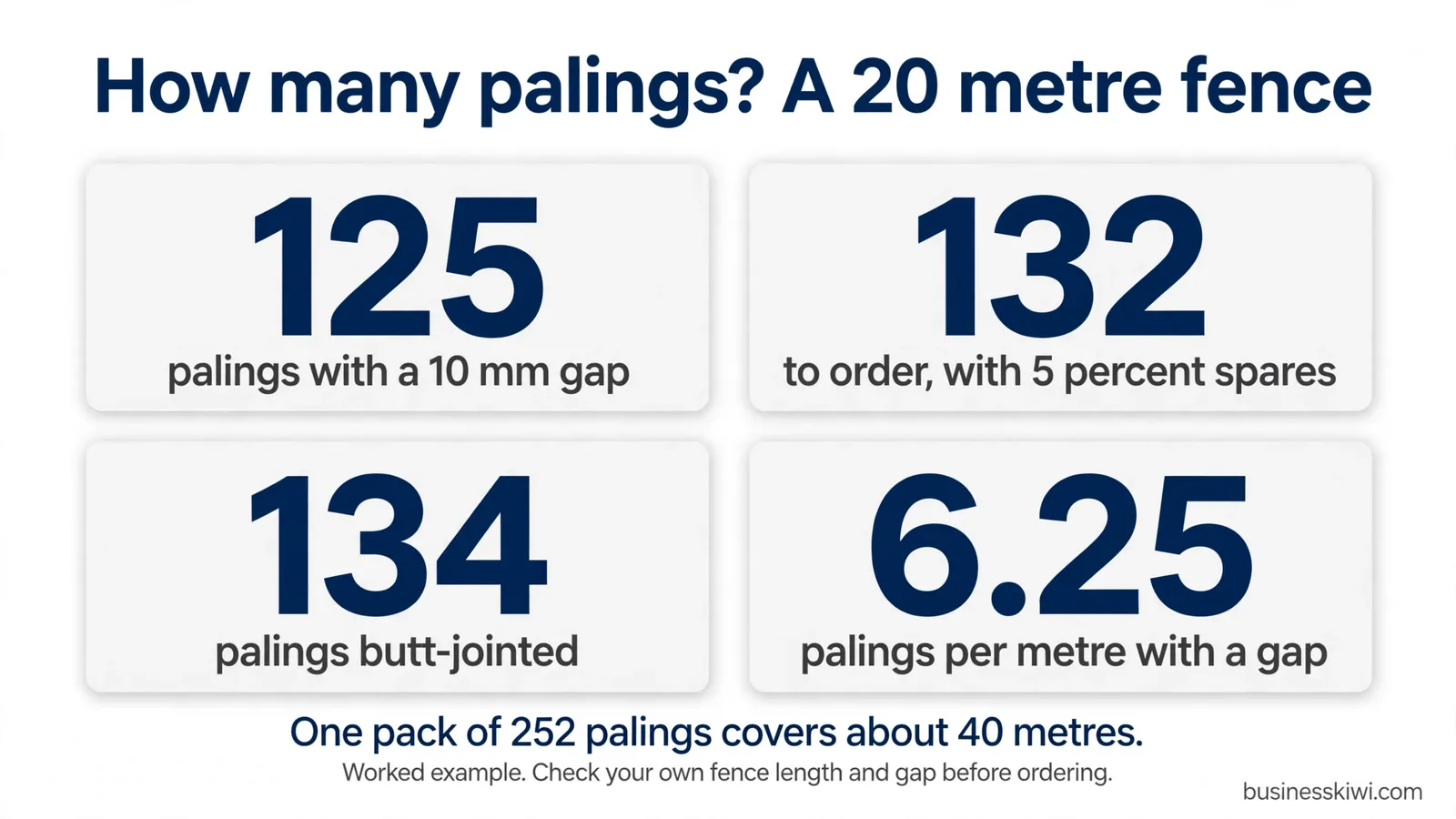
Worked example. Your fence run is 20 metres. You choose 150mm palings and a 10mm gap, which gives airflow and a shadow line while keeping privacy. Each paling covers 160mm, so 20 metres divided by 0.16 metres gives exactly 125 palings. Add 5 percent for spares and you order 132.
If you butt the boards hard against each other instead, each paling covers only its 150mm width. The same 20 metres then needs 134 palings, and green treated timber shrinks as it dries, so small gaps tend to open up anyway. Per metre of fence, the quick figures are 6.25 palings at a 10mm gap and about 6.7 palings butt-jointed.
Overlap styles use more timber. Where palings overlap each other, each board covers less than its full width, so the count rises. Run the same division with the covered width, not the board width, before you order.
Pack sizes help with long runs. Pine Products packs its 150 x 19mm rough sawn palings 252 to a pack. At a 160mm pitch, one pack covers about 40 metres of fence, which suits a full boundary replacement ordered through a merchant.
What fence pailings cost
There is no single NZ paling price, and any guide that quotes one number for the whole country is guessing. Manufacturers sell palings in packs through timber merchants, and merchants set their own per-piece and per-pack prices by size, length and finish. WBS Henderson, an Auckland timber merchant, states that all of its prices include GST, but it does not publish a public paling price list, and neither does the manufacturer range used for this guide. Treat the honest position as this: prices vary by supplier, size and length, and you need a quote on the exact board before you budget.
What you can control is the specification you ask prices on. Quote these points and quotes become comparable:
-
Exact size and length, such as 150 x 19mm at 1.8m, per piece and per pack
-
Finish, rough sawn or dressed, because dressed boards are machined and sit in the premium part of the range
-
Whether the price includes GST, and whether delivery is extra
-
The treatment class on the stamp, so a cheaper board is not cheaper because it is a lower class
Price moves in predictable directions even without a published list. Longer and thicker boards hold more timber, so a 2.1m paling costs more than the same board at 1.2m, and a 25mm board costs more than a 19mm. The biggest saving is usually accuracy: order from the quantity maths, not from a guess, and you avoid both a second delivery and a stack of leftovers.
The palings are also only one line in a fence budget. Posts, rails, concrete, fixings and capping all add cost, and a full installed fence price per metre is a different question from the price of the boards themselves.
Fitting basics: how a paling fence goes together
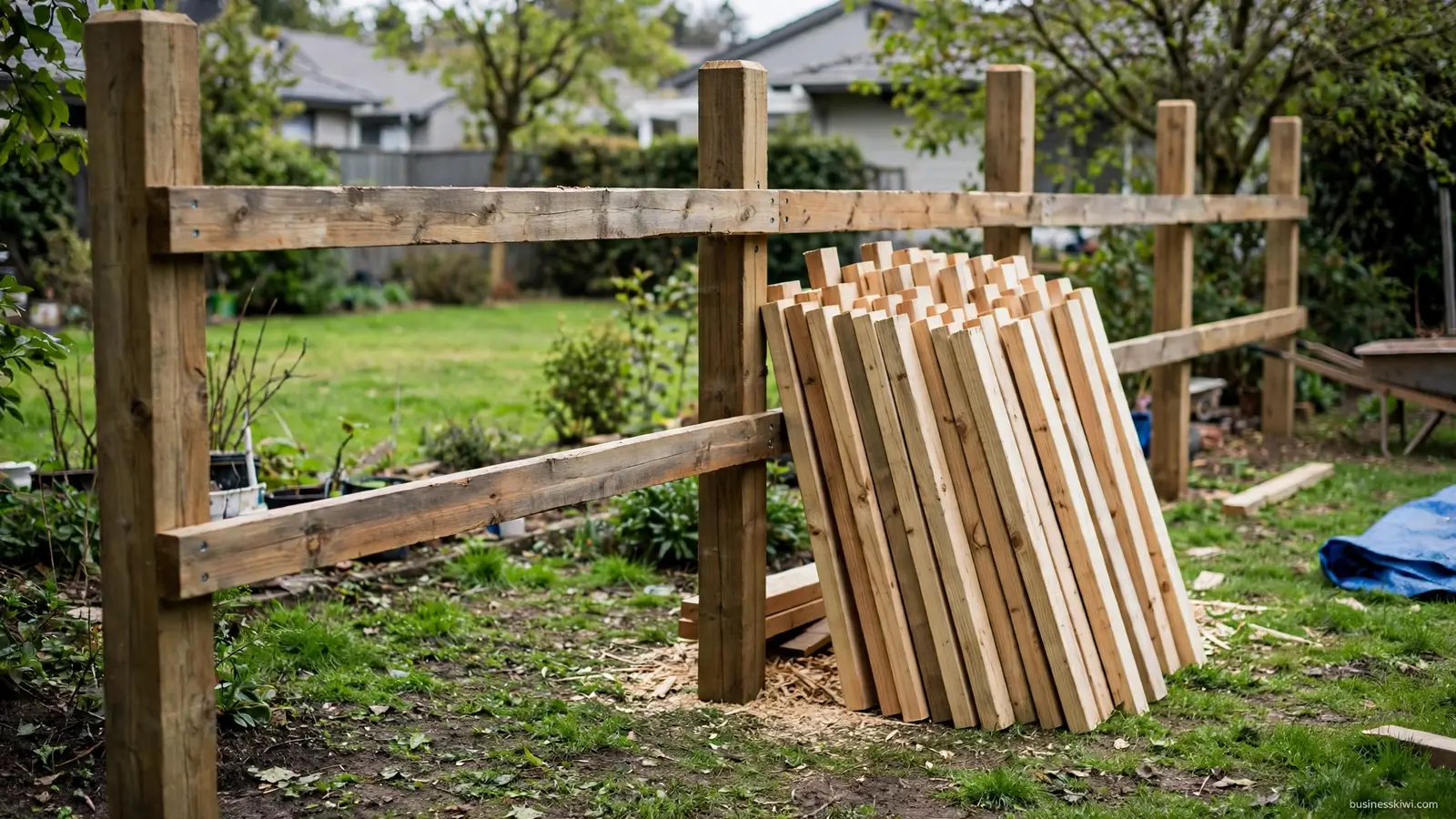
This is the summary version, so you can picture the system and talk sensibly to a builder or merchant. Hampden’s spec sheet for its typical close-boarded panel shows the standard build. Posts are 100 x 100mm H4 rough sawn timber, set in the ground in concrete footings, typically 300mm across and 800mm deep in 20MPa concrete. Pine Products gives post spacing at 1.8m to 2.4m depending on fence height and wind exposure, set at least 600mm deep in concrete. Hampden caps its post centres at 2400mm.
Rails run horizontally between the posts. The spec uses 100 x 50mm H3.2 rough sawn rails, fixed to the posts with galvanised nails or 14g bugle screws. Taller fences need more rails to keep palings flat and firm; the rails carry the boards, so their spacing sets how much a paling can flex.
Palings are nailed vertically to the rails, two fixings per rail. Pine Products’ fencing guidance is two nails per rail for a secure fixing, and Hampden specs 3.15 x 60mm galvanised nails into the rails. Work along a string line, check every few boards for plumb, and use a spacer offcut to keep gaps even.
Two finishing parts are worth the money. A kickboard at the base keeps palings out of the wet zone at ground level. Capping along the top sheds water off the end grain. Both protect the parts of a paling that age first.
Before you dig, confirm the boundary line is where you think it is, and talk to your neighbour early. Boundary fences sit between two properties, and NZ’s Fencing Act 1978 provides the framework for how neighbours share the cost of an adequate fence. Getting the line and the conversation right first is cheaper than moving a finished fence.
Choosing and checking quality
Merchant grade palings are working boards, so sort the pack rather than expecting perfection. These checks take minutes and save returns:
-
Sight down each board. Reject boards with a strong bow, crook or twist, and put mildly bent boards aside for short end bays where they get cut down.
-
Check the knots. Sound, tight knots are normal in merchant grade. Dead knots that feel loose, holes, and any soft or decaying patches are grounds to reject the board, because the grading rules exclude them.
-
Read the treatment stamp. Treated timber carries the treatment brand and its hazard class. The NZ Timber Preservation Council points to the WOODmark stamp as a guarantee the timber was treated to standard, alongside the hazard class rating. You want H3.2 on a paling. No stamp, no sale.
-
Ask how the timber was dried. Palings can be supplied wet after treatment, which makes them heavy and prone to shrink as they dry in place. Kiln dried stock is more stable. Pine Products codes its range WAT for wet after treatment and KD for kiln dried, so ask which you are getting.
-
Store the boards flat, off the ground and under cover until you build, so they stay straight and dry evenly.
Buy a few boards over the count, as the worked example allows, and agree the returns position with the merchant before delivery. Swapping two bad boards is easy; discovering them mid-run on a Saturday is not.
Care and lifespan
No manufacturer in the sources for this guide publishes a promised lifespan in years for a paling, so treat any exact figure you hear with care. What the sources do support is this: H3.2 is the class specified for above-ground outdoor exposure, and how long the fence serves depends on that treatment, on detailing that keeps boards dry, and on basic upkeep.
Pine Products publishes seasonal maintenance guidance for its fencing, and it is a sensible routine to copy. In spring, inspect for rot, warping and loose fasteners, and clean the surface with a timber cleaner or mild detergent. In summer, apply a timber oil or stain to protect against UV damage. In autumn, clear leaves and debris so moisture does not build up against the boards, and re-tighten loose screws or nails. In winter, keep drainage clear so water does not pool at the base, and avoid pressure washing; use a soft brush and cleaner instead.
Two habits matter more than any product. First, keep soil, mulch and garden beds off the bottom of the palings, because constant damp defeats above-ground treatment. Second, seal cut ends. When you cut treated timber, the fresh end exposes less-protected wood, and the manufacturer’s installation guidance is to seal exposed ends with an appropriate end-seal preservative to maintain durability.
A paling that splits, rots or comes loose is a small job if you catch it early. Pry the board off the rails, cut a replacement to length, seal the ends, and nail it back with two fixings per rail. Keep a couple of spare boards from the original pack and the colour match takes care of itself.
Related guides: our fence posts guide covers the posts a paling fence hangs on, our boundary survey guide helps you confirm the line before you build, and our composite decking guide covers another outdoor timber choice. For more building and business guides, browse the Business & Industry section.
Frequently asked questions
What is the standard fence paling size in NZ?
The standard is 150mm wide by 19mm thick, in lengths of 1.2m, 1.5m, 1.8m and 2.1m. The 1.8m length suits the usual 1.8m privacy fence. Thinner 12mm and heavier 25mm boards are made in the same 150mm width, and dressed palings finish at 140mm wide.
What does H3.2 mean on a fence paling?
H3.2 is a hazard class, the NZ treatment rating for timber used outdoors above ground where it gets wet but can dry out. The NZ Timber Preservation Council lists palings as a typical H3.2 use. It is a stronger treatment than H3.1, which must be painted, and it is not a ground-contact class; posts in the ground are H4.
How many palings do I need per metre of fence?
With 150mm palings and a 10mm gap, each board covers 160mm, so you need 6.25 palings per metre. Butt the boards together and you need about 6.7 per metre. Always round up for the full run and add about 5 percent for cuts and spares.
What is the difference between rough sawn and dressed palings?
Rough sawn palings keep the textured surface from the saw, and they are the standard boundary fence board. Dressed palings are planed smooth on all four sides for a cleaner finish, and dressing reduces the width, so a dressed board is 140mm where the rough sawn board is 150mm.
Can fence palings sit on the ground?
No. Palings are H3.2 above-ground boards, and constant ground contact is outside that class. Keep the bottom of the fence clear of soil, or fit an H4 kickboard at ground level to protect the palings, as manufacturer guidance recommends.
How much do fence palings cost in NZ?
Prices vary by supplier, size, length and finish, and manufacturers sell through merchants in packs rather than publishing a national price. Ask merchants for per-piece and per-pack prices on the exact board, check whether GST and delivery are included, and compare like with like on the treatment stamp.
How long does a paling fence last?
The sources for this guide publish no fixed lifespan figure, and any exact promise should be treated with care. H3.2 treatment is specified for the exposure, and service life then depends on detailing and upkeep: keep the base clear of soil, cap the top, seal cut ends, and follow a yearly inspect, clean and re-oil or stain routine.
The bottom line
A fence pailing is a simple board, but the details decide how the fence ages. Buy radiata pine at 150 x 19mm in the length that matches your fence height, check the H3.2 stamp on every pack, and work your quantity from the fence length divided by width plus gap. Spend the small extra on a kickboard and capping, keep the base out of the soil, and give the fence a short seasonal once-over. Do those things and the humble paling does its job quietly for years: privacy, shelter and a clean line down the boundary.
Sources
-
Pine Products NZ, Product Catalogue (manufacturer range: palings, rails, posts, capping, kickboards, installation and maintenance guidance), https://www.pineproducts.co.nz/resources/file/picker/68dc5a7489c52.pdf
-
Pine Products NZ, Building Product Information Sheet: Radiata H3.2 Dressed Paling, https://www.pineproducts.co.nz/resources/file/downloads/Pine Products NZ Radiata H3.2 Dressed Paling BPIR.pdf
-
Pine Products NZ, Products, grading guidelines and treatment definitions, https://www.pineproducts.co.nz/Products/Structural/
-
NZ Timber Preservation Council, Choosing the Right Timber: Hazard Classes Explained, https://www.nztpc.co.nz/choosing-the-right-timber
-
Hampden Ltd, Timber Fence Panel Spec Sheet Ver.2 (10 July 2025), https://www.hampden.co.nz/s/Timber-Fence-Panel-Spec-Sheet-Ver2.PDF
-
WBS Henderson, Fencing range (merchant), https://wbshenderson.co.nz/shop/category/fencing-2?order=name+desc
This article is general information about fence pailings and how to choose, count and care for them. It is not building, legal or financial advice. Check specifications and prices with your supplier before you buy, confirm your boundary line, and check your council’s rules before you build.